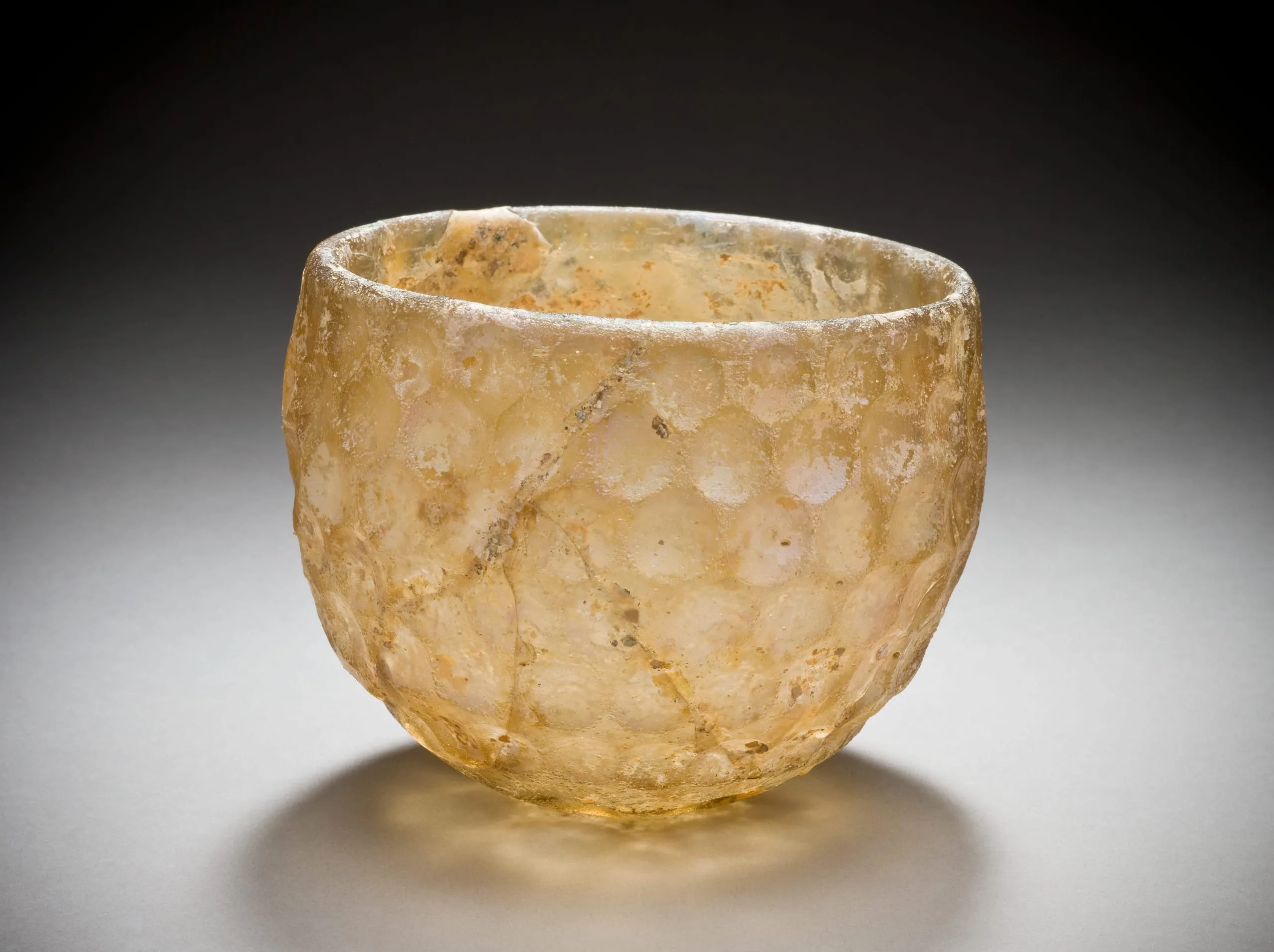
Facet-cut wares are among the most celebrated types of glassware produced in the Sasanian Empire (224–651). Exceptionally popular among elites during late antiquity, they were widely traded, with examples reaching as far as Japan. In their original, unweathered condition, the facets refracted and reflected light in different ways as the vessel turned in the hands of the drinker, producing a dazzling optical effect. This effect would have been further enhanced by the liquid content of the vessel, which often was wine.
This thick-walled, opaque brown hemispherical cup, which would fit perfectly in the palm, is decorated with hexagonal facets. The object was made by blowing while the facets were cold-cut.