LACMA

ShopMembershipMyLACMATickets
LACMA
Los Angeles County Museum of Art
5905 Wilshire Blvd.
Los Angeles, CA 90036
info@lacma.org
(323) 857-6000
Sign up to receive emails
Subscribe
© Museum Associates 2026
  • About LACMA
  • Jobs
  • Building LACMA
  • Host An Event
  • Unframed
  • Press
  • FAQs
  • Log in to MyLACMA
  • Privacy Policy
© Museum Associates 2026
Collections

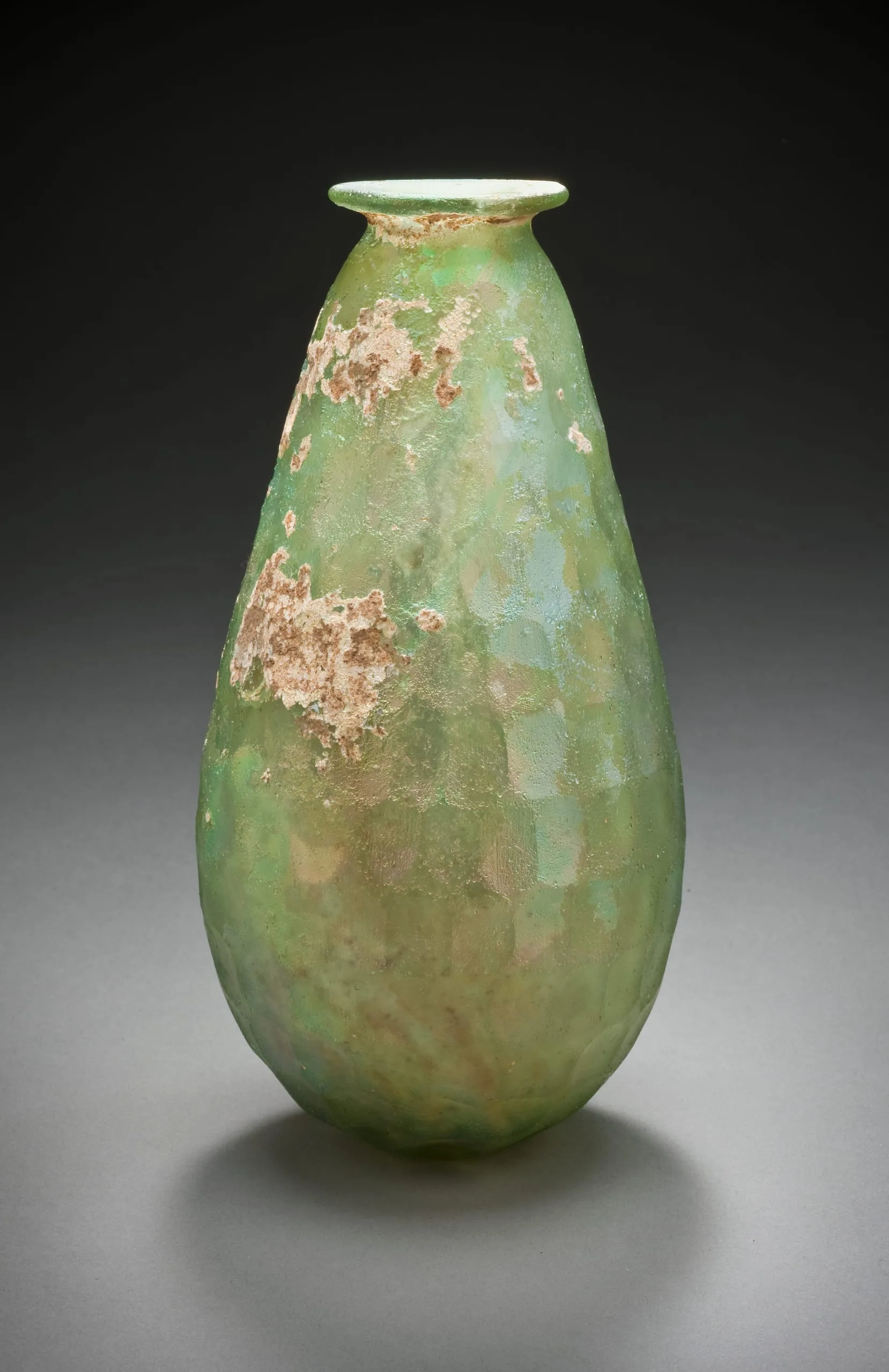
Pear-shaped Bottle224-651

On view:
Geffen Galleries
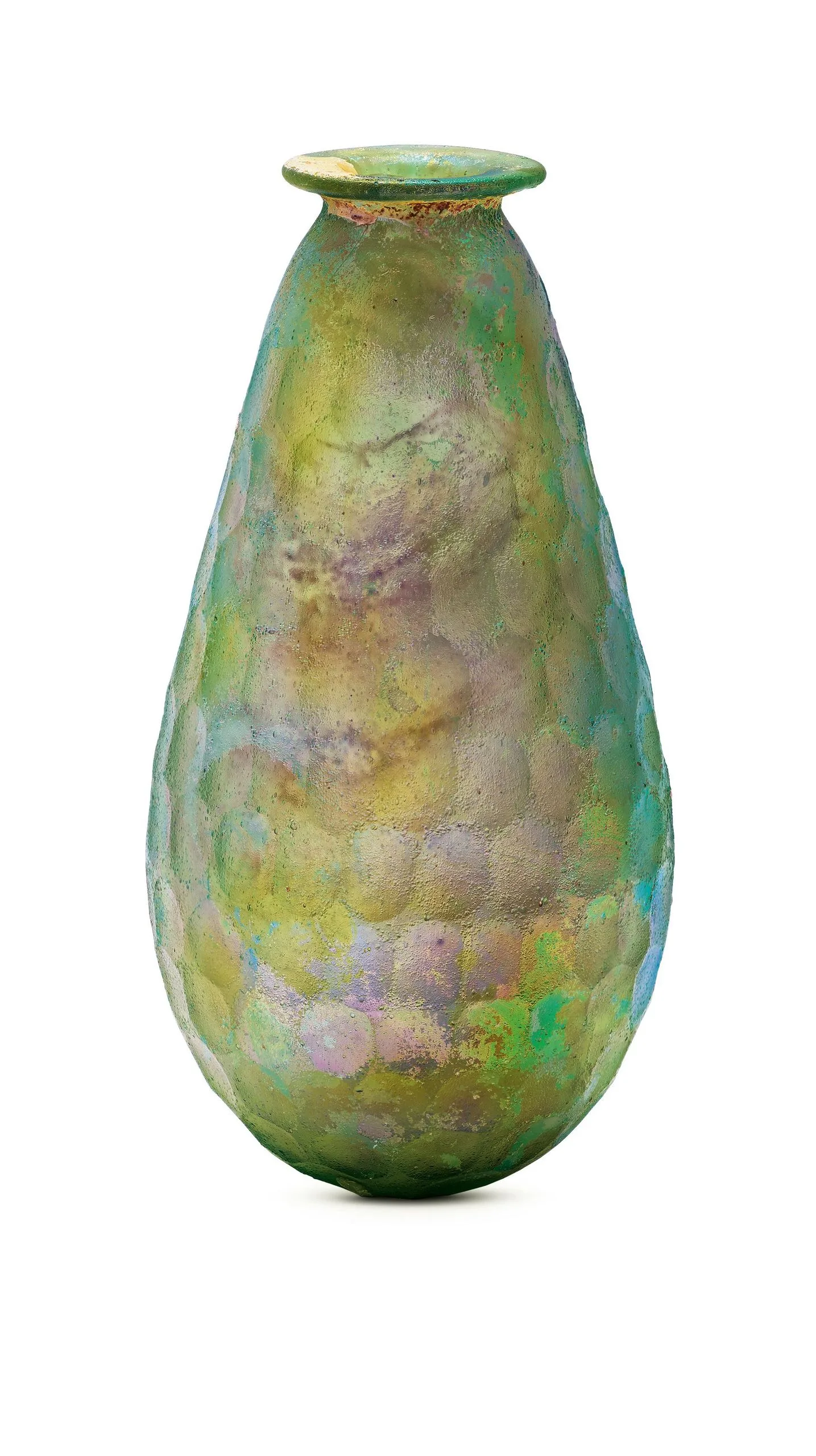
Glass or ceramic vase with tall teardrop form, heavily dimpled surface, and iridescent glaze shifting between yellow-green, teal, lavender, and copper tones
Blown glass vessel with a teardrop-shaped body and narrow rim, green iridescent surface with patches of tan and rust-colored weathering throughout.

Unknown, Pear-shaped Bottle, 224-651, Los Angeles County Museum of Art, Gift of Nasli M. Heeramaneck, photo © Museum Associates/LACMA

Title
Pear-shaped Bottle
Place Made
Iran
Date Made
224-651
Period
Sasanian
Medium
Glass, blown and facet-cut
Dimensions
7 × 4 in. (17.78 × 10.16 cm)
Credit Line
Gift of Nasli M. Heeramaneck
Accession Number
M.76.174.236
Classification
Glass
Collecting Area
Art of the Middle East: Ancient
Curatorial Notes

During the Sasanian period (224–651), glass was used as tableware, especially for drinking vessels and bottles, alongside silver-gilt objects (see AC1992.152.82). Honeycomb-patterned faceted glass, like this pear-shaped bottle, is among the most common types to have survived. Some examples, as here, echo the shapes of contemporaneous silver-gilt vessels. The green glass would have been blown in an open mold; after cooling, the hexagonal facets covering the surface of the thick-walled bottle would have been cut and polished. The technique survived into the Islamic period in Iran (see M.88.129.160).

Glass bottles such as this must have been considered luxury ware for the elite. Pouring wine from it would have been a multisensory experience, involving taste, aroma, sight, and touch; the last would have involved not only the intriguing texture of the faceted surface but also the hefty feel of the bottle, which is weighted toward the bottom.

2024
Selected Bibliography
  • Ancient Bronzes, Ceramics, and Seals: The Nasli M. Heeramaneck Collection of Ancient Near Eastern, Central Asiatic, and European Art. Los Angeles: Los Angeles County Museum of Art, 1981.
  • Komaroff, Linda, editor. Dining with the Sultan: The Fine Art of Feasting. Los Angeles: Los Angeles County Museum of Art; New York: DelMonico Books, 2023.