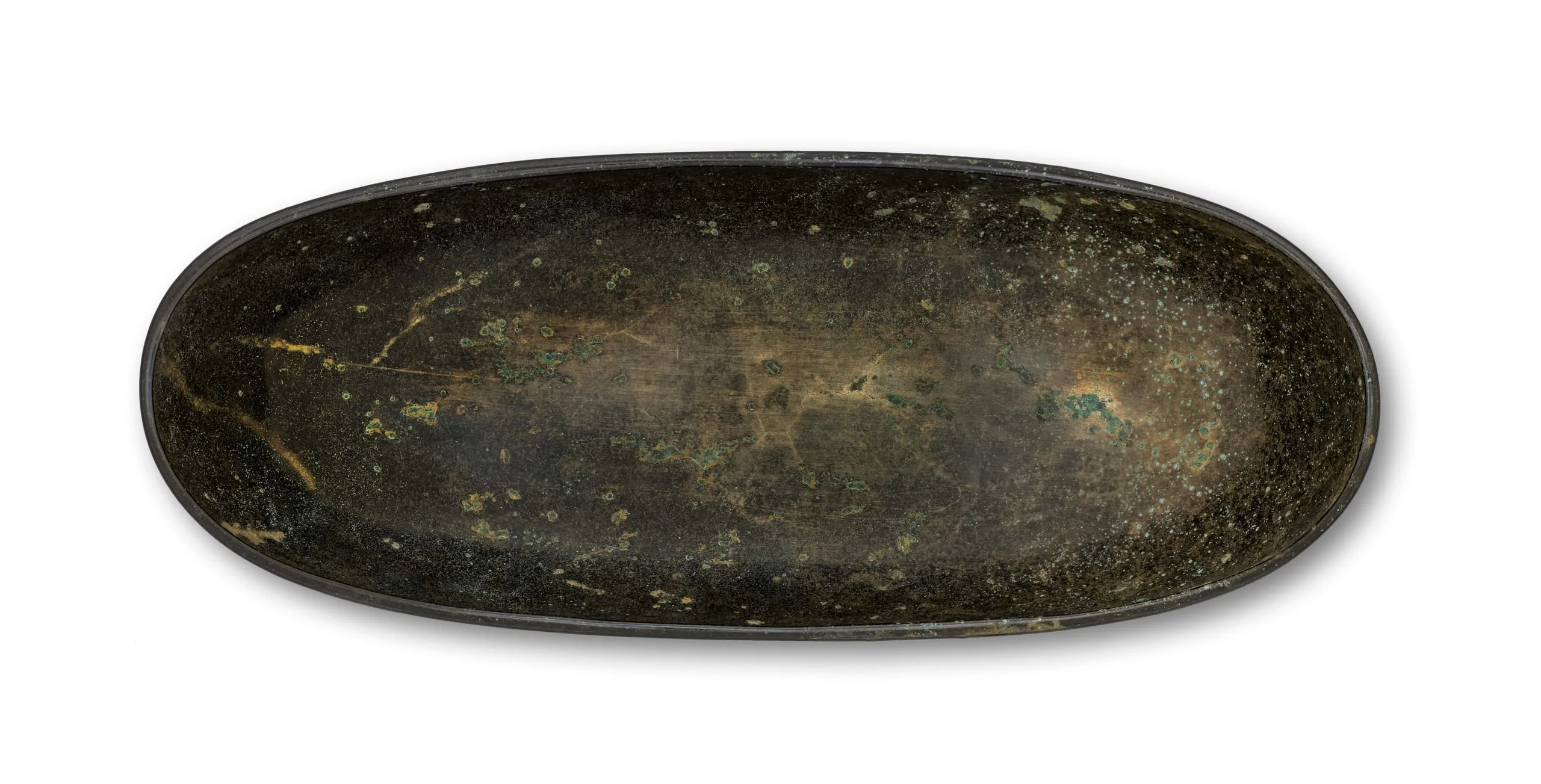
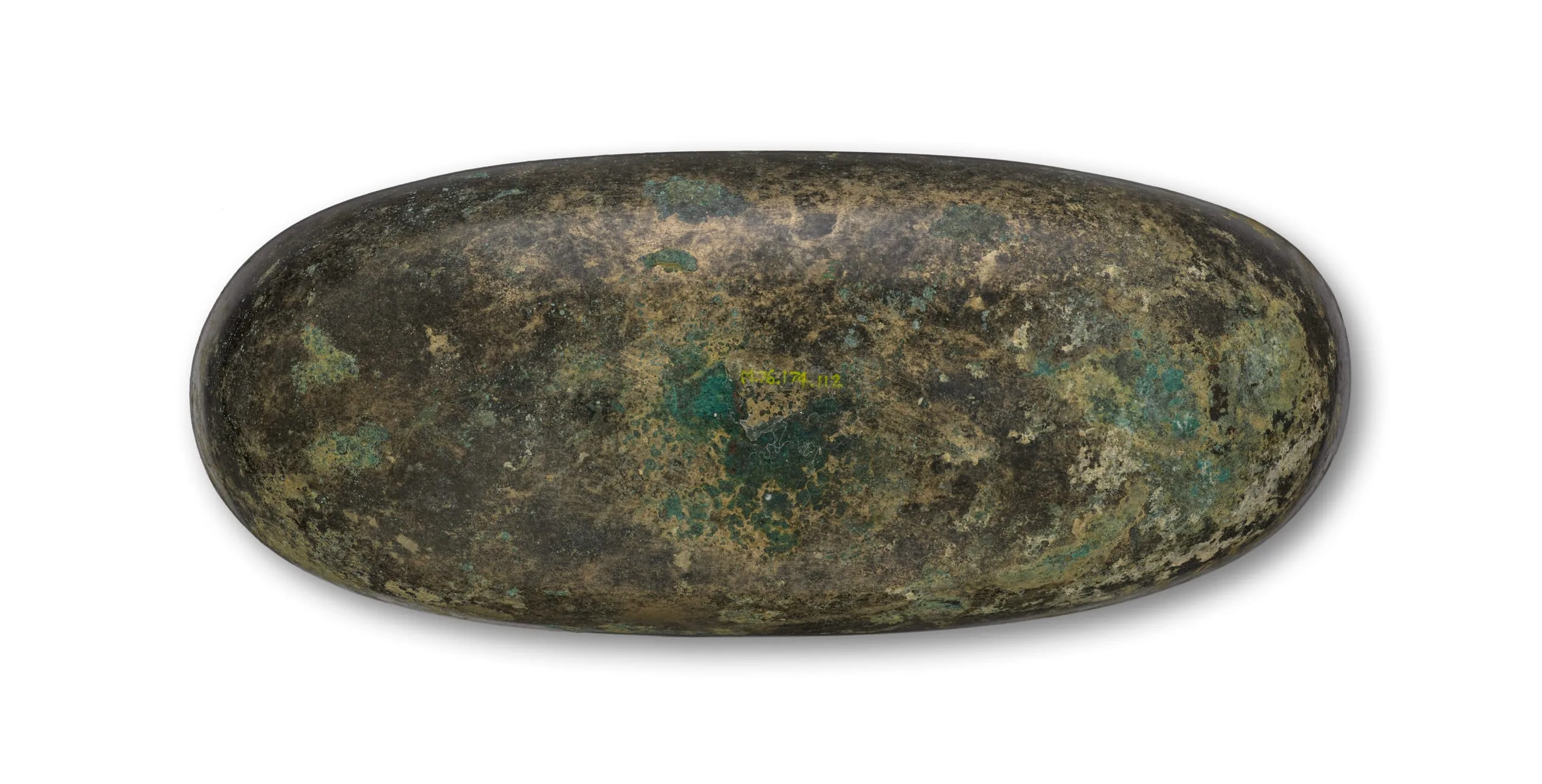
In Sasanian Iran (224–651), silver was the primary material used for luxury vessels intended for elite banqueting (see AC1992.152.82, and M.76.174.8). Toward the end of this period, however, metalworkers began experimenting with nonprecious materials to replicate the desired color and radiance of silver. An alloy of bronze with high tin content offered such an alternative. Developed during the final decades of Sasanian rule and continuing into the early centuries of Islam, high-tin bronze pieces provided a more affordable option for a broader range of patrons (see M.76.97.378 and M.2002.1.568).
Although undecorated, this wine boat (or boat-shaped drinking cup) was meticulously shaped into a symmetrical crescent-like form. During a banquet, the cup was held in the palm of the drinker’s hand while they occasionally drank from its narrow end, which was modified to facilitate the smooth flow of wine.