LACMA

ShopMembershipMyLACMATickets
LACMA
Los Angeles County Museum of Art
5905 Wilshire Blvd.
Los Angeles, CA 90036
info@lacma.org
(323) 857-6000
Sign up to receive emails
Subscribe
© Museum Associates 2026
  • About LACMA
  • Jobs
  • Building LACMA
  • Host An Event
  • Unframed
  • Press
  • FAQs
  • Log in to MyLACMA
  • Privacy Policy
© Museum Associates 2026
Collections

Unknown
Aquamanile (Ewer)circa 1250

On view:
Geffen Galleries, floor 2
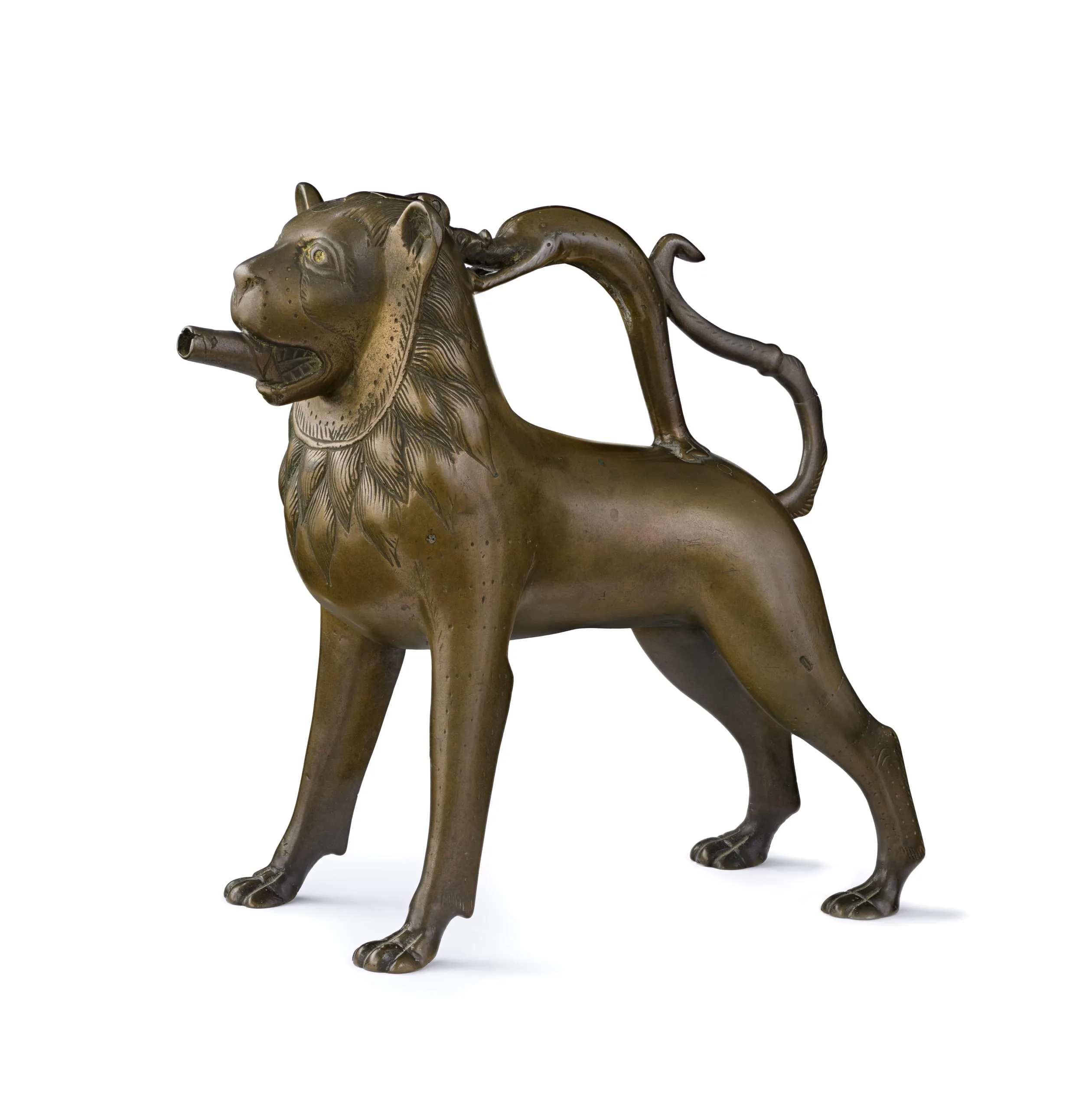
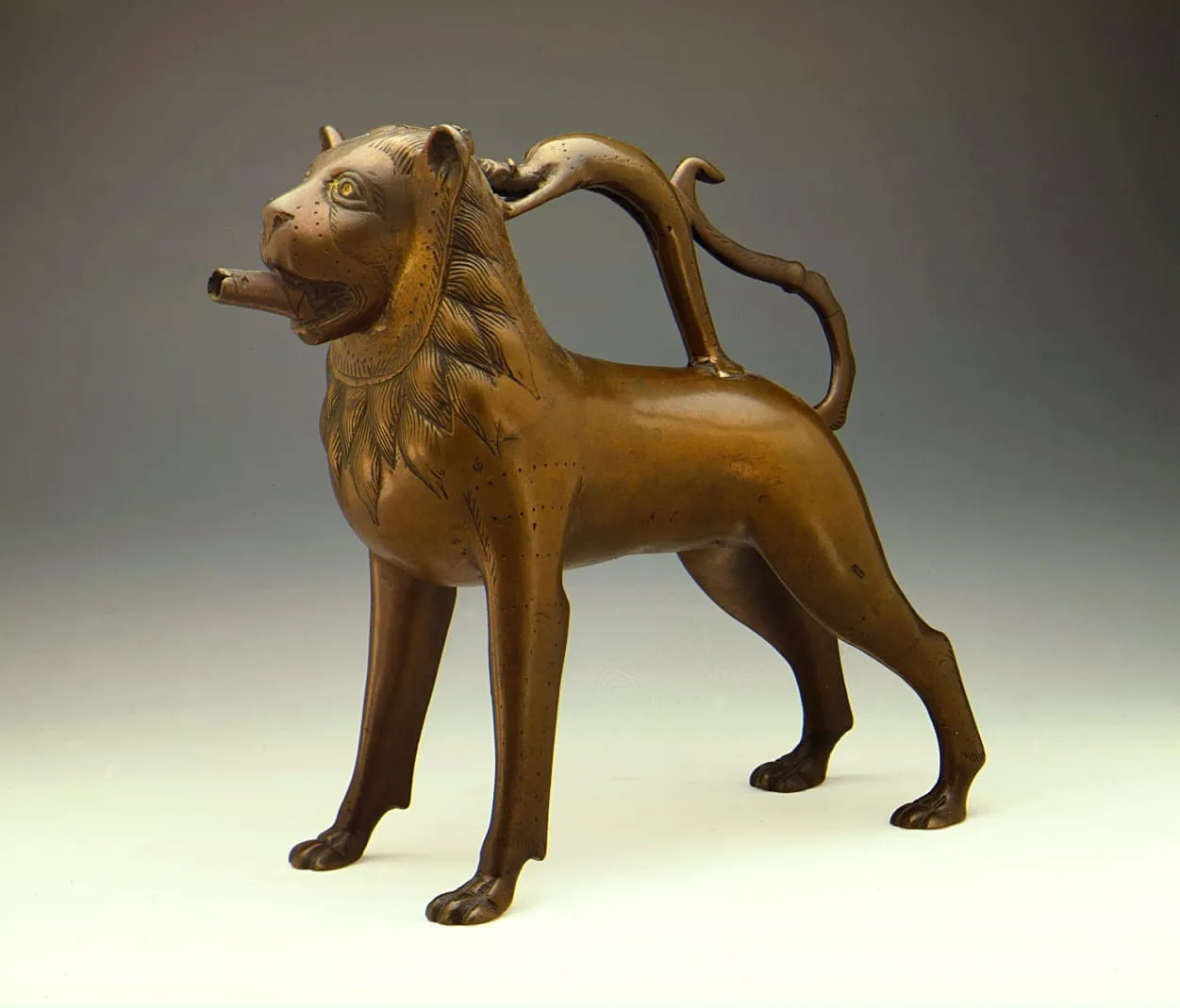
Bronze lion-form vessel with olive-brown patina, mouth open with a cylindrical spout, an arched handle along the back, detailed incised mane
Bronze aquamanile in the form of a standing lion, shown in profile with open mouth forming a spout and a curved dragon-shaped handle arching over the back; mane rendered with incised feather-like lines and dotted surface details throughout the body.

Unknown, Aquamanile (Ewer), circa 1250, Los Angeles County Museum of Art, Gift of Varya and Hans Cohn, photo © Museum Associates/LACMA

Artist or Maker
Unknown
Title
Aquamanile (Ewer)
Place Made
Northern Germany, Lower Saxony, Hildeshiem (?)
Date Made
circa 1250
Medium
Brass (copper alloy)
Dimensions
10 1/2 × 12 × 3 7/8 in. (26.67 × 30.48 × 9.84 cm)
Credit Line
Gift of Varya and Hans Cohn
Accession Number
AC1992.152.100
Classification
Furnishings
Collecting Area
Decorative Arts and Design
Curatorial Notes

An aquamanile (ewer) was used for washing hands, as indicated by its name, derived from the Latin words aqua (water) and manus (hand). Filled through a hole at the top and emptied through the spout that extends from the lion’s mouth, this ewer’s handle is formed by the lion’s curling tail and the arched body of a serpent standing on the lion’s back. As hollow vessels, aquamanilia required considerable skill to create after modeling in wax and casting in the “lost wax” method by metalworkers who specialized in copper and its alloys. Medieval texts and illuminated manuscripts indicate the use of aquamanilia both at home and in church services, where the ritual of washing hands by priests was symbolic of spiritual cleansing. Handwashing was no less important at medieval banquets, as guests ate most food with their fingers.

Aquamanilia made in the northern Germanic region, such as this example, survive in a variety of designs, ranging from wild animals and mythical beasts to human figures on horseback. Lion-shaped ewers, the largest surviving group, vary in the details of their stance, expression, and elaboration of their manes, as different workshops developed distinct styles. Here, the engraved whiskers, upright ears, and embellished collar relate to a group made in Lower Saxony. The lion’s stance with rear legs extended conveys the animal’s energy and may have been inspired by the monumental bronze lion created in the twelfth century and dedicated to the duke of Saxony that formerly dominated the center of Brunswick, Germany.
Selected Bibliography
  • Thomas, Nancy, and Constantina Oldknow, eds. By Judgment of the Eye: The Varya and Hans Cohn Collection. Los Angeles: Hans Cohn, 1991.
  • Morrison, Elizabeth, editor. Book of Beasts: The Bestiary in the Medieval World. Los Angeles: J. Paul Getty Museum, 2019.