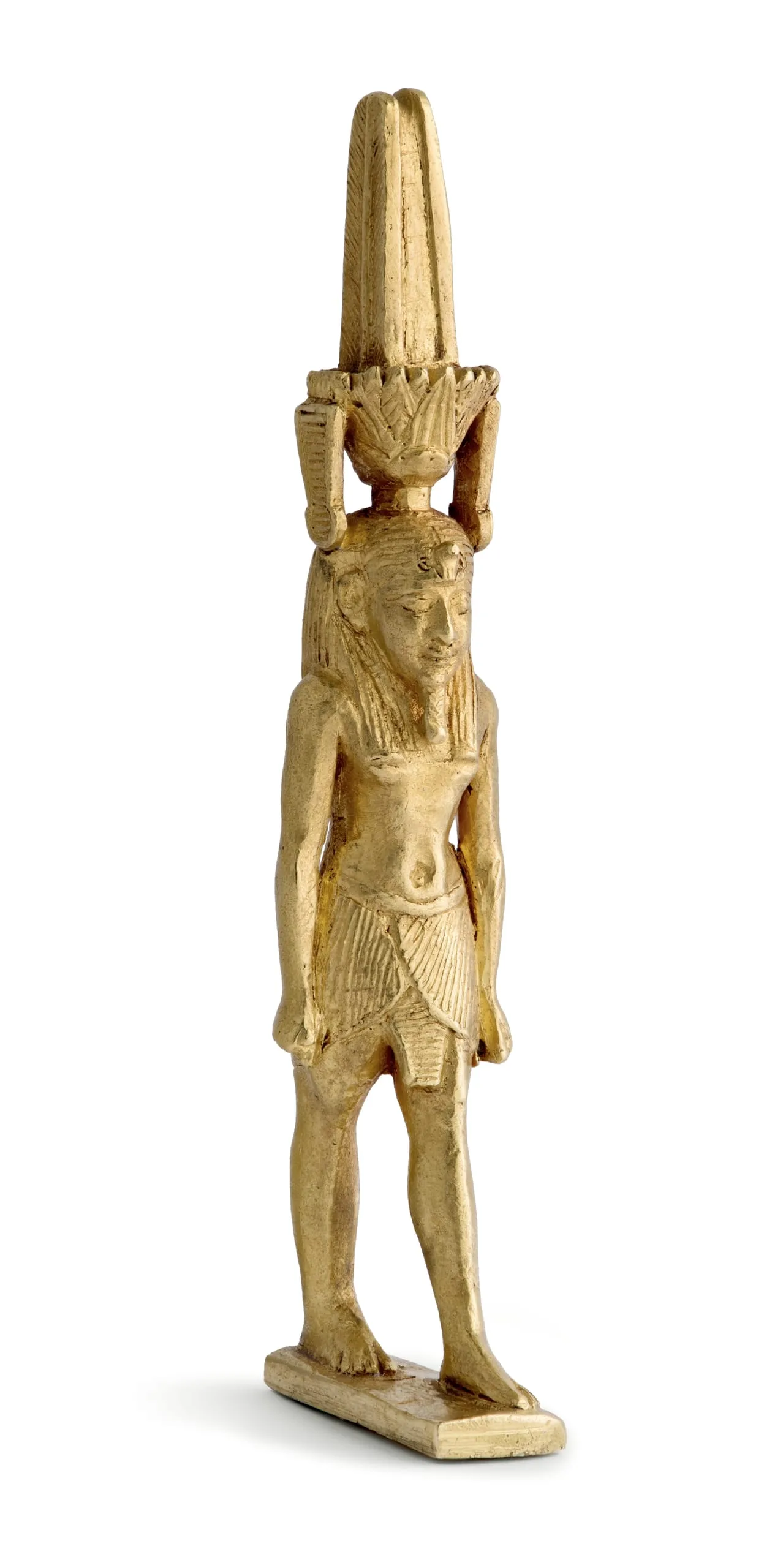
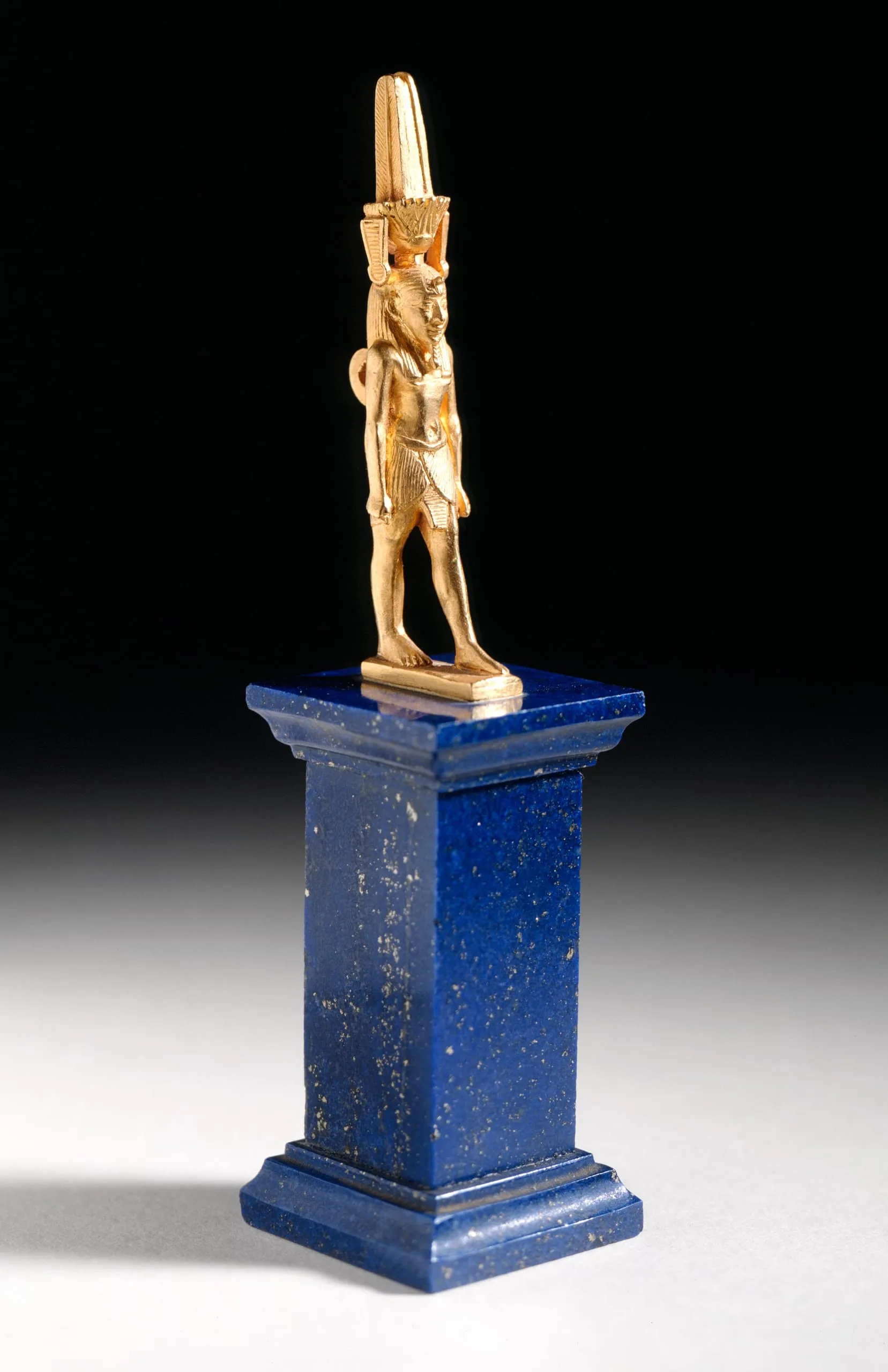
This miniature sculpture of the god Nefertem was crafted in gold with substantial attention to detail. Obtained from ancient local mines and also imported from Nubia, gold was one of the earliest metals used by the ancient Egyptians, second only to copper, and sophisticated goldworking traditions are known from the 1st Dynasty onward. In keeping with most depictions of Nefertem, here he is shown in human form, wearing a complex crown incorporating his primary emblem, the distinctive form of the blue lotus flower. The lotus is topped with two tall plumes and supported by menat emblems, the traditional counterpoise of necklaces, associated with the goddess Hathor. The figure wears a tripartite wig, striated beard, and short tabbed kilt. He stands rigidly, fists clenched at his sides, left leg striding forward. A suspension loop attached to the back allowed the figure to be worn as a pendant.
In Egyptian cosmology, Nefertem, the primordial god of creation, emerged from the waters of chaos at the beginning of time when the petals of the blue lotus first opened to the rising sun. In this role, he was associated with the earth’s creation and, by extension, the cycle of birth, death, and regeneration. During the New Kingdom (c. 1538−1077 BCE), Nefertem assumed an additional function, as the junior member of the Memphite triad. This group of three gods was centered on Memphis, the original religious capital of Egypt, and consisted of Ptah, the Memphite creator god; his wife, the leonine goddess Sekhmet; and Nefertem.
Provenance: With Michael E. Abemayor, New York; purchased by Hans Cohn, 1967; Gift to LACMA, 1992.
Publication
Thomas, Nancy, and Constantina Oldknow, eds. By Judgment of the Eye: The Varya and Hans Cohn Collection. Los Angeles: Hans Cohn, 1991, 12223.