- Title
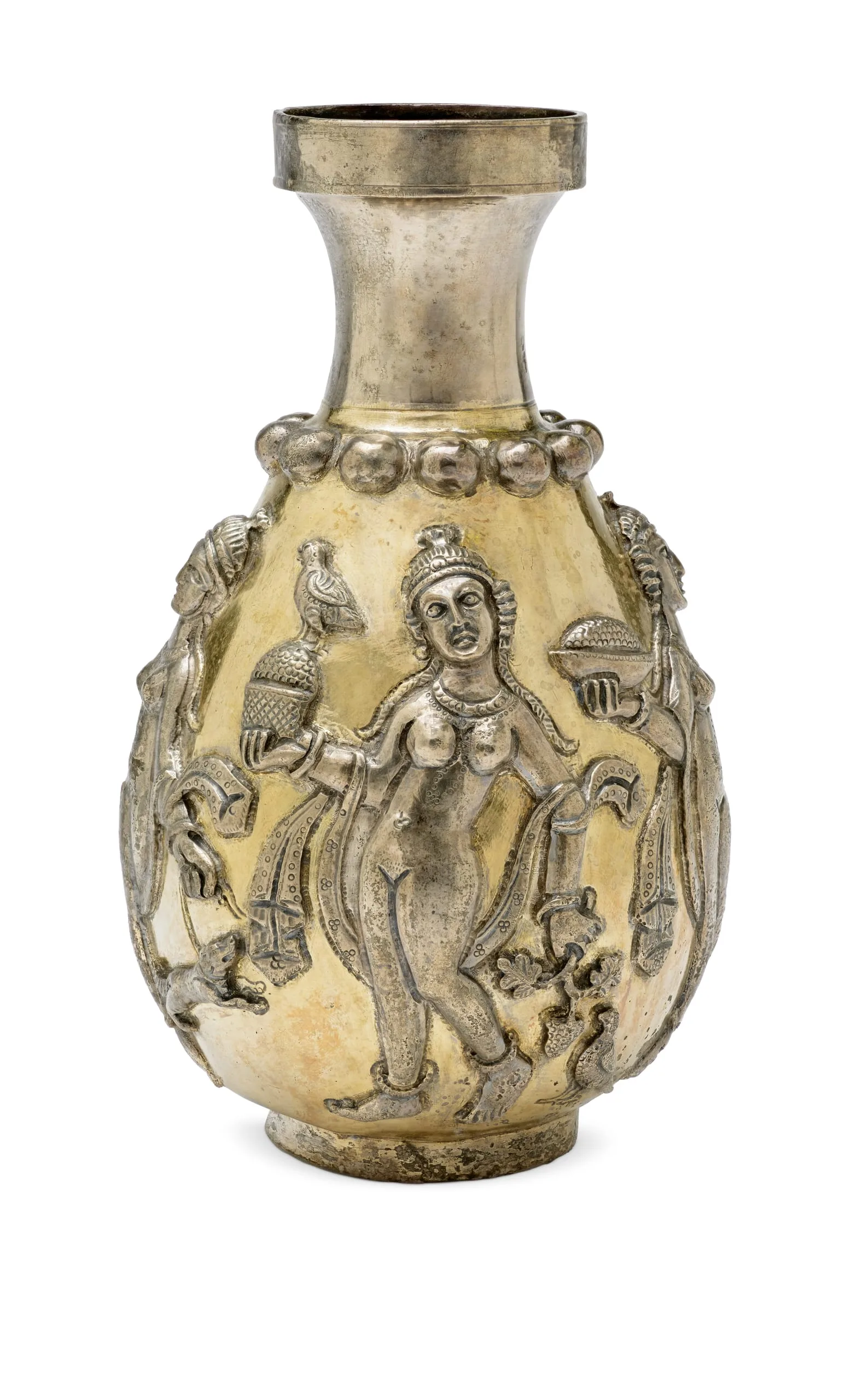
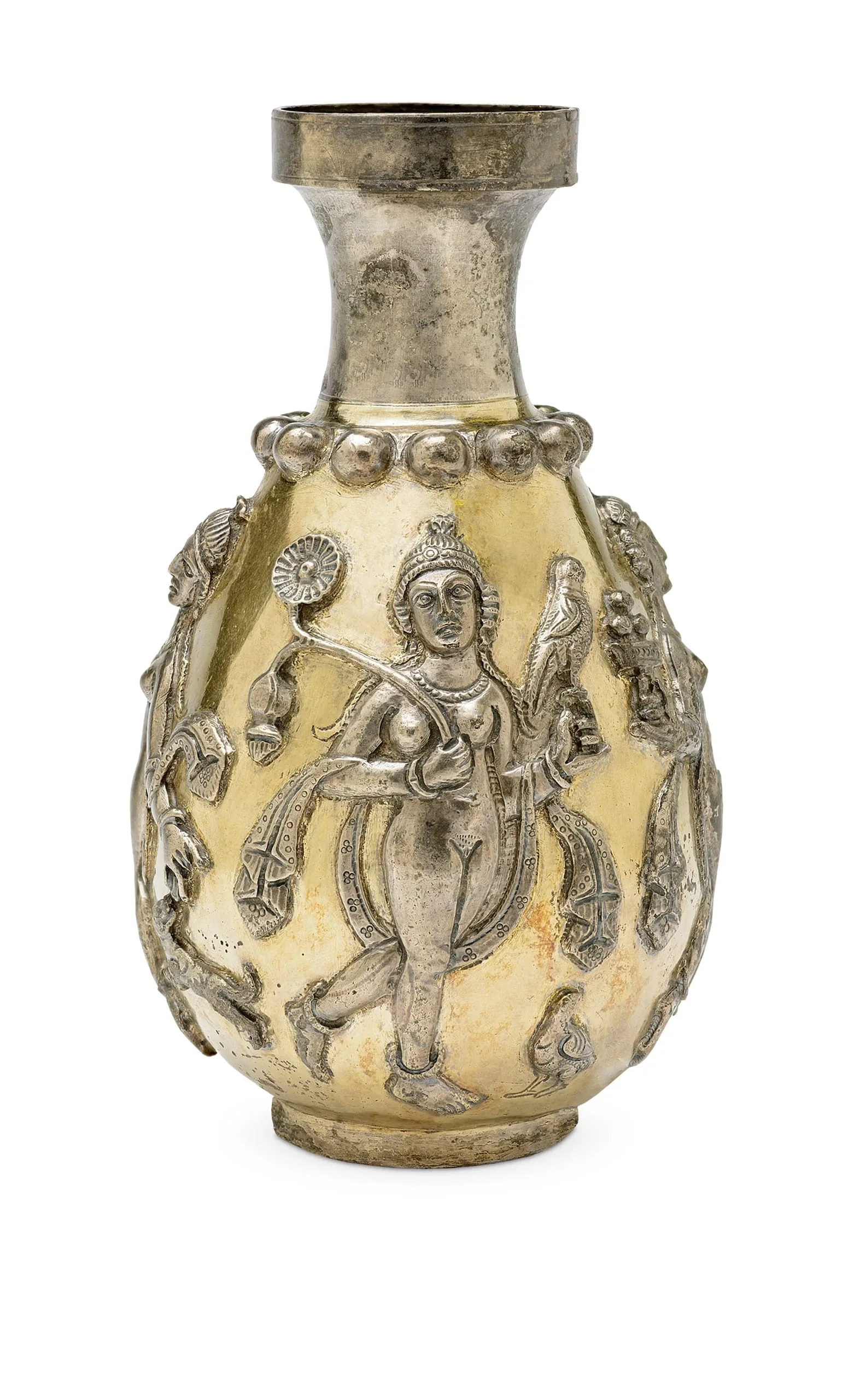
- Vase with Dancing Female Figures
- Date Made
- 224-651
- Medium
- Gilded silver
- Dimensions
- Base (Diameter (base)): 2 1/8 in. (5.3975 cm)
Diameter: 4 1/4 in. (10.8 cm)
Height: 6 in. (15.24 cm)
- Accession Number
- AC1992.152.82
- Curatorial Notes
Iran under the Sasanian dynasty (224–651) was a cosmopolitan society maintaining contacts and exchanges with lands to the east and to the west, Tang China and the late Roman/Byzantine empires, respectively, which impacted material culture in multiple directions. Based on textual accounts and surviving objects such as this sumptuous vessel, gold and especially silver plate seems to have been the tableware of choice for elite feasting in the Sasanian period. Pear-shaped flasks, as here, with applied relief decoration must have been an especially popular form, as evidenced by the number of preserved examples. Here, four female dancers bear ceremonial objects and carry various containers—a bowl, a cup, a basket—holding wine and grapes, suggesting an association with Dionysus/Bacchus, the Greco-Roman god of grape harvest and wine. Probably meant for celebratory feasts, the flask was likely used as a wine receptacle.
2024
- Selected Bibliography
- Thomas, Nancy, and Constantina Oldknow, eds. By Judgment of the Eye: The Varya and Hans Cohn Collection. Los Angeles: Hans Cohn, 1991.
- Los Angeles County Museum of Art. New York: Thames and Hudson, 2003.
- Mousavi, Ali. Ancient Near Eastern art at the Los Angeles County Museum of Art. Los Angeles: Los Angeles County Museum of Art, 2012.
- Komaroff, Linda, editor. Dining with the Sultan: The Fine Art of Feasting. Los Angeles: Los Angeles County Museum of Art; New York: DelMonico Books, 2023.