Excerpted from Herina, Rens, and Harmen C. Veldhuisen. Fabric of Enchantment: Batik from the North Coast of Java. Los Angeles: Los Angeles County Museum of Art; New York: Weatherhill, Inc., 1996, Catalogue no. 3.
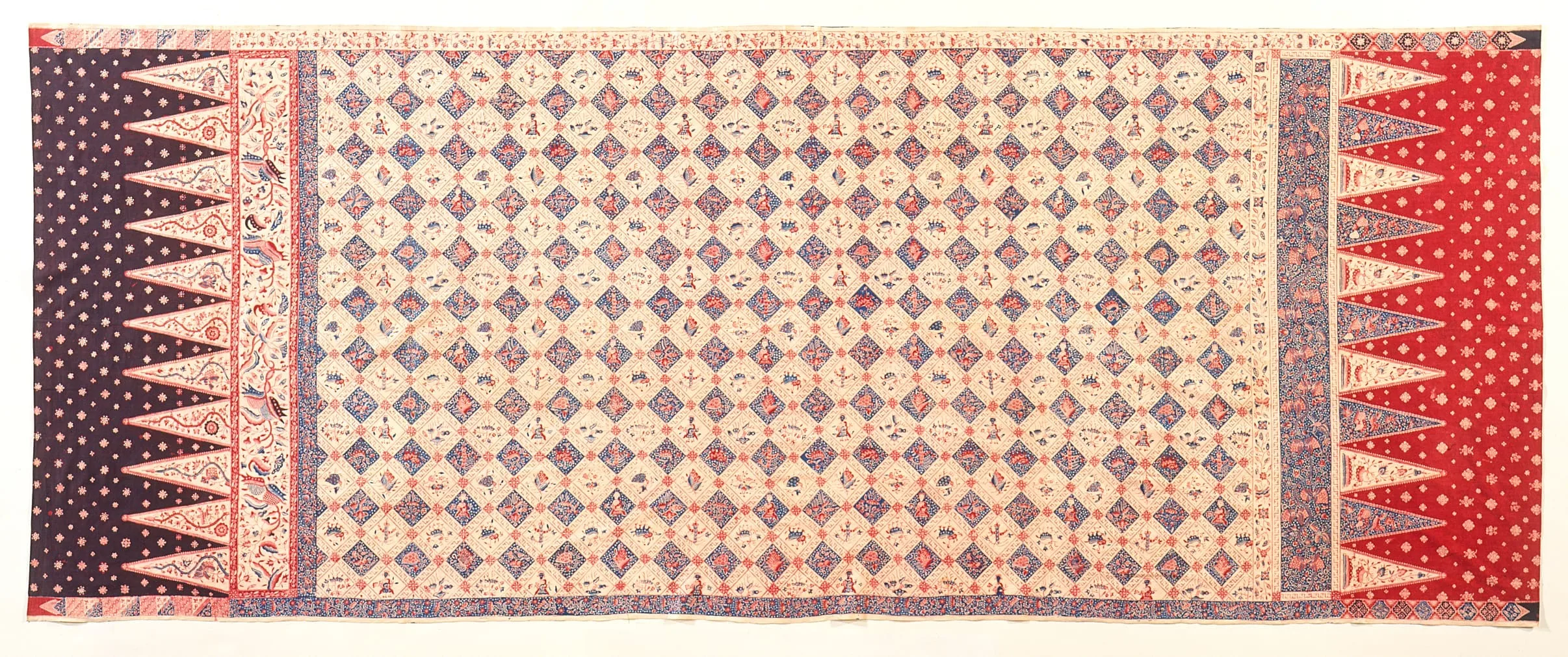
A very late example of the traditional asymmetrical Pasisir format, this cloth shows the motif kotak seribu (one thousand pigeonholes), exclusive to Cirebon. Connected through banji motifs, the blue lozenges alternate with white ones, which are adorned with yet another version of alas-alasan: scorpions, turtles, ¬ cattle, flowers, birds, and butterflies follow each other in neat rows. An unusual feature are the small human figures that alternate in contrasting colors: blue on white and white on blue. One of the papan shows only flowers. The fish that swim among the usual birds, insects, and flowers on the other end are often seen in batik from the fishing port of Cirebon. A portion of the border motifs above the kepala resembles motifs encountered on kain sembagi. They consist of diamonds crossed on the diagonal with a figure eight or large S form. The color is denoted as bang biru tiron Lasem (imitation of Lasem-style red and blue).1 Due to the availability of synthetic dyes the Lasem-style colors could easily appear on this typical Cirebon-produced batik.
Maker
This batik comes from a Peranakan workshop. A similar S-form motif was employed by Carolina von Franquemont2 and is also depicted on Indian sembagi. Lies van Zuylen used the motif around 1900 on kain panjang executed in the traditional Pasisir style.
Wearer
This particular bridal cloth was worn in Cirebon, but it would also have been acceptable to Muslim Sumatrans because of its abstracted style. In Java the contrasting colors of the human figures may have represented bride and groom. The cosmological associations of the sea, land, and sky creatures would have made it a perfect gift for a bride at a time when she was considered the ¬ center of the universe. Wishes for marital happiness were expressed by the ¬ flowers, birds, and butterflies. The turtle, apart from having medicinal and therefore protective properties, is, according to the Chinese, an emblem of spiritually endowed creatures who attained a great age.3 The S figures are reminiscent of the Chinese ying-yang symbol, which expresses the balance between male and female properties, similar to the meaning of the traditional gandawari border.
Notes
1. J. J. B. Ostmeijer, Handleiding bij het schatten: Samengesteld t.b.v. het personeel bij den pandhuisdienst (Batavia: Albrecht, n.d.), 1: 261.
2. H. C. Veldhuisen, Batik Belanda 1840–1940 (Jakarta: Gaya Favorit, 1993), nos. 12, 14–15.
3. C. A. S. Williams, Outlines of Chinese Symbolism and Art Motives, 3d ed. (New York: Dover, 1976), 404.