Excerpted from Herina, Rens, and Harmen C. Veldhuisen. Fabric of Enchantment: Batik from the North Coast of Java. Los Angeles: Los Angeles County Museum of Art; New York: Weatherhill, Inc., 1996, Catalogue no. 11.
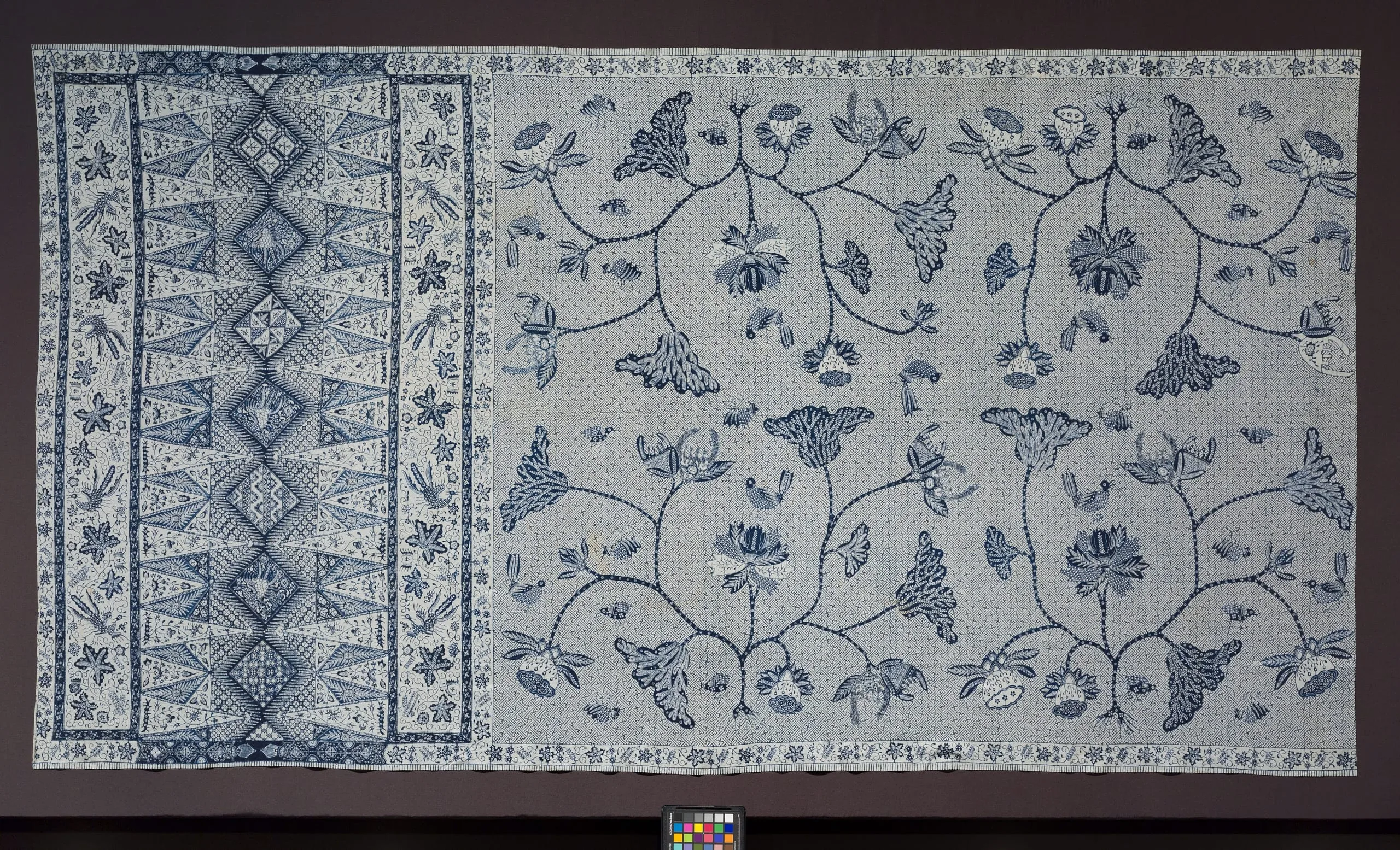
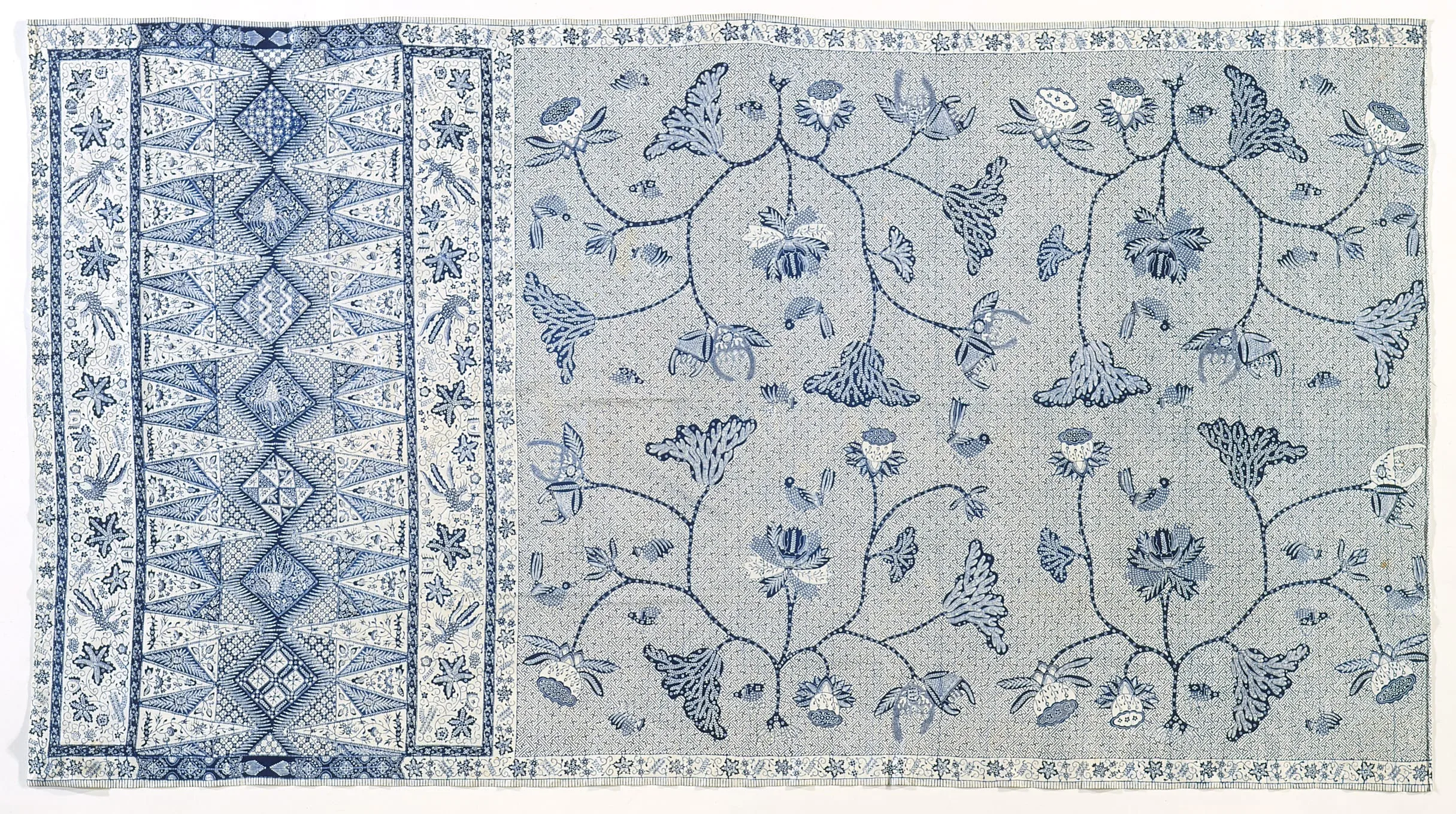
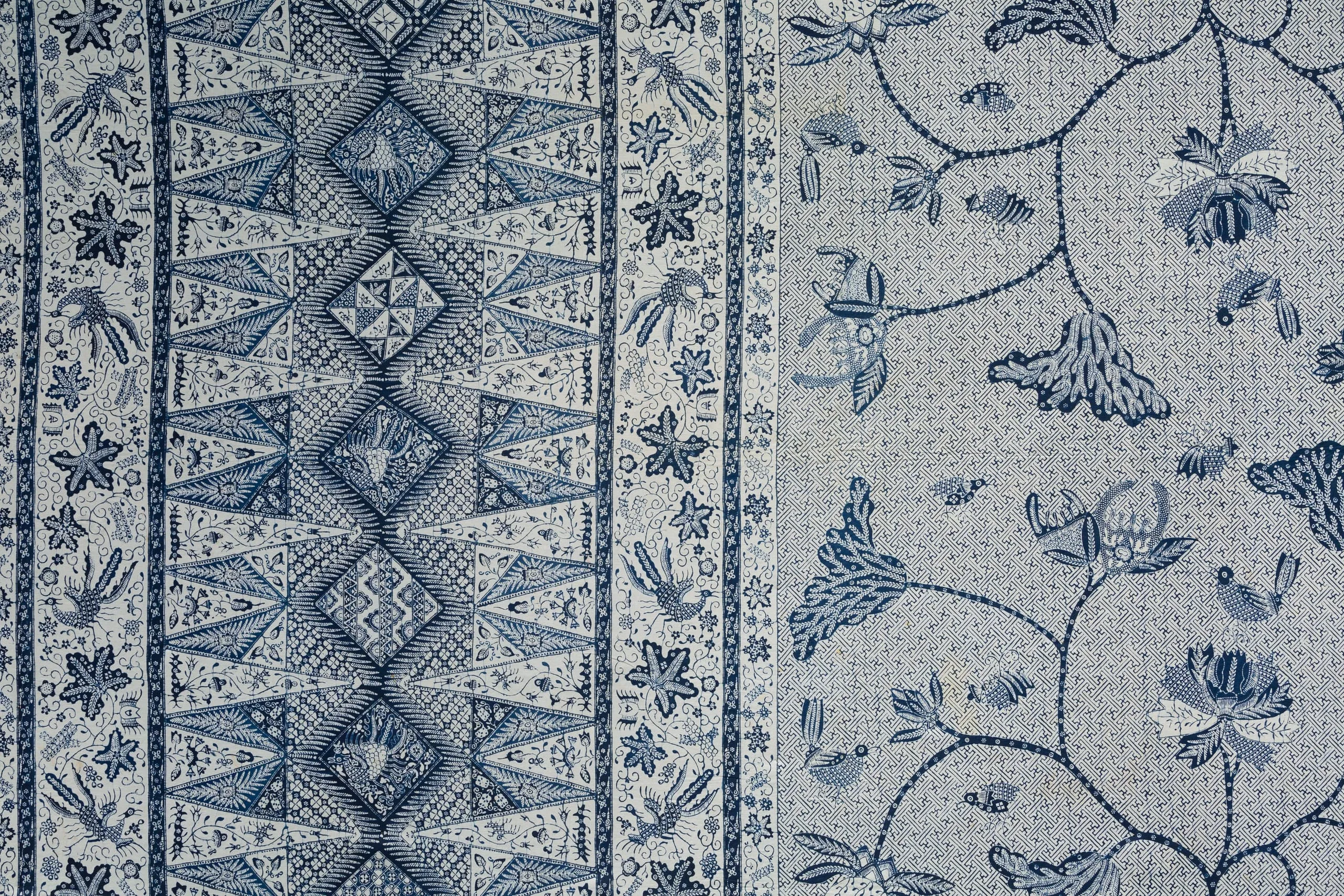
The Chinese pattern on this batik consists of two stylized kembang teratai (flowering lotus trees), mirrored along an imaginary horizontal line. Although the subject is Chinese, the design itself shows the influence of art nouveau. A single standing bird marks the center of the badan. The robust quality of the filler motifs indicates Cirebon influence. The background is decorated with banji in traditional Pasisir style. The triangles in the complex, Peranakan-style kepala gigi balang, are alternately long and short, while the central area is dominated by a row of diamonds on a ground of double diagonals. Each is adorned with an abstract pattern or a bird in classic Pasisir style. The papan and ¬ borders also show classic Pasisir motifs. Flowering vines, long-tailed birds, and rice stalks fill the available space. The style of the motifs in the borders is unusual, while the seret shows a new development, greater space between the vertical lines. Two shades of blue on white make up a perfectly ¬ executed kelengan.
Maker
New designs like this one, executed in a Peranakan workshop, were based on pencil sketches on transparent paper, which were traced onto white cotton and copied with the canting in wax.1 After the batik-maker had done this many times, she could draw the design by heart, as was the case with this cloth. The repeating pattern looks the same all over, but there are variations in it. This shows it was made in a Peranakan workshop where concept took pride of place. Indo-European entrepreneurs wanted their patterns to be rendered identically.
Wearer
Worn by Peranakan women, kelengan batiks such as this one served during the extended mourning period for close family members. In later life a woman rarely wore any other color. The sacred lotus, sprouting each year from the mud, and its pods, full of seeds promising renewed life, express a belief in reincarnation and the continuation of the family tree. The banji background multiplies this wish a thousandfold.2
Notes
1. H. C. Veldhuisen, Batik Belanda 1840–1940 (Jakarta: Gaya Favorit, 1993), 35–36.
2. C. A. S. Williams, Outlines of Chinese Symbolism and Art Motives, 3d ed. (New York: Dover, 1976), 257–58, 381.