LACMA

ShopMembershipMyLACMATickets
LACMA
Los Angeles County Museum of Art
5905 Wilshire Blvd.
Los Angeles, CA 90036
info@lacma.org
(323) 857-6000
Sign up to receive emails
Subscribe
© Museum Associates 2026
  • About LACMA
  • Jobs
  • Building LACMA
  • Host An Event
  • Unframed
  • Press
  • FAQs
  • Log in to MyLACMA
  • Privacy Policy
© Museum Associates 2026
Collections

Jusepe de Ribera
A Philosopher1637

Not on view
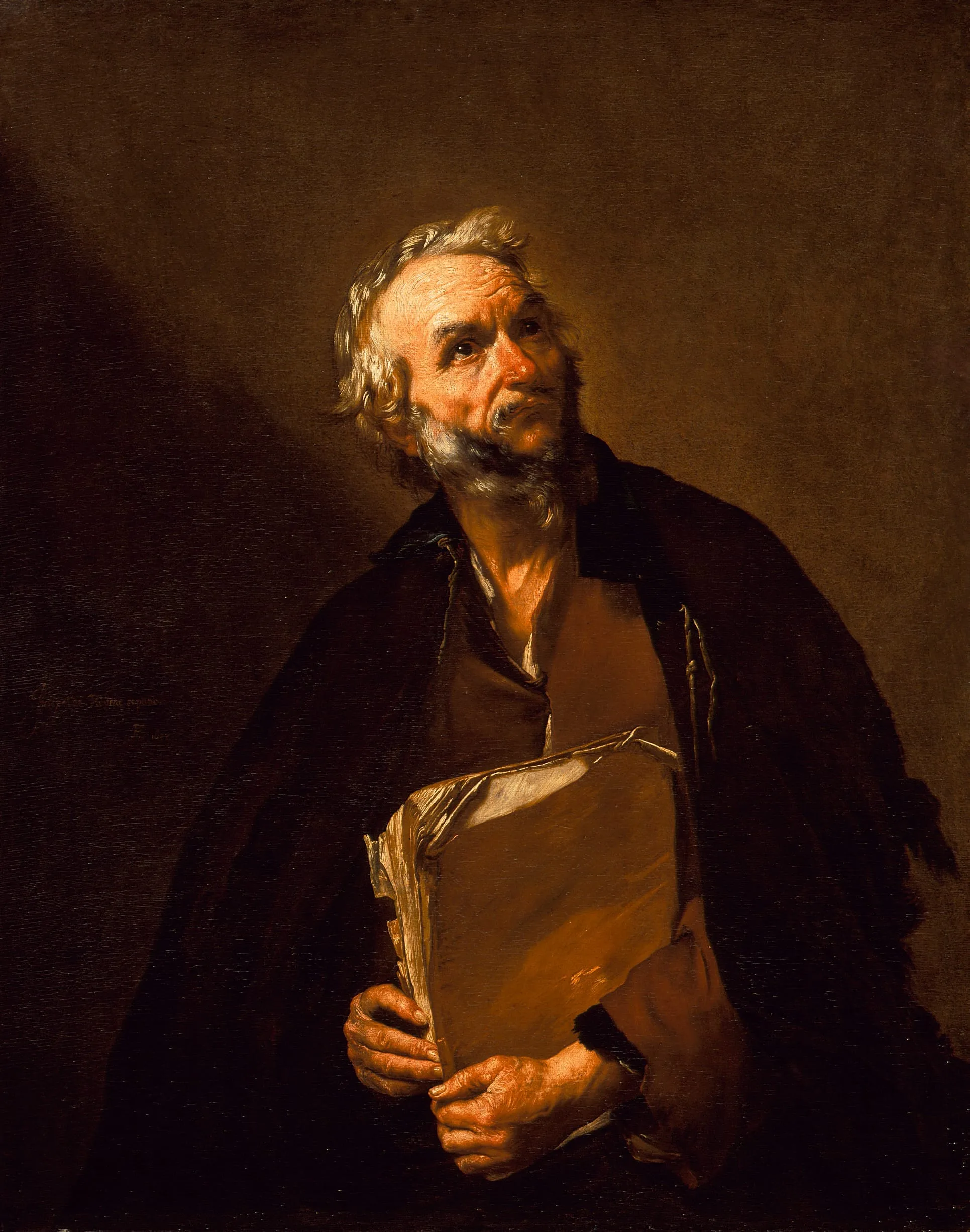
Oil painting portrait of an elderly bearded man in dark robes, looking upward, holding a sheaf of worn papers, dramatically lit from the left

Jusepe de Ribera, A Philosopher, 1637, Los Angeles County Museum of Art, Gift of Mr. and Mrs. R. Stanton Avery, photo © Museum Associates/LACMA

Artist or Maker
Jusepe de Ribera
Spain, Játiva near Valencia, 1591-1652, active Italy, Naples
Title
A Philosopher
Place Made
Spain
Date Made
1637
Medium
Oil on canvas
Dimensions
Canvas: 48 15/16 × 39 in. (124.3 × 99.06 cm) Frame: 61 × 51 × 5 in. (154.94 × 129.54 × 12.7 cm)
Credit Line
Gift of Mr. and Mrs. R. Stanton Avery
Accession Number
M.91.125.2
Classification
Paintings
Collecting Area
European Painting and Sculpture
Curatorial Notes

An aged philosopher gazes upward, his face bathed in light, a worn book in his hands. This painting is one of a series portraying ancient Greek philosophers in moments of quiet contemplation by the Spanish artist Jusepe de Ribera. Commissioned by the prince of Liechtenstein in 1636 with six others, the painting remained in the family’s collection for 300 years.

The rediscovery and publication of classical Roman texts in the sixteenth and seventeenth centuries generated new interest in ancient Greek and Roman philosophers. While uncertain, the subject of this painting may be Plato, based on remarks by Greek biographer Laertius, who described the philosopher as “frowning,” with “eyebrows lifted high like a snail” and eyes and mouth that had never been touched by laughter. In each picture of the series, Ribera rendered the wise men as humble and poor, underscoring their cultivation of metaphysical rather than material pursuits. Together, the canvases would have provided inspiration for discussion among the prince’s guests about the learned men’s works.

The asceticism for which certain ancient philosophers, prophets, and saints were known appealed to Spanish Catholics. Their learnedness also reflected the interests of the Spanish nobility who ruled Naples and were Ribera’s most important clients. Arriving in Rome in his late twenties, Ribera spent the remainder of his career in Naples and continued to be proud of his Spanish heritage: he signed this painting, “Jusepe de Ribera español.”

2025
Selected Bibliography
  • Los Angeles County Museum of Art Members' Calendar 1992, vol. 29-30, no. 12-1 (December, 1991-January, 1993).
  • Los Angeles County Museum of Art Members' Calendar 1991. vol. 28-29, no. 12-1 (December, 1990-January, 1992).
  • Jusepe de Ribera, el Españoleto. Barcelona: Lunwerg Editores, 2003.
  • Turner, Evan H. "Ribera's Philosophers." Wadsworth Atheneum Bulletin (Spring 1958): 5-14.
  • Spinosa, Nicola. Ribera. Naples: Electa Napoli, 2006.

Related Unframed

Related Unframed

Summoning the Ancestors: The Relational Science of Sarah Rosalena’s Decolonizing Aesthetics
  • January 19, 2024
  • Elizabeth Povinelli
From the Collection: Plague in an Ancient City
  • August 3, 2015
  • Scott Tennent
Dial N for New Topographics
  • October 26, 2009