LACMA

ShopMembershipMyLACMATickets
LACMA
Los Angeles County Museum of Art
5905 Wilshire Blvd.
Los Angeles, CA 90036
info@lacma.org
(323) 857-6000
Sign up to receive emails
Subscribe
© Museum Associates 2025

Museum Hours

Monday

11 am–6 pm

Tuesday

11 am–6 pm

Wednesday

Closed

Thursday

11 am–6 pm

Friday

11 am–8 pm

Saturday

10 am–7 pm

Sunday

10 am–7 pm


  • About LACMA
  • Jobs
  • Building LACMA
  • Host An Event
  • Unframed
  • Press
  • FAQs
  • Log in to MyLACMA
  • Privacy Policy
© Museum Associates 2025
Collections

Unknown
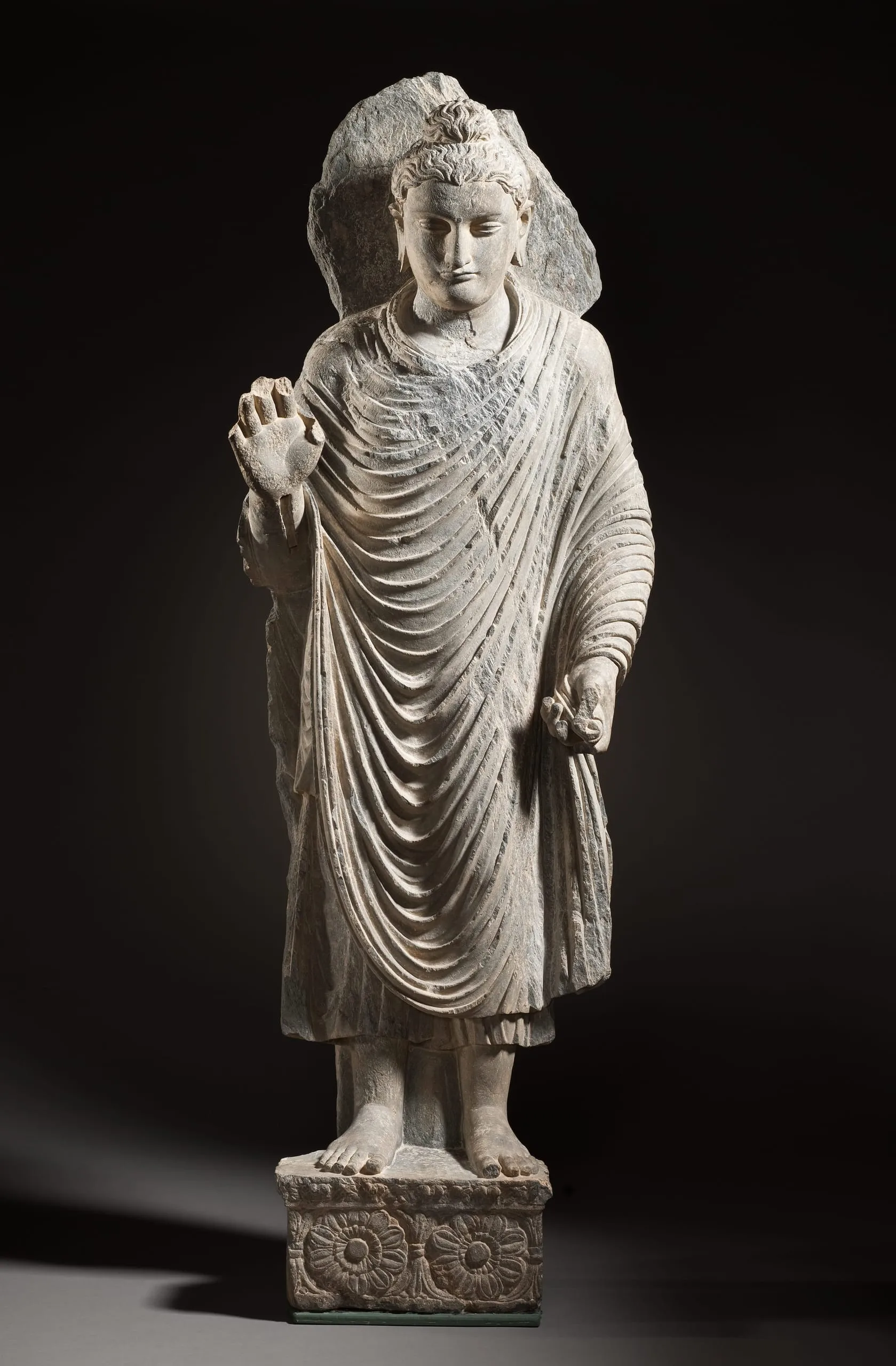
Buddha Shakyamuni2nd century

On view:
Resnick Pavilion, floor 1
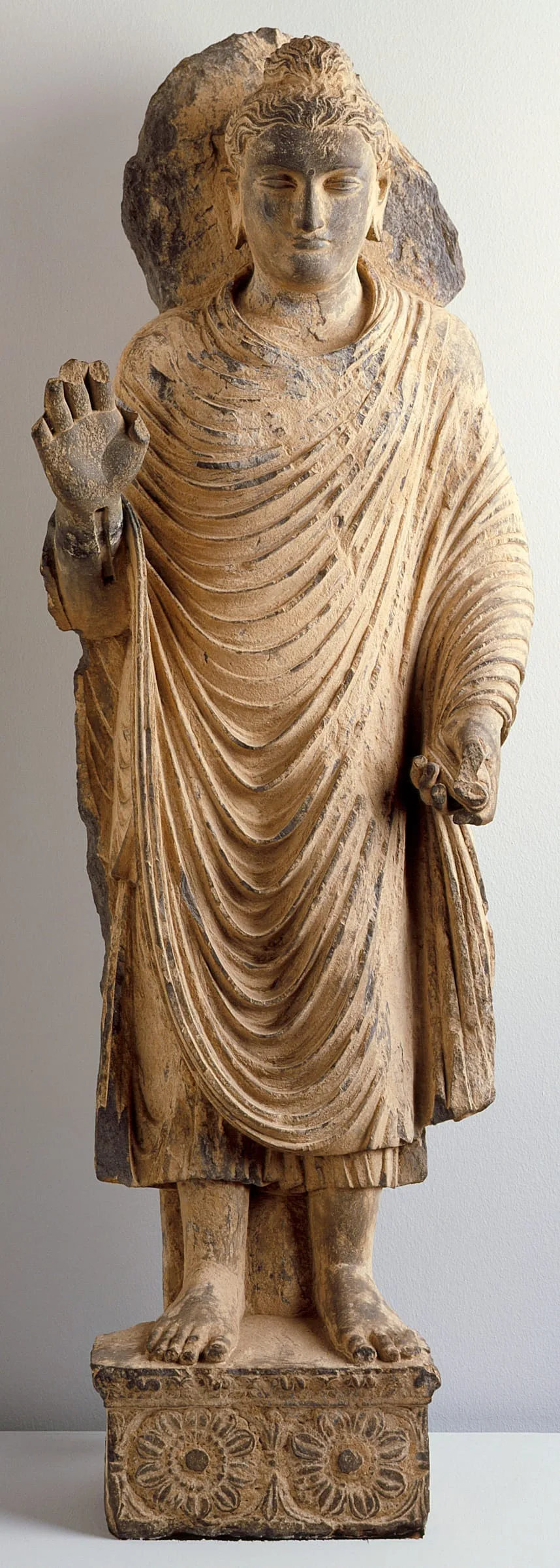
Stone or stucco sculpture of a standing robed figure with one hand raised, palm outward, on a pedestal carved with rosette medallions
Gray schist sculpture of a standing figure in Gandharan style, draped in a robe with deeply carved parallel folds, right hand raised, standing on a rectangular base with carved rosette motifs.
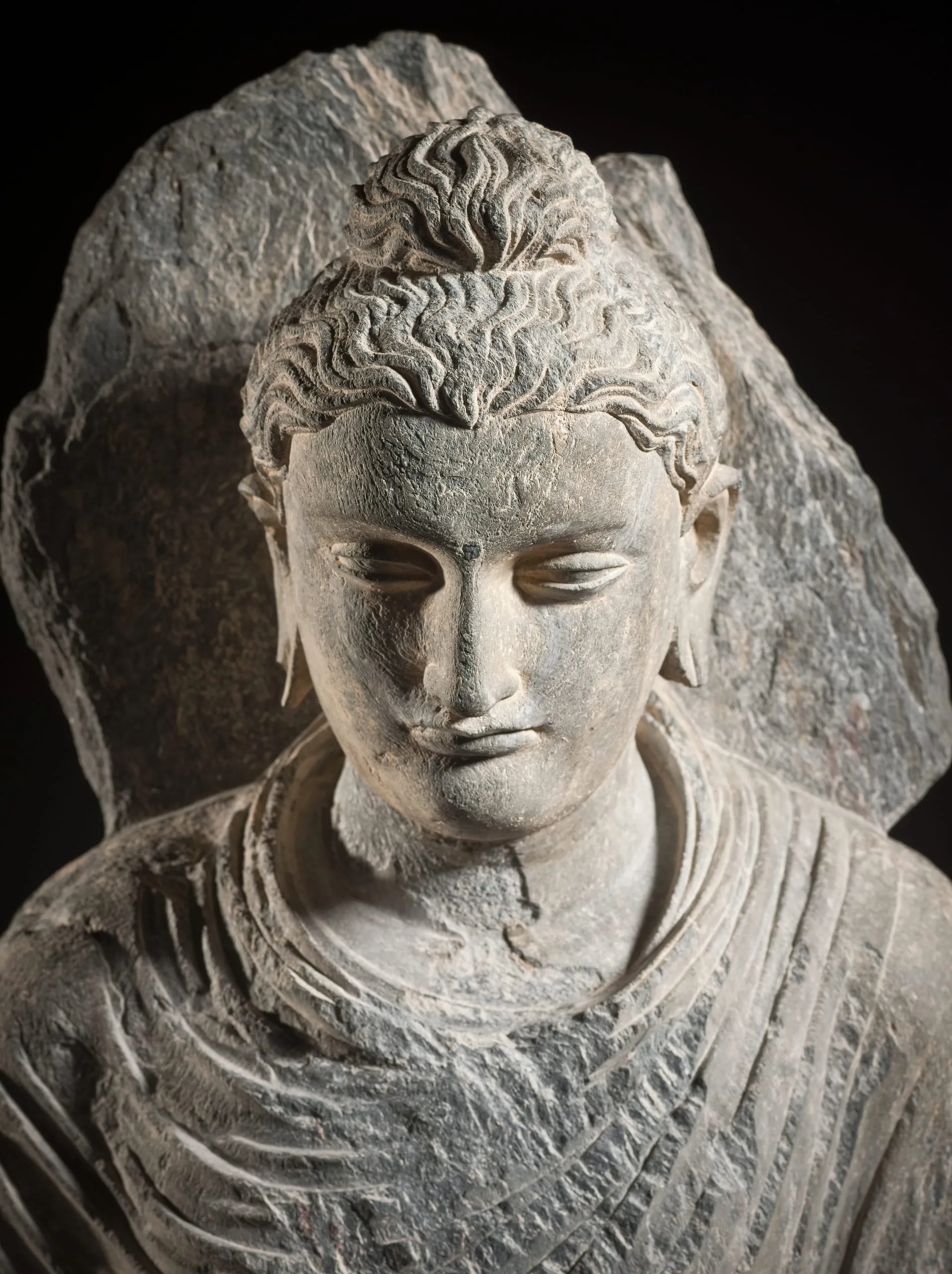
Gray schist bust sculpture of a Buddha figure in Gandharan style, with ushnisha, tightly waved hair, downcast eyes, elongated earlobes, and draped robes rendered in parallel ridged folds, against a dark background.
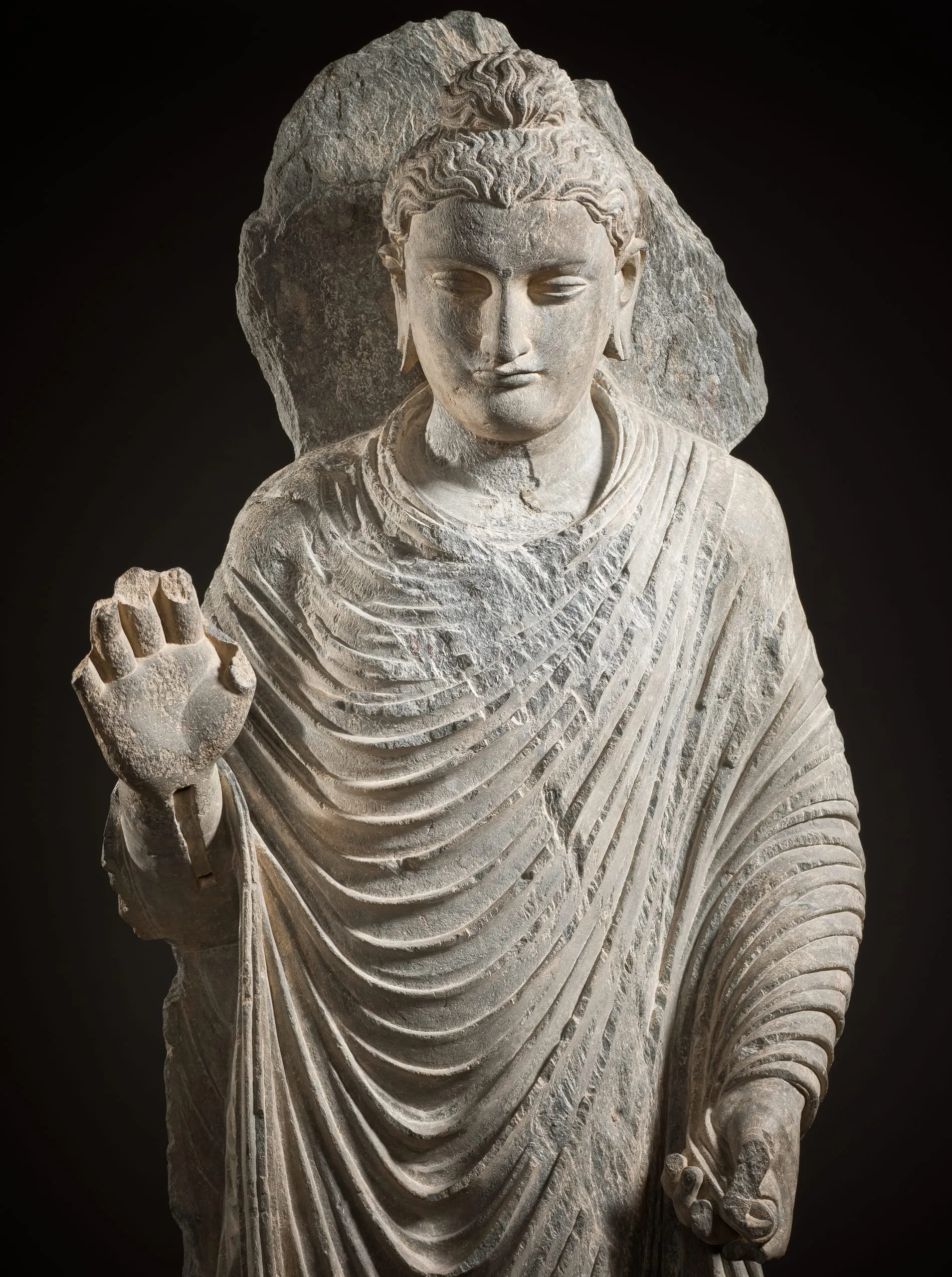
Gray schist sculpture of a standing Buddha figure in Gandharan style, wearing a draped sanghati robe with deeply carved parallel folds, one hand raised in abhaya mudra, with ushnisha and halo visible against a dark background.
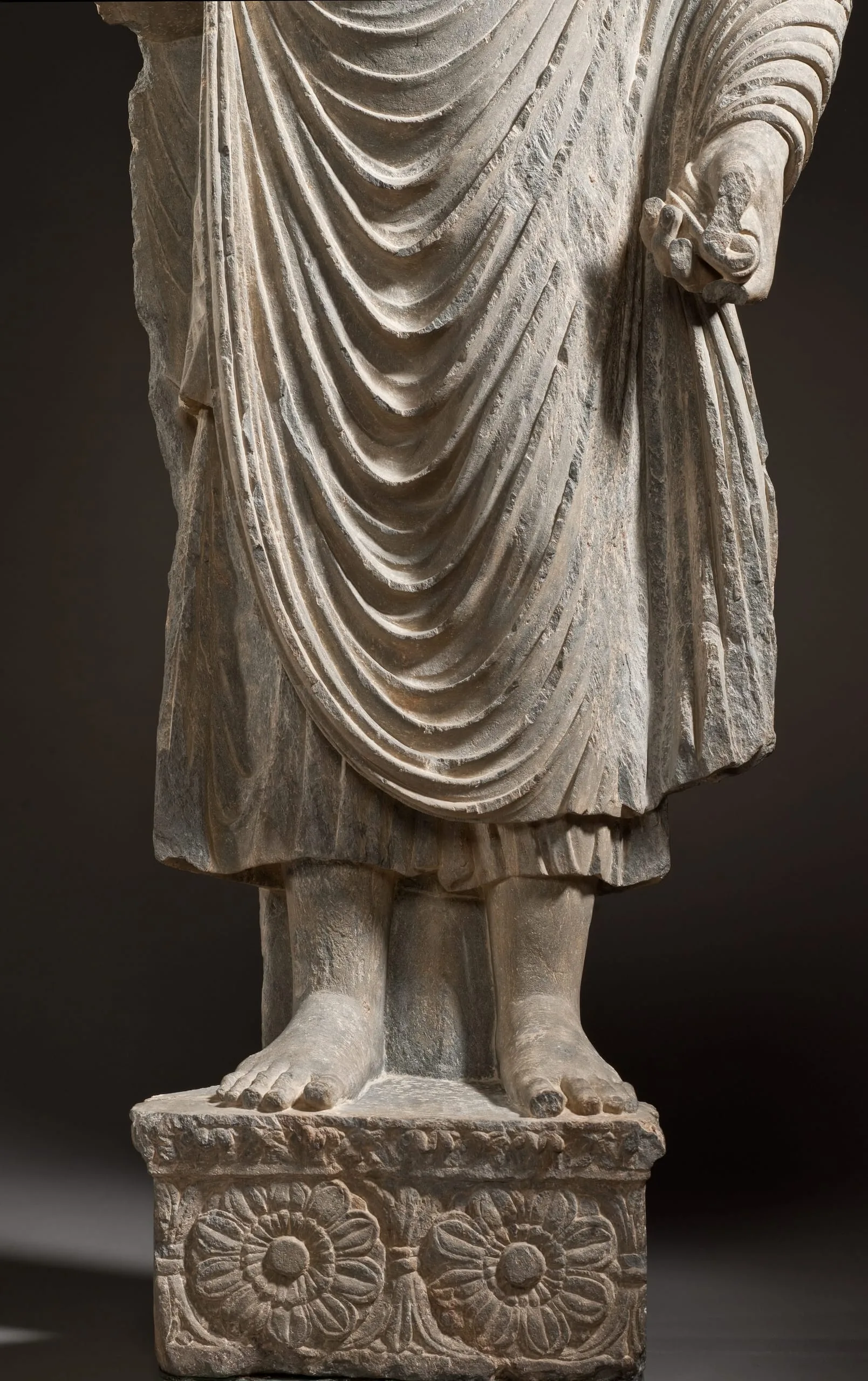
Gray schist sculpture fragment, lower body of a standing figure draped in deeply carved flowing robes, bare feet on a rectangular pedestal with carved rosette relief decoration in Gandharan style.
Artist or Maker
Unknown
Title
Buddha Shakyamuni
Place Made
Pakistan, Gandhara region
Date Made
2nd century
Medium
Gray schist
Dimensions
47 1/2 x 16 x 19 1/2 in. (120.65 x 40.64 x 49.53 cm)
Credit Line
Gift of Mr. and Mrs. Eric Lidow in honor of the museum's twenty-fifth anniversary
Accession Number
M.91.90
Classification
Sculpture
Collecting Area
South and Southeast Asian Art
Curatorial Notes

Gandharan images of the historical Buddha Shakyamuni (traditionally dated to 563–483 BCE) typically portray him in a monastic robe that was likely modeled on Roman togas. The adoption of garb for Gandharan Buddhas reflects the artistic influences that accompanied Greco-Roman traders along the Silk Routes from the Mediterranean region into Indo-Greek provinces (satrapies) located in ancient Gandhara in present-day northwestern Pakistan and northeastern Afghanistan.

This representation of the Buddha depicts him in the standard monastic robe (sanghati), fashioned here with symmetrical pleats, and an undergarment that hangs down to above his ankles and bare feet. The nimbate Buddha has wavy hair and a cranial protuberance (ushnisha) emblematic of his omniscience. His elongated earlobes symbolize his renunciation of the material world. At the bridge of his nose is a circular sacred marking (urna) that signifies his enlightenment. His right hand, which was made separately and secured by a metal tenon, is held in the ‘fear-not’ gesture (abhaya mudra). His left hand grasps the hem of his monastic garment. The Buddha stands on a rectangular base adorned with lotus medallions and splayed foliage.
Selected Bibliography
  • Dobbins, James C. Behold the Buddha: Religious Meanings of Japanese Buddhist Icons. Honolulu: University of Hawai'i Press, 2020.
  • Little, Stephen, and Tushara Bindu Gude. Realms of the Dharma: Buddhist Art across Asia. Los Angeles: Los Angeles County Museum of Art, 2025.