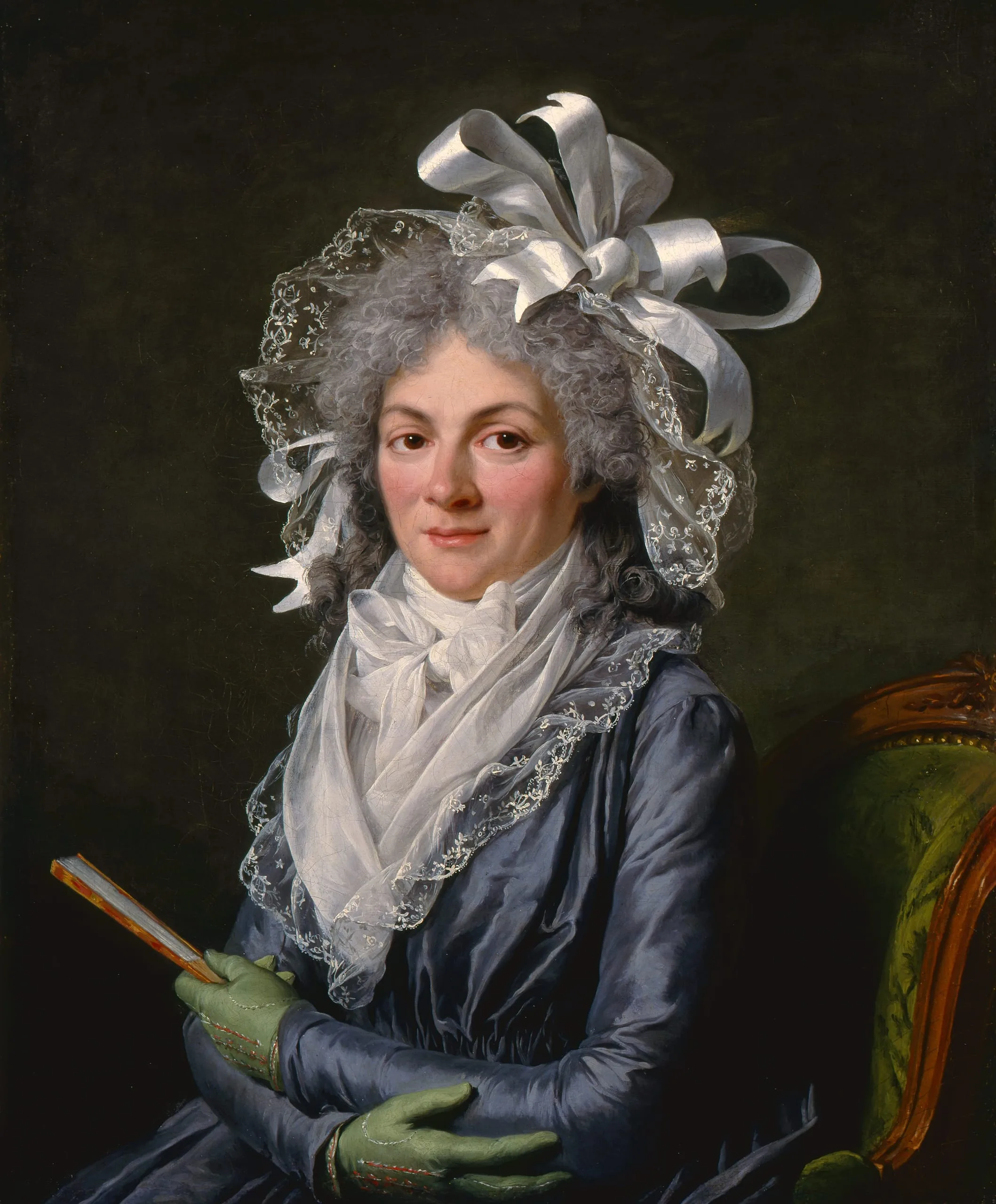
Adélaïde Labille-Guiard was one of the leading portrait painters in France in the last quarter of the eighteenth century. Her artistic talents were supported early on by a family of modest means. By the age of sixteen, when she married, Labille-Guiard was already publicly recognized for her miniatures and pastels, acceptable modes of art making for women during that time. Unfazed by the restrictions placed on women artists, she mastered oil painting and portraiture. Her rise would have continued but for political reasons—she supported the Revolution—and her attempts at the highest regarded genre of large-scale history painting were stymied.
Despite this setback and the changing political landscape, Labille-Guiard’s exquisite handling of paint, subtle palette, and insightful observational skills made her one of the most sought after portraitists of the time, including among her male counterparts. As with other highly accomplished female painters in the late 1700s like Élisabeth Vigée-LeBrun and Anne Vallayer-Coster, she enjoyed royal and aristocratic patronage. But despite the extraordinary talent of these women, they were never able to gain full acceptance in the official French system.
The sitter in this portrait, Madame de Genlis, was equally intelligent and well educated, although arguably more savvy than Labille-Guiard in terms of her alignment with members of the ruling class. Genlis, too, supported the Revolution, moderating political debates of the revolutionaries and renouncing her noble titles (she had by that time risen to be governess to the duc de Chartres’s three sons, among them the future, restored king, Louis Philippe). When her husband was executed during the Revolution, Genlis fled the country but returned to Paris when Napoleon took power and became a prolific writer of historical novels.
2025