LACMA

ShopMembershipMyLACMATickets
LACMA
Los Angeles County Museum of Art
5905 Wilshire Blvd.
Los Angeles, CA 90036
info@lacma.org
(323) 857-6000
Sign up to receive emails
Subscribe
© Museum Associates 2025

Museum Hours

Monday

11 am–6 pm

Tuesday

11 am–6 pm

Wednesday

Closed

Thursday

11 am–6 pm

Friday

11 am–8 pm

Saturday

10 am–7 pm

Sunday

10 am–7 pm


  • About LACMA
  • Jobs
  • Building LACMA
  • Host An Event
  • Unframed
  • Press
  • FAQs
  • Log in to MyLACMA
  • Privacy Policy
© Museum Associates 2025
Collections

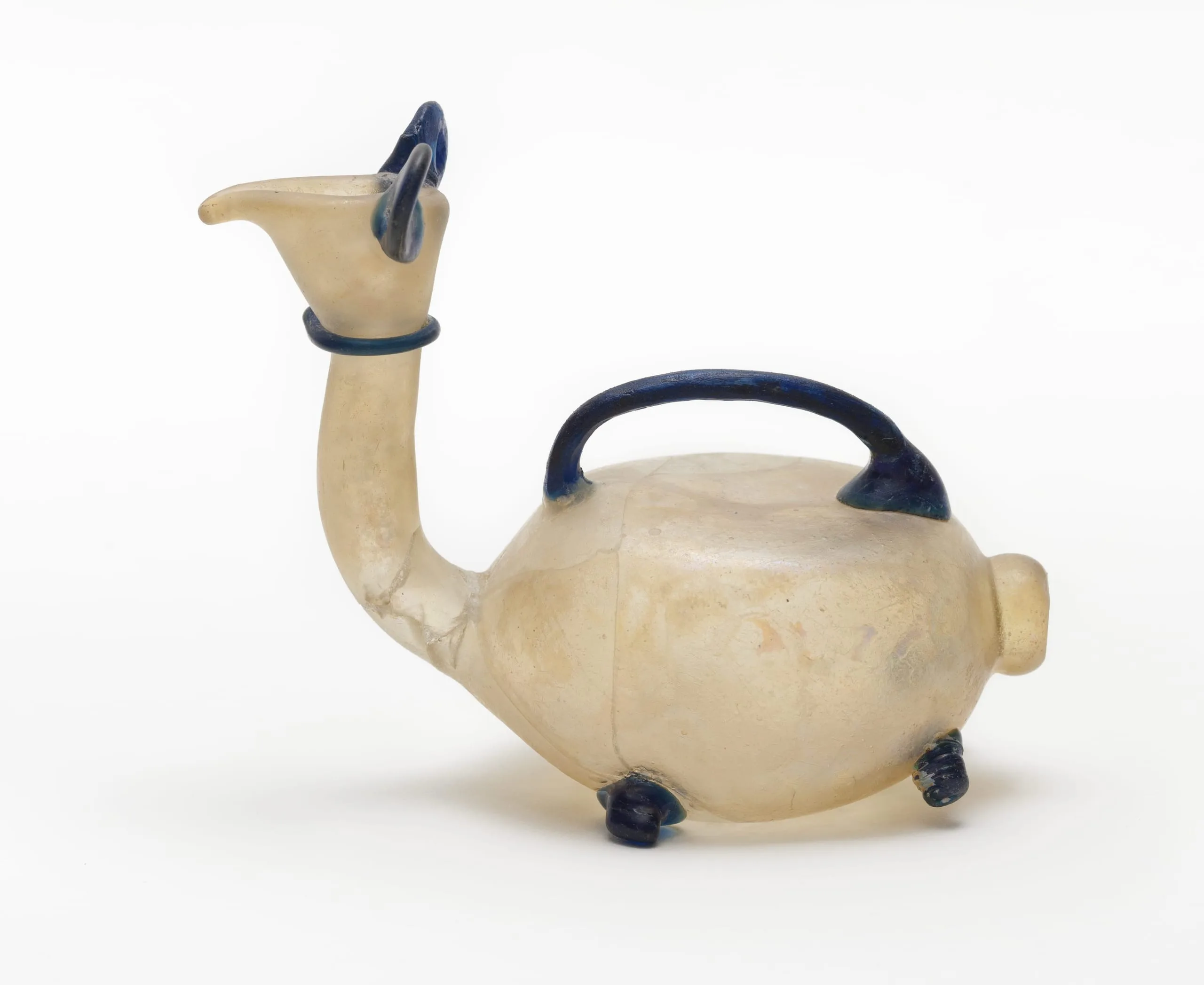
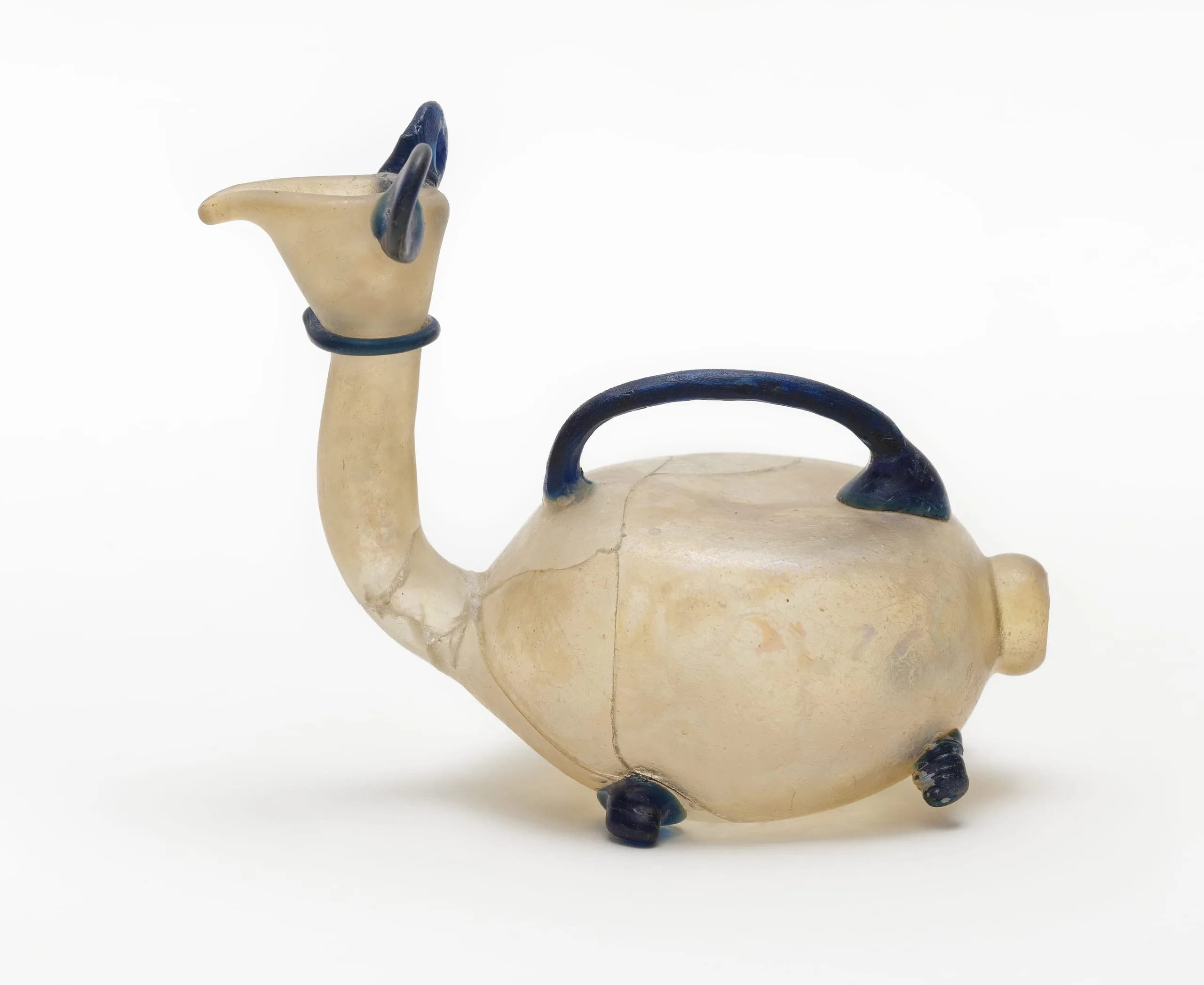
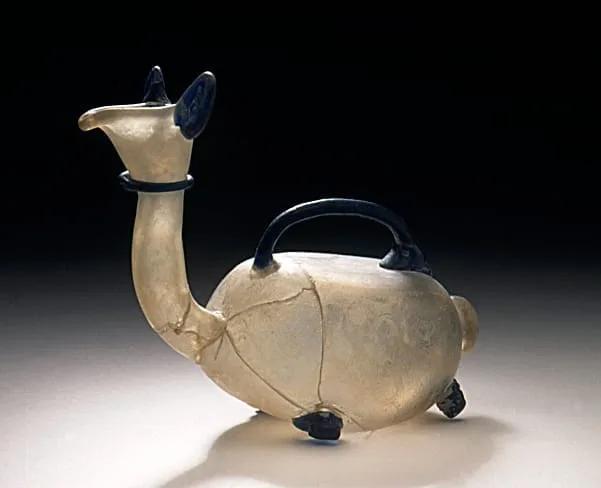
Container in the form of an Animal10th century

On view:
Geffen Galleries, Islamic Art and Late Antiquity
Small translucent glass vessel shaped like a crouching animal, with an arching neck-spout and navy blue handle, feet, and decorative accents
Ancient glass vessel in the form of a duck or bird, translucent pale cream with dark blue applied glass details at the handle, collar, eyes, and small feet; visible repair lines across the rounded body.
Glass vessel in the form of a camel, with a rounded pale cream body, elongated neck curving upward to a spout, dark blue handle arching over the back, and small blue accents at the ears, collar, and feet; visible crack repairs across the body.
Title
Container in the form of an Animal
Place Made
Probably Iran
Date Made
10th century
Medium
Glass, free-blown, with applied decoration
Dimensions
3 3/16 x 2 3/16 x 4 3/8 in. (8.10 x 5.56 x 11.11 cm)
Credit Line
Gift of Varya and Hans Cohn
Accession Number
M.88.129.187
Classification
Glass
Collecting Area
Art of the Middle East: Islamic
Curatorial Notes

In Islamic art, animal forms are frequently employed in the design of utilitarian objects, as in this charming glass perfume container in the shape of a kneeling quadruped, probably a camel. Here, in order to transform the animal into a functional vessel, it has been reduced to its most basic yet recognizable forms. The elegant, curved neck of the camel has been further elongated to serve as the vessel's spout, the hump is reconfigured as the handle, and the tiny, almost vestigial feet represent the legs folded beneath the beast.

Selected Bibliography
  • Lo Terrenal y lo Divino: Arte Islámico siglos VII al XIX Colección del Museo de Arte del Condado de Los Ángeles. Santiago: Centro Cultural La Moneda, 2015.