LACMA

ShopMembershipMyLACMATickets
LACMA
Los Angeles County Museum of Art
5905 Wilshire Blvd.
Los Angeles, CA 90036
info@lacma.org
(323) 857-6000
Sign up to receive emails
Subscribe
© Museum Associates 2025

Museum Hours

Monday

11 am–6 pm

Tuesday

11 am–6 pm

Wednesday

Closed

Thursday

11 am–6 pm

Friday

11 am–8 pm

Saturday

10 am–7 pm

Sunday

10 am–7 pm


  • About LACMA
  • Jobs
  • Building LACMA
  • Host An Event
  • Unframed
  • Press
  • FAQs
  • Log in to MyLACMA
  • Privacy Policy
© Museum Associates 2025
Collections

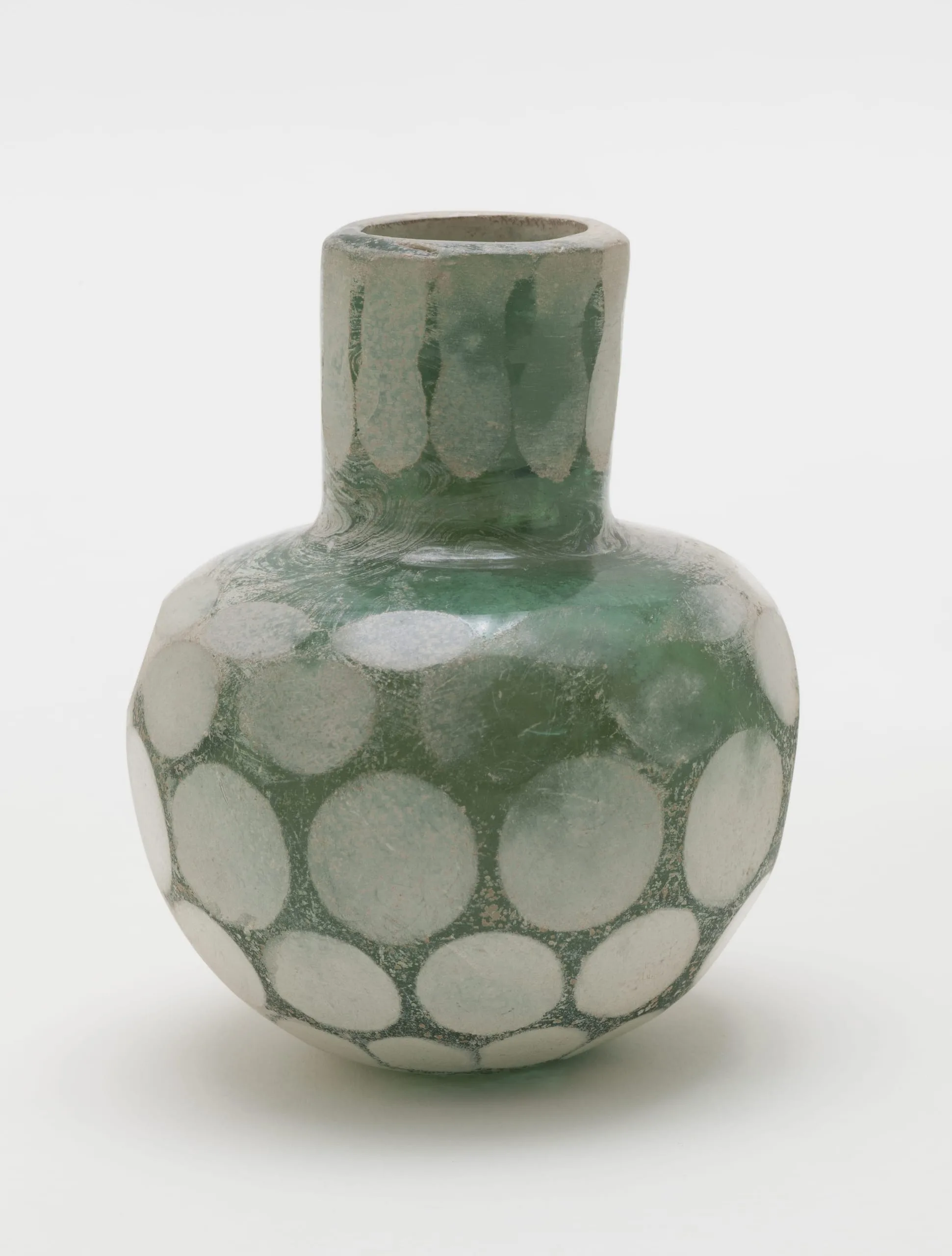
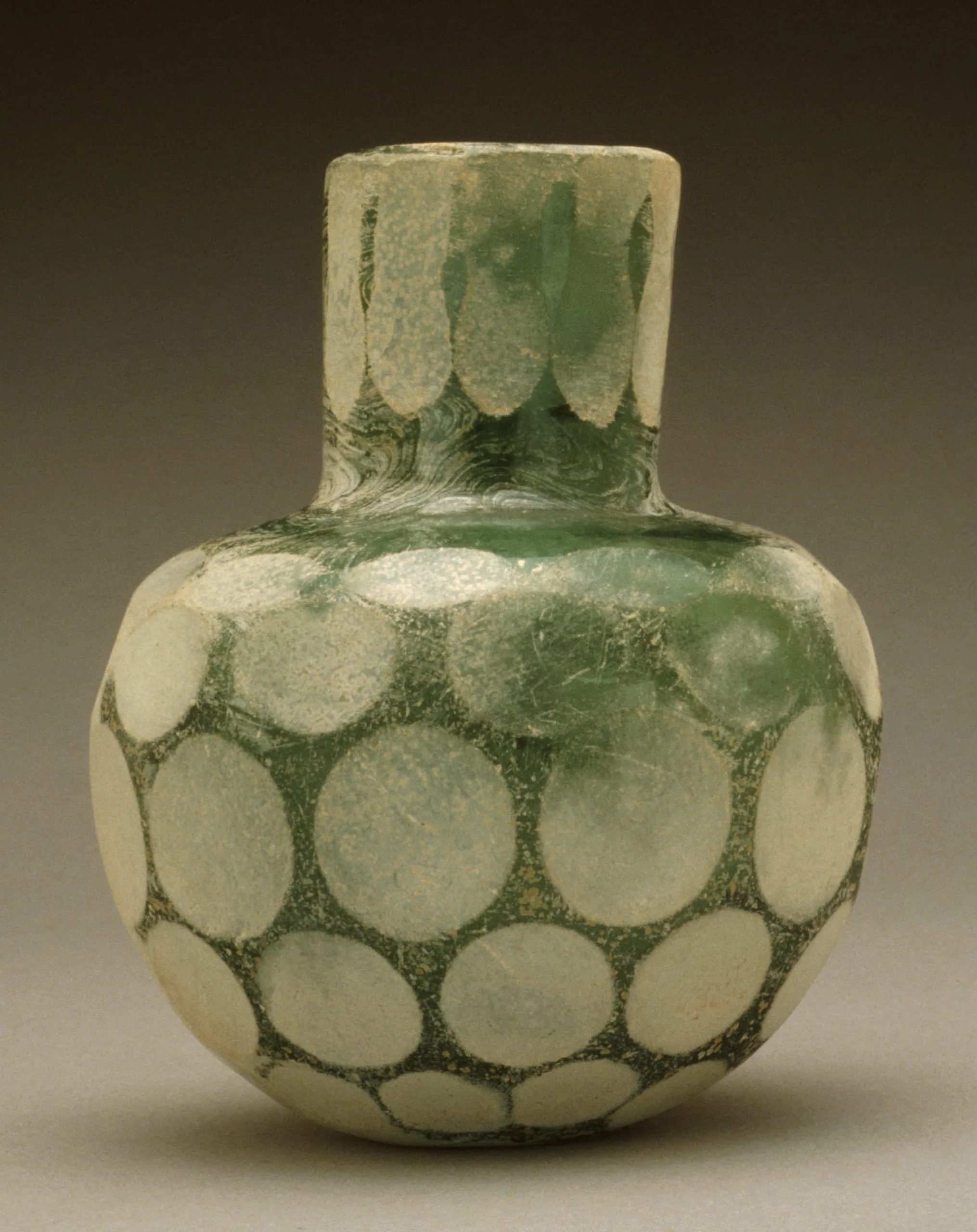
Bottle9th-10th century

On view:
Geffen Galleries, Islamic Art and Late Antiquity
Small ceramic vessel with squat rounded body and short cylindrical neck, covered in a jade green glaze with allover pattern of pooled silvery-white oval shapes
Small ancient glass vessel with a rounded body and narrow cylindrical neck, green with heavily iridescent weathering; body decorated with a raised honeycomb pattern of pale circular bosses, scalloped pattern at the neck.
Title
Bottle
Place Made
probably Iran
Date Made
9th-10th century
Medium
Blown glass with cut decoration
Dimensions
4 x 3 1/4 in. (10.2 x 8.2 cm)
Credit Line
Gift of Varya and Hans Cohn
Accession Number
M.88.129.160
Classification
Glass
Collecting Area
Art of the Middle East: Islamic
Curatorial Notes

Premodern glassware represents an extraordinary transformation by fire of humble ingredients—sand, plant ash, and minerals—into delicate, jewel-like objects of everyday use. First discovered sometime before BC 2000 in the Middle East, glass technology was developed to a high degree of sophistication in antiquity by Roman and Iranian craftsmen, whose greatly valued wares were exported to places as far flung as northern Europe and East Asia. Glassmaking in the centuries following the Muslim conquests is marked by a continuity with these earlier traditions, as is demonstrated by this bottle, whose design draws upon Sasanian prototypes (see M.76.174.236 and "https://collections.lacma.org/node/172638">M.76.174.239>) having wheel-cut hexagonal surface patterns. Here, however, the facets are circular, and were cut and polished after the greenish blue glass was blown.

Selected Bibliography
  • Lo Terrenal y lo Divino: Arte Islámico siglos VII al XIX Colección del Museo de Arte del Condado de Los Ángeles. Santiago: Centro Cultural La Moneda, 2015.

  • Komaroff, Linda. Beauty and Identity: Islamic Art from the Los Angeles County Museum of Art. Los Angeles: Los Angeles County Museum of Art, 2016.