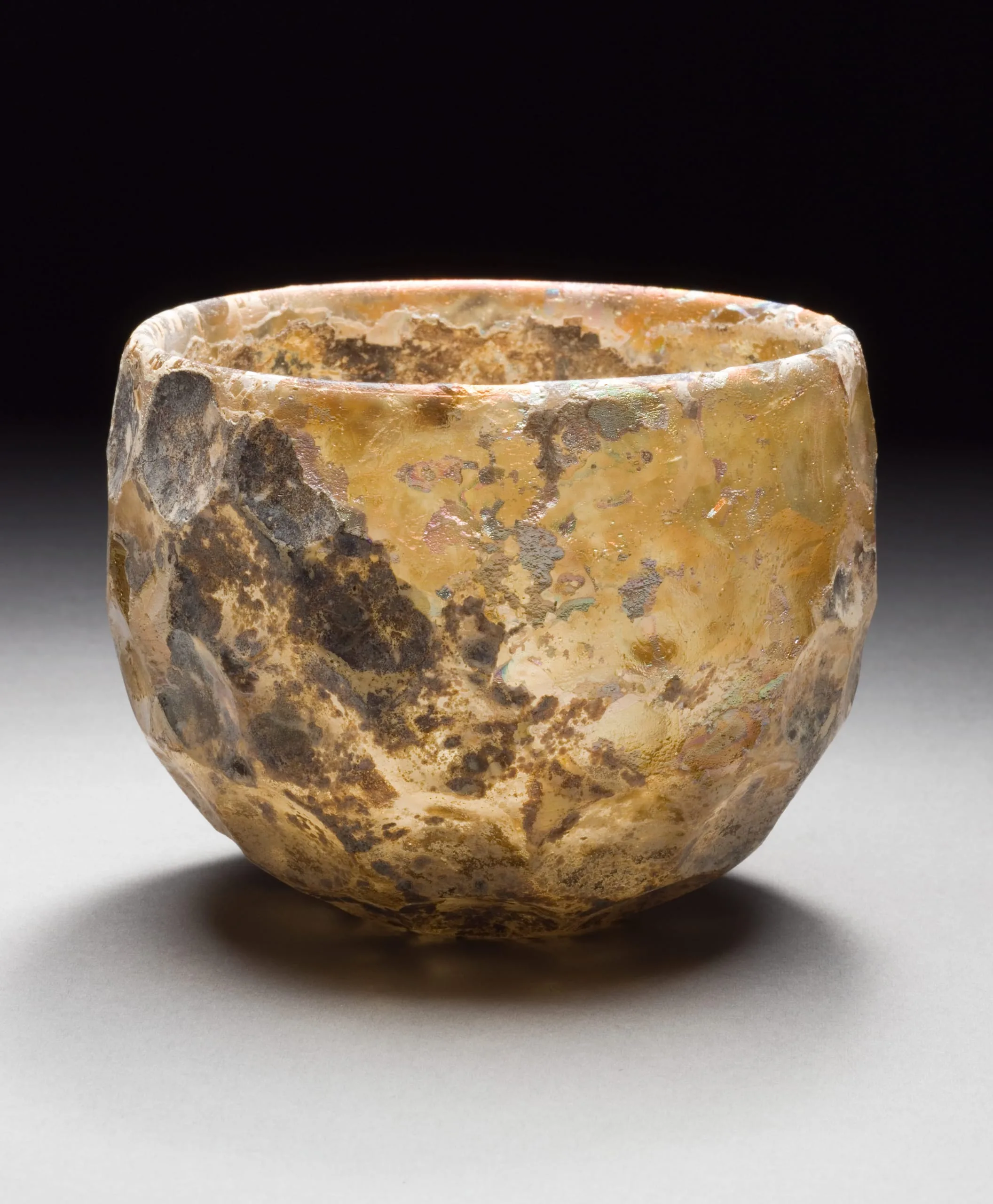
Facet-cut wares are among the most celebrated types of glassware produced in the Sasanian Empire (224–651). Exceptionally popular among elites during late antiquity, they were widely traded, with examples reaching as far as Japan. In their original, unweathered condition, facets refracted and reflected light in different ways as the vessel turned in the hands of the drinker, producing a dazzling optical effect. This effect would have been further enhanced by the liquid content of the vessel, which often was wine.
This thick-walled, hemispherical wine cup, which would have fit comfortably in the palm of the hand, was made by blowing. It was then decorated with round and polygonal facets that were were cold-cut. Although the original glass was colorless, it is now covered in a heavy sand-colored and iridescent weathering. A remarkably well-preserved example in the Shōsō-in Treasure House at Nara in Japan demonstrates the brilliance of these objects in their original condition.