LACMA

ShopMembershipMyLACMATickets
LACMA
Los Angeles County Museum of Art
5905 Wilshire Blvd.
Los Angeles, CA 90036
info@lacma.org
(323) 857-6000
Sign up to receive emails
Subscribe
© Museum Associates 2026
  • About LACMA
  • Jobs
  • Building LACMA
  • Host An Event
  • Unframed
  • Press
  • FAQs
  • Log in to MyLACMA
  • Privacy Policy
© Museum Associates 2026
Collections

Unknown
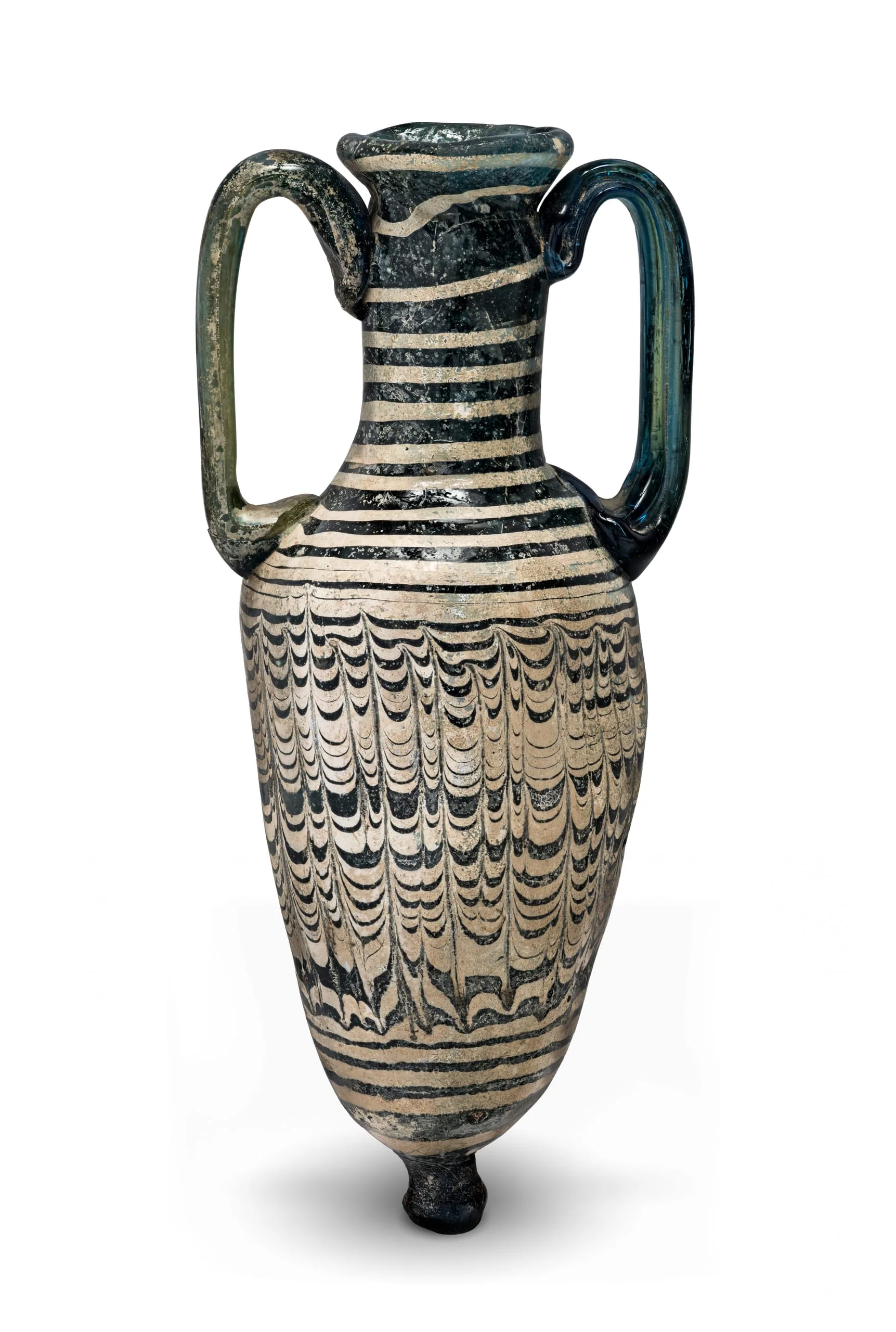
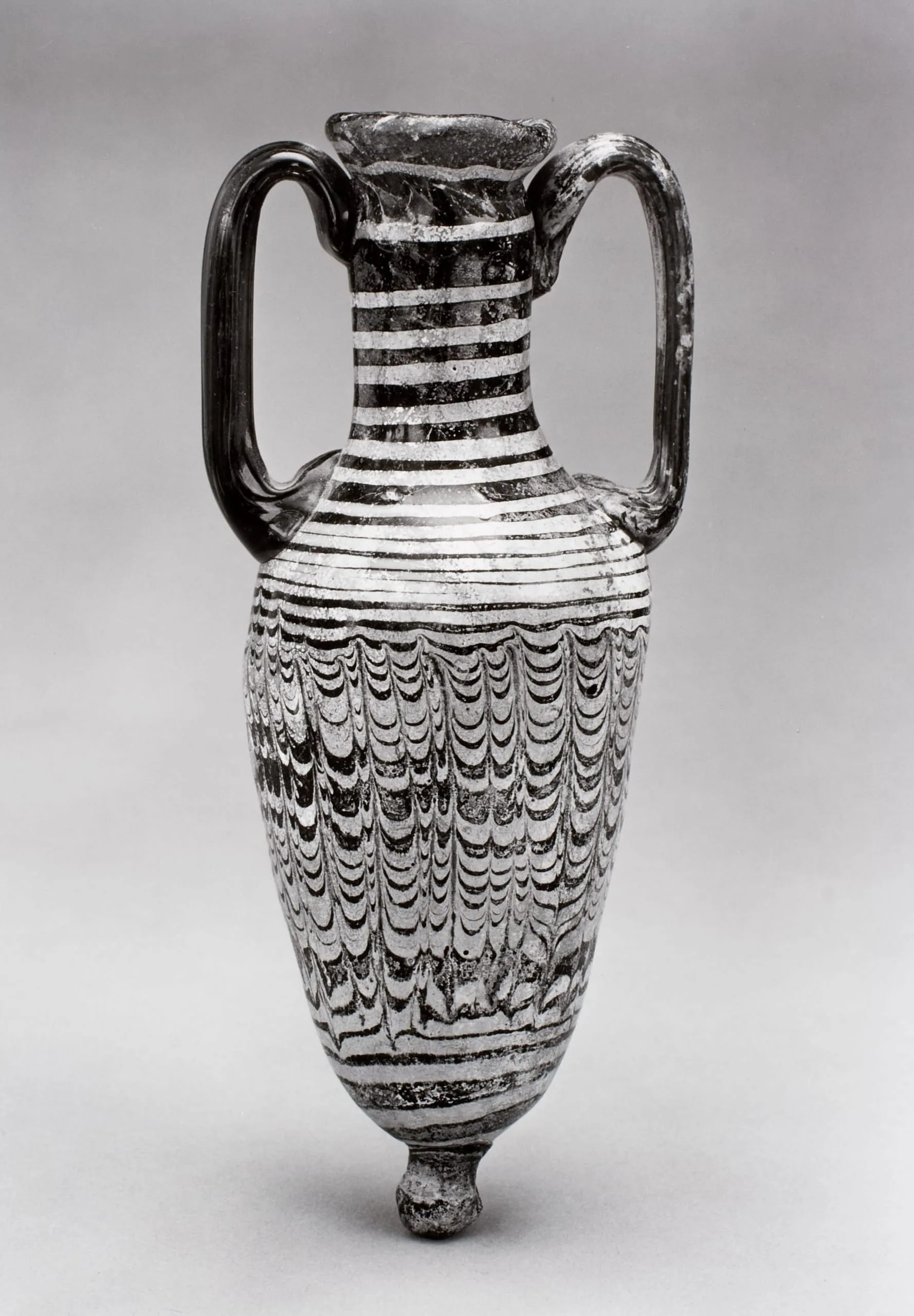
Amphoriskos2nd - first half of 1st century B.C.

On view:
Geffen Galleries, floor 1
Ancient glass amphora with cream ground and dark charcoal horizontal stripes on the neck, feathered combed pattern on the body, and blue-green loop handles
Core-formed glass amphoriskos with two loop handles, elongated ovoid body decorated with combed feather pattern, horizontal stripes on the narrow neck, and small disk foot.
Maker
Unknown
Title
Amphoriskos
Culture
East Mediterranean
Date Made
2nd - first half of 1st century B.C.
Medium
Core-formed glass
Dimensions
5 11/16 x 2 1/2 x 1 15/16 in. (14.5 x 6.4 x 4.9 cm)
Credit Line
Gift of Varya and Hans Cohn
Accession Number
M.88.129.4
Classification
Furnishings
Collecting Area
European Painting and Sculpture: Greek and Roman
Curatorial Notes

The amphoriskos, Greek for “small amphora,” is a miniature version of the two-handled vessels that contained oil or wine. Similarly, an amphoriskos would contain oil or perfume of some kind. This example is executed in a translucent turquoise-blue base color with white festoons and spirals, though some dulling and decoloration has occurred. There are several restorations, including the toe (base knob) and one handle.

Core-forming is a technique that involves twisting or gathering molten glass around a core made from animal dung and clay. This core was mounted onto a rod and carefully dipped into molten glass. Spirals were formed by rotating the rod with one hand while applying a molten contrast color with the other hand. After another round of heating, the glass was rolled to smooth the thread of the new color into the glass, and then the festoons were created by dragging a sharp tool across the surface of the core. Once the body was complete, the neck and rim of the amphoriskos was shaped and the handles applied, whereupon the core and its rod were set in a different area for annealing, the process of slowly cooling glass to prevent cracks.
Selected Bibliography
  • Saldern, Axel von. Glass 500 B.C. to A.D. 1900: The Hans Cohn Collection. Mainz: Philipp von Zabern, 1980.