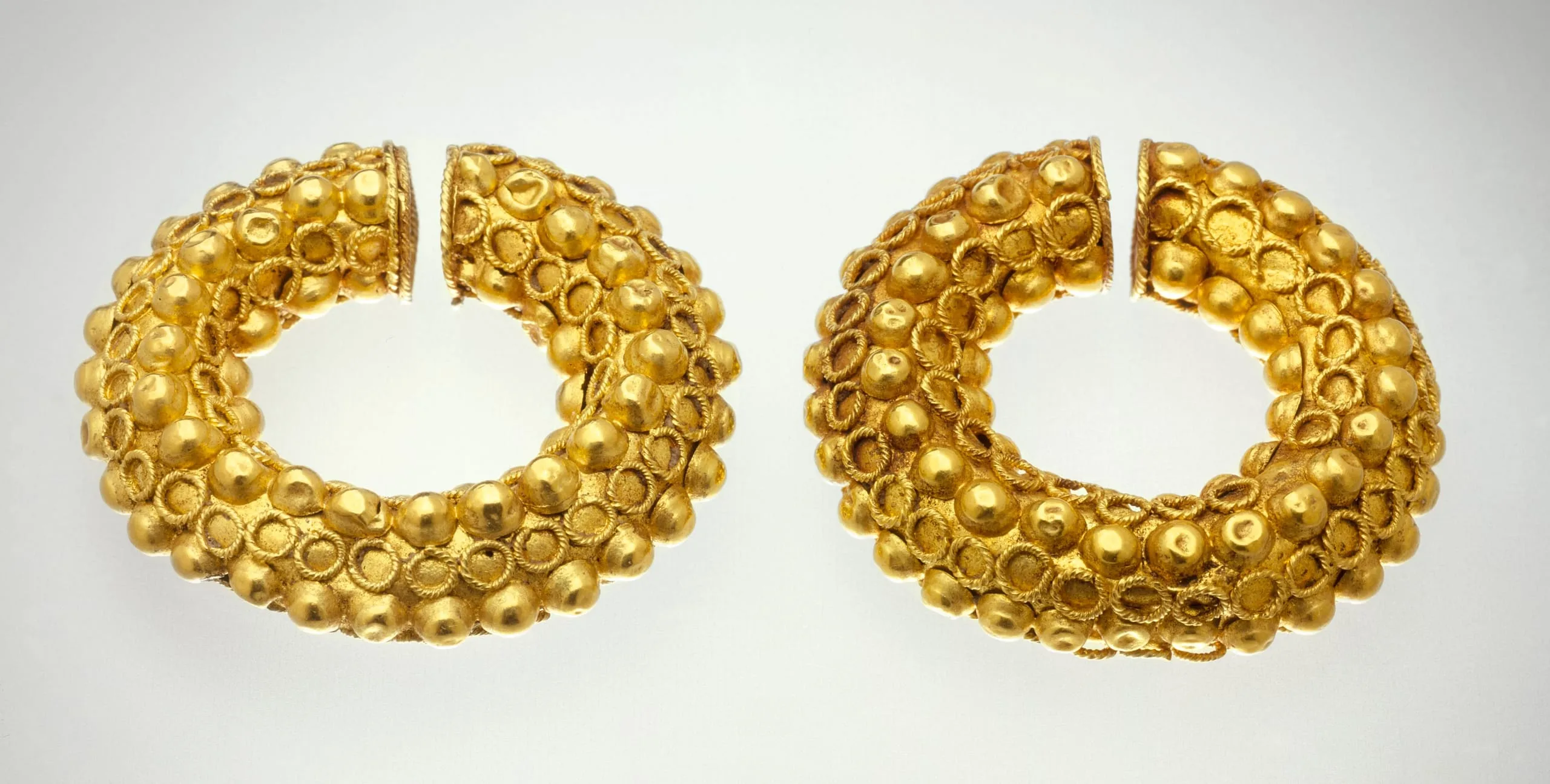
In ancient and late antique Iran, jewelry, including earrings, was an important form of personal adornment for men and women. Much of our information on these pieces derives from depictions in a variety of media, especially metal vessels, coinage, and rock reliefs. One point to be gleaned from such imagery is that earrings were sizable and showy, like this rare pair. Large hoops such as these are sometimes shown hanging from a royal ear with another ornament above or below them, perhaps representing garnets or lapis lazuli, as stones in this period were selected more for their color than their preciousness.
The earrings are intricately constructed and display several different types of goldsmithing techniques. Their surface is decorated with rows of gold wires shaped into circles alternating with gold grain appliqué. The latter involved working individual dome shapes from sheets or strips of gold that were then carefully soldered to the surface. The techniques of making such elaborate jewelry continued into the Islamic period, seen for example in the use of gold wires and grains on an eleventh-century pendant (M.81.7).