- Title
- Votive Stupa
- Date Made
- 12th-13th century
- Medium
- Copper alloy
- Dimensions
- Height: 20 × 8 in. (50.8 × 20.32 cm)
- Accession Number
- M.87.243
- Curatorial Notes
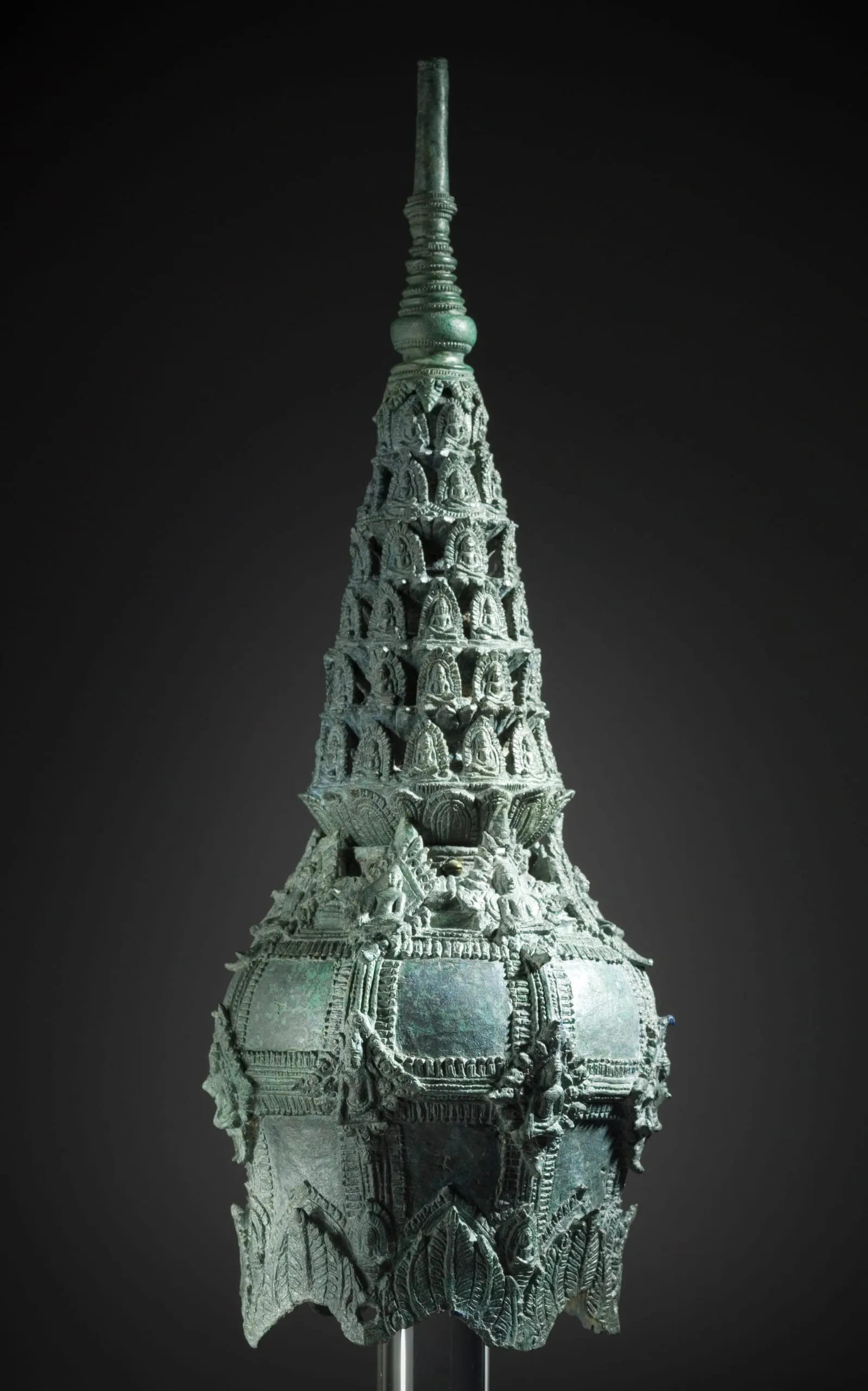
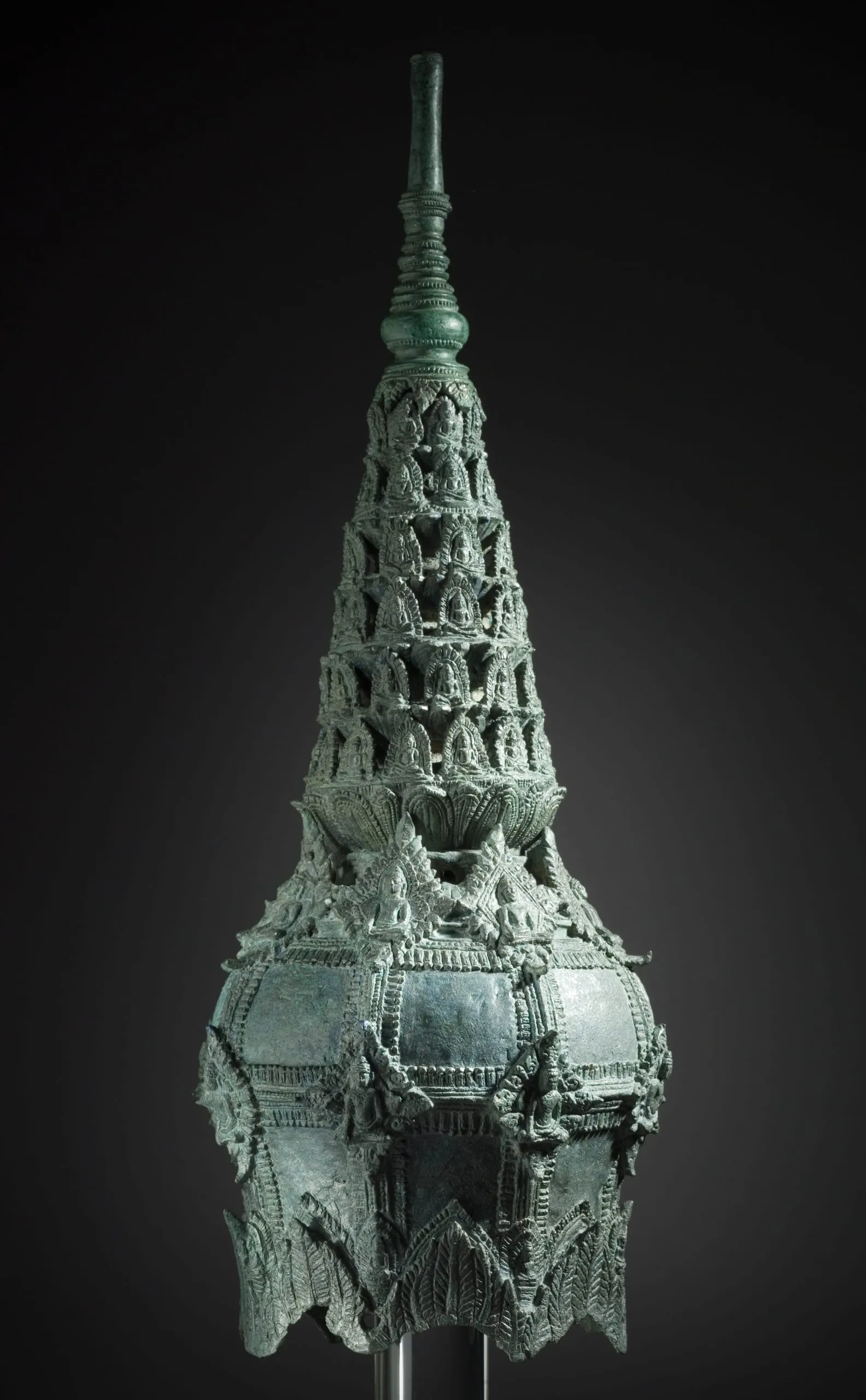
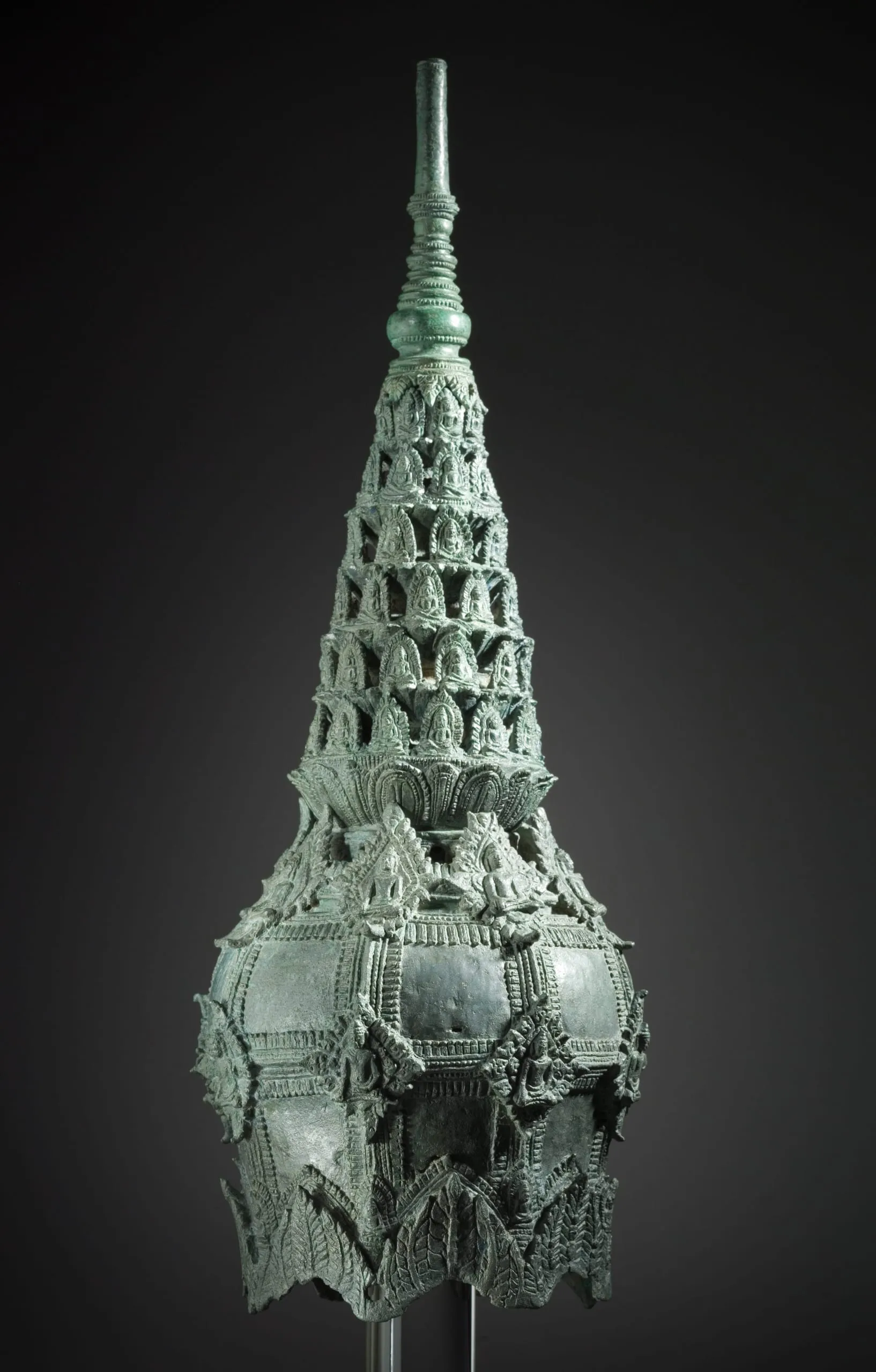
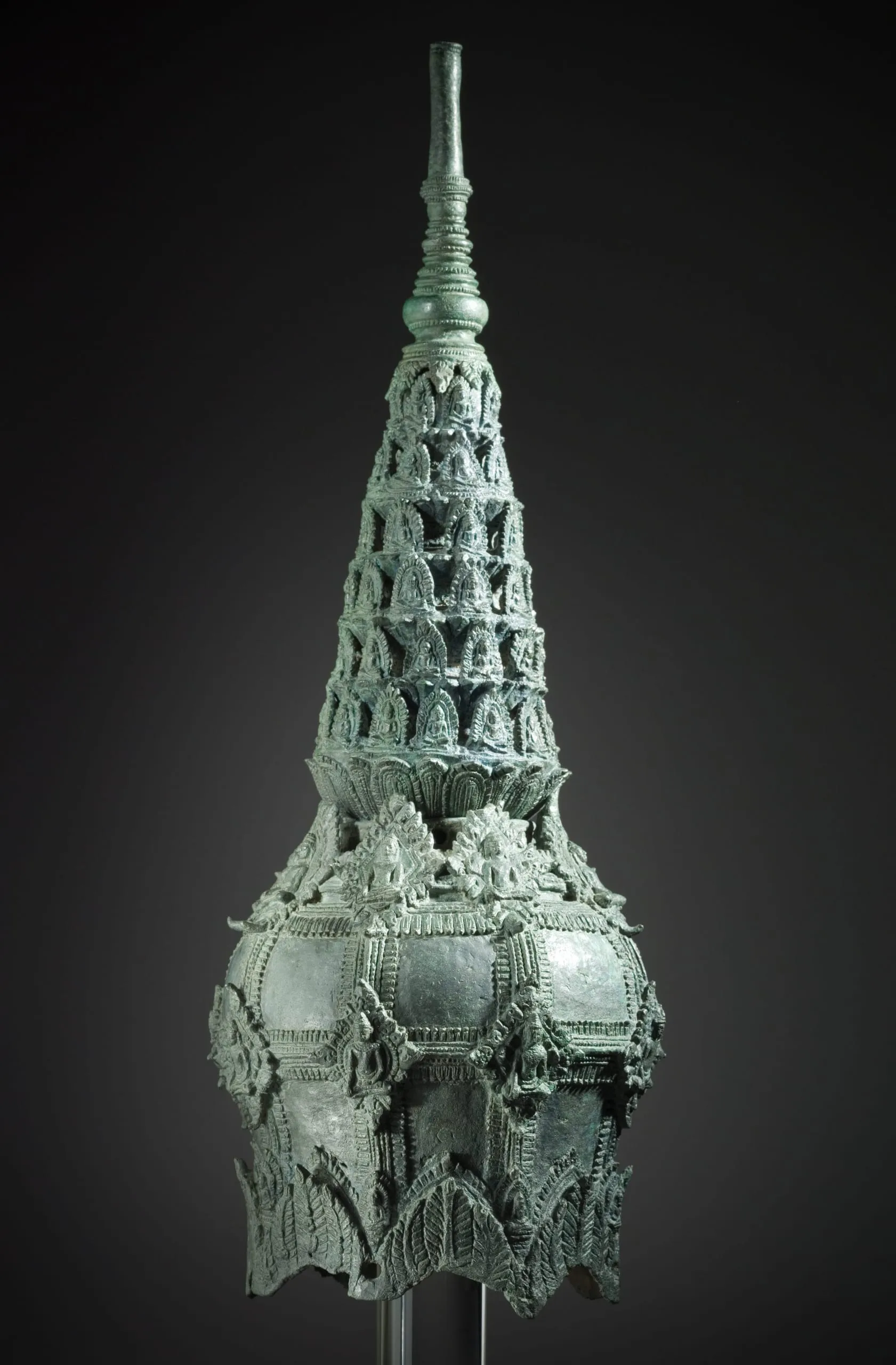
A stupa is a Buddhist or Jain funerary monument. The earliest Buddhist stupas held the Buddha’s ashes and relics, but later ones also interred the remains of the Buddha’s renowned acolytes or commemorated significant sites or events in the life of the Buddha. Miniature stupas made of schist or copper alloy were used either as reliquaries containing precious offerings or, as here, votive objects for worship.
This is possibly the upper part of a reliquary that once stood within a larger stupa, perhaps housing the relics of a high-ranking monk or royal personage who attained Enlightenment in a later life. The surface is adorned with myriad miniature Buddhas. The stupa’s shape is reminiscent of the eight-niche stupas for Buddha images built in Thailand. Its lower part bears branches of the Bodhi tree, under which the Buddha attained Enlightenment.