LACMA

ShopMembershipMyLACMATickets
LACMA
Los Angeles County Museum of Art
5905 Wilshire Blvd.
Los Angeles, CA 90036
info@lacma.org
(323) 857-6000
Sign up to receive emails
Subscribe
© Museum Associates 2025

Museum Hours

Monday

11 am–6 pm

Tuesday

11 am–6 pm

Wednesday

Closed

Thursday

11 am–6 pm

Friday

11 am–8 pm

Saturday

10 am–7 pm

Sunday

10 am–7 pm


  • About LACMA
  • Jobs
  • Building LACMA
  • Host An Event
  • Unframed
  • Press
  • FAQs
  • Log in to MyLACMA
  • Privacy Policy
© Museum Associates 2025
Collections

Unknown
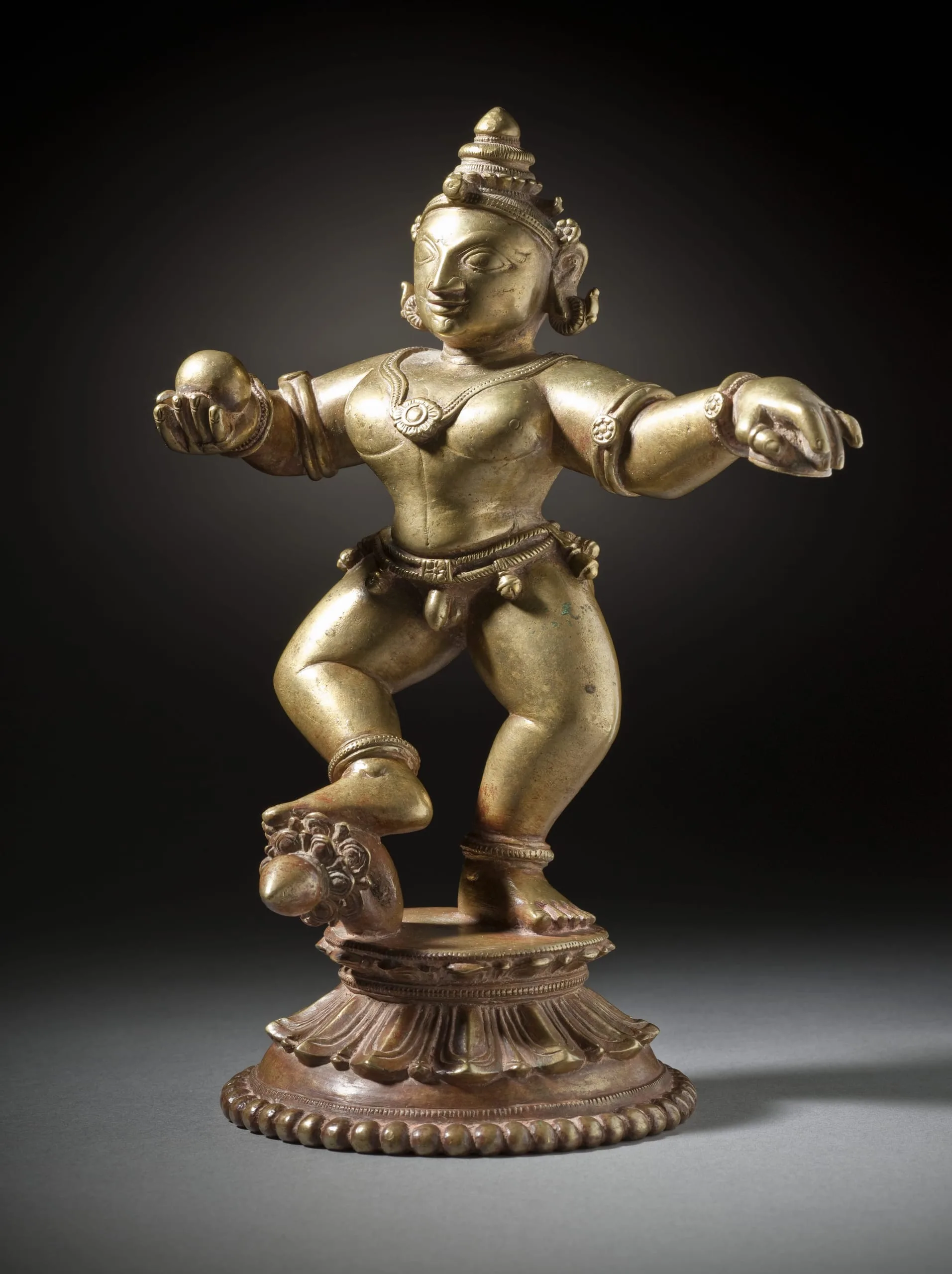
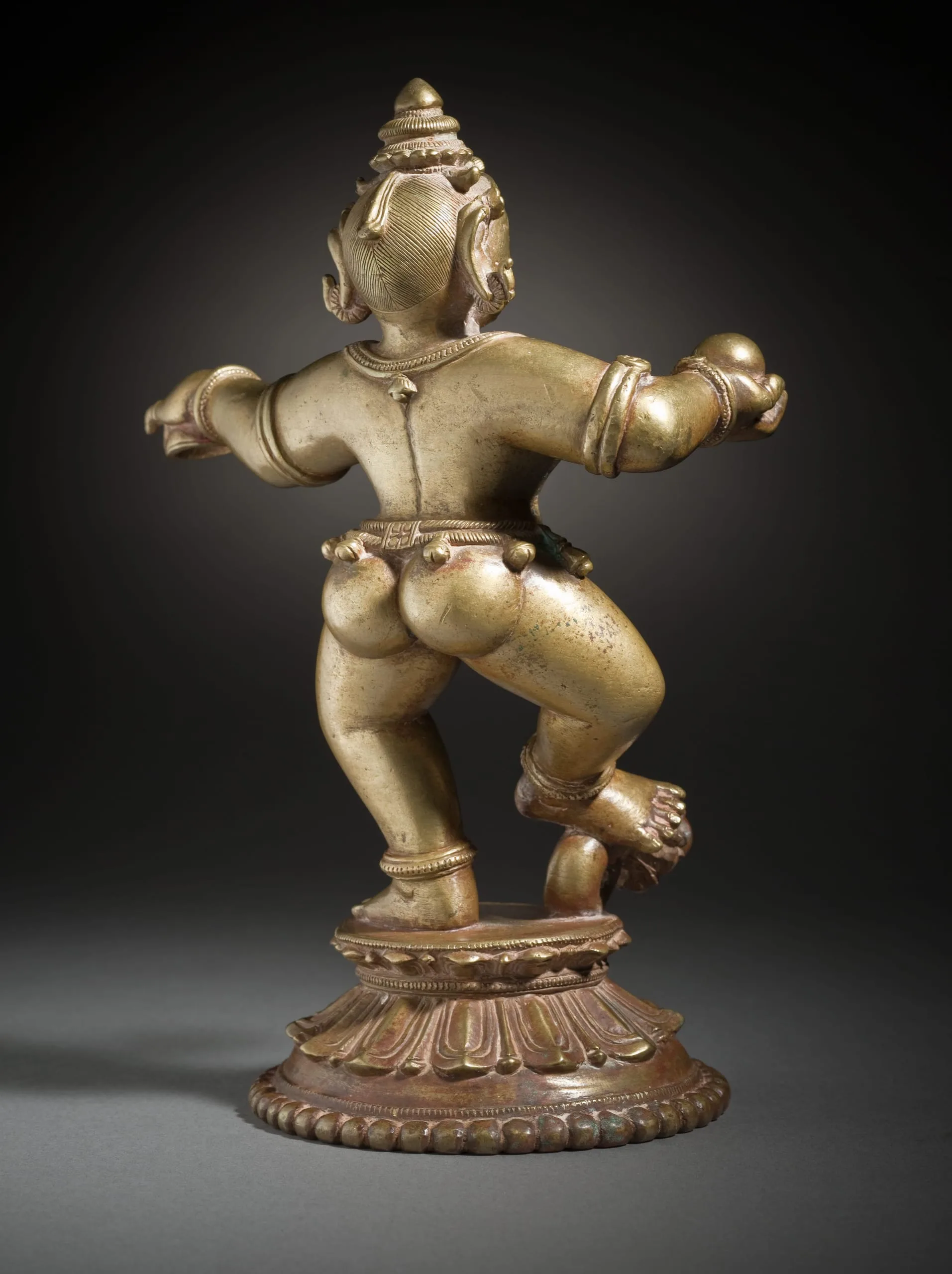
Dancing Krishnacirca 17th century

Not on view
Gilt bronze sculpture of a dancing child-like figure with one foot raised, arms outstretched, wearing jewelry and a tall conical headdress, standing on a lotus pedestal
Gilt bronze sculpture of a dancing child deity with elephant head, arms outstretched in dynamic pose, wearing beaded jewelry and waistband, standing on one leg atop a lotus pedestal with beaded base.
Artist or Maker
Unknown
Title
Dancing Krishna
Place Made
India, Odisha (Orissa)
Date Made
circa 17th century
Medium
Brass with traces of paint
Dimensions
8 5/8 x 6 1/2 x 4 1/2 in. (21.91 x 16.51 x 11.43 cm)
Credit Line
Purchased with funds provided by Mrs. Burton M. Fletcher
Accession Number
M.87.124
Classification
Sculpture
Collecting Area
South and Southeast Asian Art
Curatorial Notes

Krishna (The Dark One) is the eighth avatar of the Hindu god Vishnu, the Lord of Preservation. He was born in pastoral Vrindavan near Mathura, Uttar Pradesh. As a child, he was very rambunctious. His antics and adventures are called Krishna Lila (The Sport of Krishna).

Here, Krishna is depicted as a naked child performing the charming (lalita) dance posture while standing on his left leg with his right leg raised and supported by the pericarp of a lotus flower (karnika). He is crowned and wears earrings, armlets, bracelets, anklets, a chest ornament (channavira), and a belt with pendant bells. In his right hand, he holds a ball of butter representing his stealing and eating butter from his mother’s churn. In his outstretched left hand, he holds an overturned drinking cup, which may refer to a siphon cup symbolizing the myth of when the flooding river Yamuna rose only to the level of baby Krishna’s feet and then drained while he was being carried across the river by his father Vasudeva to escape the evil King Kamsa.
Selected Bibliography
  • Pal, Pratapaditya. Indian Sculpture, vol.2. Los Angeles: Los Angeles County Museum of Art; University of California Press, 1988.