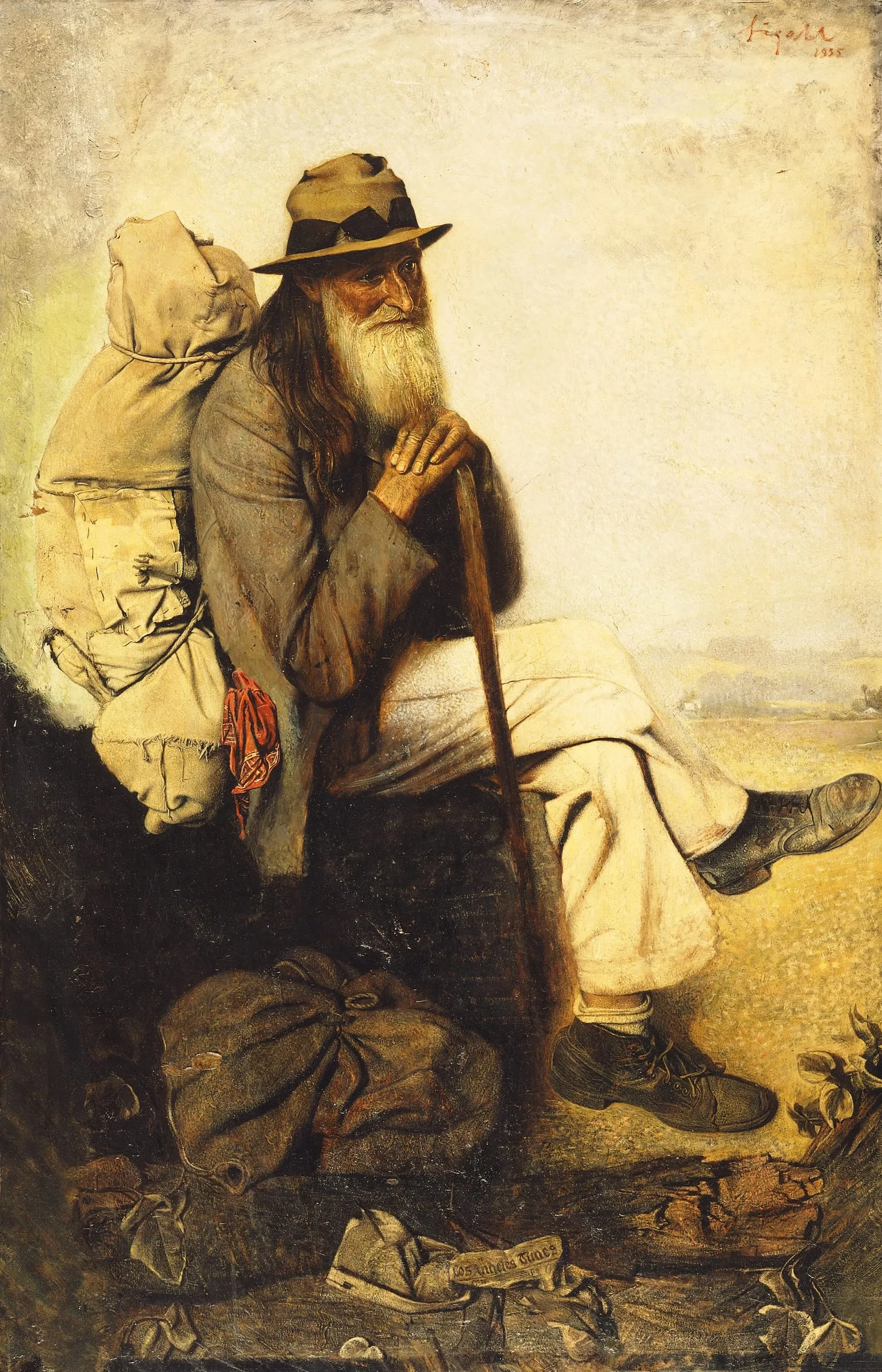
This painting came to the museum with no title but has been called The Wanderer because of its subject matter. The image of the Wandering Jew in art dates back several centuries and took on many levels of meaning, often referring to a person on the fringes of or outside of society. Sigall, who may have been Jewish, might have intended this elderly man to allude to his own emigrations. However, the wanderer was quite an appropriate subject during the Great Depression, during which thousands of people were displaced, some of them forced to live as hobos. In this painting Sigall has presented in quite sympathetic terms an old man who stops to rest and contemplate his situation. A tear stands on his eyelid. Although the background does not seem to be the depiction of a specific locale, the remnants of the front page of a Los Angeles Times in the immediate foreground place the wanderer in the Southern California area.
The picture’s somewhat piecemeal nature gives it a rather naïve quality, but Sigall’s meticulously detailed rendering and application of paint in a tempera technique suggest that he was trained in traditional old master methods. Such realistic depiction accords with the revival of Renaissance art that was occurring in American painting at the time. Whether Sigall encountered such art through studies in Europe, South America, or the United States is not known.