Although the product of academic training, Edgar Degas possessed a powerfully modernist outlook. He admired Jean-Auguste-Dominique Ingres (17801867) and studied under one of his pupils. In his formative years Degas was a dedicated copyist of old masters. Later he exhibited with the impressionists, shared their aesthetic convictions, and was deeply committed to an art that conveyed imaginative truths rather than literal images.
After about 1870 Degas turned from portraiture and history to painting experiences of modern life. Along with many artists of the day, he realized that etching could preserve drawing's spontaneity even while making multiple original works. Living in an age when experimental method and intellectual achievement were synonymous, Degas became deeply involved in innovative printmaking techniques.
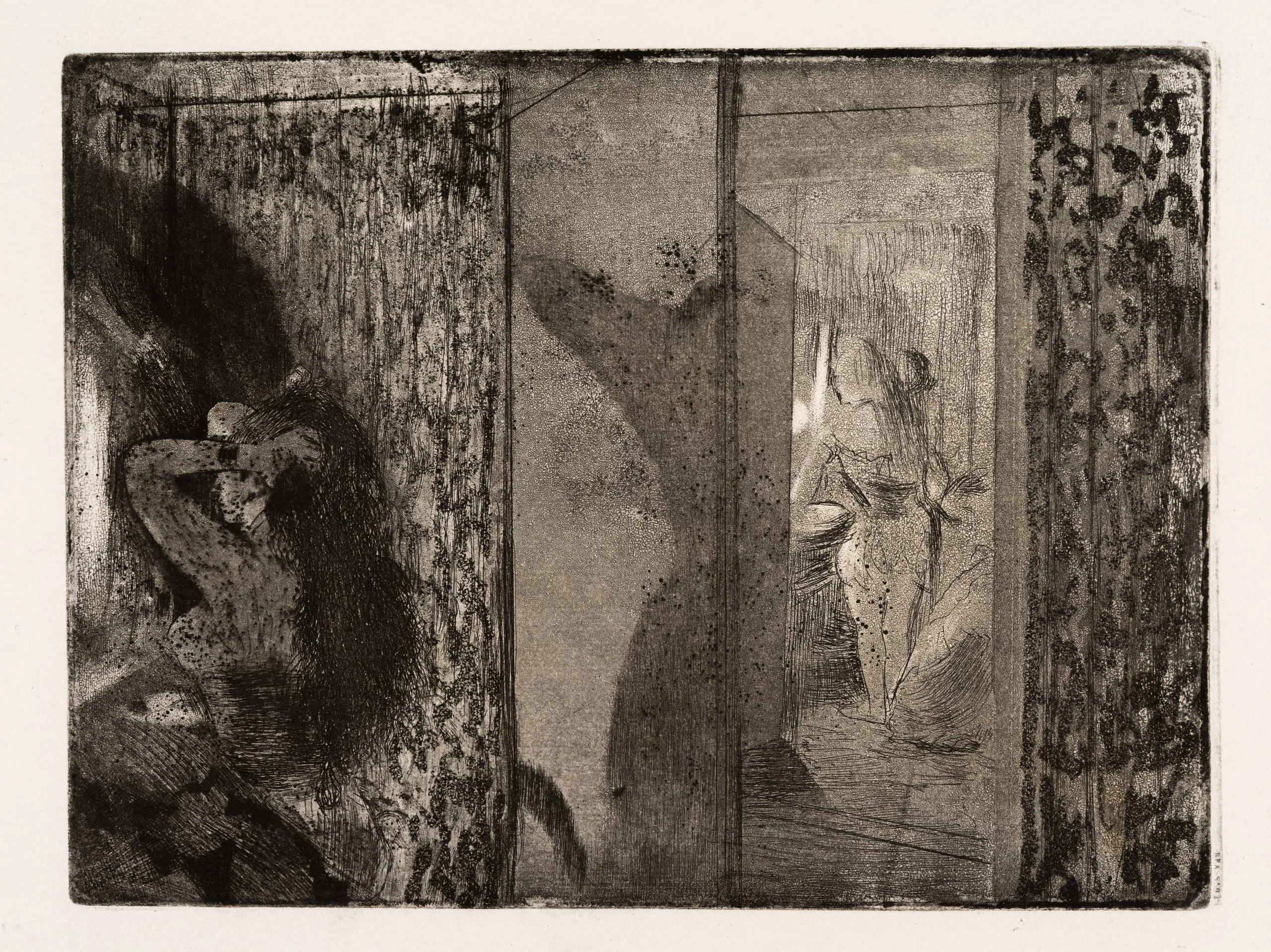
This rare print of actresses in their dressing cubicles preparing for a performance reveals the theater world Degas knew so well. Aquatint produces textures and tonalities that can be hand-burnished to change effect; this is how Degas achieved his wash like areas of light and shadow. He was fascinated by effects of interior lighting, which here casts a dramatic shadow to indicate the presence of a third woman. This shadow gives continuity to the receding spaces of the composition, indicated in four vertical panels. The women are linked by their experience of life in these dimly lit rooms, an experience Degas subtly conveyed in line and tone.