Dating from circa 550 CE, the Devimahatmya (Glory of the Goddess) is a devotional text of 700 Sanskrit verses that extol the Goddess (Devi) as the supreme power and creator of the universe. The verses were interpolations to the earlier Markandeya Purana dating from circa 250 CE and then extracted as a stand-alone text.
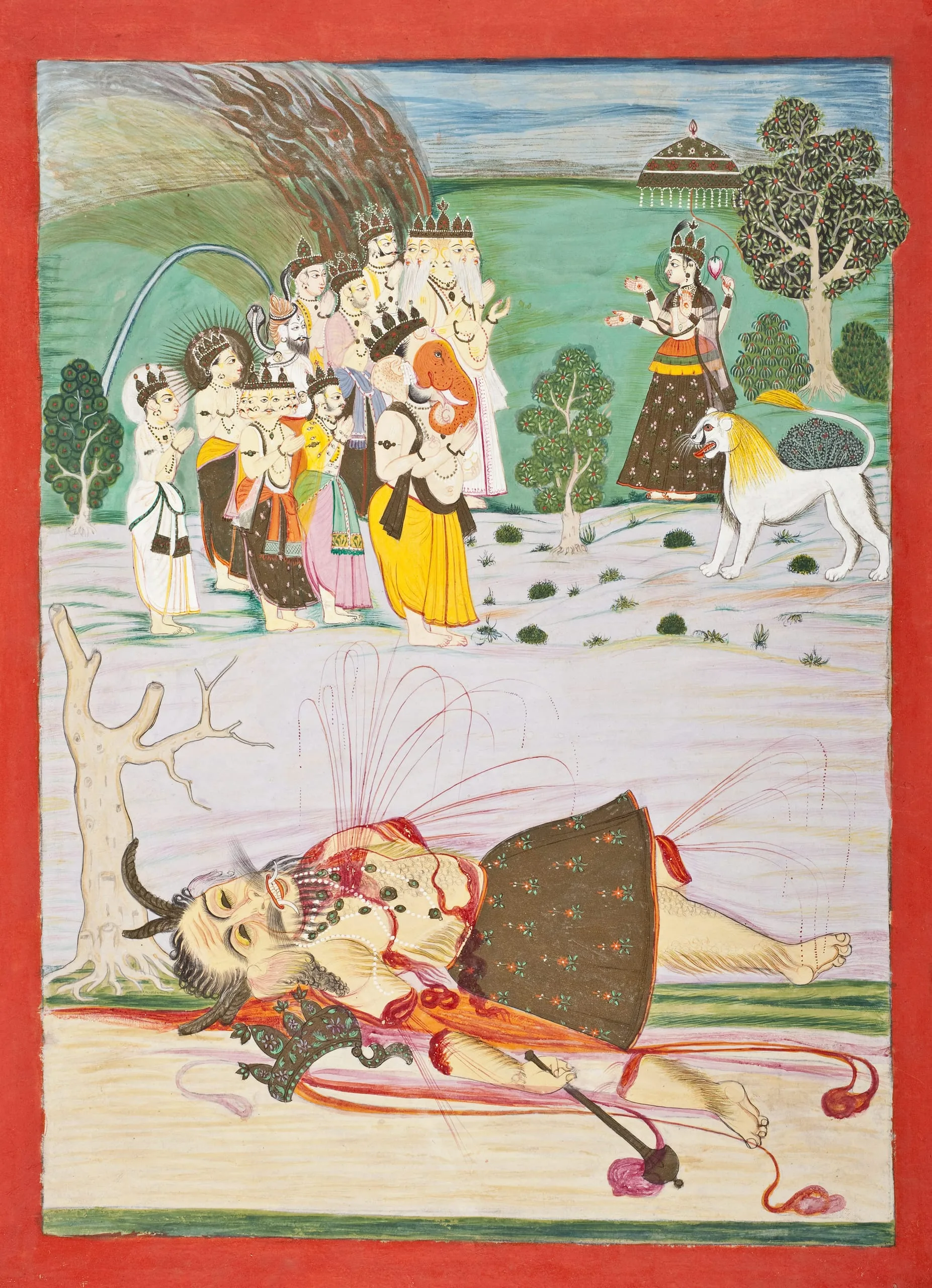
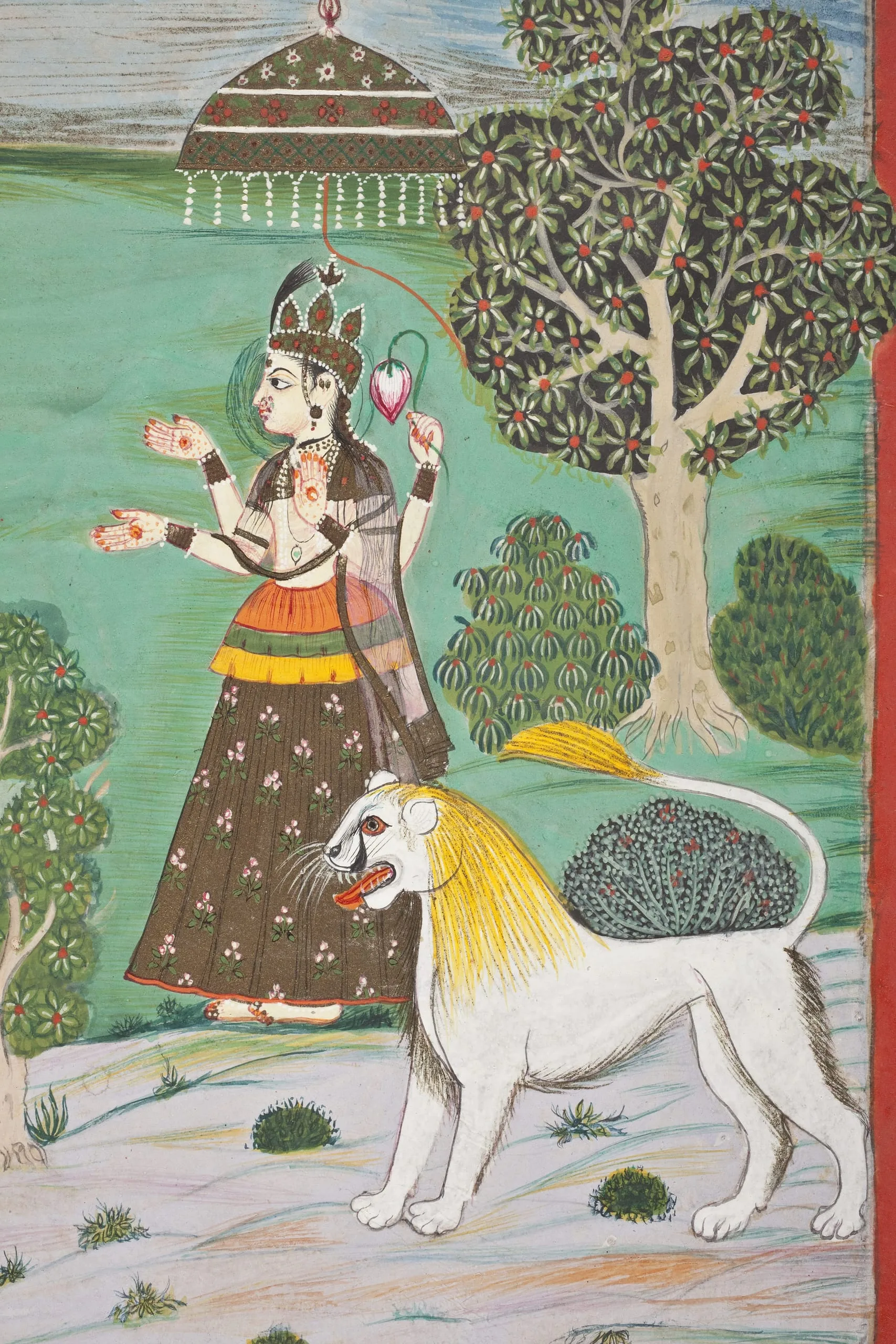
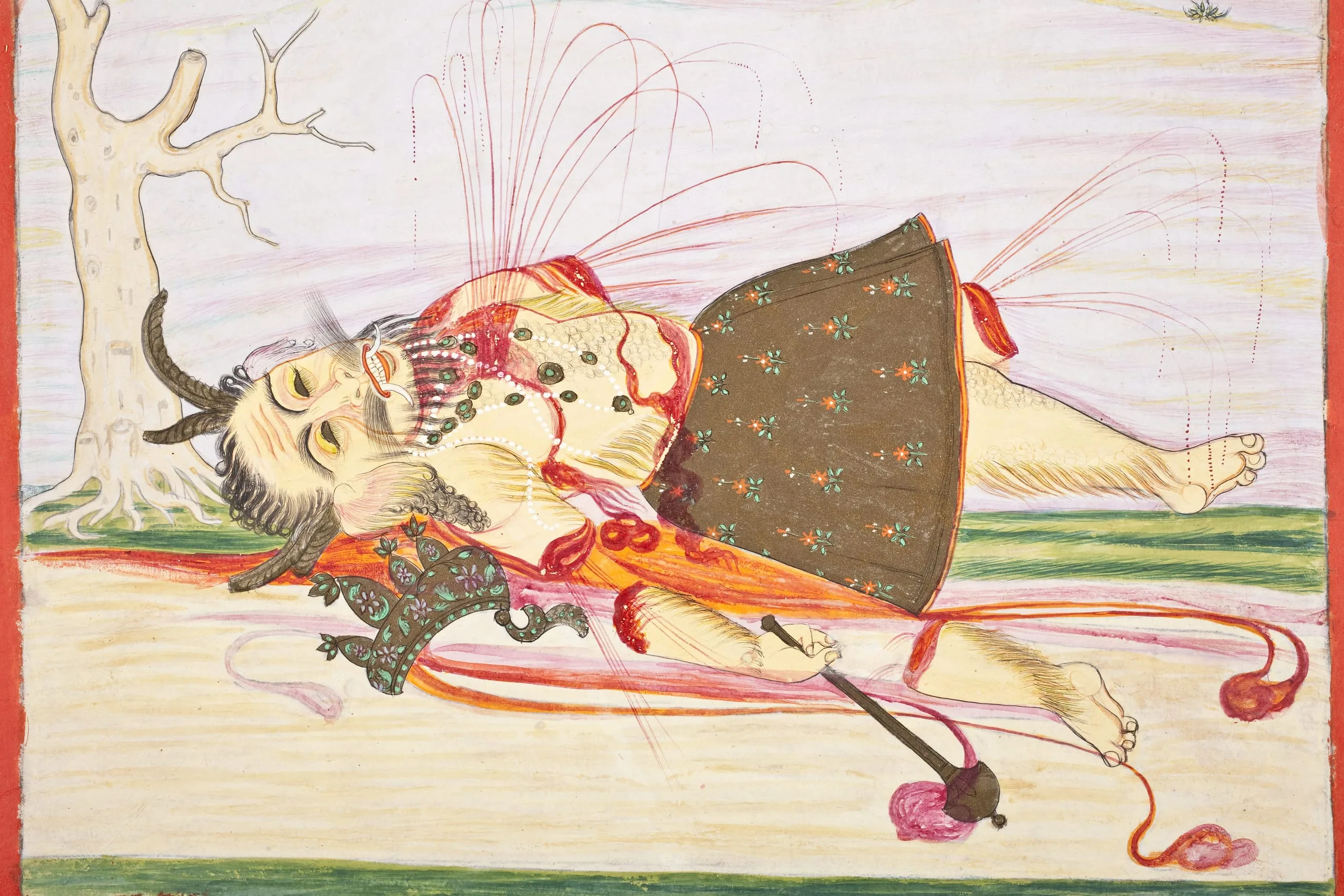
Here, the Shaiva and Vedic gods of Hinduism are paying homage to the Goddess after her defeat of a demonic titan. The Goddess is likely a form of Parvati. She is crowned with pale skin and four arms. She carries a lotus bud in her upper left hand. Her remaining three hands are held in symbolic gestures: lower left, ‘fear-not’ (abhaya mudra); lower right, ‘gift-giving’ (varada mudra); upper right, indeterminate. Each hand has a sacred marking in the palm (lakshana). She stands under an honorific parasol and has a lion mount. The gods standing in adoration are the elephant-headed Ganesha, the four-headed Brahma with white beards, the ascetic Shiva, the thousand-eyed Indra, the six-headed Karttikeya (the sixth head is not visible), the Sun-God Surya with a golden nimbus, the Moon-God Chandra with a white nimbus, and three generic gods. The slain supine demon has severed limbs with streams of blood still spurting.
This folio and its series mate M.84.229.5 have inscriptions on the reverse stating they were painted in Chhatarpur. This folio also has a Hindi rendition of the Devimahatmya text verses by the poet Kosala who wrote them for Maharaja Khandot Singh.