LACMA

ShopMembershipMyLACMATickets
LACMA
Los Angeles County Museum of Art
5905 Wilshire Blvd.
Los Angeles, CA 90036
info@lacma.org
(323) 857-6000
Sign up to receive emails
Subscribe
© Museum Associates 2026
  • About LACMA
  • Jobs
  • Building LACMA
  • Host An Event
  • Unframed
  • Press
  • FAQs
  • Log in to MyLACMA
  • Privacy Policy
© Museum Associates 2026
Collections

House Group200 BCE–500 CE

Not on view
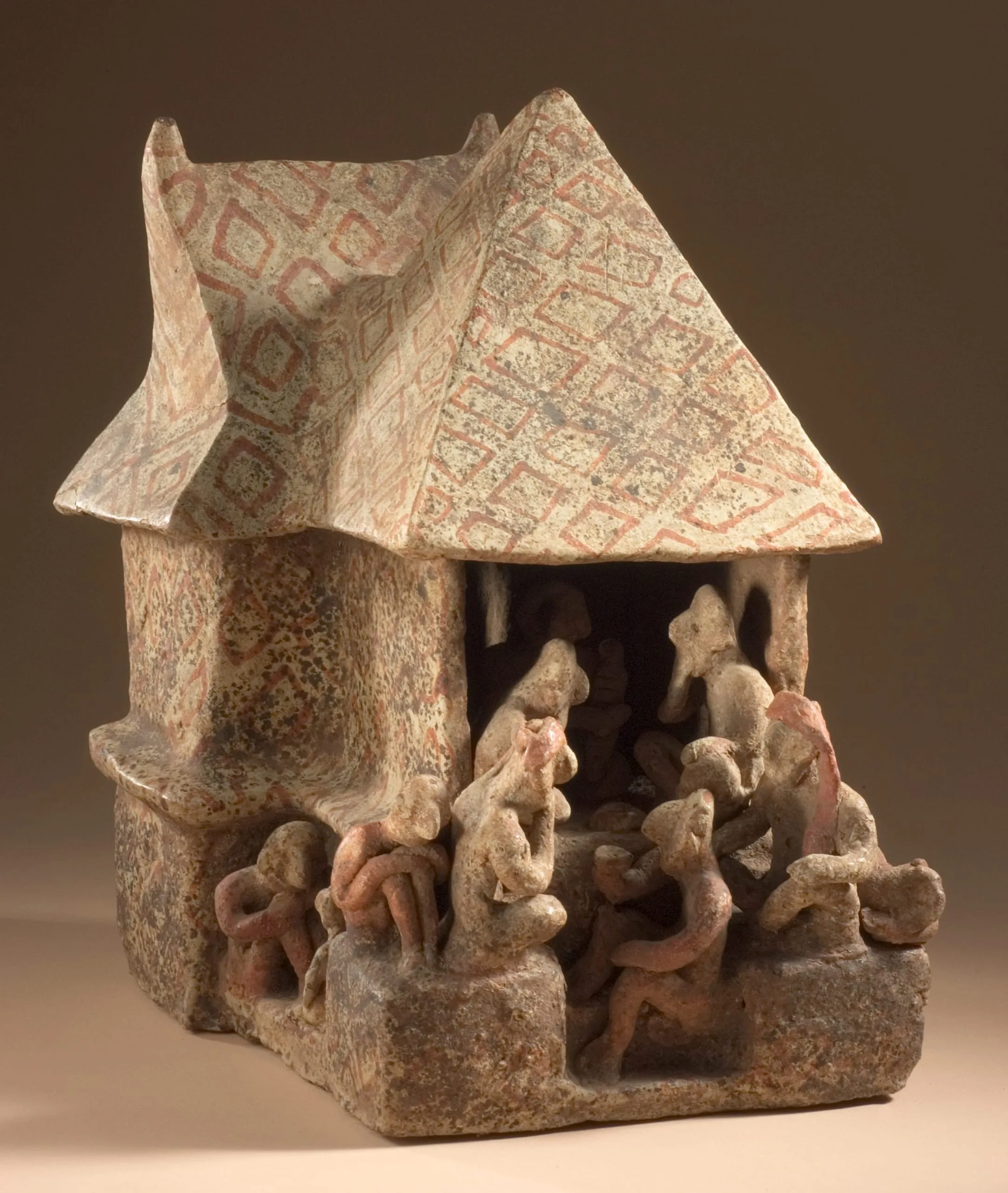
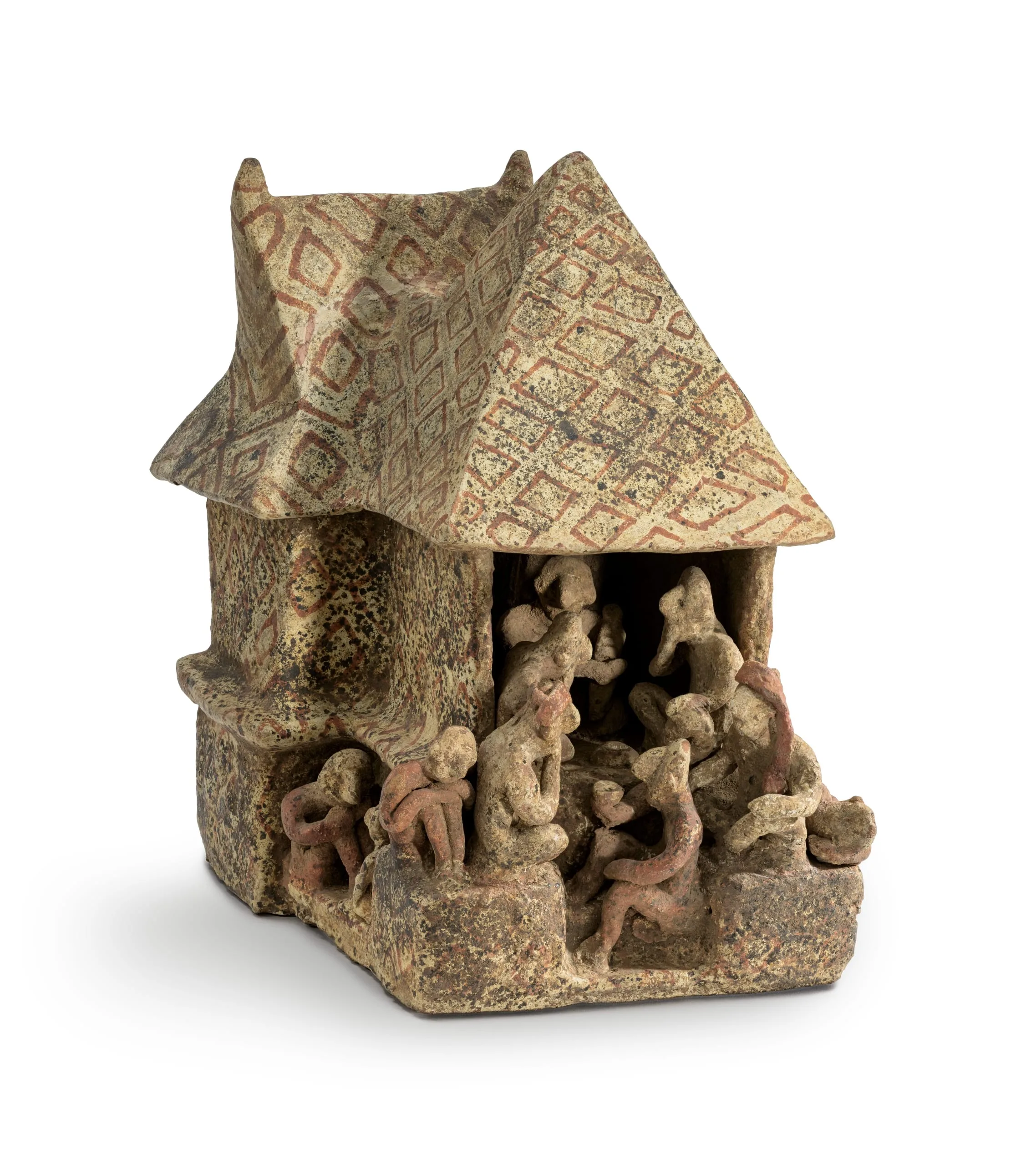
Ceramic house model with painted diamond-patterned gabled roof and numerous small figural sculptures crowding the interior and front terrace
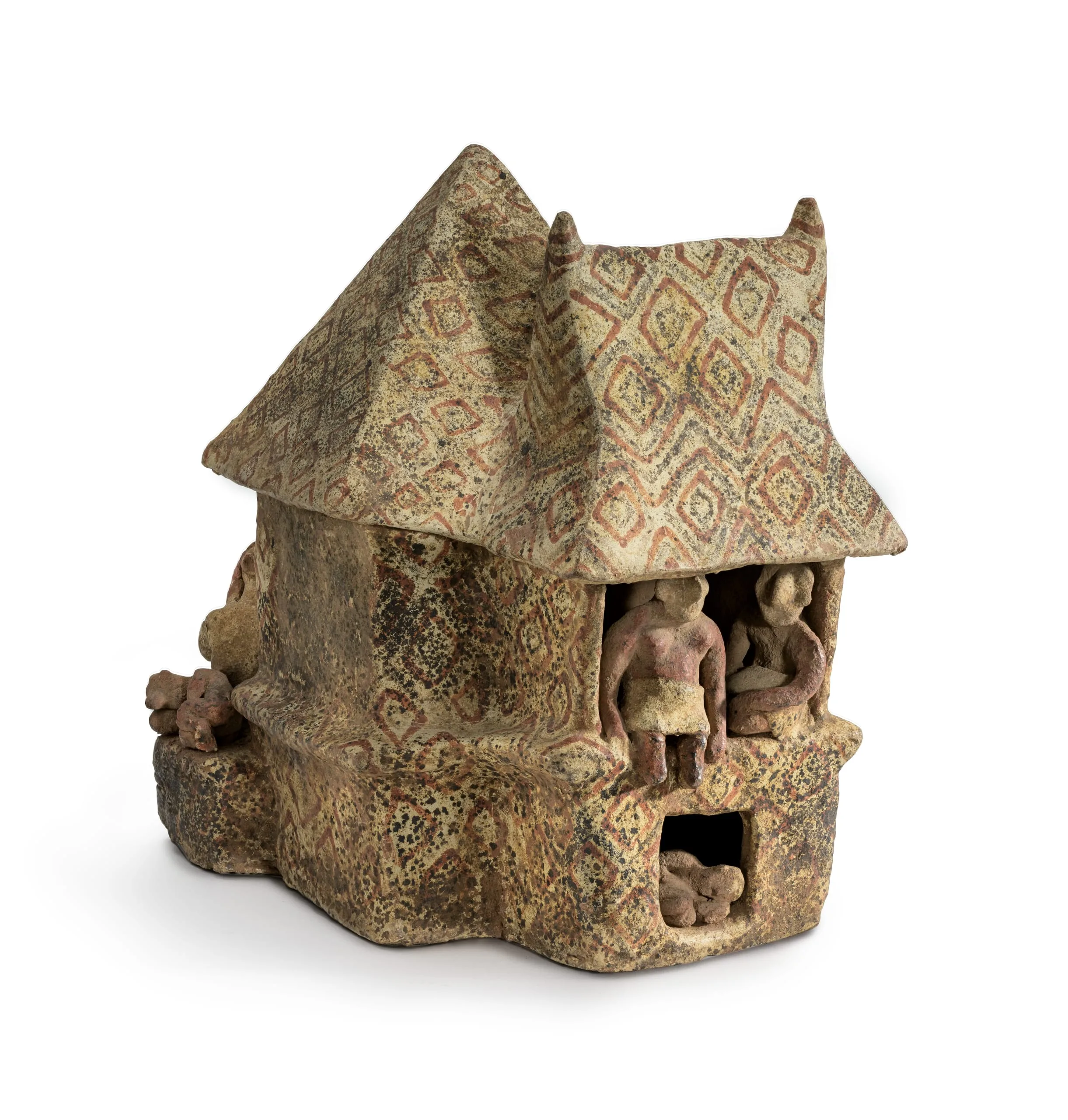
Ceramic architectural model of a two-story dwelling with a hip roof painted in red and ochre diamond patterns; two small modeled figures stand in an open doorway, with additional small figures clustered at the base and sides; mottled tan, green, and brown surface throughout.
Ceramic architectural model with a pitched roof decorated with red and green diamond lattice patterns; multiple small molded human figures crowd the interior and base platform, with traces of red and cream pigment throughout.

Unknown, House Group, 200 BCE–500 CE, Los Angeles County Museum of Art, The Proctor Stafford Collection, purchased with funds provided by Mr. and Mrs. Allan C. Balch, photo © Museum Associates/LACMA

Title
House Group
Culture
Nayarit
Place Made
Mexico, Nayarit
Date Made
200 BCE–500 CE
Medium
Slip-painted ceramic
Dimensions
11 1/2 x 8 x 6 in. (29.21 x 20.32 x 15.24 cm)
Credit Line
The Proctor Stafford Collection, purchased with funds provided by Mr. and Mrs. Allan C. Balch
Accession Number
M.86.296.38
Classification
Ceramics
Collecting Area
Art of the Ancient Americas
Curatorial Notes

This Nayarit house, modeled in clay, represents at once a house and the Mesoamerican cosmos at large. Its uppermost register consists of a gabled roof, elaborately decorated with a diamond pattern. The next register is the living space, where the viewer encounters a cluster of human figures, perhaps mourners. They spill from the interior of the building onto its front steps, which emerge from the lowermost register: a basal platform that sustains the structure. On the back side of the house, a hollowed niche holds a figure who lies on their side in a flexed position. Across Mesoamerica, it was common to bury the dead underneath the floor of the house; we might suspect that this figure is a recently interred ancestor and the subject of the mourners’ grief. The rectilinear form of the house re-creates the cosmic order, which in Mesoamerica consists of four corners and four sides. Its three registers align with the celestial, terrestrial, and aquatic (i.e., underworld) realms of the cosmos.

Alyce de Carteret

2024

Selected Bibliography
  • Kan, Michael, Meighan, Clement, Nicholson, H.B. and Rexford Stead. Sculpture of Ancient West Mexico: Nayarit, Jalisco, Colima. Los Angeles: Los Angeles County Museum of Art, 1970.
  • Von Winning, Hasso, and Olga Hammer. Anecdotal Sculpture of Ancient West Mexico. Los Angeles: Ethnic Arts Council of Los Angeles, 1972.
  • Magaloni, Diana, Davide Domenici, and Alyce de Carteret. We Live in Painting: the Nature of Color in Mesoamerican Art. Los Angeles: Los Angeles County Museum of Art, 2024.
Related Unframed

From the Collection: Mezcala Houses in Miniature
  • October 10, 2018
  • Alyce de Carteret
This Weekend: Human Nature Closing, Possible Worlds Opening, Free Concerts, Family Activities, and More
  • July 1, 2011