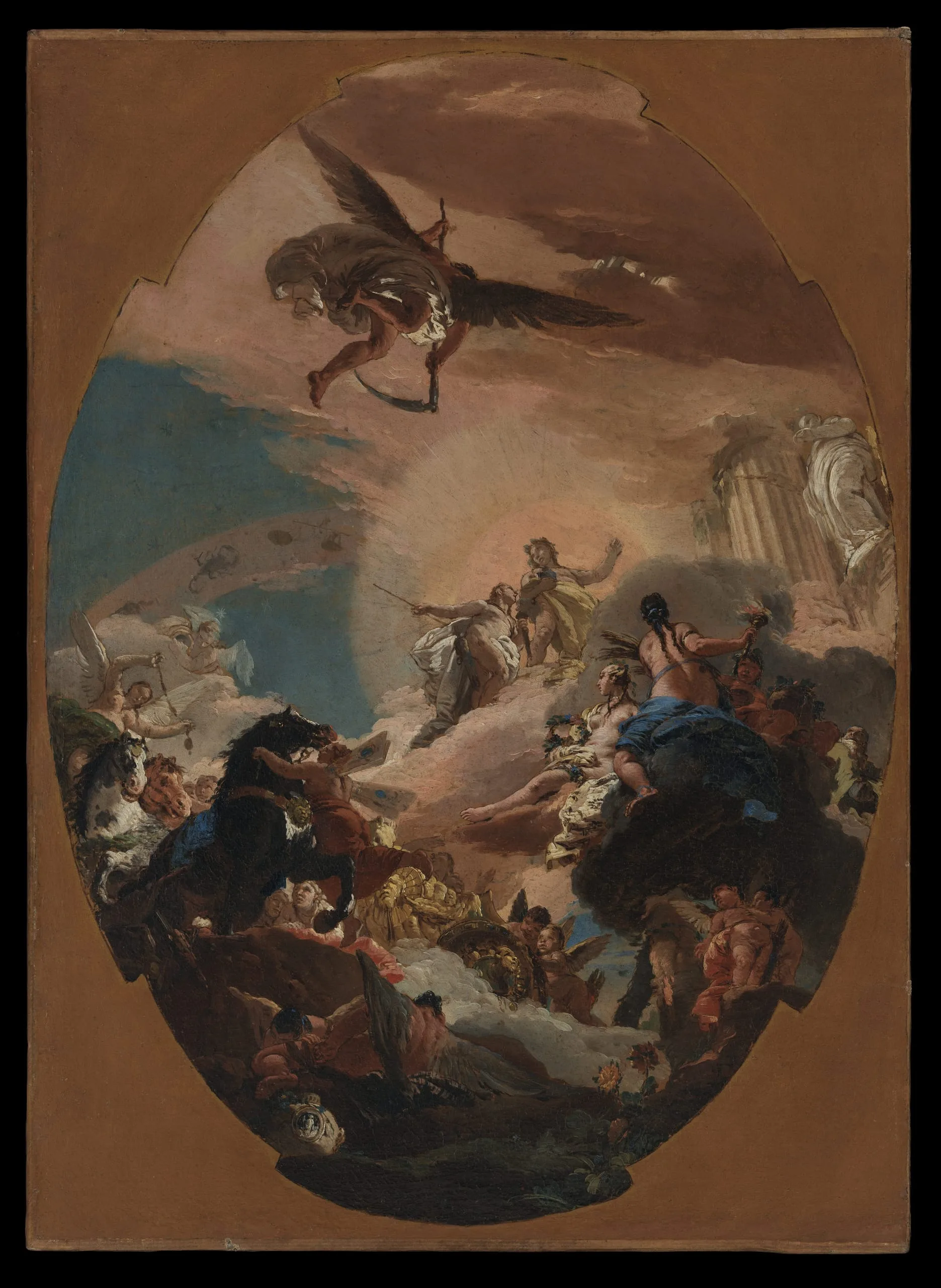
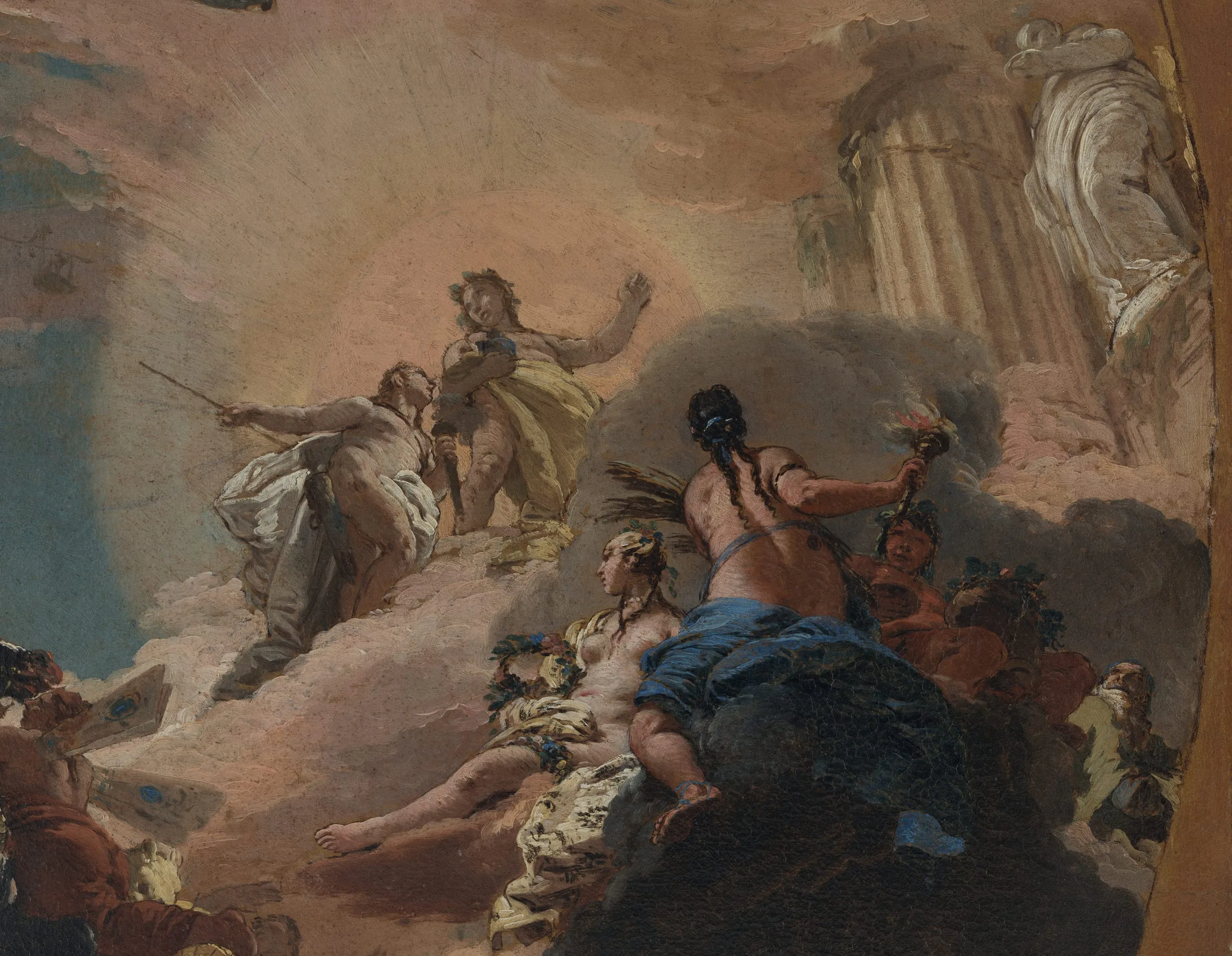
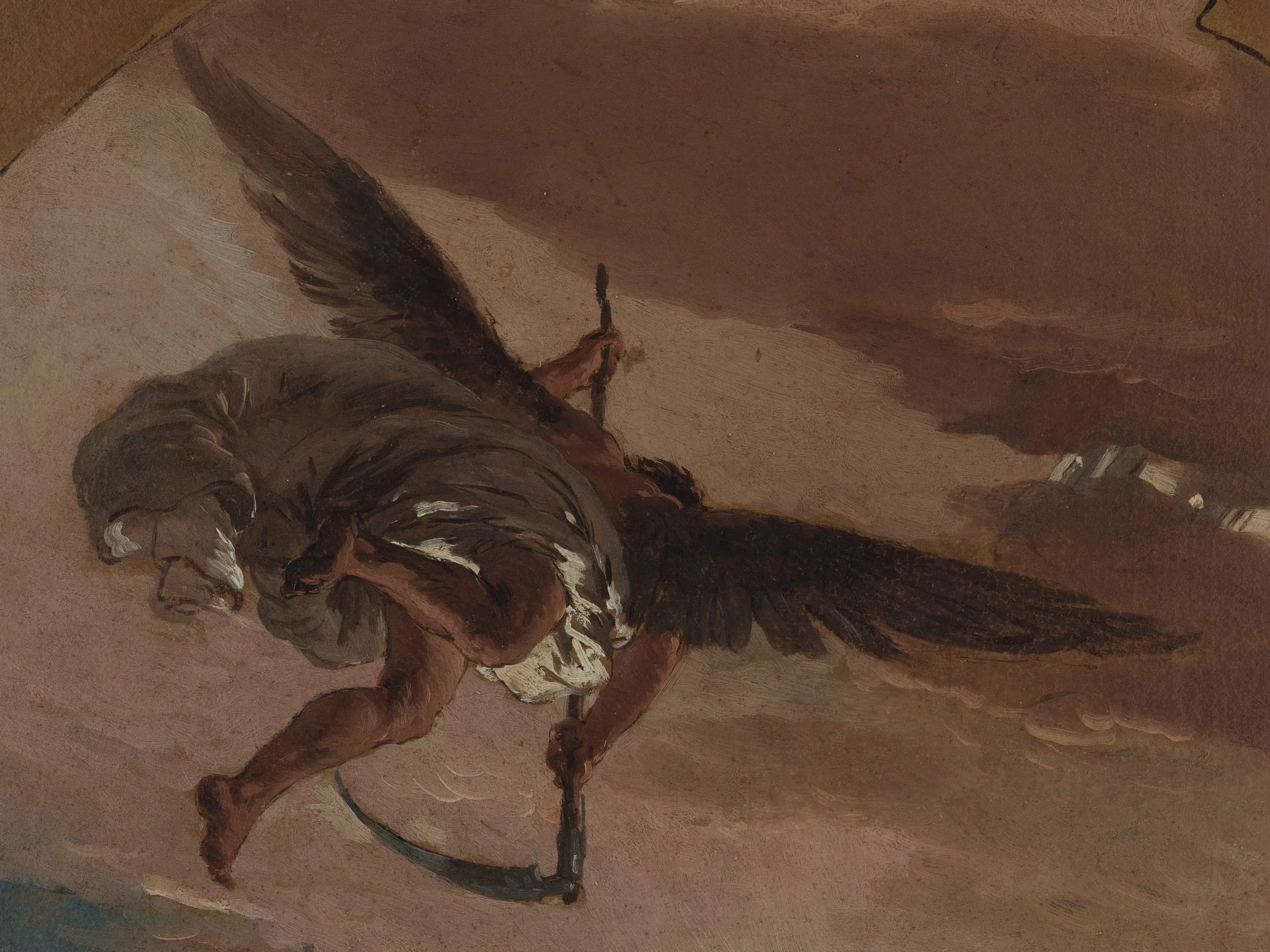
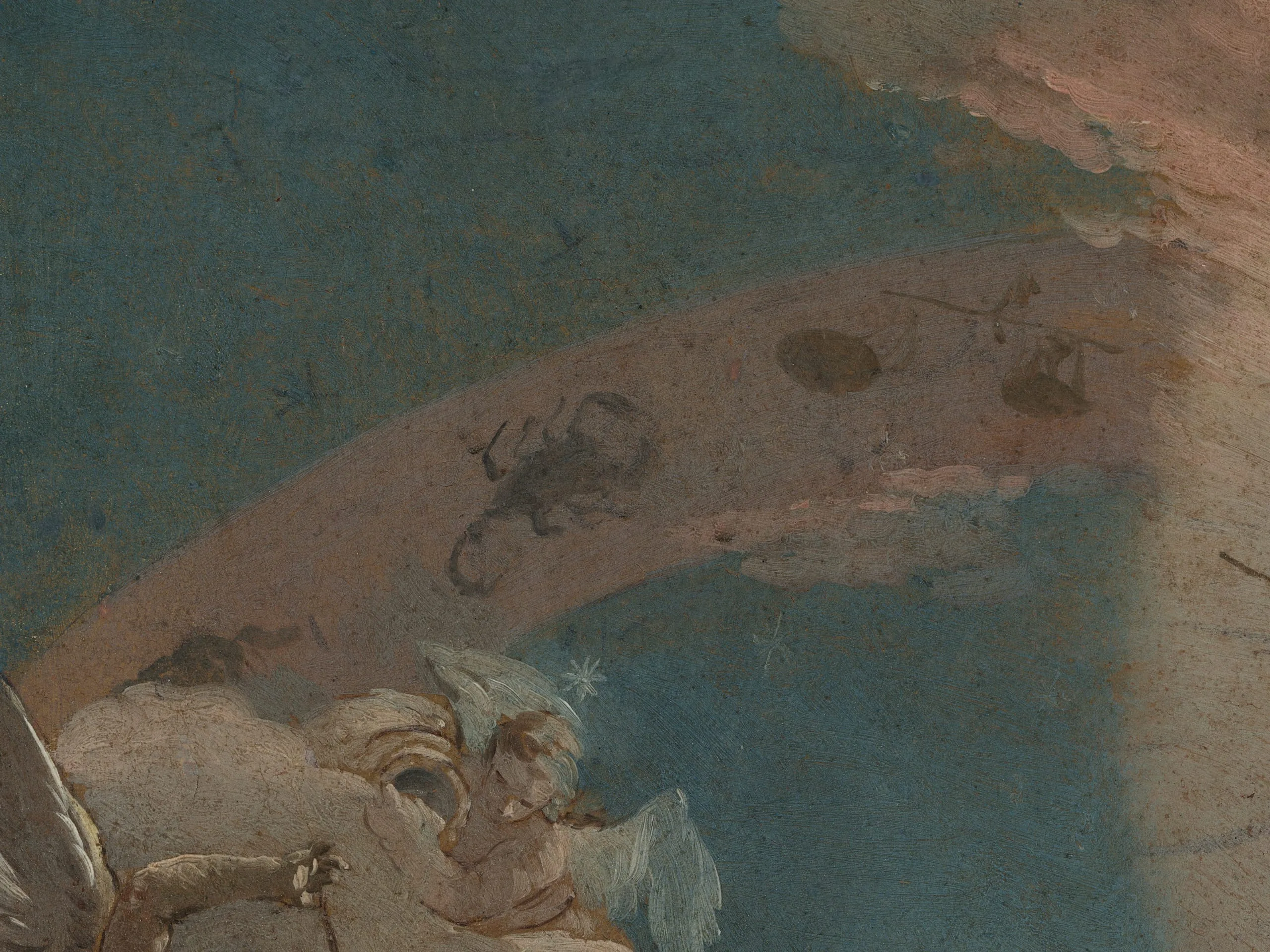
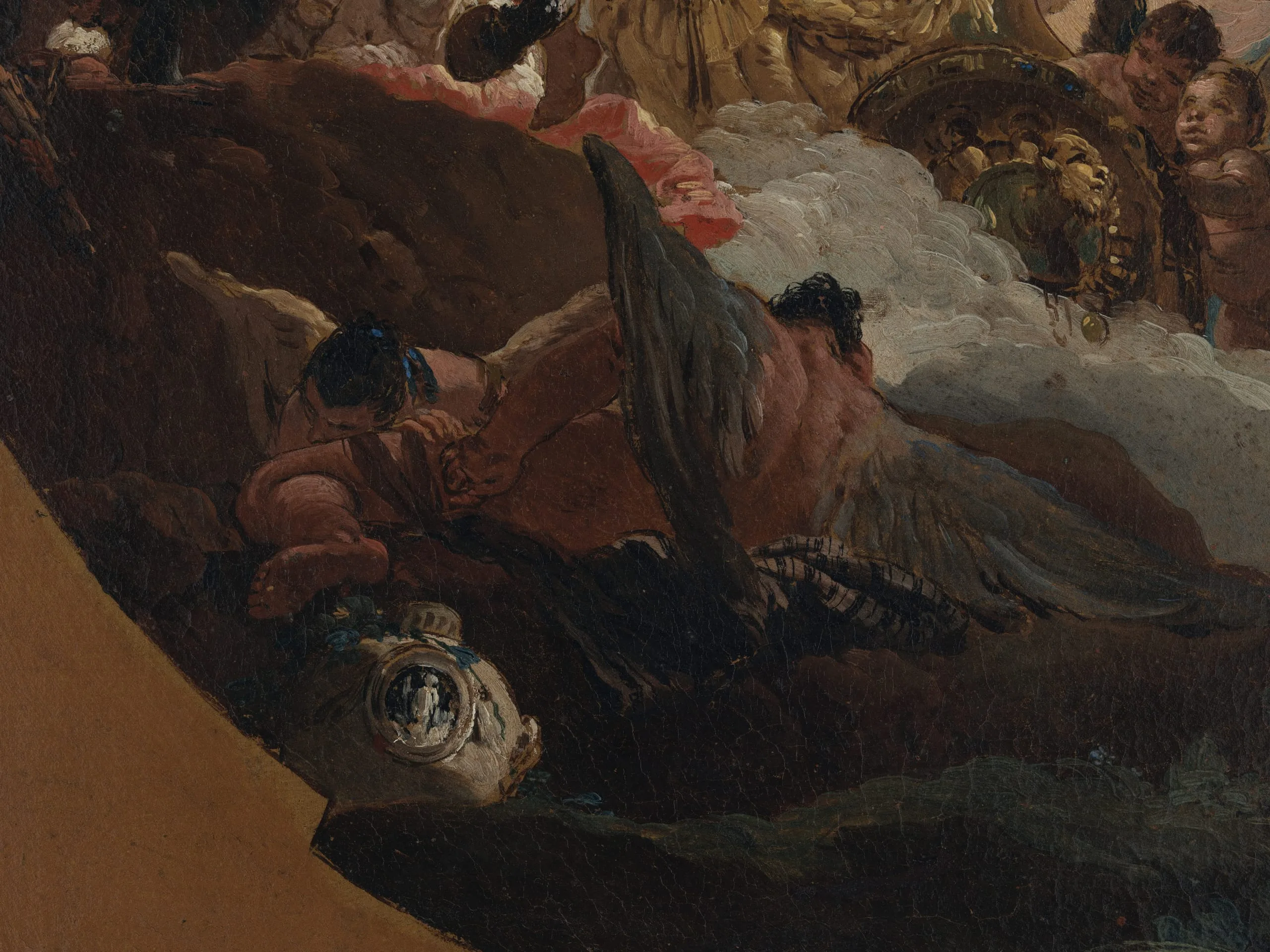
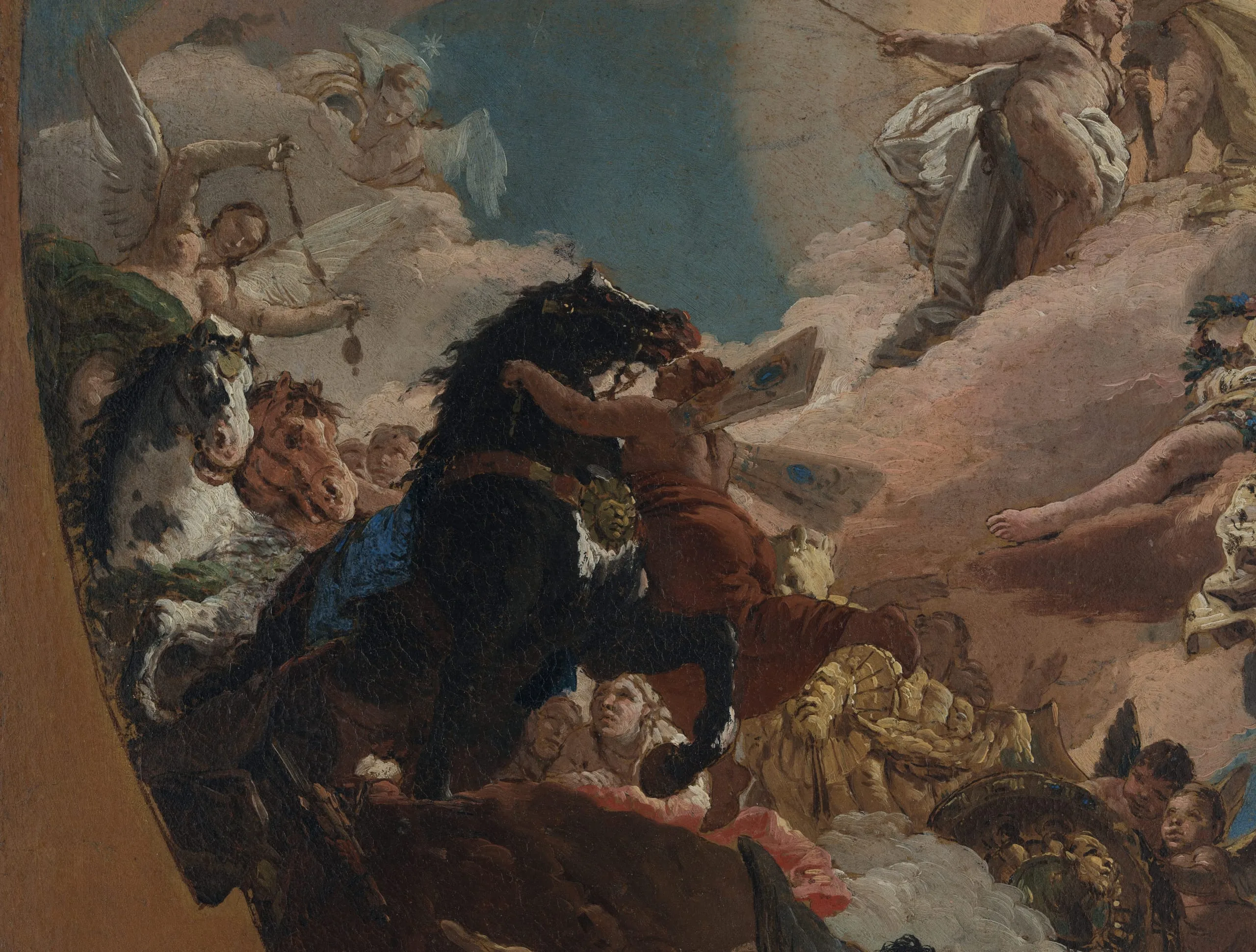
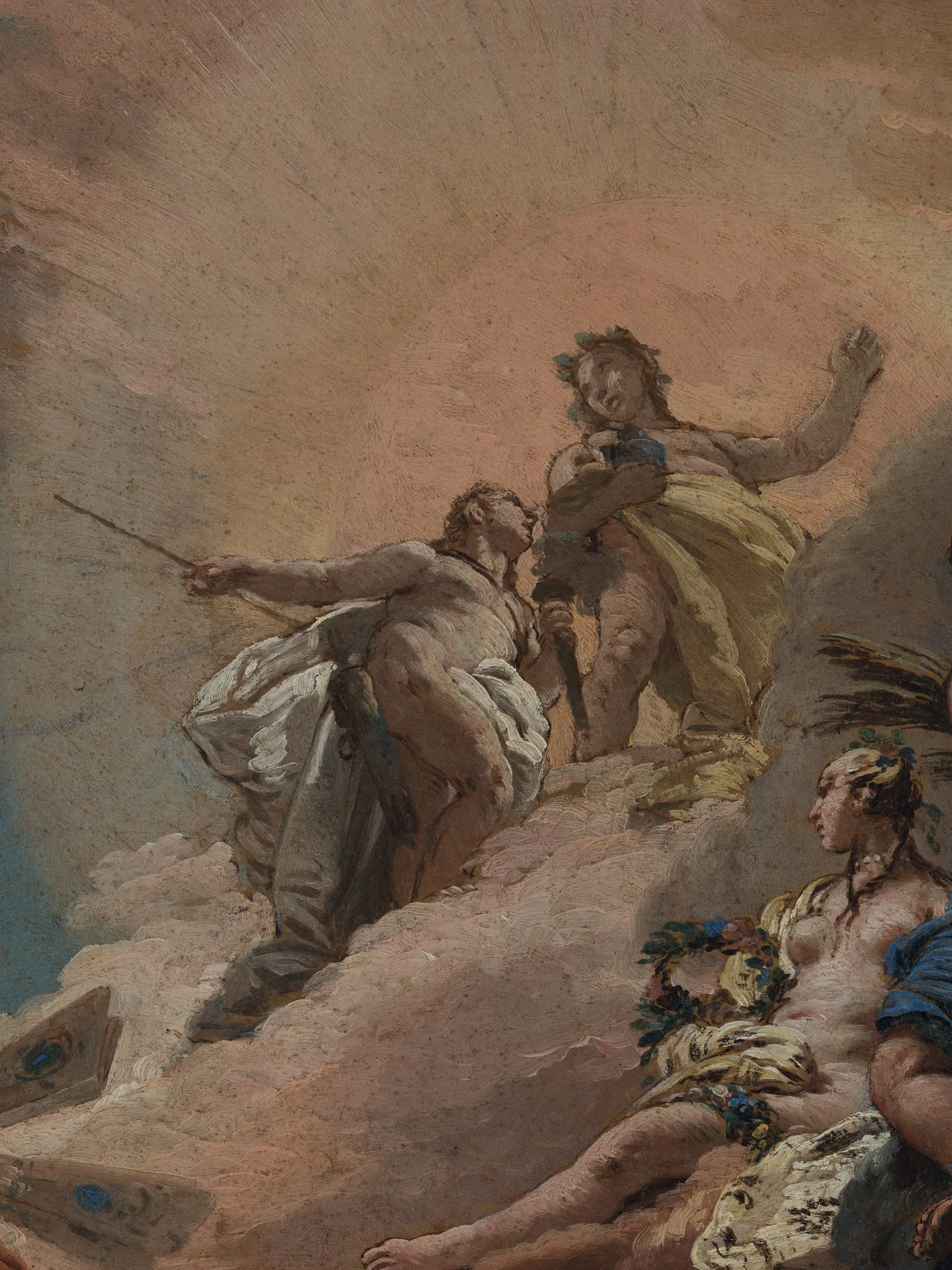
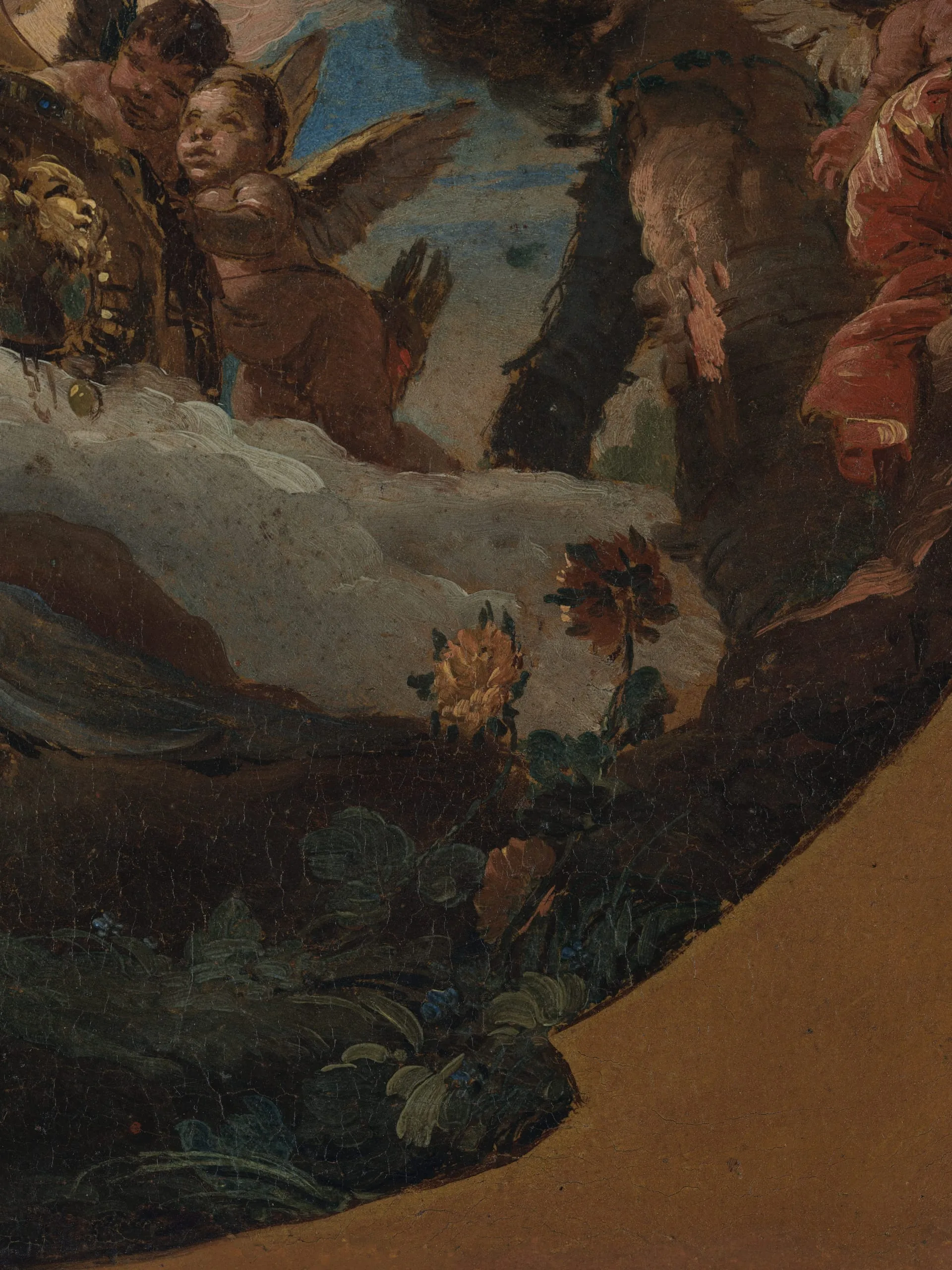
In 1730, the Venetian painter Giovanni Battista Tiepolo received a commission to produce a series of ceiling frescoes for the Palazzo Archinto in Milan. Apollo and Phaëthon, which draws from Ovid’s Metamorphoses, is a sketch related to the ceiling of one of the palace’s reception rooms. The narrative focuses on Phaëthon, the semidivine son of Apollo, who attempts to prove his lineage by taking control of his father’s chariot. Whether this oil sketch functioned as a ricordo or a modello remains uncertain. As a ricordo, it could have served a variety of functions: to document the fresco, as a template for assistants, or as sales material to attract future commissions. As a modello, the sketch may have been a preparatory work, helping Tiepolo refine his composition before presenting it to the Archinto family for approval. Regardless of its original function, the sketch holds particular value as a ricordo for contemporary viewers, as the palace was destroyed in the bombing of Milan in 1943.
The commission’s patron, Carlo Archinto, was a notable figure in the Milanese aristocracy and was deeply invested in science, medicine, and the arts. Archinto likely instructed the palace librarian, Filippo Argelati, to work with Tiepolo in shaping the fresco program. The artist’s faithful depiction of Ovid’s narrative—pinpointing the moment when Phaëthon gestures toward Apollo’s horses, eager to take control of the chariot—suggests that he worked directly from the text, rather than repurposing the popular imagery of Phaëthon losing control, nearly burning the earth, and ultimately falling into the river Po.
2024