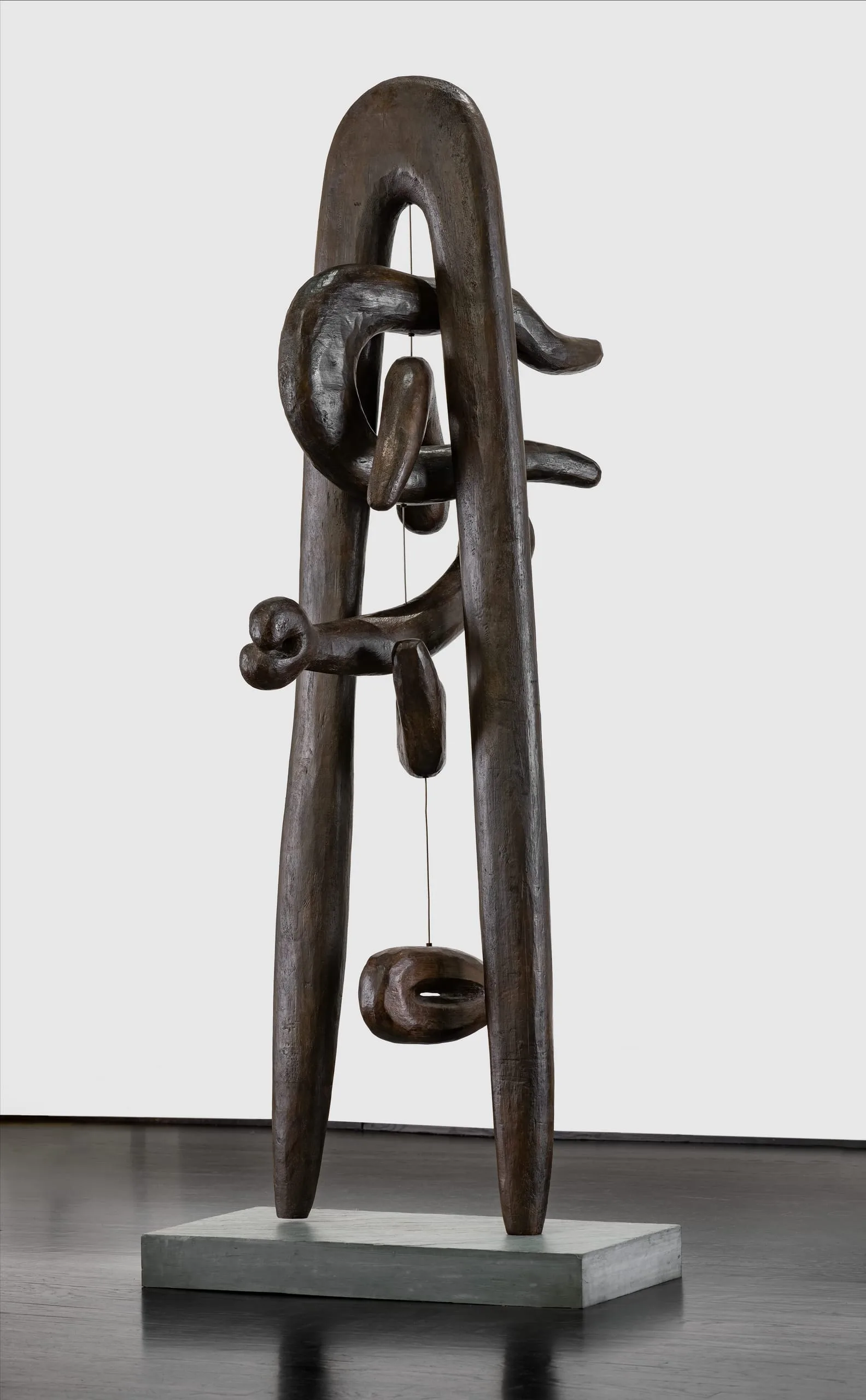
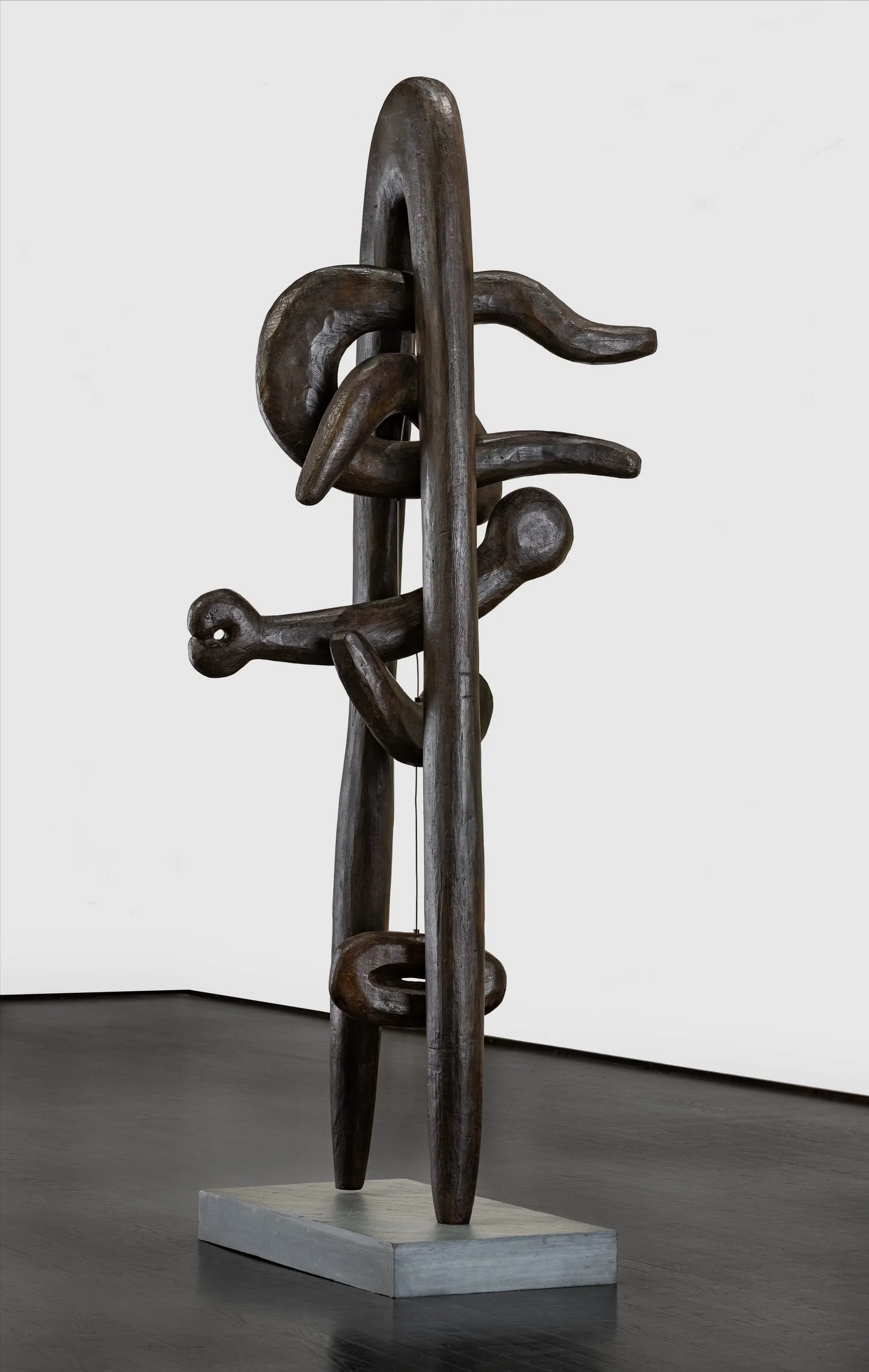
Born in Los Angeles to a Japanese father and an American mother, Isamu Noguchi embraced aspects of Asian, European, and American culture throughout his career. In 1942, Executive Order 9066 was issued, authorizing the internment of Japanese Americans living on the West Coast during World War II. Noguchi— by then living in New York—voluntarily entered a relocation camp in Arizona with the aim of improving the environment for the internees; he was forced to remain in the camp for six months.
Cronos, made initially in balsa wood, derives its name from the mythological son of Heaven and Earth. With its bone-like shapes, the suspended interlocking curves and pendular oval can turn slowly within the outer arch. Cronos was singled out in 1949 by art critic Clement Greenberg, a champion of American Abstract Expressionism, for its rough, hand-worked surfaces and powerful contours.
Wall label, 2021.