LACMA

ShopMembershipMyLACMATickets
LACMA
Los Angeles County Museum of Art
5905 Wilshire Blvd.
Los Angeles, CA 90036
info@lacma.org
(323) 857-6000
Sign up to receive emails
Subscribe
© Museum Associates 2025

Museum Hours

Monday

11 am–6 pm

Tuesday

11 am–6 pm

Wednesday

Closed

Thursday

11 am–6 pm

Friday

11 am–8 pm

Saturday

10 am–7 pm

Sunday

10 am–7 pm


  • About LACMA
  • Jobs
  • Building LACMA
  • Host An Event
  • Unframed
  • Press
  • FAQs
  • Log in to MyLACMA
  • Privacy Policy
© Museum Associates 2025
Collections

Unknown
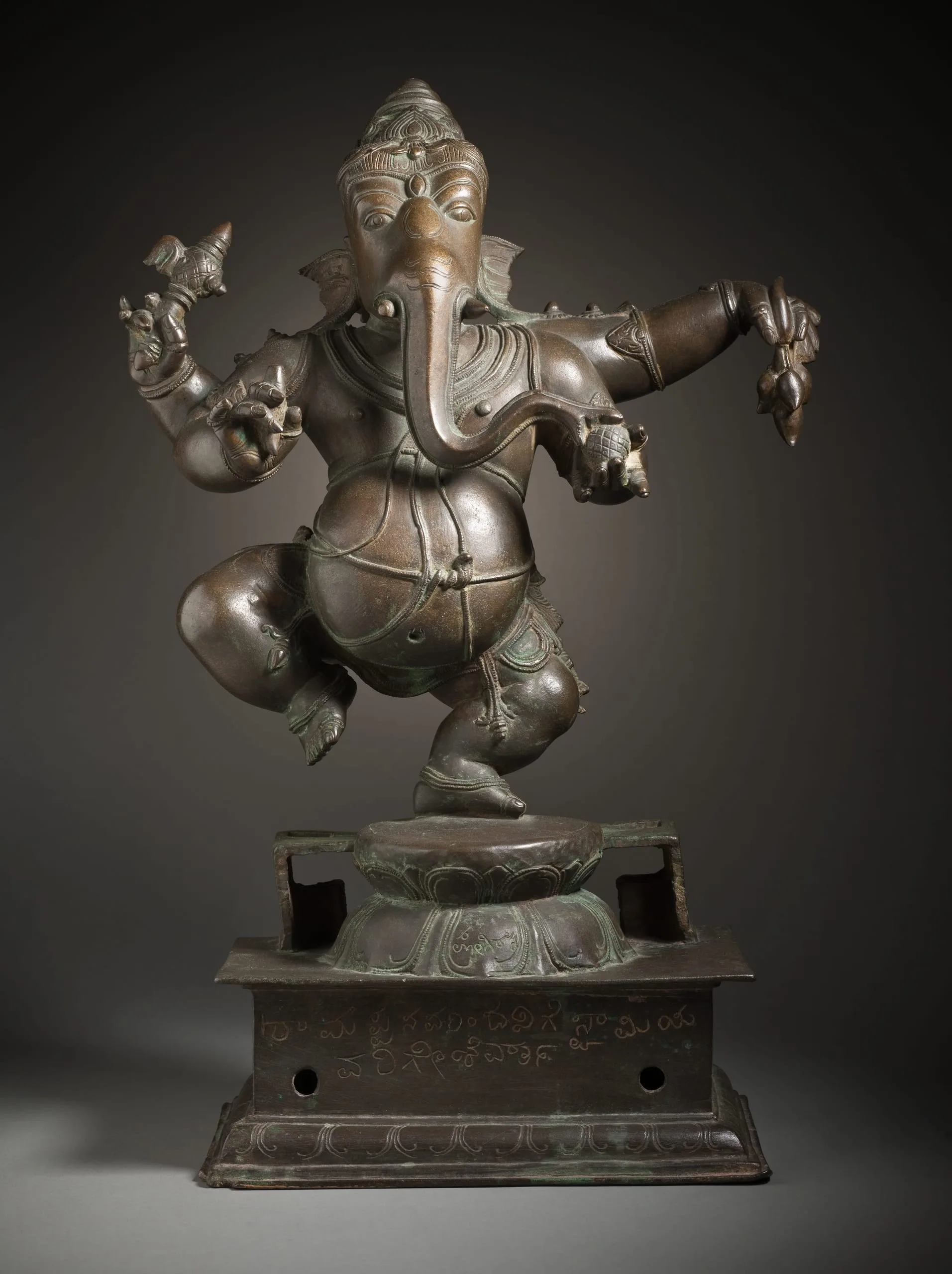
Dancing Ganesha, Lord of Obstacles16th-17th century

Not on view
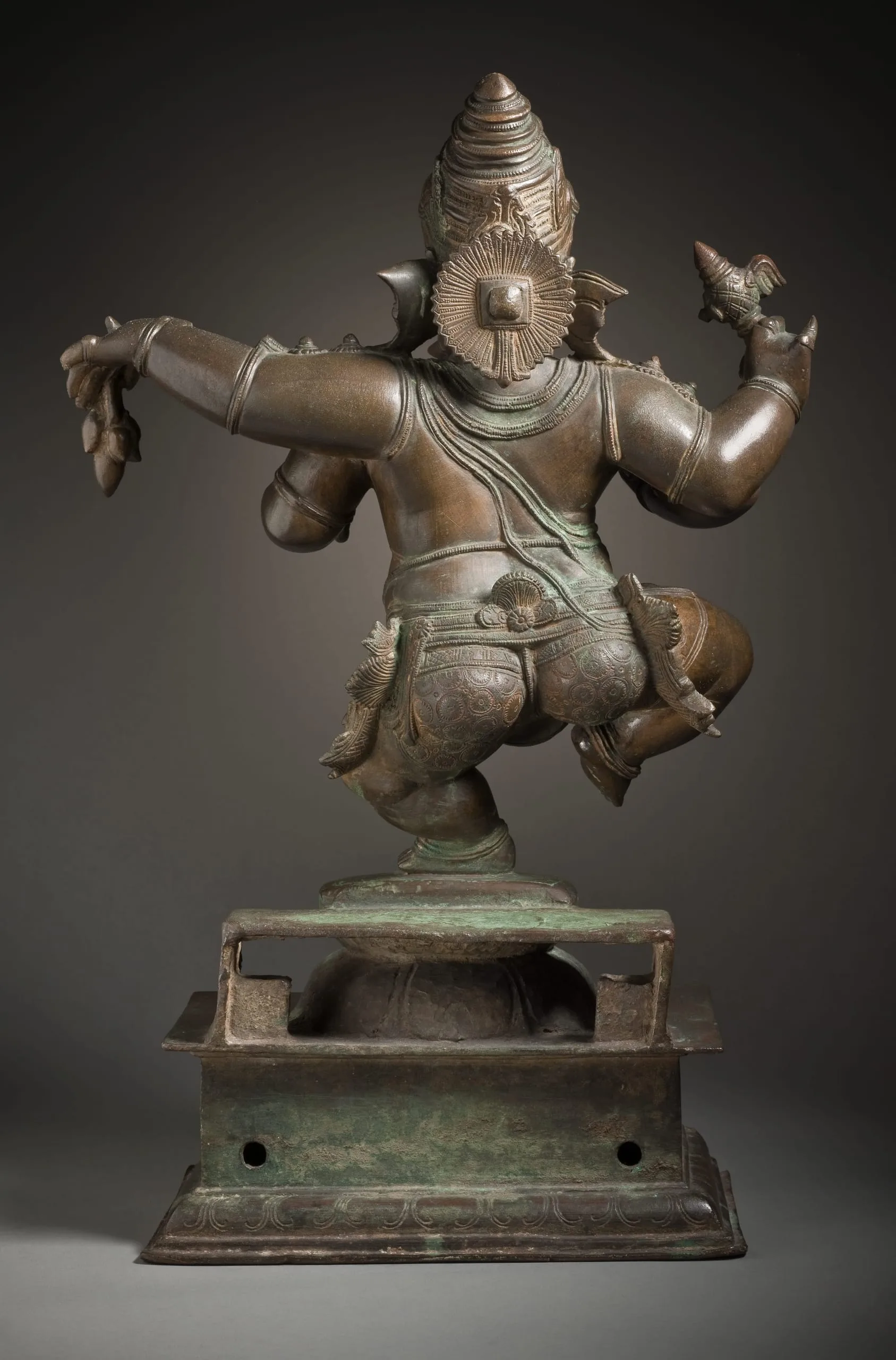
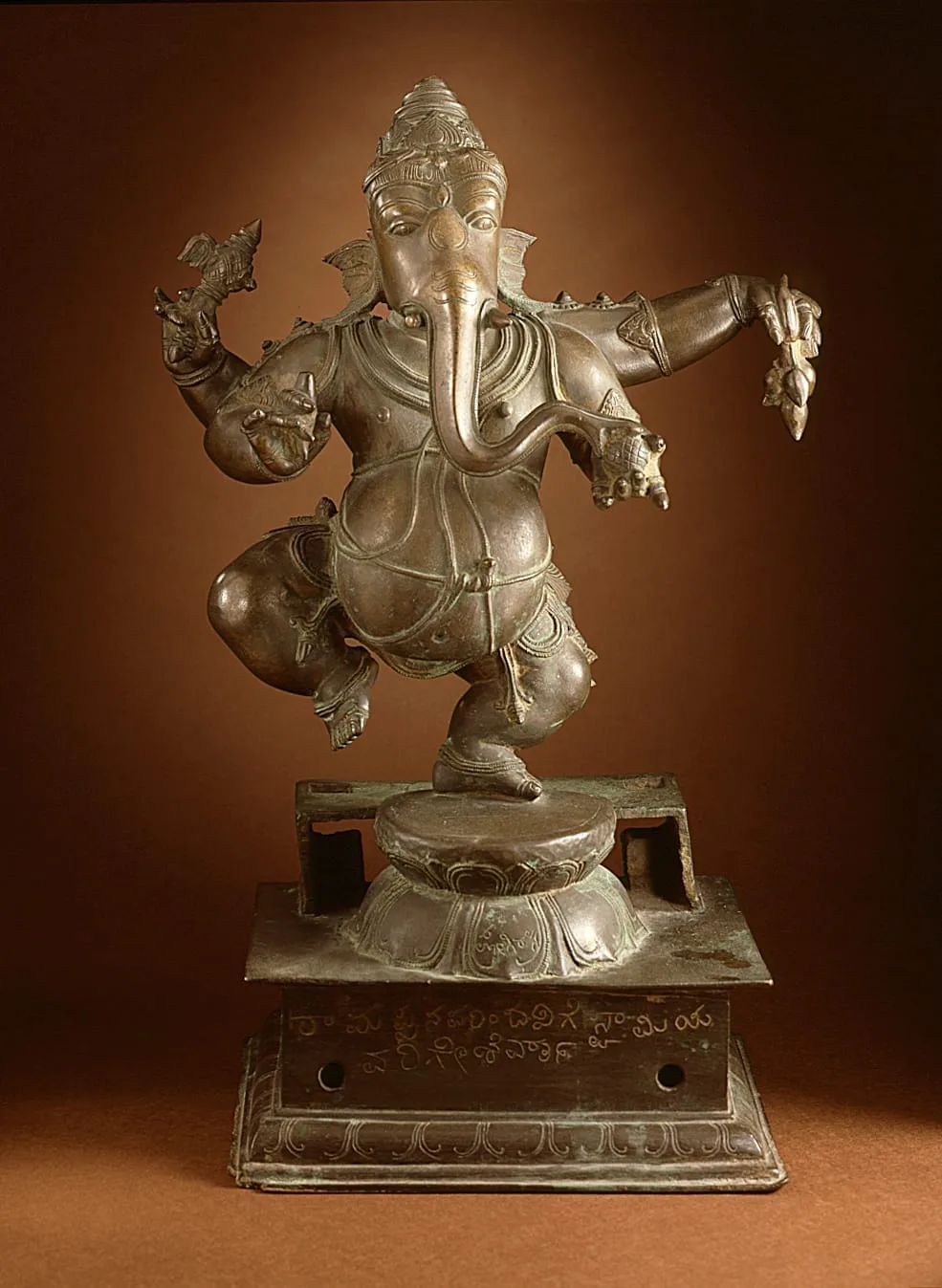
Bronze sculpture of a dancing four-armed, elephant-headed figure on a tiered lotus and rectangular pedestal inscribed with South Indian script
Bronze sculpture of a four-armed dancing figure with an elephant head, conical crown, and radiating halo, posed in a dynamic tribhanga stance with one leg raised, wearing ornate dhoti and jewelry, on a tiered rectangular base with green patina.
Bronze sculpture of a dancing elephant-headed deity with four arms, one leg raised, mounted on a lotus pedestal above a stepped rectangular base inscribed with Telugu script.
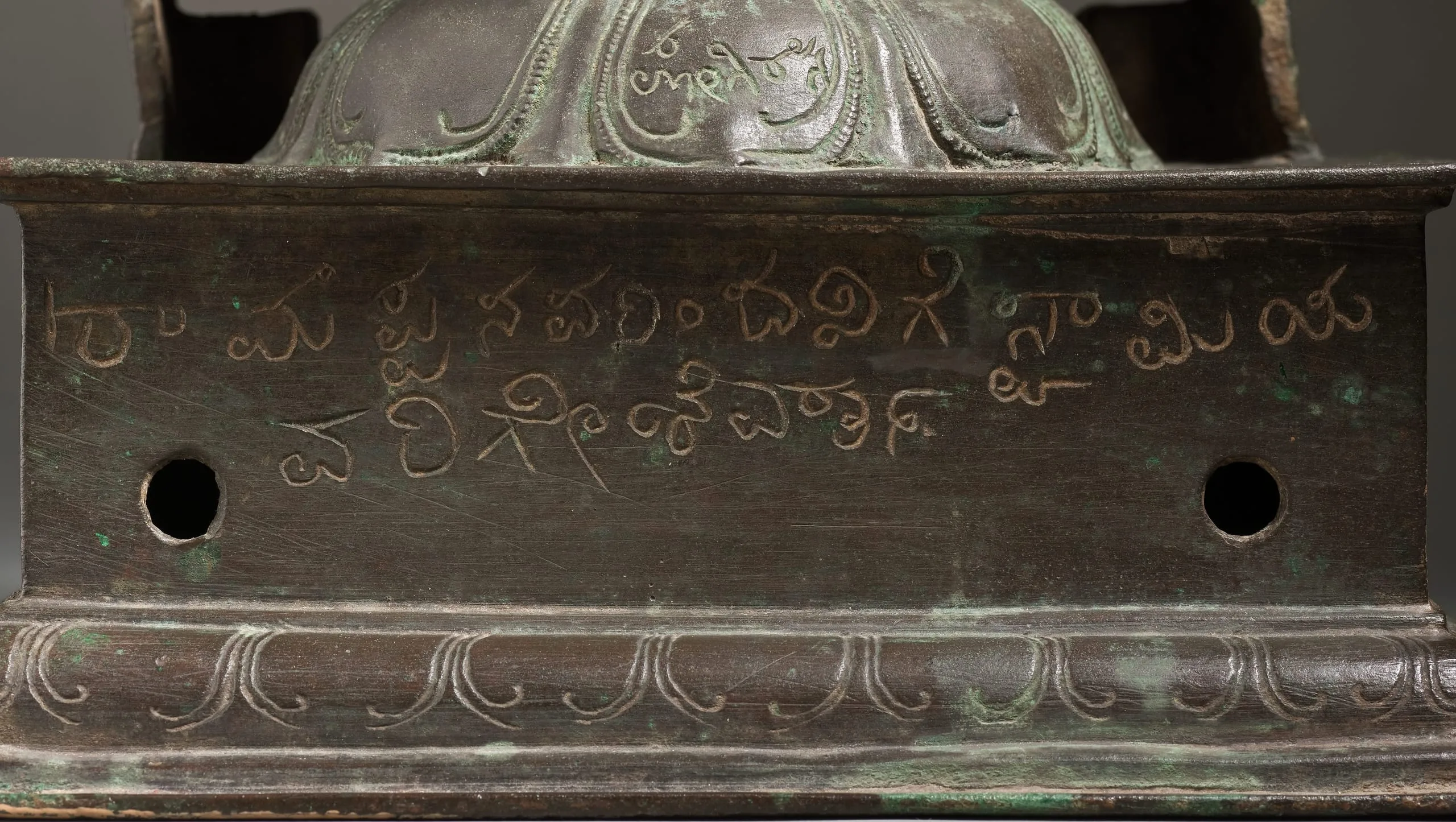
Close-up of a bronze pedestal base with green patina, bearing two lines of incised Telugu script across the flat rectangular face, above a band of scrolling relief decoration; two circular holes pierced through the base.
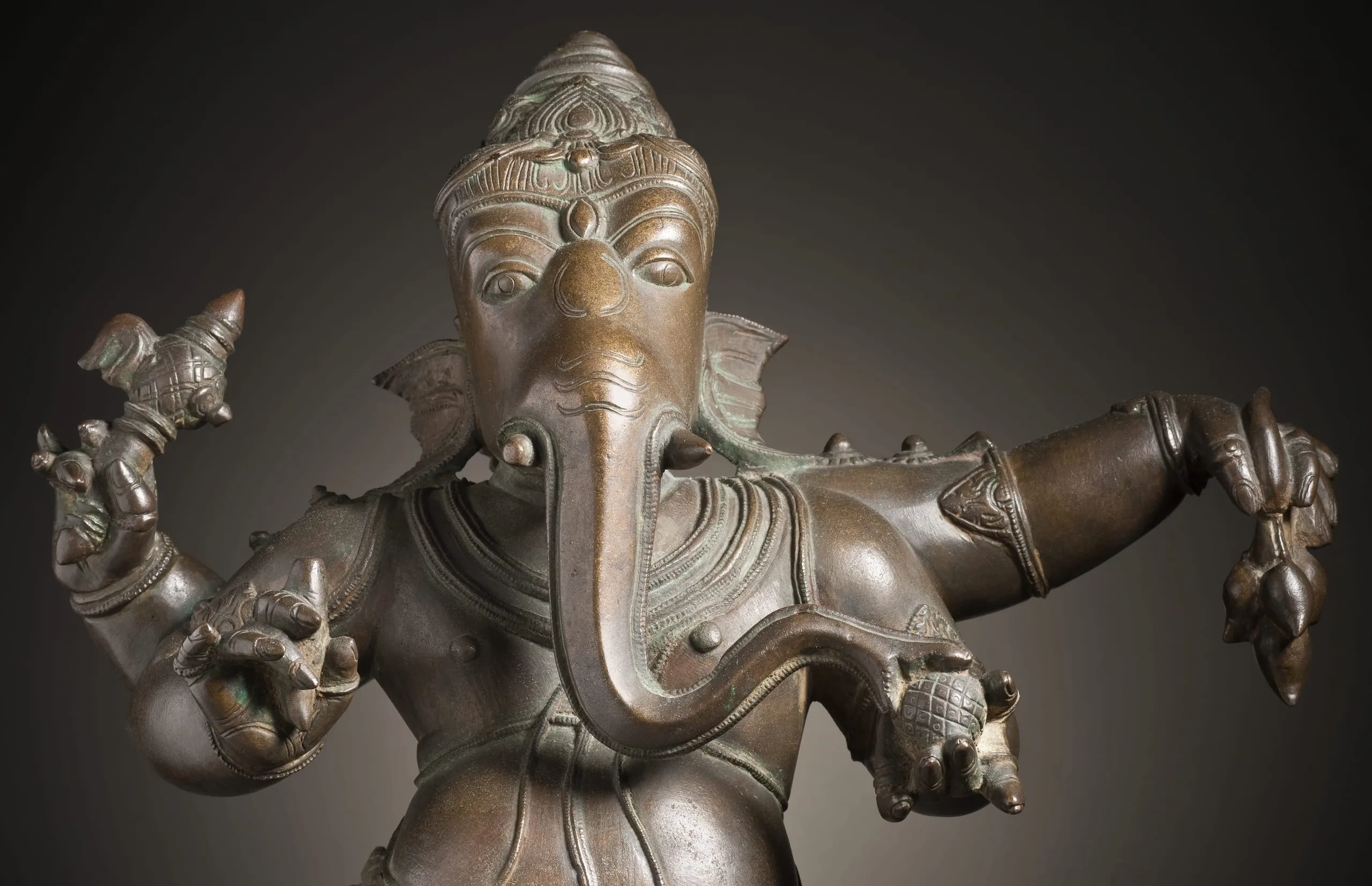
Bronze sculpture of Ganesha in a dancing pose, four arms extended and holding small objects, with ornamental armbands and crown, dark patinated surface with fine cast detailing.
Artist or Maker
Unknown
Title
Dancing Ganesha, Lord of Obstacles
Place Made
India, Karnataka
Date Made
16th-17th century
Medium
Copper alloy
Dimensions
19 7/8 x 13 x 7 3/4 in. (50.48 x 33.02 x 19.69 cm)
Credit Line
Purchased with funds provided by Harry and Yvonne Lenart
Accession Number
M.86.126
Classification
Sculpture
Collecting Area
South and Southeast Asian Art
Curatorial Notes
Ganesha is the Indian lord of obstacles. He can remove them as well as placing them in one’s path. He holds an elephant goad in his upper right hand. In his lower right hand, he holds his broken right tusk, which according to various myths was lost in battle, used as a stylus, or as a projectile that he hurled at the moon when it ridiculed him for falling off his rat mount and bursting open his belly overstuffed with sweetmeats. He used a cobra associated with his father, the Hindu god Shiva, to tie his belly back together. As Ganesha is fond of eating, he holds a bunch of mangoes in his upper left hand and a sweetmeat in his lower left. Since he is shown with mangoes and gracefully dancing, Ganesha is here meant to portray a happy, spirited child. The Kannada inscription on the base states that the image was donated by Ramappa “in honor of the Lord,” for the sake of worship. This was likely used as a processional bronze (copper alloy) and originally had a separately cast aureole.
Selected Bibliography
  • McGill, Forrest, editor. Beyond Bollywood: 2000 Years of Dance in the Arts of South Asia, Southeast Asia, and the Himalayan Region. San Francisco, CA: Asian Art Museum, 2022.