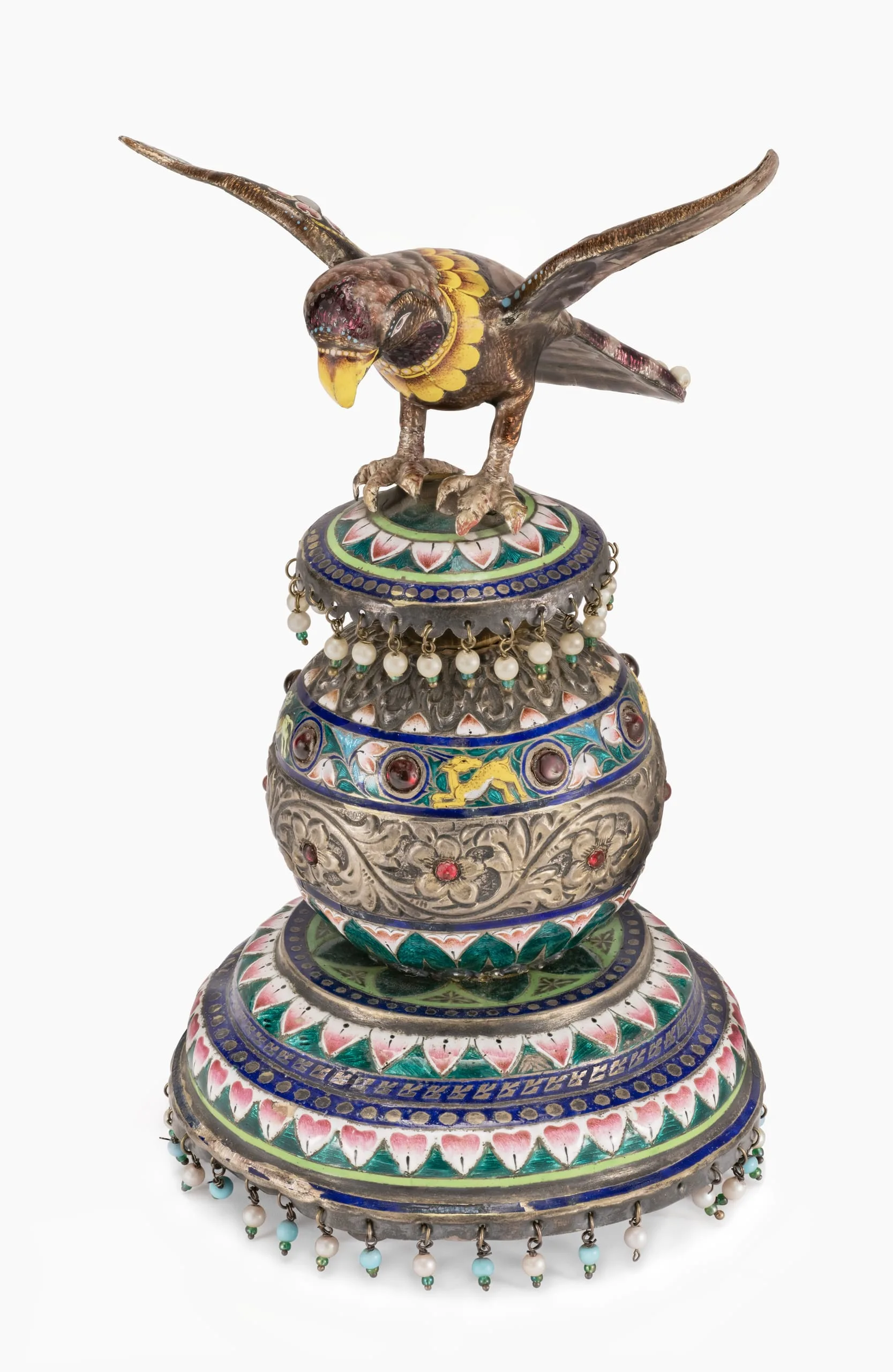
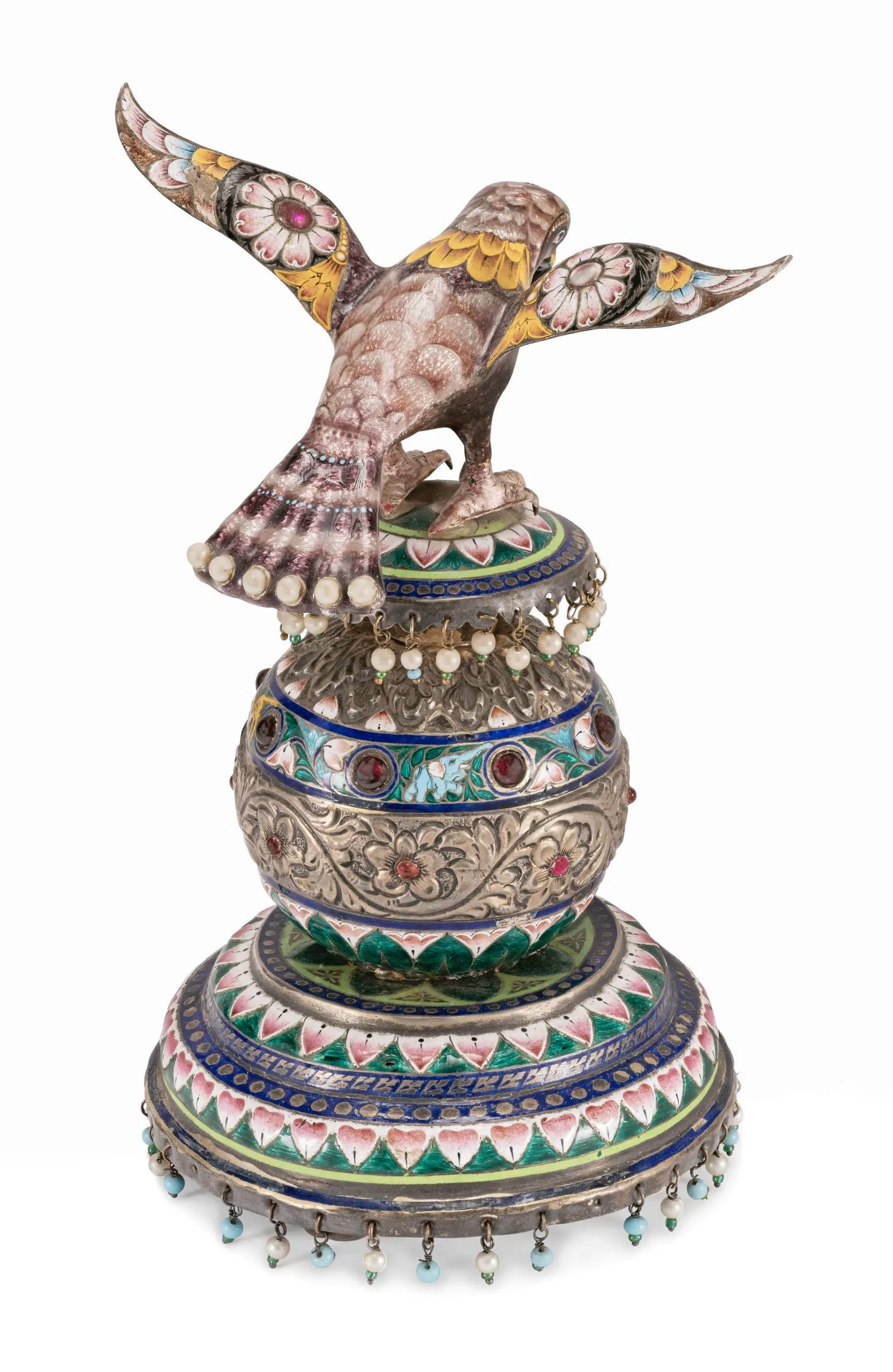
Reportedly once in the former royal collection of Bharatpur, Rajasthan, this graceful falcon is a tour de force of enameling. It features the delicate and rare pink enameling characteristic of Benares (Varanasi), as well as white, translucent mottled light brown, opaque yellow and shaded yellow, and opaque powder blue enameling. The separately fashioned silver repoussé columnar base, on stylistic grounds perhaps slightly later in date or by a different artist, also incorporates translucent green, opaque light green, and translucent blue enameling. A design register encircling the mid-base includes lively representations of a powder blue elephant and a yellow antelope.
The bird of prey is depicted as if perched on a falconer’s protective gauntlet, ready to take flight for the hunt. Falconry is traditionally a pastime of royalty believed to have originated in the Middle East or Central Asia. Although textual descriptions in early Hindu and Greek literature record an ancient practice of hunting with falcons in India, the major impetus in its South Asian development was the cultural influence of Arab and Muslim courts at which falconry was a cherished royal pursuit. Numerous Sultanate and Mughal portraits of royal falconers document the sport’s high status.
Varanasi’s sophisticated enameling traditions drew upon Mughal artistic antecedents, but its renowned pink enameling is traditionally thought to have been introduced through the Lucknow court during the reign of the enlightened art patron Nawab Asaf al-Daula (r. 1775–97) by the arrival from Kabul, Afghanistan of Kaisar Agha, who was likely familiar with the highly fugitive art of pink enameling in its efflorescence under the Iranian Qajar dynasty (1789-1925). Varanasi was a subordinate district of Awadh, the Mughal political region encompassing Lucknow. Pink enameling remained a specialty of Varanasi, although its use spread over time to Delhi and certain other locales in a limited manner. See also M.86.191.1.