LACMA

ShopMembershipMyLACMATickets
LACMA
Los Angeles County Museum of Art
5905 Wilshire Blvd.
Los Angeles, CA 90036
info@lacma.org
(323) 857-6000
Sign up to receive emails
Subscribe
© Museum Associates 2025

Museum Hours

Monday

11 am–6 pm

Tuesday

11 am–6 pm

Wednesday

Closed

Thursday

11 am–6 pm

Friday

11 am–8 pm

Saturday

10 am–7 pm

Sunday

10 am–7 pm


  • About LACMA
  • Jobs
  • Building LACMA
  • Host An Event
  • Unframed
  • Press
  • FAQs
  • Log in to MyLACMA
  • Privacy Policy
© Museum Associates 2025
Collections

Unknown
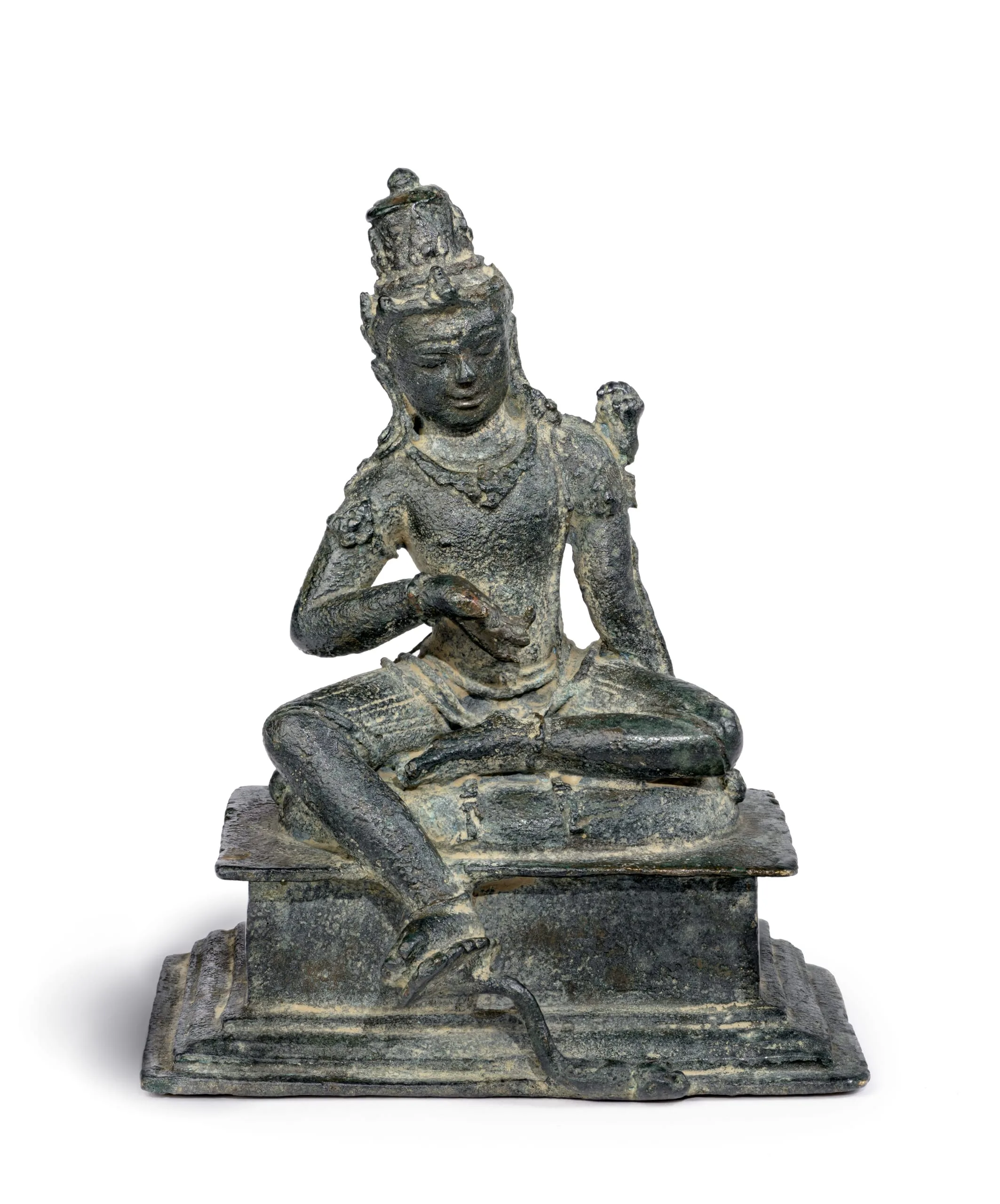
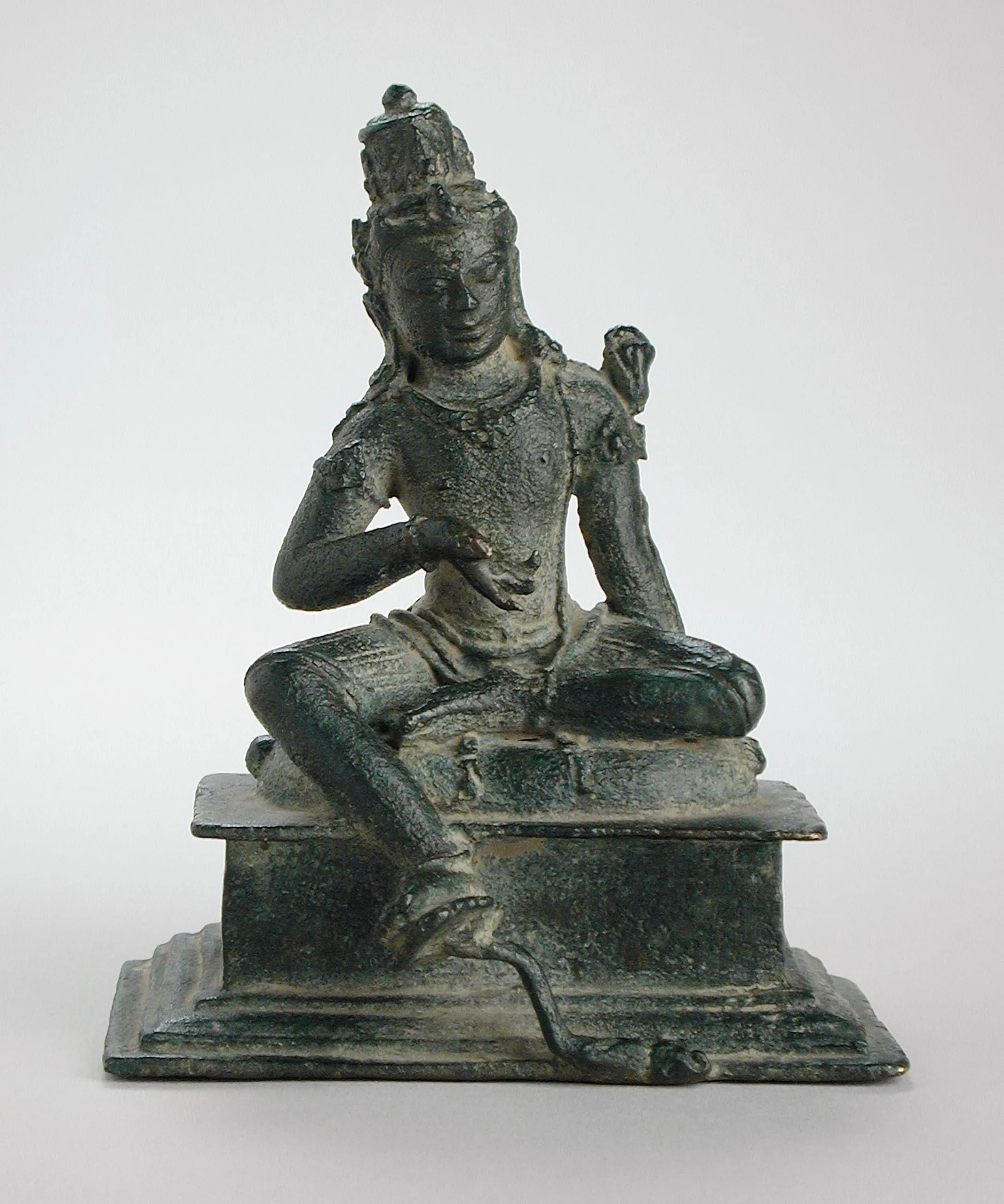
The Bodhisattva Avalokiteshvaracirca 800-850

On view:
Resnick Pavilion, floor 1
Small bronze sculpture of a seated cross-legged figure with tiered topknot and jewelry, on a stepped rectangular pedestal, covered in dark green patina
Small bronze figure of a seated deity wearing a tall crown and jewelry, one leg pendant over a tiered rectangular base, arms raised in a gesture pose, with dark green patina and textured surface.
Artist or Maker
Unknown
Title
The Bodhisattva Avalokiteshvara
Place Made
Indonesia, Central Java
Date Made
circa 800-850
Medium
Copper alloy
Dimensions
4 5/8 x 3 3/4 x 2 5/8 in. (11.7 x 9.5. x 6.7 cm)
Credit Line
Christian Humann Asian Art Fund
Accession Number
M.86.192
Classification
Sculpture
Collecting Area
South and Southeast Asian Art
Curatorial Notes

Avalokiteshvara, the Bodhisattva of Compassion, is enthroned on what is likely a cushion atop a multi-tiered rectangular pedestal. He sits in the relaxed posture (lalita asana) with his right leg pendant and supported by the pericarp of a lotus flower (karnika). Rather than his more customary piled hair of an ascetic, he wears a jeweled crown with a knob finial (kirita mukuta). This style of headdress is shared by his Hindu counterpart Vishnu, the Lord of Preservation, who is considered an emanation of Avalokiteshvara in Mahayana Buddhism. He wears standard jewelry, including the Brahmanical sacred thread (yajnopavita) worn over his left shoulder, and a striped dhoti. His right hand is held in front of his chest in the gesture of charity (varada mudra). In his left hand, he holds the stalk of a lotus with its flower behind his left shoulder. He may have once had a separately cast aureola (prabhavali) or throneback.

For an iconographically similar image of Avalokiteshvara attributed to circa 900 from Kurkihar in Bihar, India, see M.81.8.3. Together, the two images epitomize the assimilation of the artistic traditions of the Pala Dynasty of Eastern India (r. 750–1161) by the Central Javanese sculptors. This aesthetic relationship was facilitated by portable sculptures carried by traders and religious pilgrims.
Selected Bibliography
  • Little, Stephen, Tushara Bindu Gude, Karina Romero Blanco, Silvia Seligson, Marco Antonio Karam. Las Huellas de Buda. Ciudad de México : Instituto Nacional de Antropología e Historia, 2018.
  • Little, Stephen, and Tushara Bindu Gude. Realms of the Dharma: Buddhist Art across Asia. Los Angeles: Los Angeles County Museum of Art, 2025.