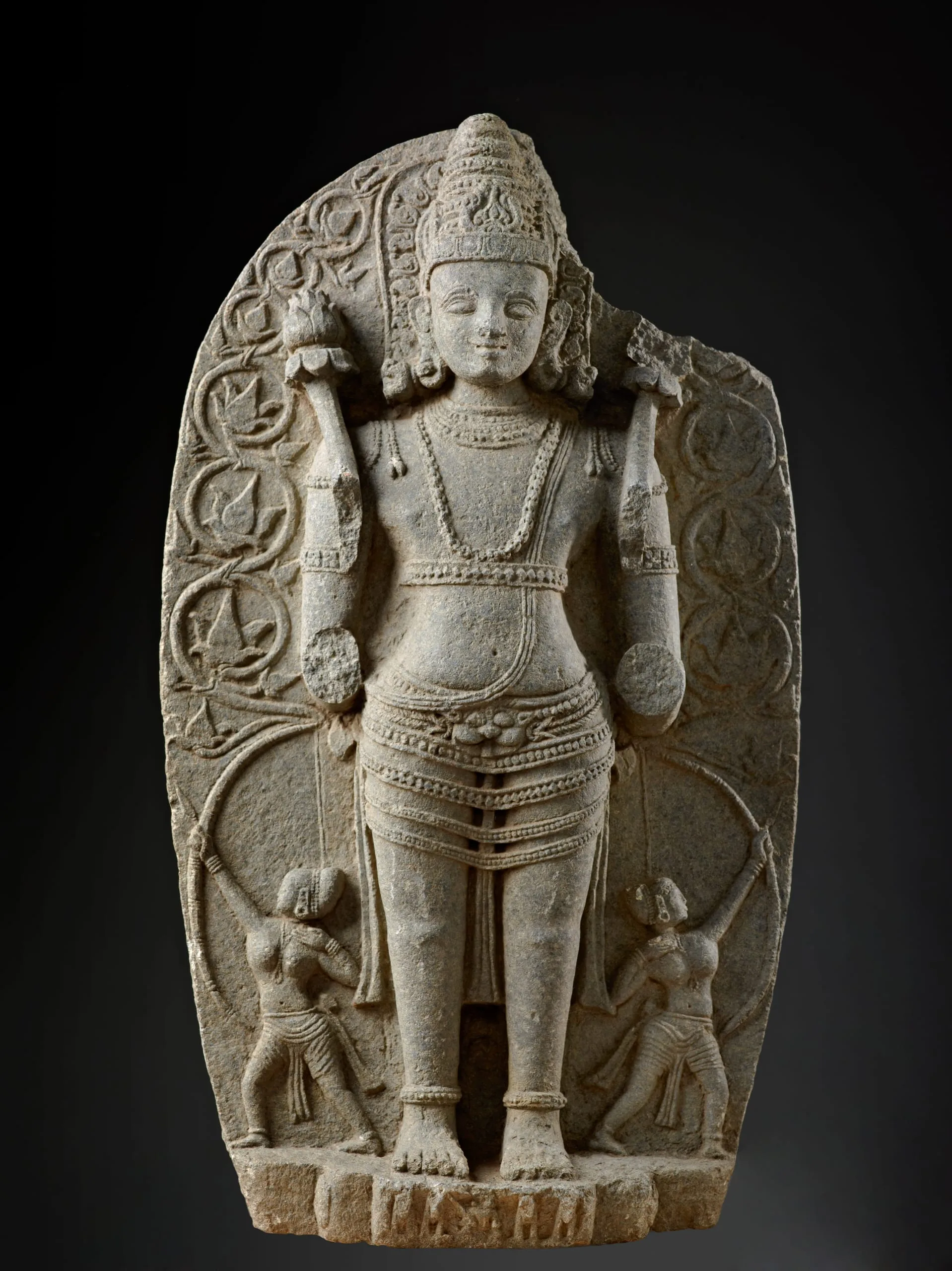
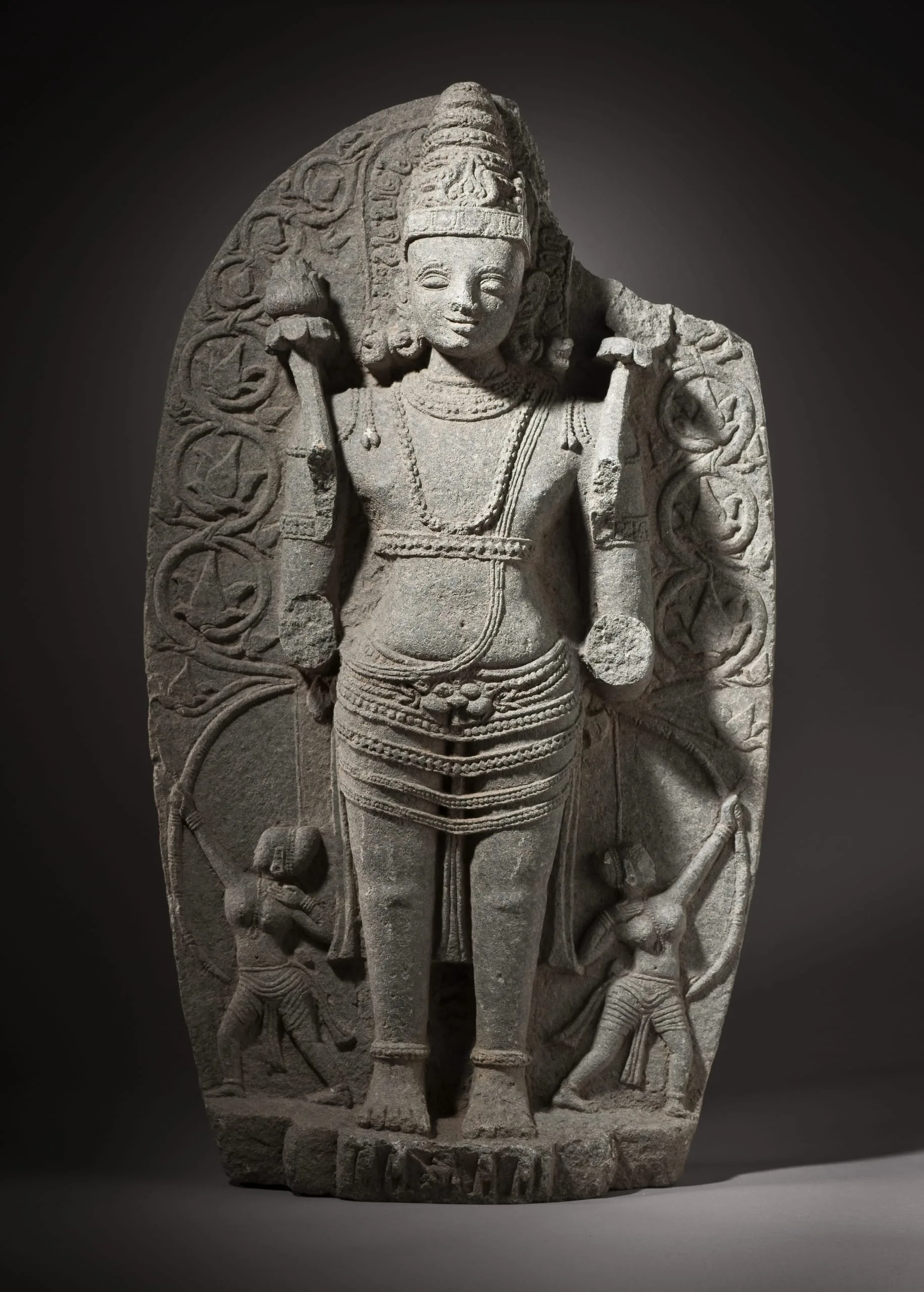
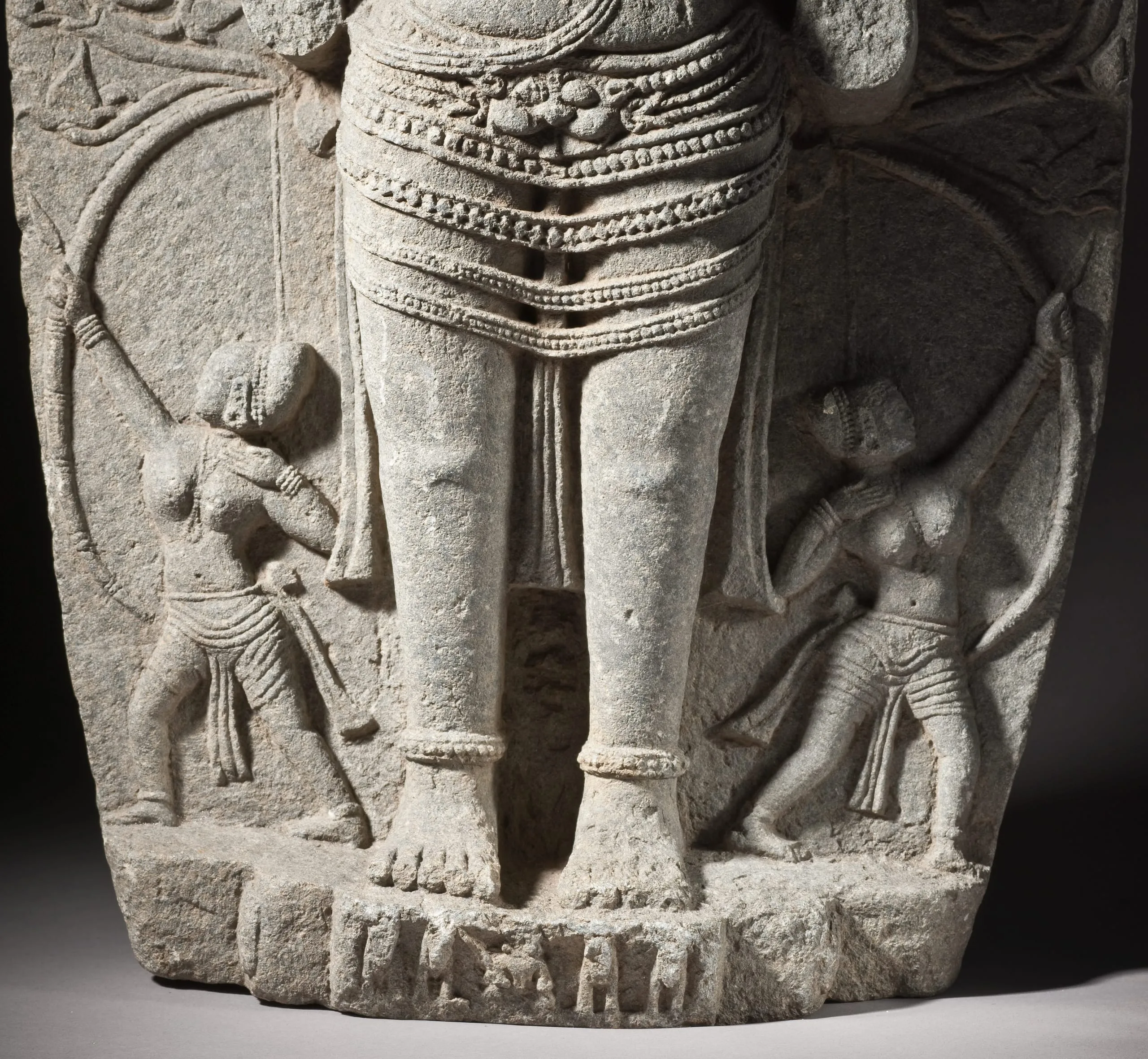
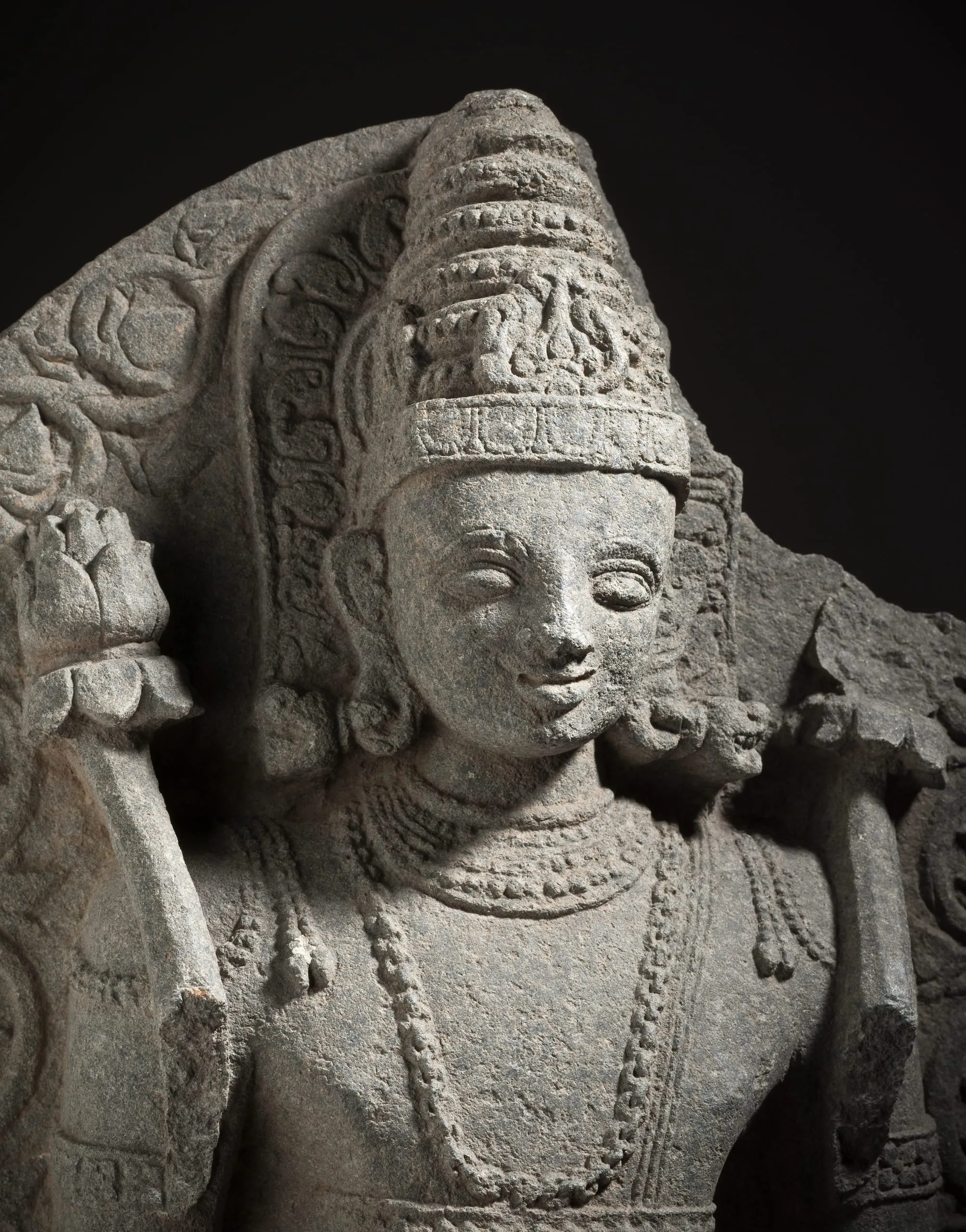
The Hindu Sun God Surya is the most important and oldest of the Indian planetary deities (nava graha). The earliest known anthropomorphic representations of Surya date from the late 3rd- 1st century B.C. The Sun God is depicted therein as riding in a chariot drawn by four horses as he makes his daily circuit across the heavens. Surya and his divine attendants are occasionally portrayed as archers, symbolizing their dispersal of darkness. The Sun God evolved into a composite nature with various strata of Vedic, Hellenistic, Iranian, and Brahmanical influences. Surya's popularity increased in the Gupta period during the 4th-6th century and the iconography used to portray him grew more complex. He continued to be represented throughout the medieval period and today remains one of the major gods of popular Hinduism.
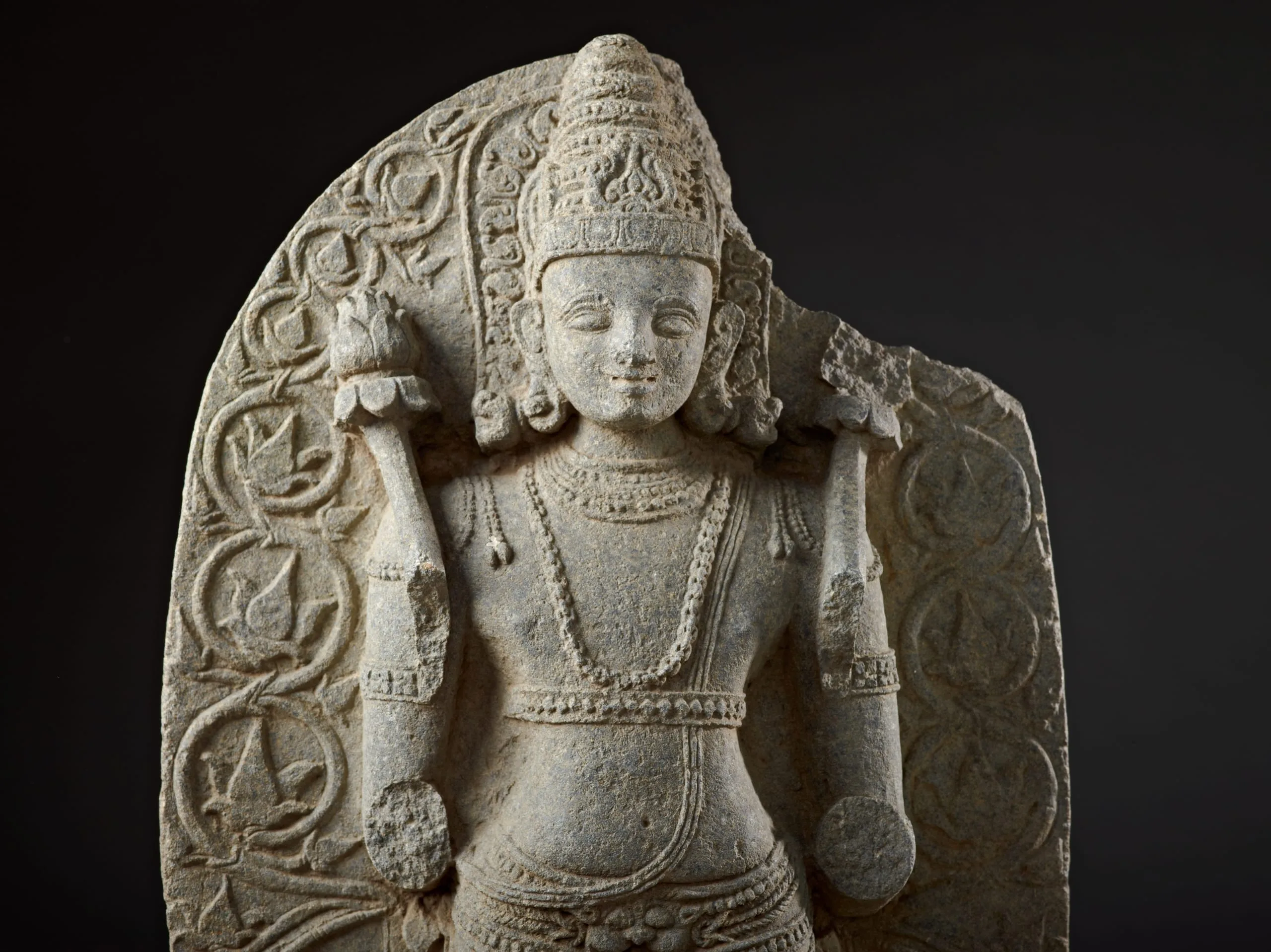
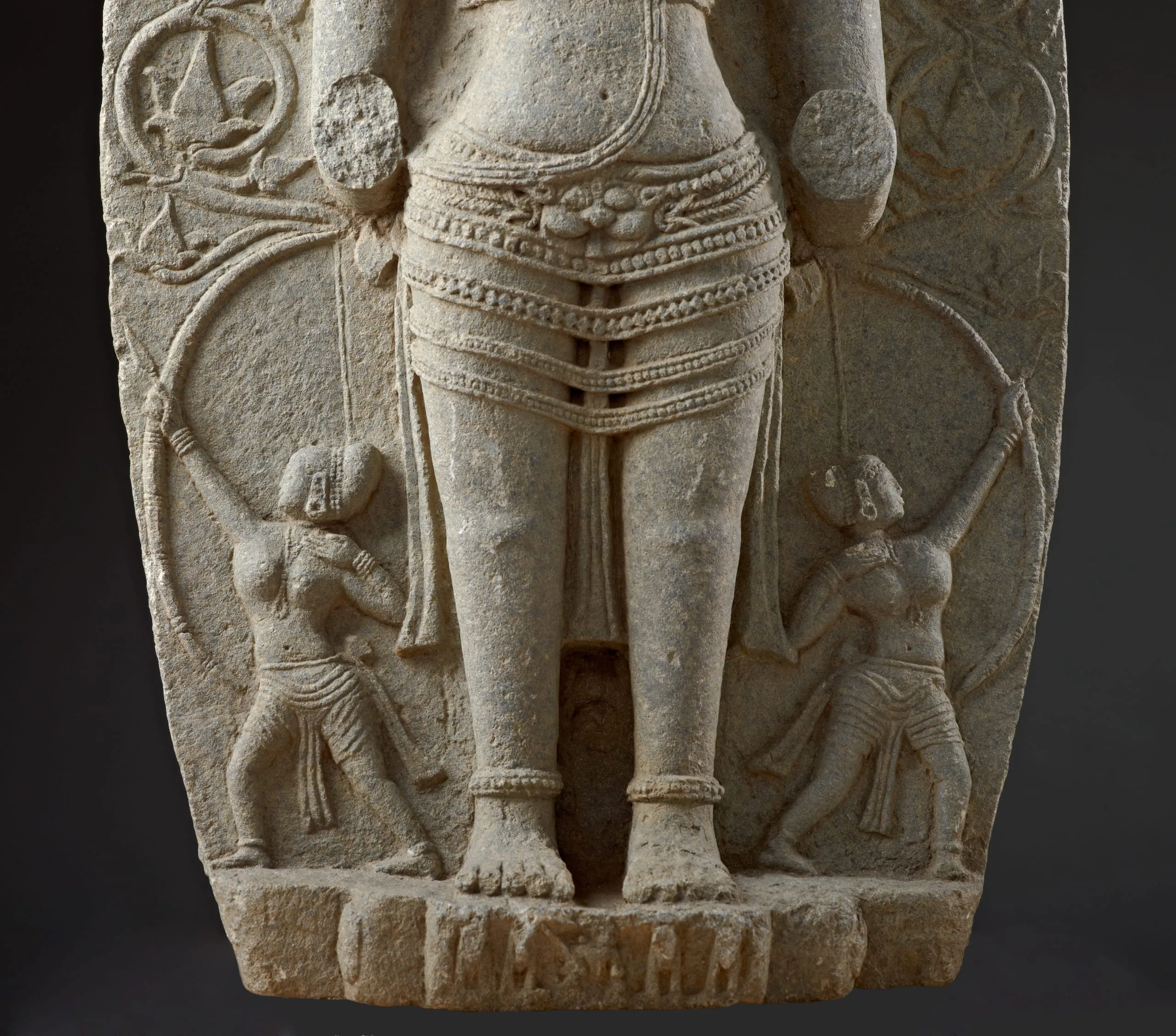
In this representation, Surya has a flaming nimbus carved in shallow relief. He wears a tall crown, earrings in the form of mythical aquatic creatures (makara kundala), and standard jewelry, including an ornate hip belt (katibandha) with a tiger head crest. He is barefoot and stands in a stiff, frontal pose (samapada sthanaka). He has two arms and holds a blossoming lotus in each of his now-missing hands. Surya is accompanied by two female archers, Usha (Dawn) and Pratyusha (Predawn), whose arrows dispel the darkness. In the center of the pedestal is Surya’s charioteer Aruna and four horses. The aureole is adorned with a scrolling lotus rhizome.