LACMA

ShopMembershipMyLACMATickets
LACMA
Los Angeles County Museum of Art
5905 Wilshire Blvd.
Los Angeles, CA 90036
info@lacma.org
(323) 857-6000
Sign up to receive emails
Subscribe
© Museum Associates 2025

Museum Hours

Monday

11 am–6 pm

Tuesday

11 am–6 pm

Wednesday

Closed

Thursday

11 am–6 pm

Friday

11 am–8 pm

Saturday

10 am–7 pm

Sunday

10 am–7 pm


  • About LACMA
  • Jobs
  • Building LACMA
  • Host An Event
  • Unframed
  • Press
  • FAQs
  • Log in to MyLACMA
  • Privacy Policy
© Museum Associates 2025
Collections

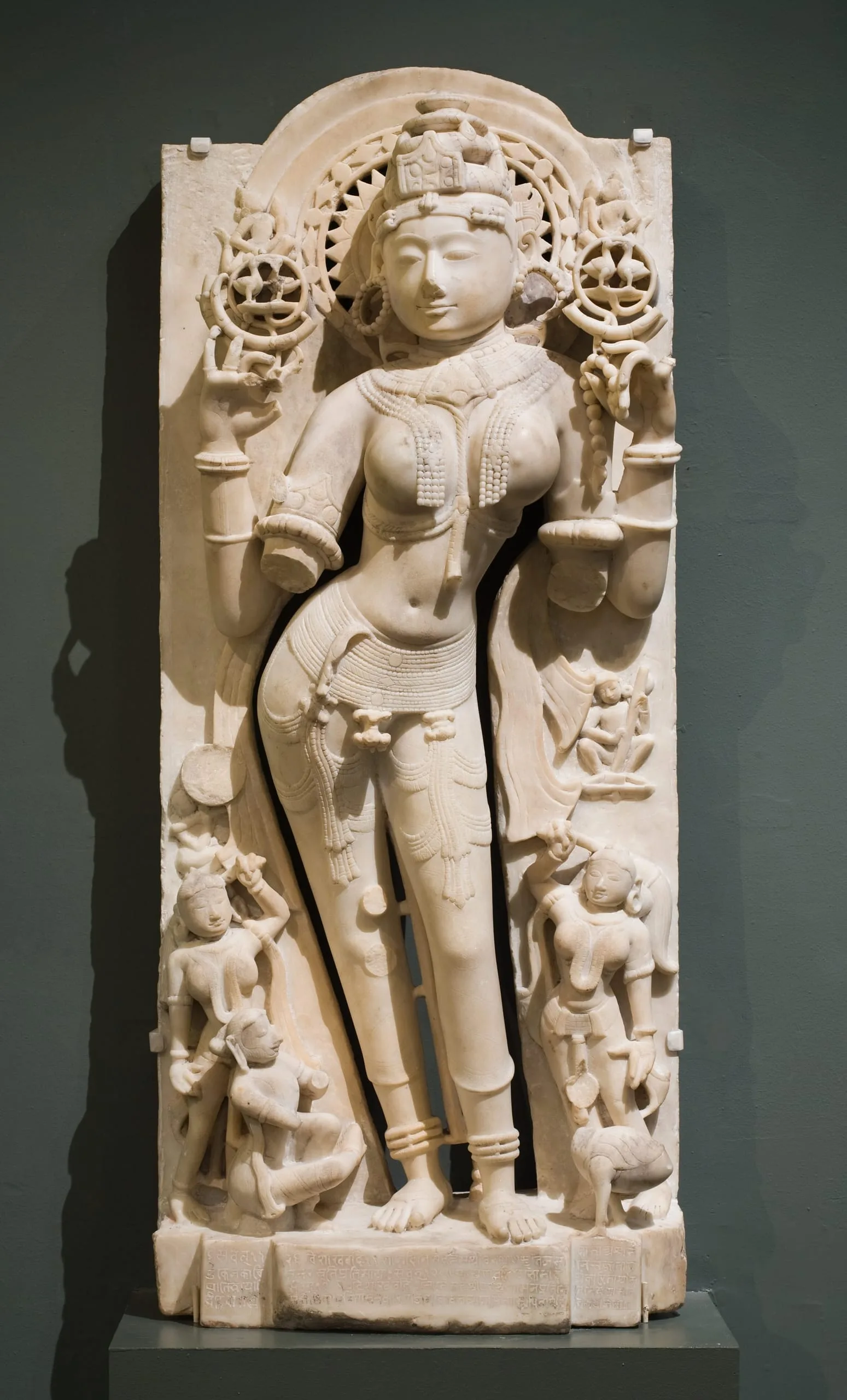
Jagadeva
The Jain Goddess Sarasvatidated 1153

Not on view
Cream-white stone relief sculpture of a four-armed standing female figure in an ornate crown and halo, holding lotus flowers, with small attendant figures carved at the sides
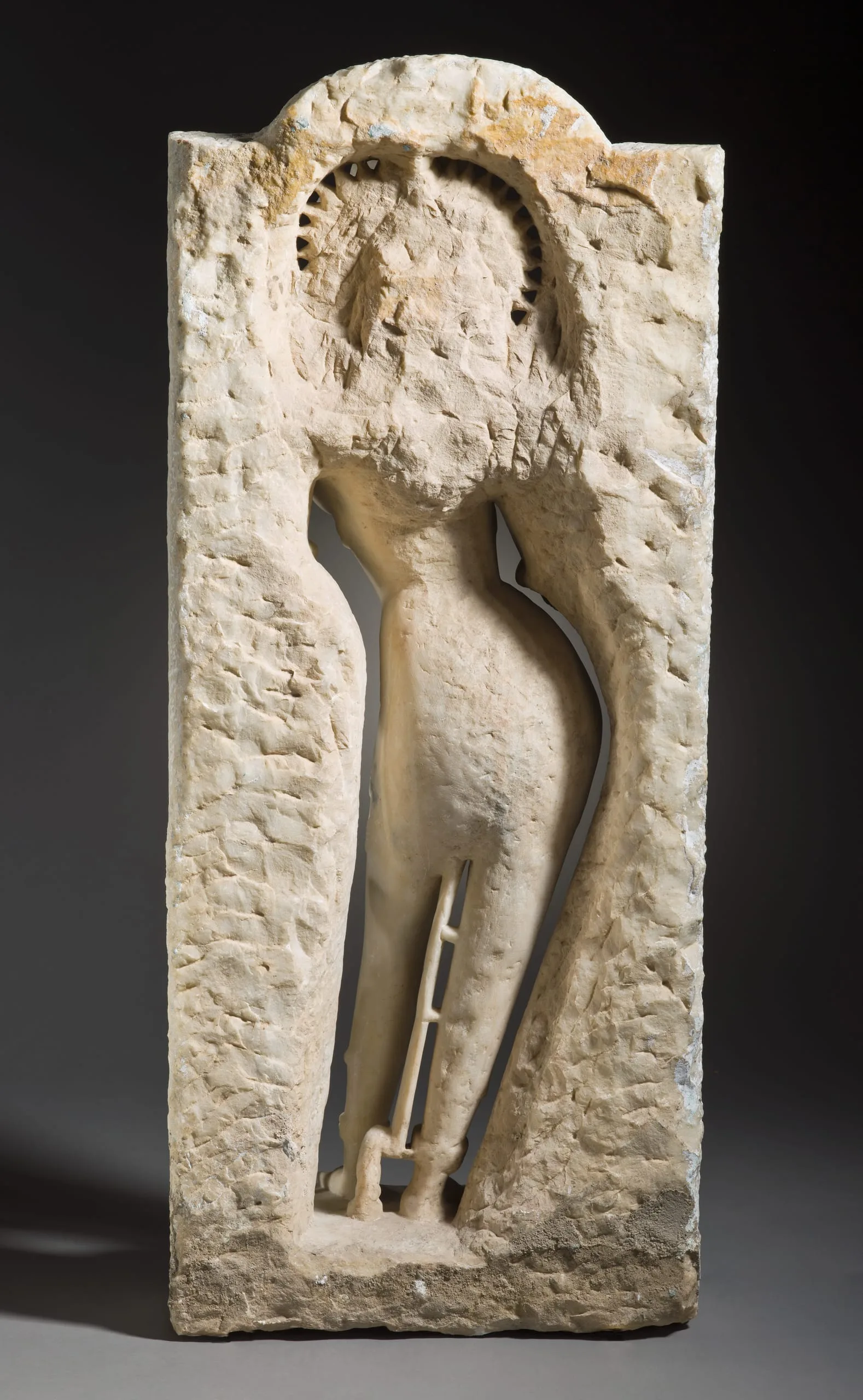
Limestone relief stele with a standing figure carved in low relief within an arched niche, the surface heavily weathered; figure holds a staff or scepter at lower center, with traces of drilled detail along the arch.
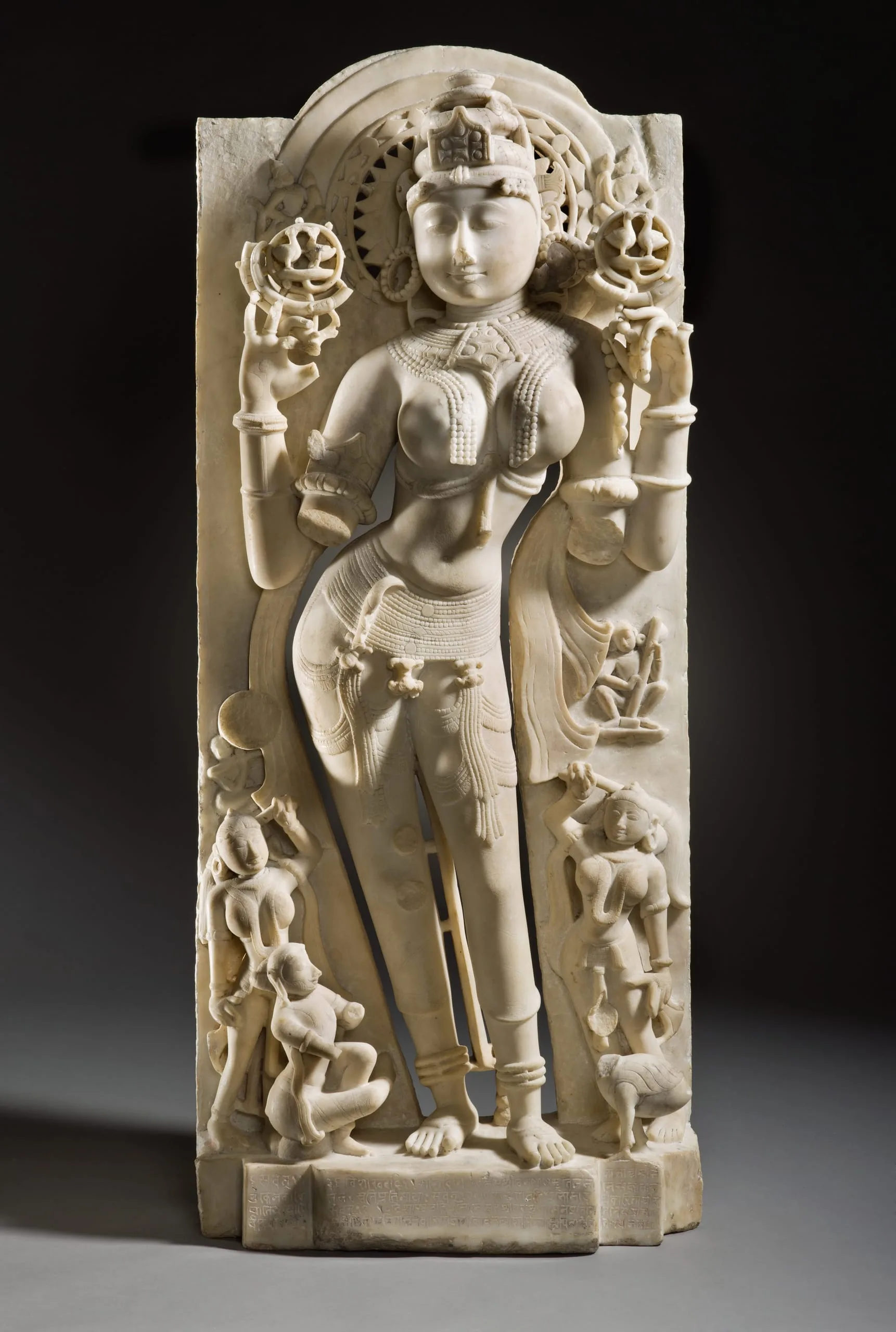
White marble stele of a four-armed standing female figure in tribhanga pose, adorned with elaborate jewelry, headdress, and draped lower garment; flanked by pierced decorative roundels and an arched nimbus; smaller attendant figures carved in relief at lower sides.
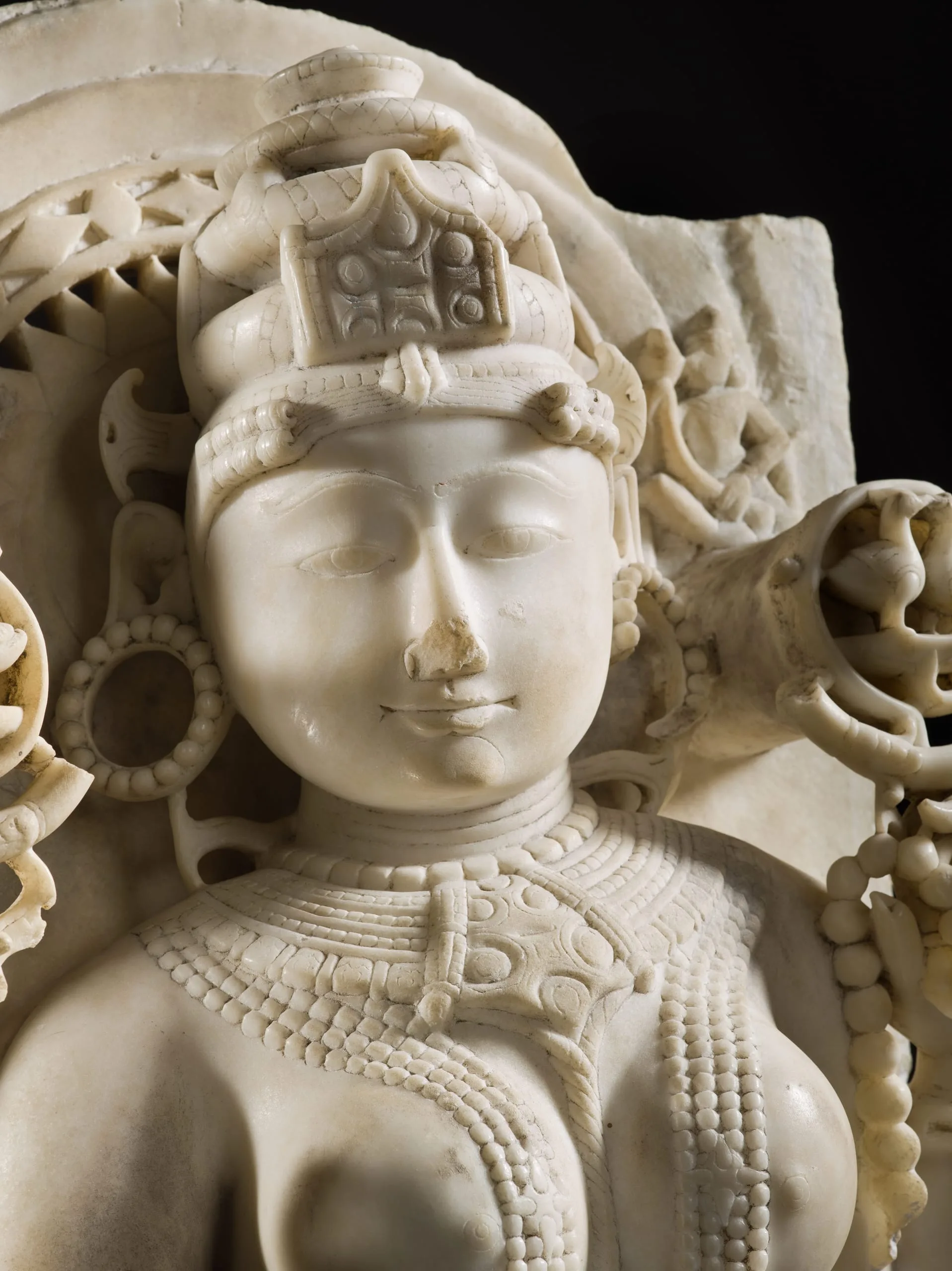
White marble sculpture, close-up of a deity figure wearing an ornate crown and layered bead necklaces, with finely carved circular earrings and a halo with pierced lattice work, smooth facial features with downcast eyes.
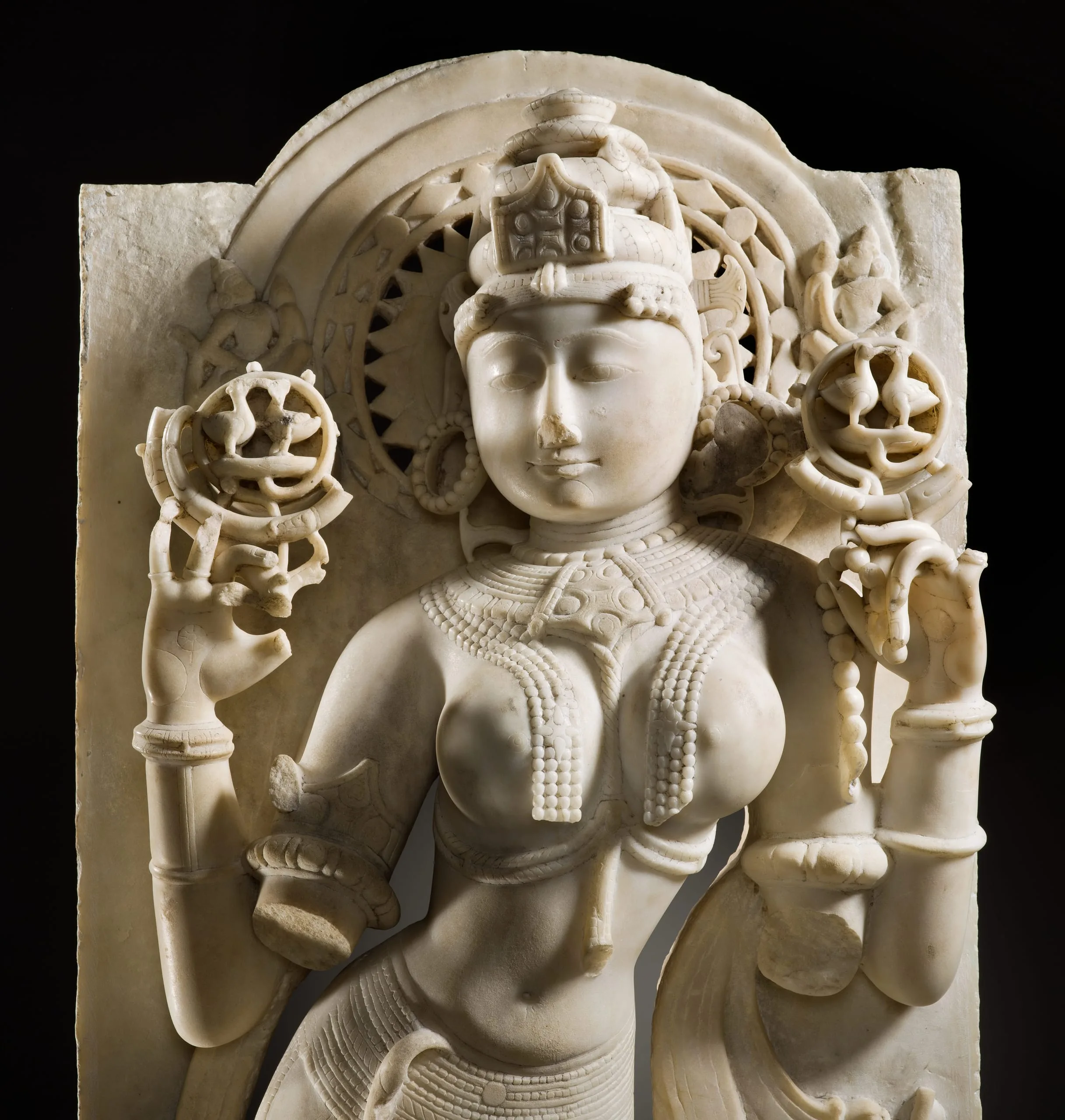
White marble relief sculpture of a four-armed deity wearing an ornate crown and multi-strand bead necklaces, holding chakras in two raised hands, set against a pierced stone aureole with finely carved detail throughout.
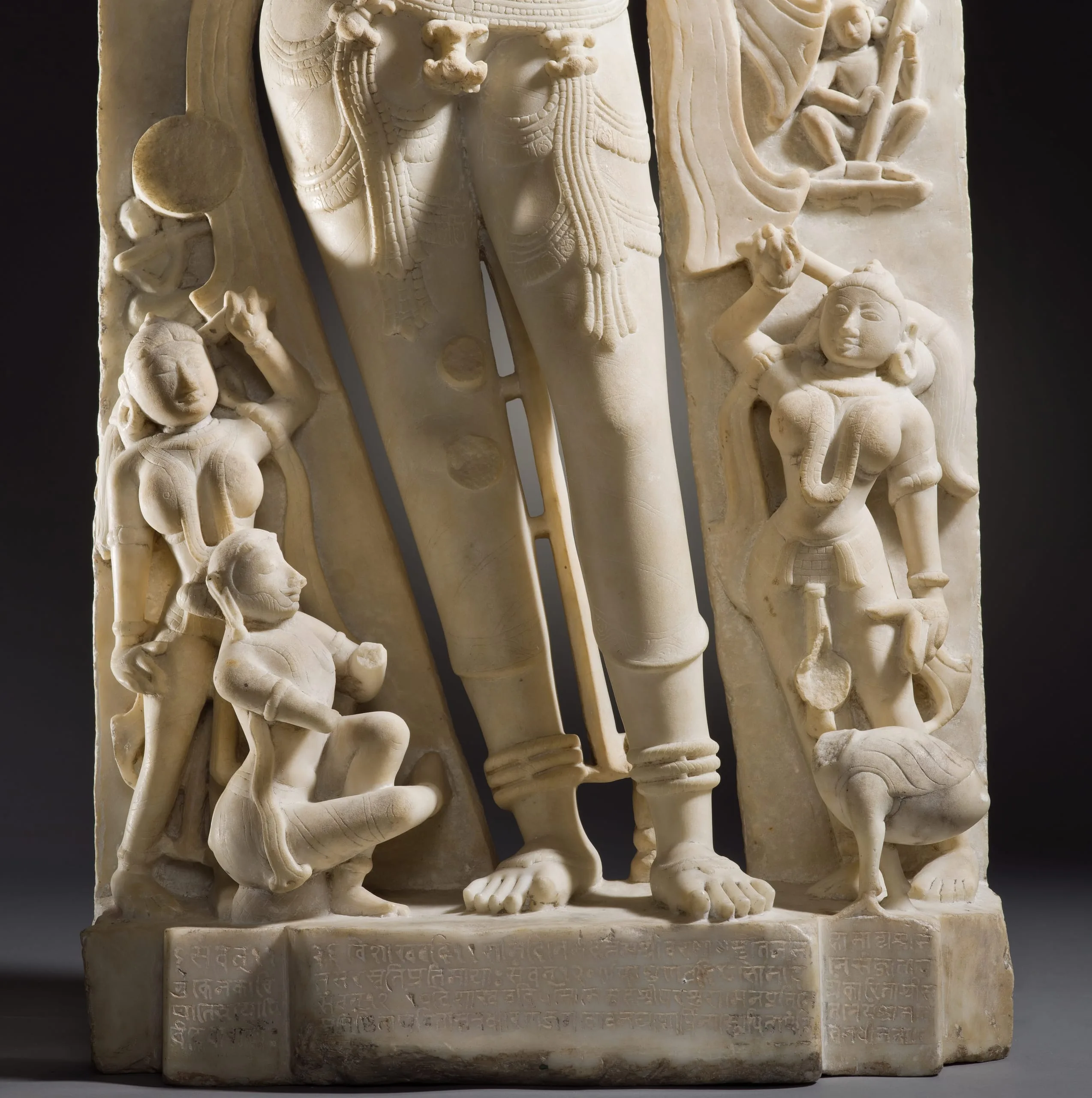
White marble sculptural stele, lower portion showing the legs and feet of a central standing figure with ornate ankle adornments, flanked by smaller attendant figures in dynamic poses on both sides. Finely carved relief details include jewelry and drapery folds. An inscription in Devanagari script runs along the base.
White marble sculptural relief depicting a female attendant figure in a tribhanga (three-bend) pose, adorned with jewelry and a sash, one arm raised, with a small crouching figure at her feet; finely carved surface detail on ornaments and garments.
Carved marble relief panel depicting two figures in dynamic poses: a standing female figure with raised arm and elaborate headdress, and a smaller crouching figure below, both rendered with finely incised jewelry and garments; partial view of a larger flanking figure at right.
Detail of a marble sculpture showing the lower portions of standing figures with anklets, a crouching figure at left, and a bird at right, above a rectangular base inscribed with multiple lines of Devanagari script.
Close-up of a white marble sculpture detail showing a hand holding an elaborately carved circular medallion with two birds perched within it, suspended above a strand of beaded spheres; intricate pierced and relief carving visible throughout
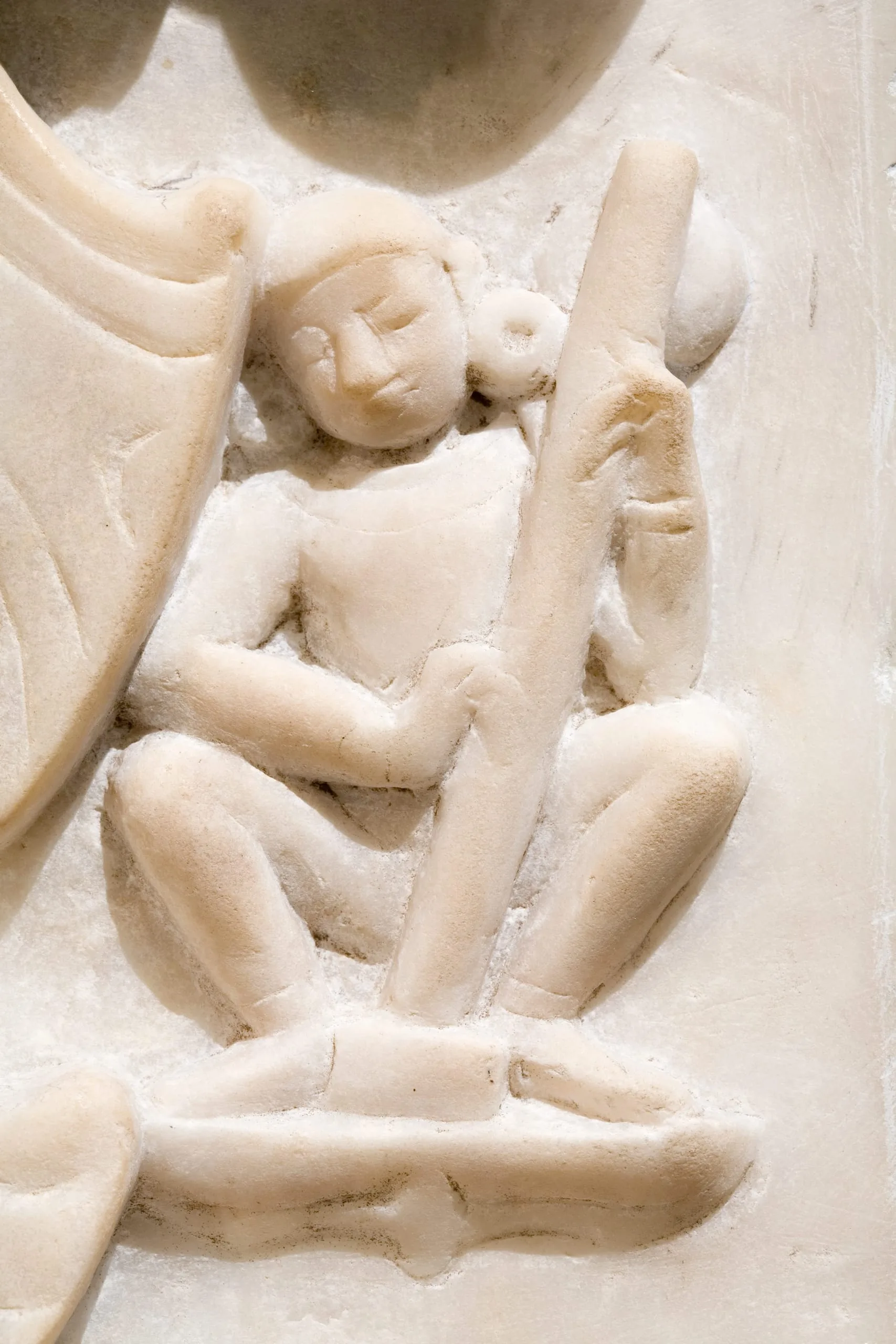
Low-relief marble carving of a small seated figure holding a long staff or spear, with rounded, simplified forms and smooth white stone surface.
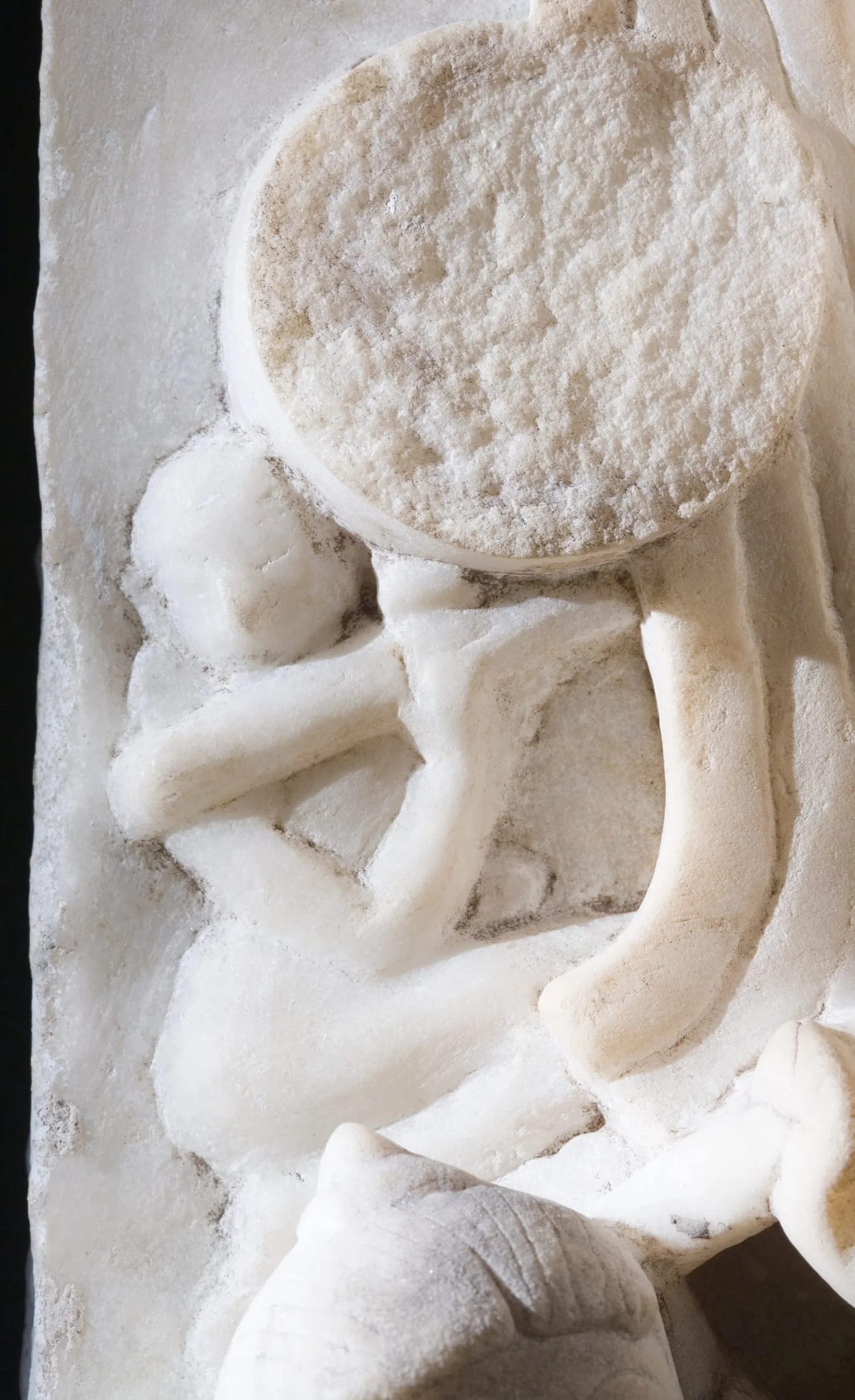
Close-up of a white marble relief sculpture depicting a small figure holding a circular disk aloft, with low-relief carved forms emerging from the weathered stone ground.
Artist or Maker
Jagadeva
India, Gujarat, active circa 1130-70
Title
The Jain Goddess Sarasvati
Place Made
India, Gujarat
Date Made
dated 1153
Medium
White marble
Dimensions
47 1/4 x 19 3/4 x 11 3/4 in. (120.02 x 50.17 x 29.85 cm)
Credit Line
Gift of Anna Bing Arnold
Accession Number
M.86.83
Classification
Sculpture
Collecting Area
South and Southeast Asian Art
Curatorial Notes

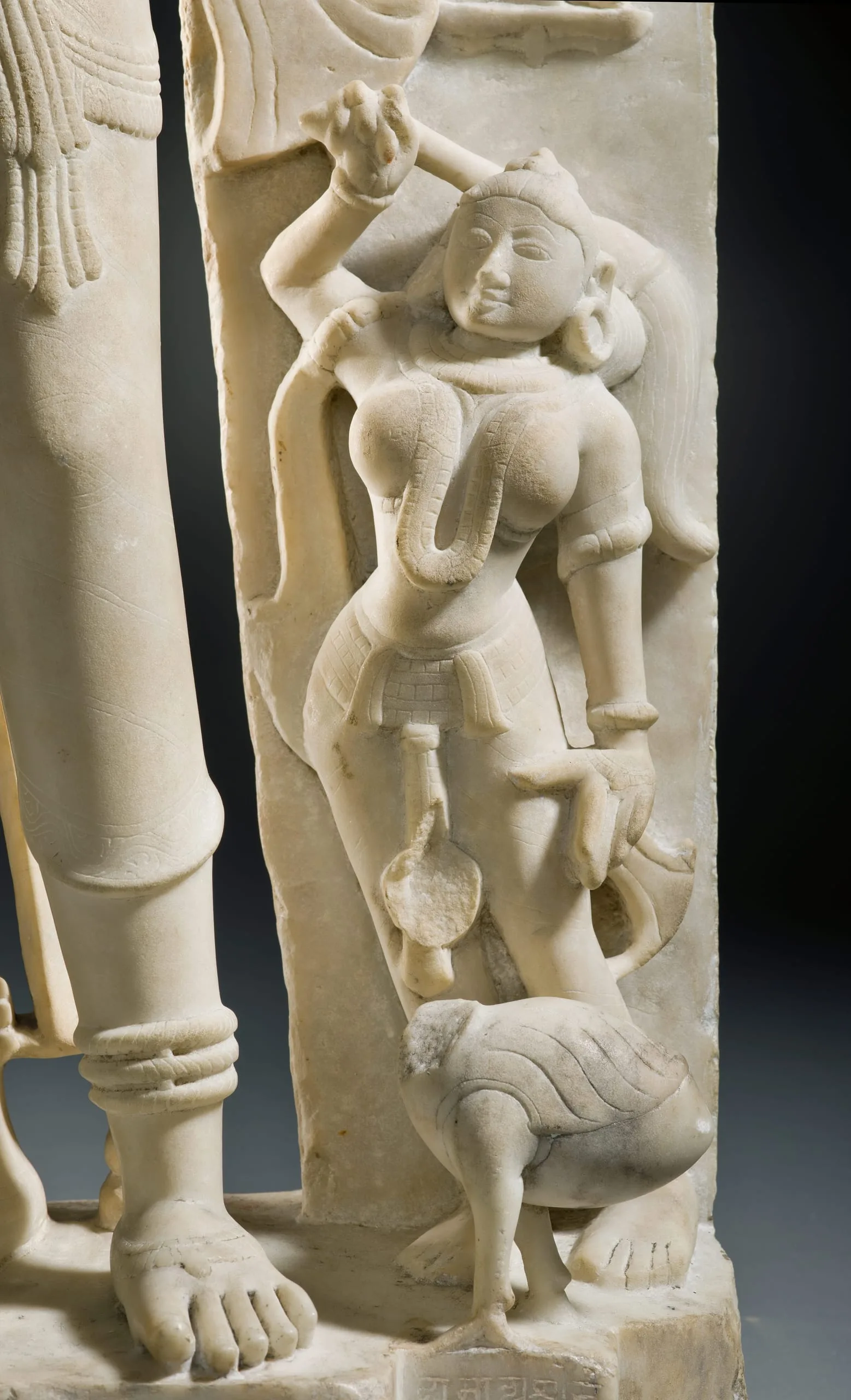
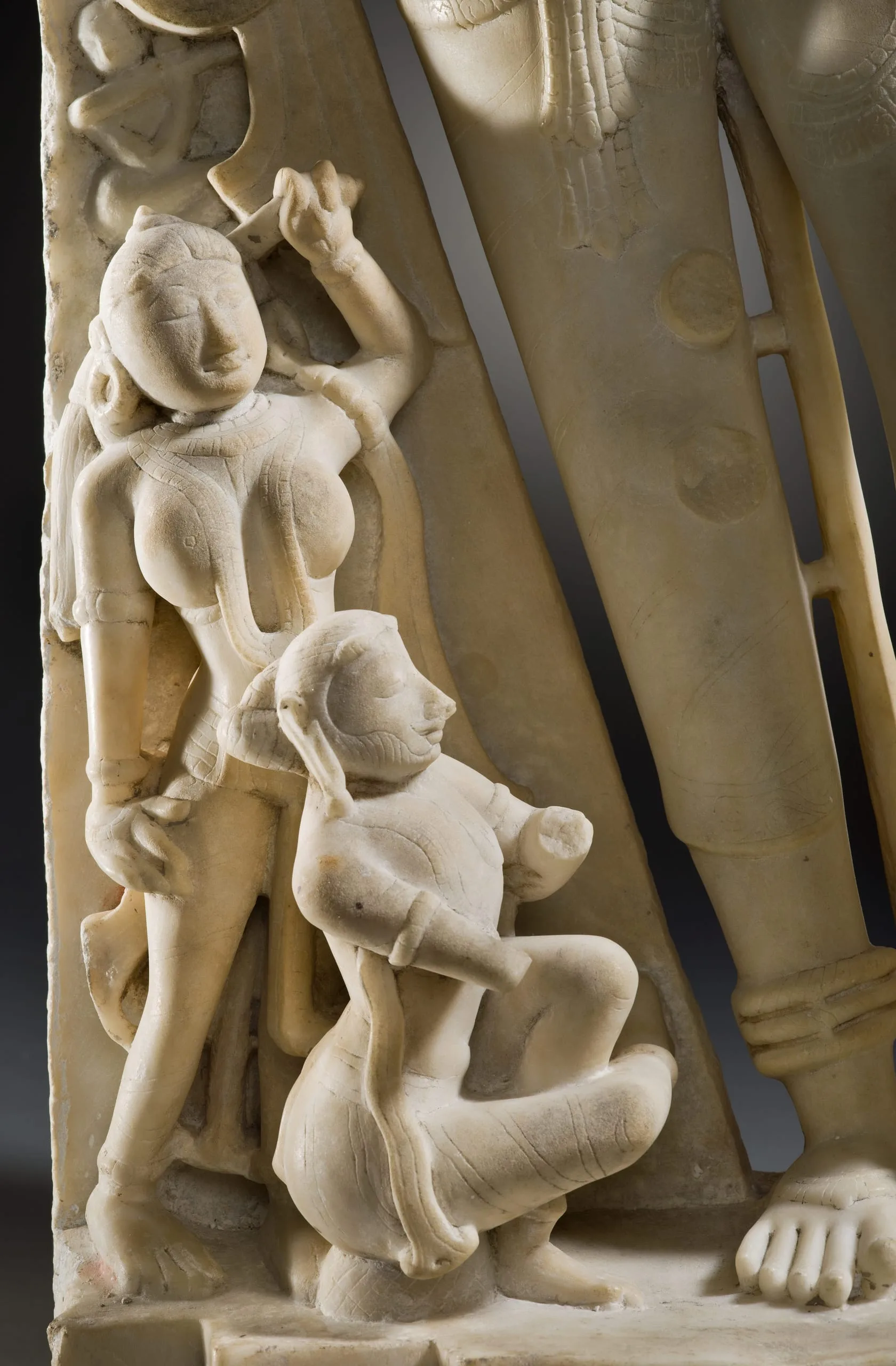
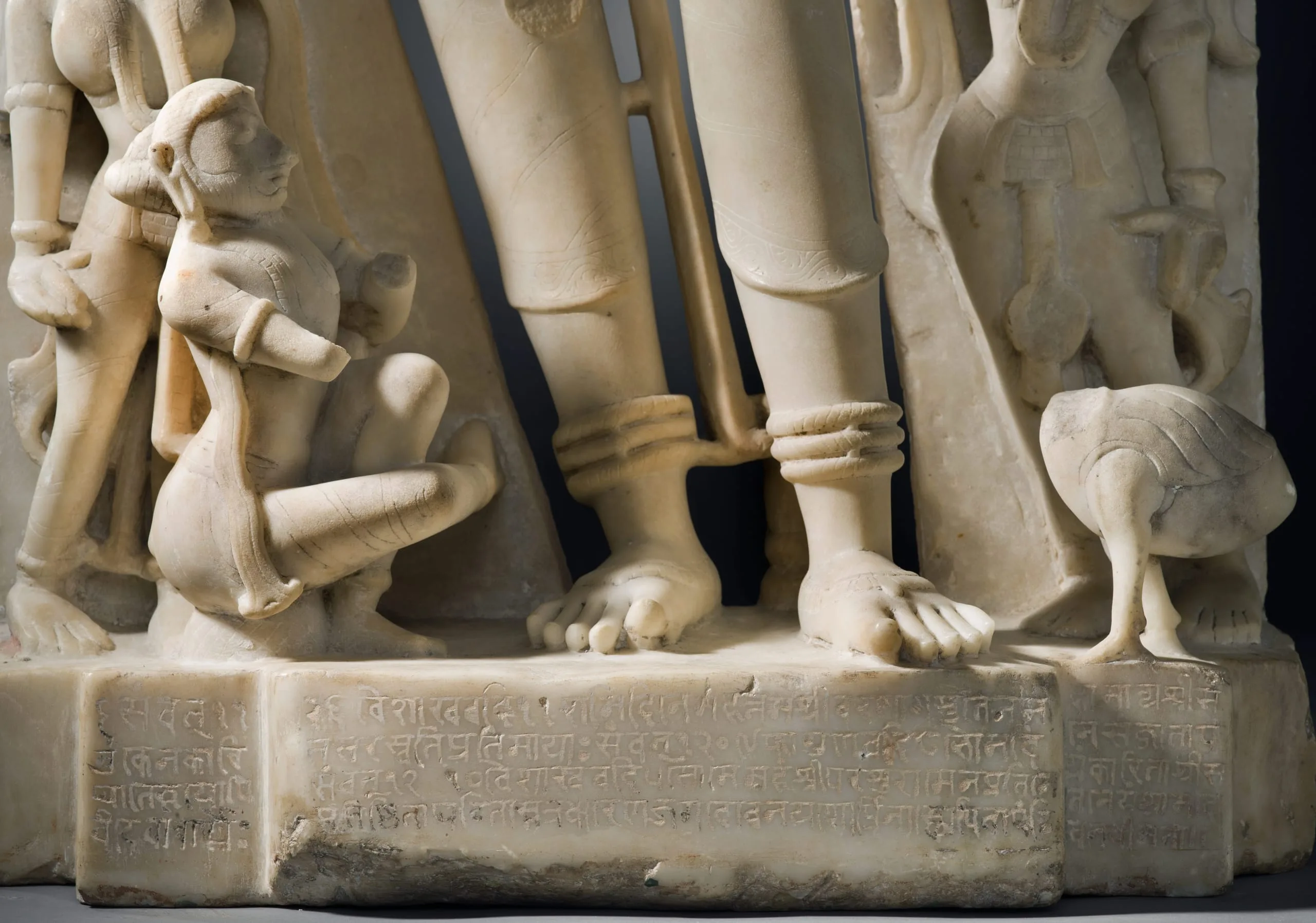
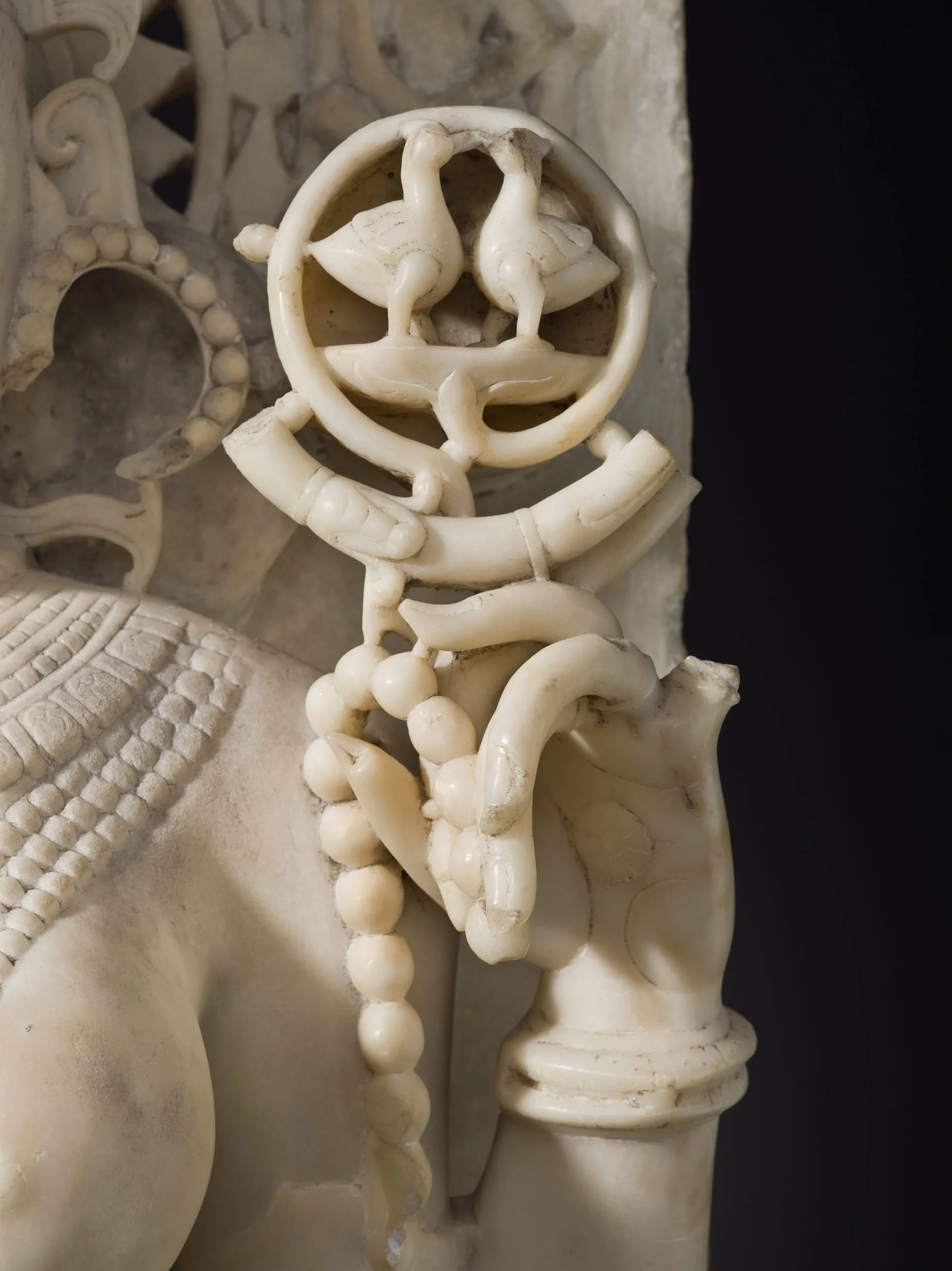
Venerated by Jains, Hindus, and Buddhists alike, Sarasvati is the goddess of knowledge, learning, speech, poetry, and music. The originally four-armed figure is richly ornamented with multiple strands of pearls and jewelry. Each of her upper two hands holds a lotus stem encircling a pair of geese. Her upper left hand also holds a rosary. Although now-missing, her lower left hand presumably held a sacred text and the lower right likely displayed the gift-giving gesture or carried an ascetic's water flask. She is flanked by two attendants bearing flywhisks and two small figures with musical instruments that allude to her role as the preceptress of music. The sculpture’s donor sits beside her right foot. A gander, her now-headless mount, stands near the left.

The inscription on the base states that in April-May 1069, an image of Sarasvati was commissioned by the minister Sanmukha, the son of the officer Varanaga. It was damaged in February-March 1152. Subsequently, in April-May 1153 the officer Parashurama had a copy made by the master sculptor Jagadeva who “aspired for fame.” The image was consecrated by the [Shvetambara Jain] pontiff Evamdevacharya and installed in the temple by the pundit Dhiman. (Translation by Gouriswar Bhattacharya.)

The inscription’s claim that it is a copy of an 11th-century image is stylistically corroborated by its restrained decoration and serene countenance. Representations of Sarasvati from the 12th century are typically more extravagantly ornamented.

See Stephen Markel, "A Marble Sculpture of Sarasvati by Jagadeva," Orientations 19:5 (May 1988): pp. 73-75.
Selected Bibliography
  • El Universo de la India: Obras Maestras del Museo de Arte del Condado de Los Angeles. Santiago: Centro Cultural Palacio La Moneda, 2012.