LACMA

ShopMembershipMyLACMATickets
LACMA
Los Angeles County Museum of Art
5905 Wilshire Blvd.
Los Angeles, CA 90036
info@lacma.org
(323) 857-6000
Sign up to receive emails
Subscribe
© Museum Associates 2025

Museum Hours

Monday

11 am–6 pm

Tuesday

11 am–6 pm

Wednesday

Closed

Thursday

11 am–6 pm

Friday

11 am–8 pm

Saturday

10 am–7 pm

Sunday

10 am–7 pm


  • About LACMA
  • Jobs
  • Building LACMA
  • Host An Event
  • Unframed
  • Press
  • FAQs
  • Log in to MyLACMA
  • Privacy Policy
© Museum Associates 2025
Collections

Unknown
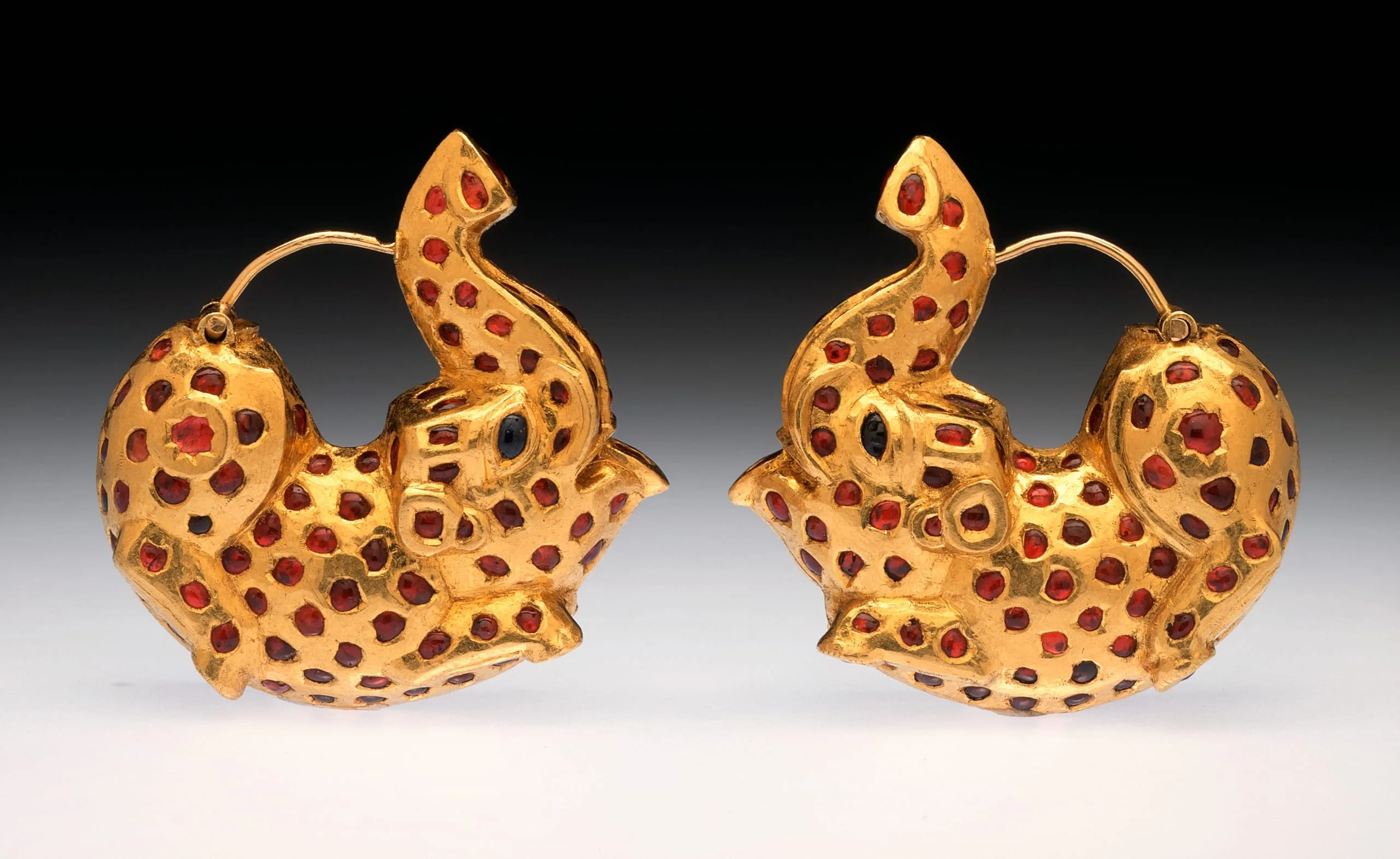
Pair of Earrings in the Form of Dancing Elephants19th century

Not on view
Pair of gold earrings in the form of crouching fantastical animals, bodies densely set with red and blue stones, with curling tails ending in flame-like finials
Artist or Maker
Unknown
Title
Pair of Earrings in the Form of Dancing Elephants
Place Made
India, Deccan
Date Made
19th century
Medium
Gold inlaid with rubies and sapphires
Dimensions
each: 1 1/2 × 1 1/2 × 1/2 in. (3.81 × 3.81 × 1.27 cm)
Credit Line
Purchased with funds provided by Christian Humann and Wallace Thompson
Accession Number
M.86.49a-b
Classification
Jewelry and Adornments
Collecting Area
South and Southeast Asian Art
Curatorial Notes

These charming earrings in the form of dancing or frolicking elephants are made of gold inlaid with rubies and sapphires. They are close in design shape to the more common type of pendant earrings made in the form of a makara (mythical aquatic animal), which also feature a similar upturned snout and curved lower body. Makara earrings have an ancient heritage in South Asia, where they adorn images of Buddhist and Hindu deities, most notably Shiva and Vishnu. Various additional animals and symbolic objects were used to embellish and distinguish earrings, including lions, serpents, jewels, conchs, and sacred books.

Earrings in the form of joyous elephants may also draw their inspiration from paintings of the same subject, such as representations of elephants sporting during the summer month of Jyeshtha (May-June in the Hindu lunisolar calendar). For a particularly apt illustration, see a mid-18th century painting from Bundi now in the Chhatrapati Shivaji Maharaj Vastu Sangrahalaya, Mumbai (55.97).