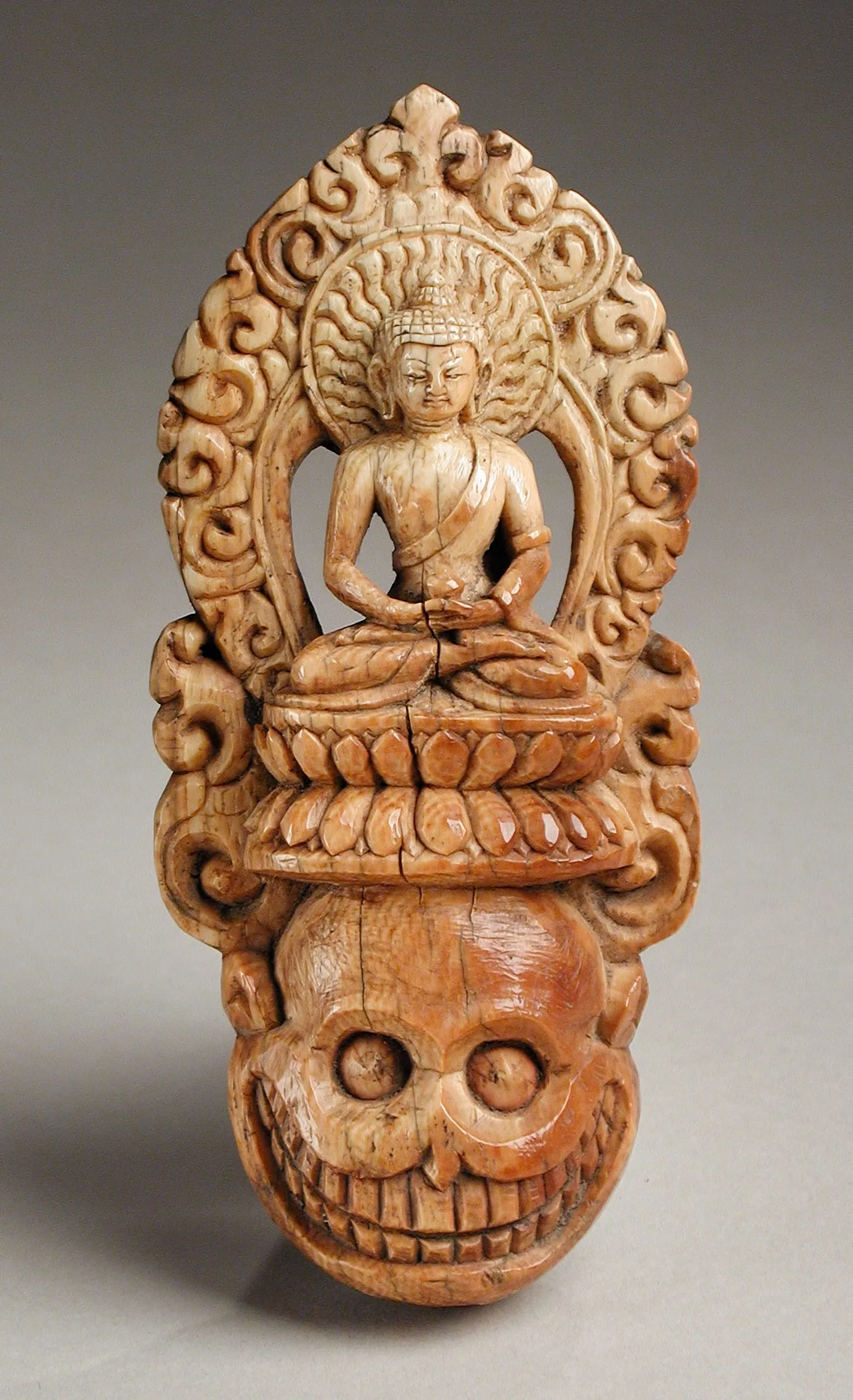
Amitabha, the Jina Buddha of Infinite Light, is the presiding deity on this ivory plaque from a Vajrayana Buddhist ritual diadem consisting of five crown points, each graced by a different Jina Buddha. The Five Jina Buddhas are Amitabha (Infinite Light), Vairochana (Intensely Luminescent One), Akshobhya (Unshakeable One), Ratnasambhava (Jewel Born), and Amoghasiddhi (Unfailing Success). These five Buddhas, who are emanations of the Adi Buddha (Primordial Enlightened One), represent the state and qualities of Buddhahood and the essence of the Buddhist Dharma. Each Buddha has a specific mudra, insight, symbol, color, vehicle, and rules a cardinal direction or the zenith. See M.74.139.15, M.79.151.1–.2, M.90.195, and M.91.116.
Amitabha is the transcendental Buddha of discriminating wisdom. He is also widely worshipped throughout Asia as the Buddha presiding over the Sukhavati (Pure Land of Bliss) Paradise in the West, where Buddhists can be reborn endlessly while they wait to attain enlightenment. Amitabha is nimbate and has a Buddha’s snail-curl hair, cranial protuberance (ushnisha) emblematic of his omniscience, elongated earlobes symbolizing his renunciation of the material world, and wears a monk’s robe (sanghati) over his left shoulder. His hands are held in the gesture of meditation (dhyana mudra) and holding a golden vase (kalasha) containing the elixir of immortality (amrita). He is seated in the meditation posture (padma asana) on a lotus base with a flaming aureola (prabhavali).
The skull and the original remaining four skulls of the diadem represent the Five Poisons (Pañcha Kleshavisha) of Desire (Raga), Anger (Dvesha), Ignorance (Avidya), Pride (Mana), and Jealousy (Irshya). The Five Jina Buddhas sitting on them symbolize the immediate transmutation of those deadly poisons into enlightened wisdom known as the Five Wisdoms (Pañcha Jñana): Absolute Space (Dharmadhatu), Mirror-like (Adarsha), Equality (Samata), Discriminating (Pratyavekshana), and All-Accomplishing (Krity-Anushthana). Amitabha targets and purifies the poison of desire, lust, and obsessive attachment.