LACMA

ShopMembershipMyLACMATickets
LACMA
Los Angeles County Museum of Art
5905 Wilshire Blvd.
Los Angeles, CA 90036
info@lacma.org
(323) 857-6000
Sign up to receive emails
Subscribe
© Museum Associates 2025

Museum Hours

Monday

11 am–6 pm

Tuesday

11 am–6 pm

Wednesday

Closed

Thursday

11 am–6 pm

Friday

11 am–8 pm

Saturday

10 am–7 pm

Sunday

10 am–7 pm


  • About LACMA
  • Jobs
  • Building LACMA
  • Host An Event
  • Unframed
  • Press
  • FAQs
  • Log in to MyLACMA
  • Privacy Policy
© Museum Associates 2025
Collections

Unknown
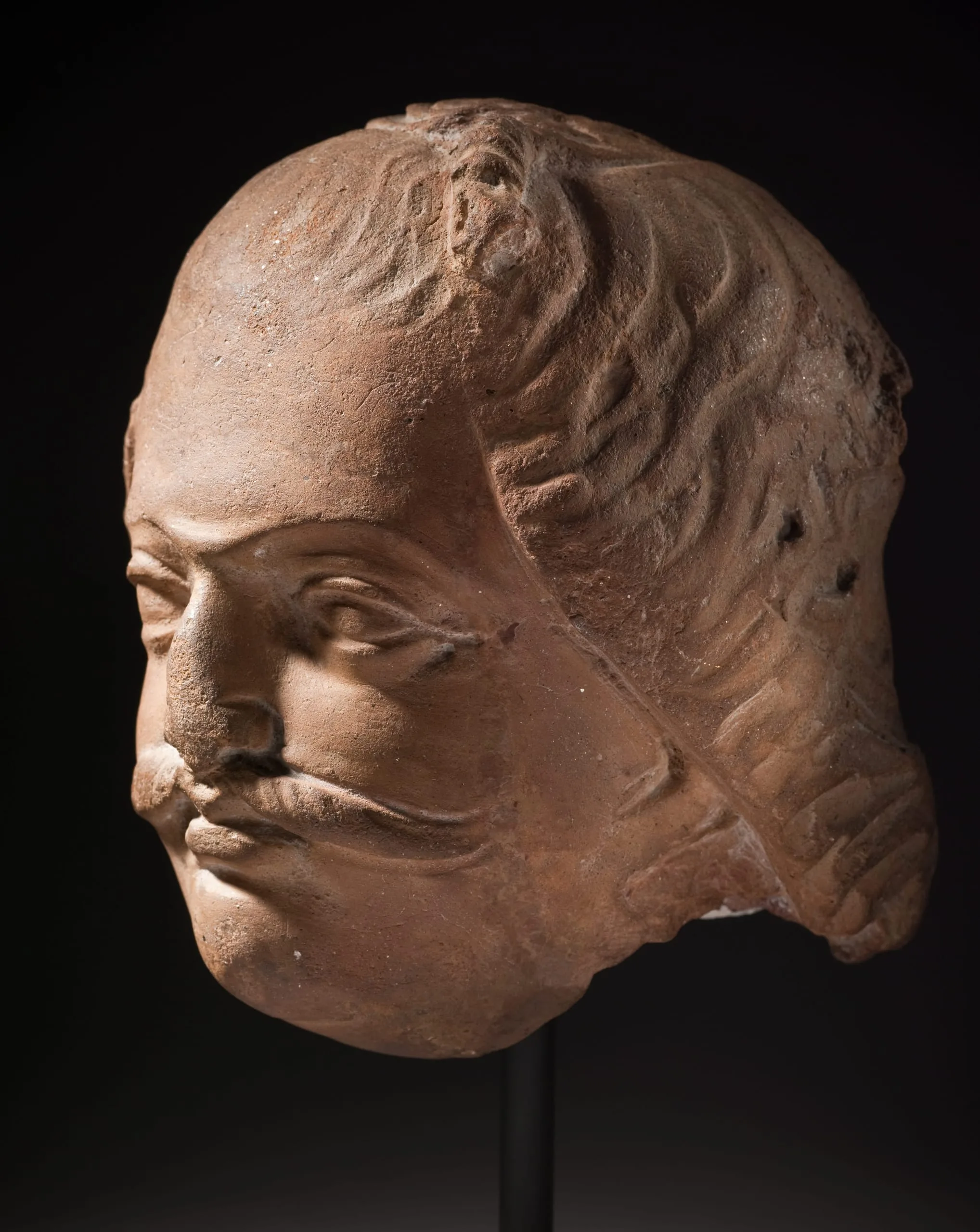
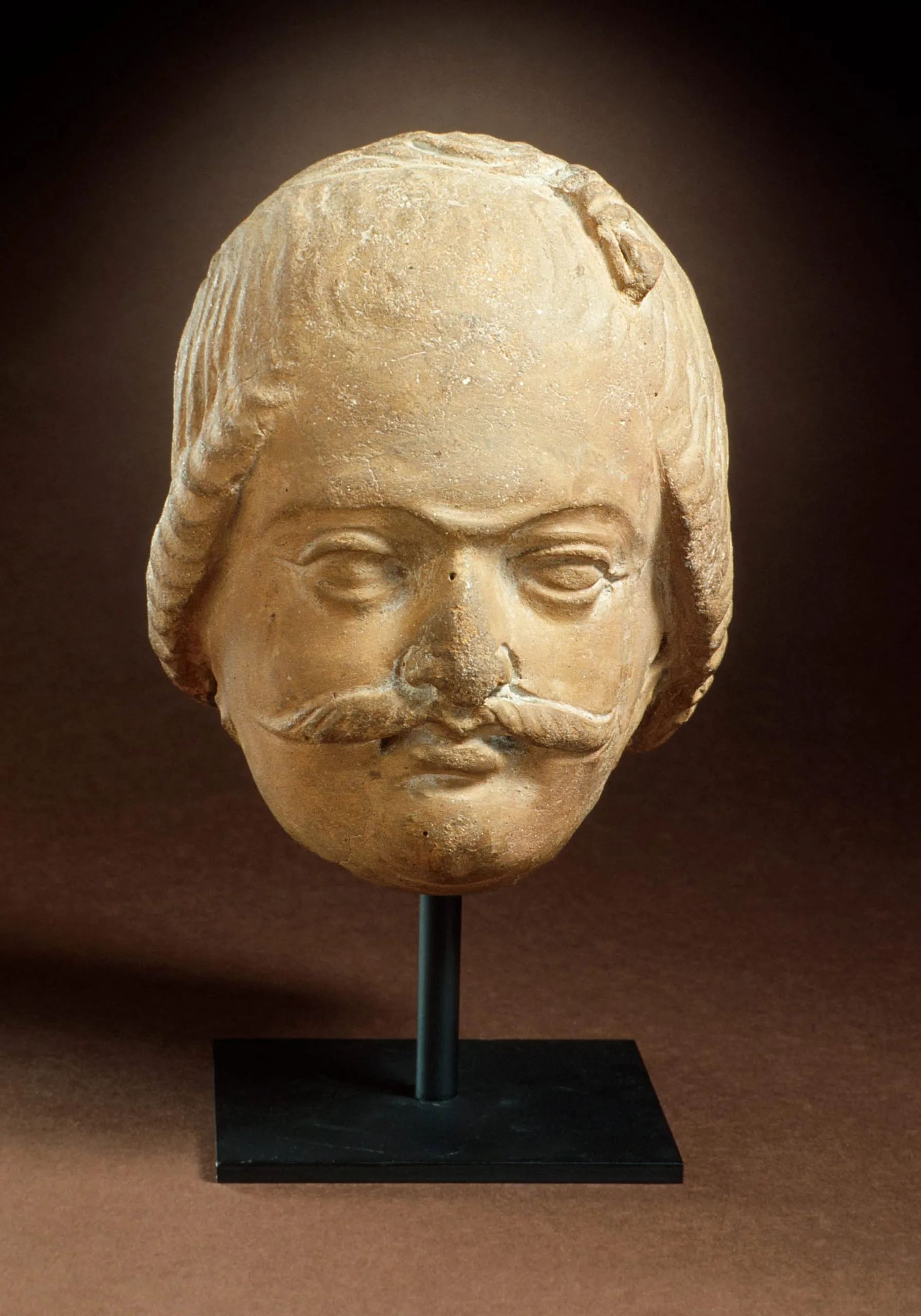
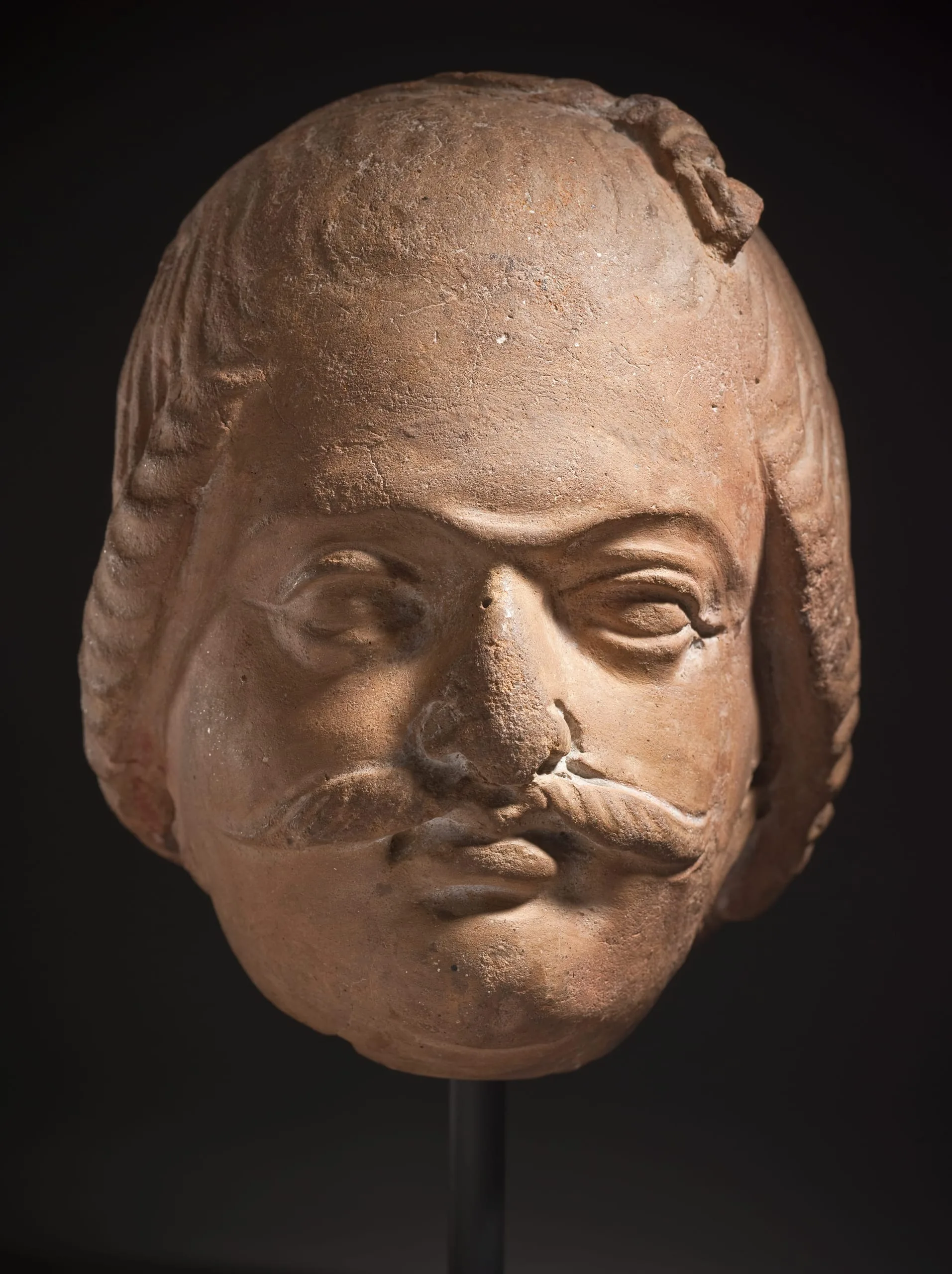
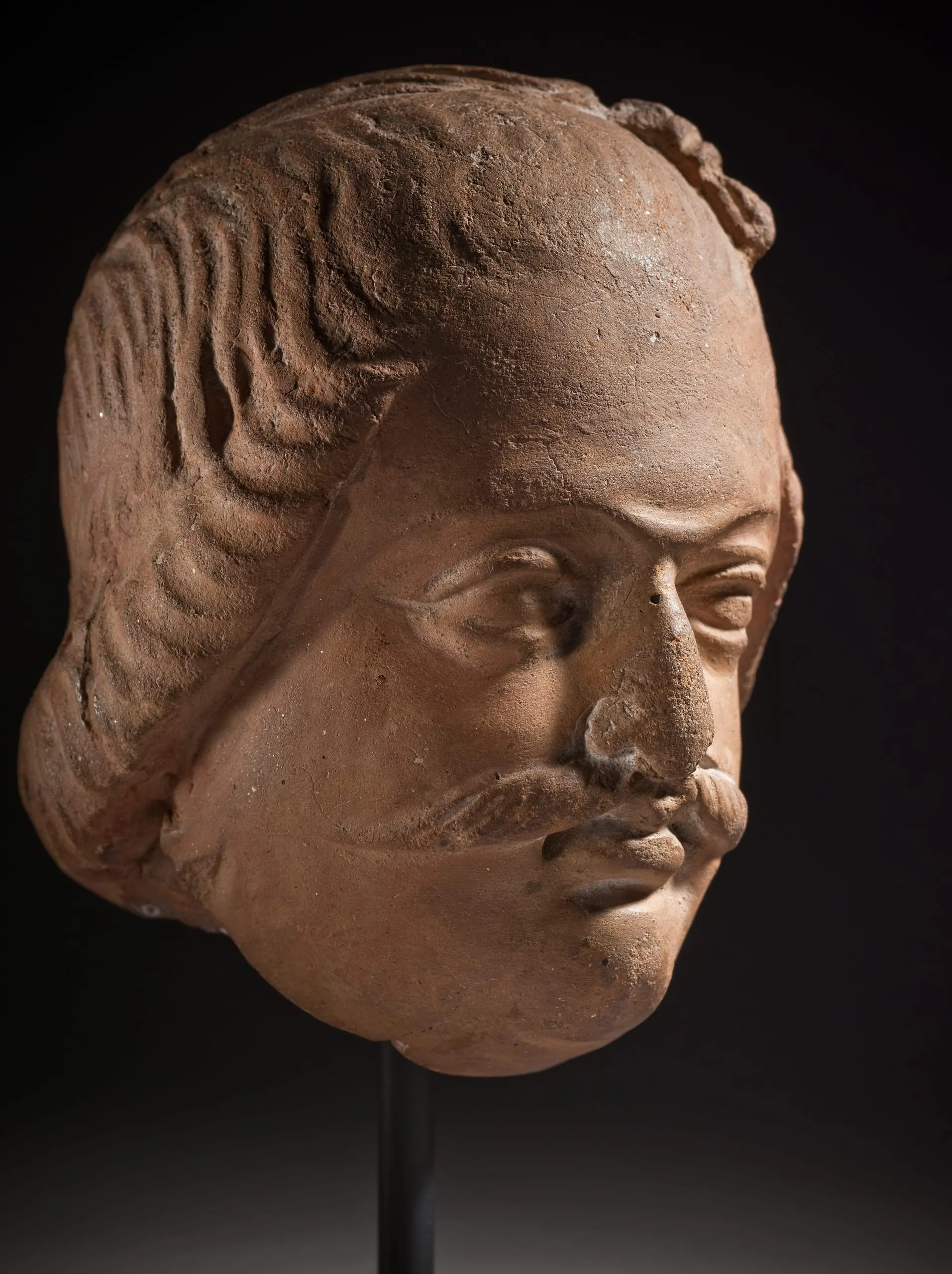
Head of a Sogdian Maleearly 6th century

Not on view
Terracotta sculptural head of a mustachioed man, mounted on a metal post, with reddish-salmon clay surface showing signs of age and wear
Terracotta sculptural head of a bearded male figure, slightly turned, with incised wavy hair, mustache, and short beard; surface shows age-related chips and wear, mounted on a thin metal rod against a dark background.
Terracotta sculptural fragment of a human head in three-quarter view, with modeled facial features, ridged hair swept back, and a mustache; reddish-brown clay surface shows weathering and losses, mounted on a thin metal rod against a black background.
Fragmentary stone head of a man with a drooping mustache, short wavy hair, and heavy-lidded eyes, mounted on a black metal display stand against a dark brown background.
Artist or Maker
Unknown
Title
Head of a Sogdian Male
Place Made
India, Jammu and Kashmir, Akhnur
Date Made
early 6th century
Medium
Reddish brown earthenware
Dimensions
overall: 16.51 x11.43 x 13.97 cm. (6 1/2 x 4 1/2 x 5 1/2 in)
Credit Line
Gift of Marilyn Walter Grounds
Accession Number
M.85.284.6
Classification
Sculpture
Collecting Area
South and Southeast Asian Art
Curatorial Notes

This sensitive portrait of a male head likely represents a Sogdian nobleman or wealthy trader. The Sogdians, members of an Iranian civilization in Central Asia (6th century BCE–11th century CE), were the preeminent merchants managing the ancient Silk Routes into Central Asia. He has a full face, wide open eyes, deeply arched eyebrows with a prominent brow ridge, a twirled moustache, and longish wavy hair with a short topknot that lies on the side of his head.

Numerous heads of Buddhas, the laity, and foreigners such as depicted in this head were excavated at Akhnur (Aknoor), which was an important Buddhist monastic complex dating from the 1st century BCE to the 7th century CE. Located near Jammu, Akhnur was a major trade hub on the Northern Route (Uttarapath) of the Silk Routes connecting Pataliputra (Patna), Bihar to Takshashila (Taxila), Panjab, and beyond. See Moti Chandra, "Terracotta Heads from Akhnur," Bulletin of the Prince of Wales Museum of Western India 12 (1973), pp. 54-57, figs. 28-36; now in the Chhatrapati Shivaji Maharaj Vastu Sangrahalaya, Mumbai (72.3–72.6).

Comparable portraits of Sogdian males are in the University of Michigan Museum of Art (1950/2.13) and in Julie Bellemare and Judith A. Lerner, The Sogdians at Home: Art and Material Culture (Washington: National Museum of Asian Art), fig. 46, https://sogdians.si.edu/the-sogdians-at-home/. See also M.85.193.1.
Selected Bibliography
  • El Universo de la India: Obras Maestras del Museo de Arte del Condado de Los Angeles. Santiago: Centro Cultural Palacio La Moneda, 2012.