LACMA

ShopMembershipMyLACMATickets
LACMA
Los Angeles County Museum of Art
5905 Wilshire Blvd.
Los Angeles, CA 90036
info@lacma.org
(323) 857-6000
Sign up to receive emails
Subscribe
© Museum Associates 2025

Museum Hours

Monday

11 am–6 pm

Tuesday

11 am–6 pm

Wednesday

Closed

Thursday

11 am–6 pm

Friday

11 am–8 pm

Saturday

10 am–7 pm

Sunday

10 am–7 pm


  • About LACMA
  • Jobs
  • Building LACMA
  • Host An Event
  • Unframed
  • Press
  • FAQs
  • Log in to MyLACMA
  • Privacy Policy
© Museum Associates 2025
Collections

Unknown
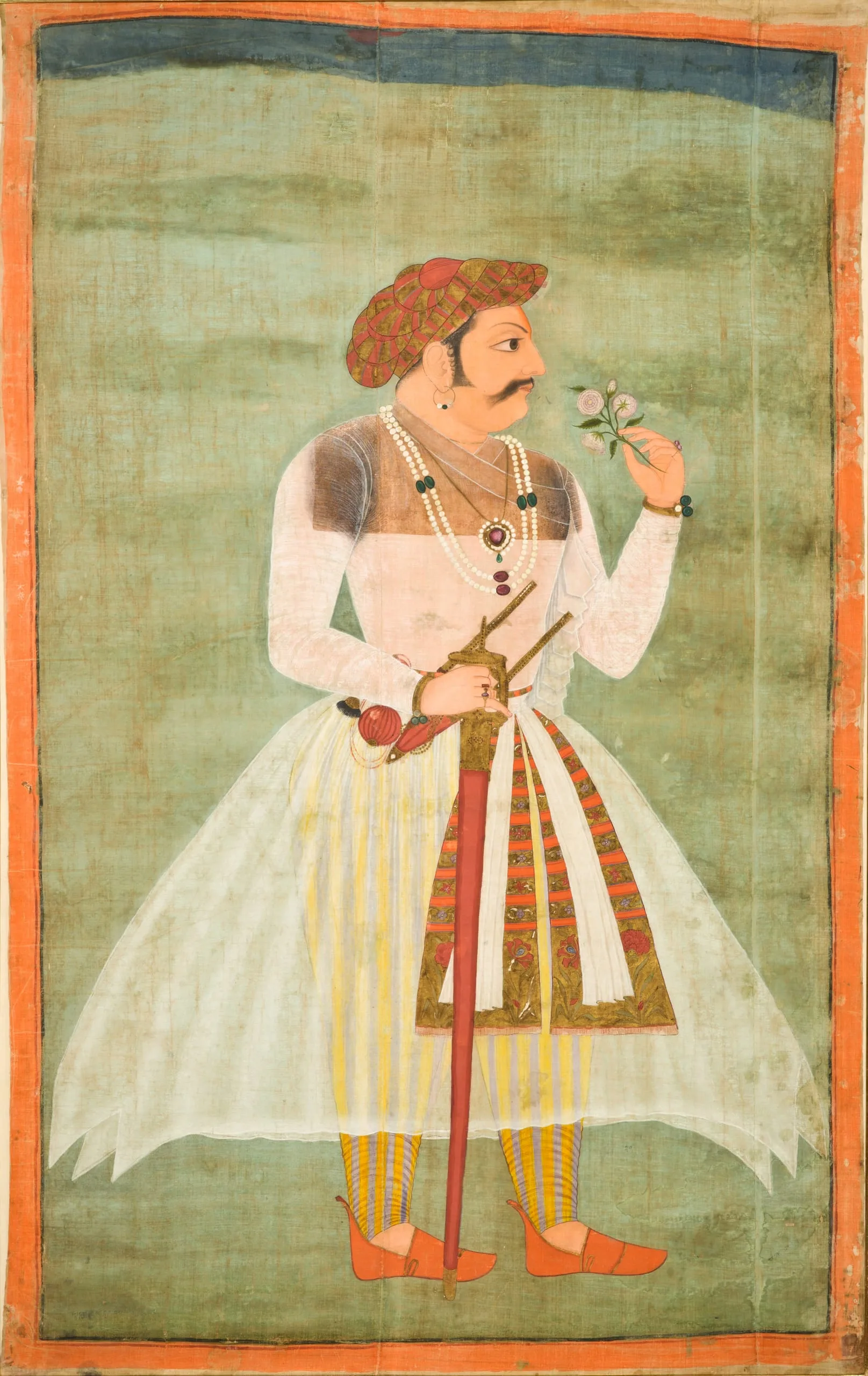
Maharana Jagat Singh I of Udaipur (r. 1628-1652)circa 1760-1765

Not on view
Mughal-style full-length portrait painting of a standing man in a white jama and patterned turban, holding a flower sprig and staff against a sage-green background
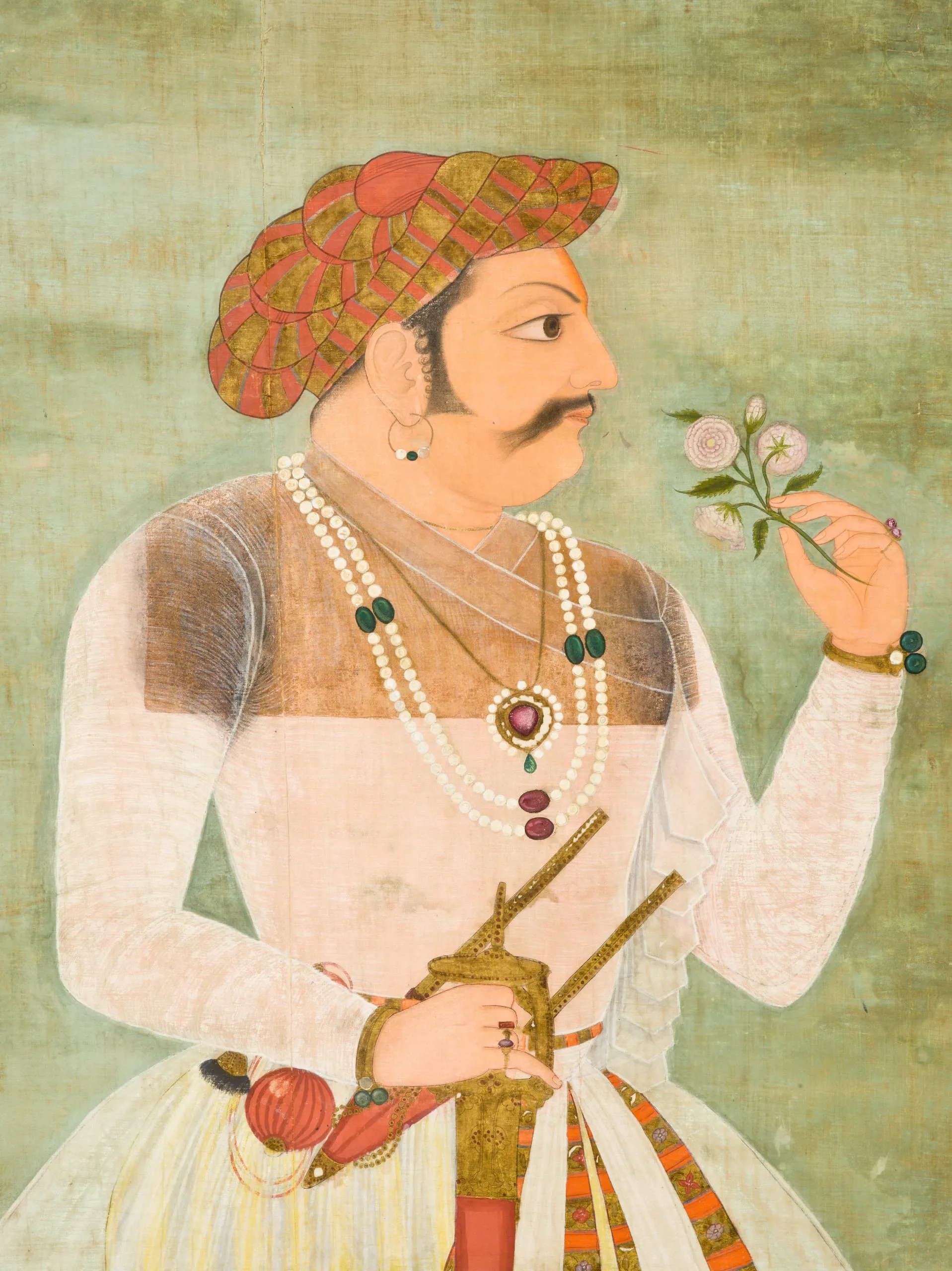
Mughal miniature painting, bust-length portrait of a man in three-quarter profile against a muted green ground, wearing a red and gold turban, sheer white jama, and layered pearl and gemstone necklaces, holding a white flower in his raised right hand and a jeweled dagger at his waist.
Artist or Maker
Unknown
Title
Maharana Jagat Singh I of Udaipur (r. 1628-1652)
Place Made
India, Rajasthan, Mewar, Udaipur
Date Made
circa 1760-1765
Medium
Opaque watercolor and gold on cloth
Dimensions
Sheet: 79 3/4 x 50 1/2 in. (202.57 x 128.27 cm); Image: 76 1/2 x 46 1/2 in. (194.31 x 118.11 cm)
Credit Line
Gift of Mr. and Mrs. Michael Douglas
Accession Number
M.85.283.5
Classification
Drawings
Collecting Area
South and Southeast Asian Art
Curatorial Notes
Jagat Singh I was the Maharana (Great King) of Mewar (r. 1628-1652). He was born in 1607 and ruled from the capital city of Udaipur, which was founded in 1568 shortly after the fall of Mewar’s first capital, Chitor, to the Mughal Emperor Akbar (r. 1556-1605). The dynasty’s long struggle against the Mughals was ended by Jagat Singh I’s grandfather, Maharana Amar Singh (r. 1597-1620), who submitted to Mughal suzerainty in 1615. Due to the favorable terms of his capitulation, Mewar entered a period of relative peace and prosperity in which art and architecture were actively cultivated. Jagat Singh I maintained a close relationship with the Mughal Emperor Shah Jahan (r. 1628-1658), who had once sought refuge in Udaipur during the reign of Jagat Singh I’s father, Karan Singh II (r. 1620-1628). Portraiture and court scenes had been popular in Mewar since the latter half of the 17th century, but it was under Maharana Ari Singh II (r. 1761-73) that large portraits of Mewar’s previous rulers became popular. A devanagari inscription on the reverse identifies the subject as the senior Maharana Jagat Singh to differentiate it from the later ruler, Maharana Jagat Singh II (r. 1734-1751). Jagat Singh I holds a nosegay as a symbol of cultural refinement. He has a punch dagger (katar) tucked in his waist sash. His right hand grasps the grip of a “Firangi” (European) straight sword. A comparable portrait of Maharana Kiran Singh (r. 1620-1628) is in the British Museum, London (1991,0131,0.1).
Selected Bibliography
  • El Universo de la India: Obras Maestras del Museo de Arte del Condado de Los Angeles. Santiago: Centro Cultural Palacio La Moneda, 2012.