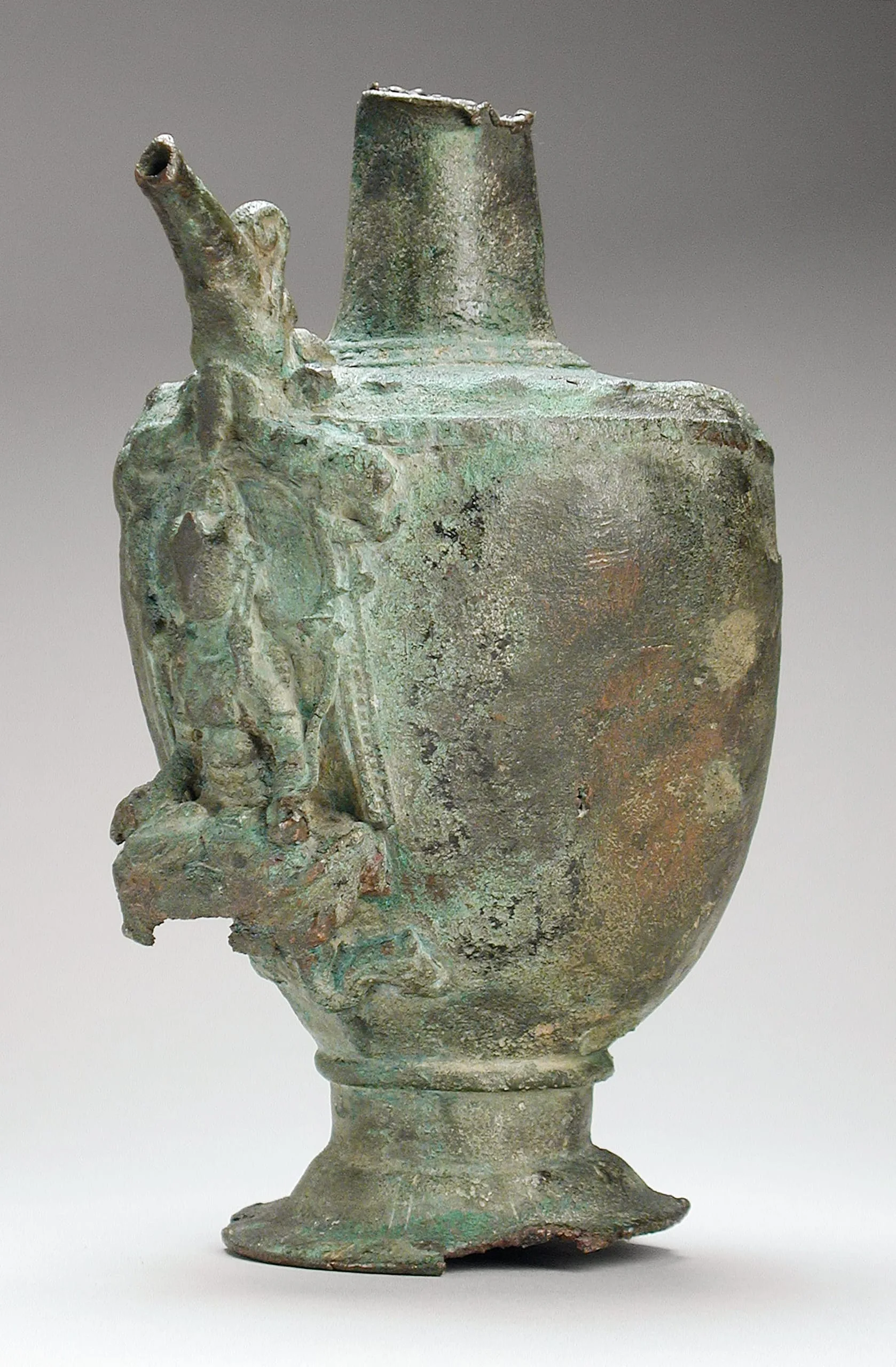
Likely used to dispense ritual oblations, this ewer has a flaring pedestal foot, bulbous body with squared shoulders, tall neck, short spout, and a now-missing mouth. The foot and shoulders are decorated with lotus petals. The shoulders have pearl borders. The vessel is adorned with a representation of Shri Lakshmi being lustrated by elephants (Gaja-Lakshmi). The crowned goddess is seated in the meditation posture (padma asana). She holds the stock of a tall lotus in her left hand. Her right hand is in the gesture of charity (varada mudra). This iconographic form of the goddess has ancient antecedents, extending back at least until the first century BCE (see M.85.62).
A comparable bronze ewer adorned with the snake goddess Manasa, attributed to Bihar, 10th century, is in the Metropolitan Museum of Art, New York (1987.142.340).