LACMA

ShopMembershipMyLACMATickets
LACMA
Los Angeles County Museum of Art
5905 Wilshire Blvd.
Los Angeles, CA 90036
info@lacma.org
(323) 857-6000
Sign up to receive emails
Subscribe
© Museum Associates 2025

Museum Hours

Monday

11 am–6 pm

Tuesday

11 am–6 pm

Wednesday

Closed

Thursday

11 am–6 pm

Friday

11 am–8 pm

Saturday

10 am–7 pm

Sunday

10 am–7 pm


  • About LACMA
  • Jobs
  • Building LACMA
  • Host An Event
  • Unframed
  • Press
  • FAQs
  • Log in to MyLACMA
  • Privacy Policy
© Museum Associates 2025
Collections

Unknown
The Androgynous Form of Shiva and Parvati (Ardhanarishvara)2nd-3rd century

Not on view
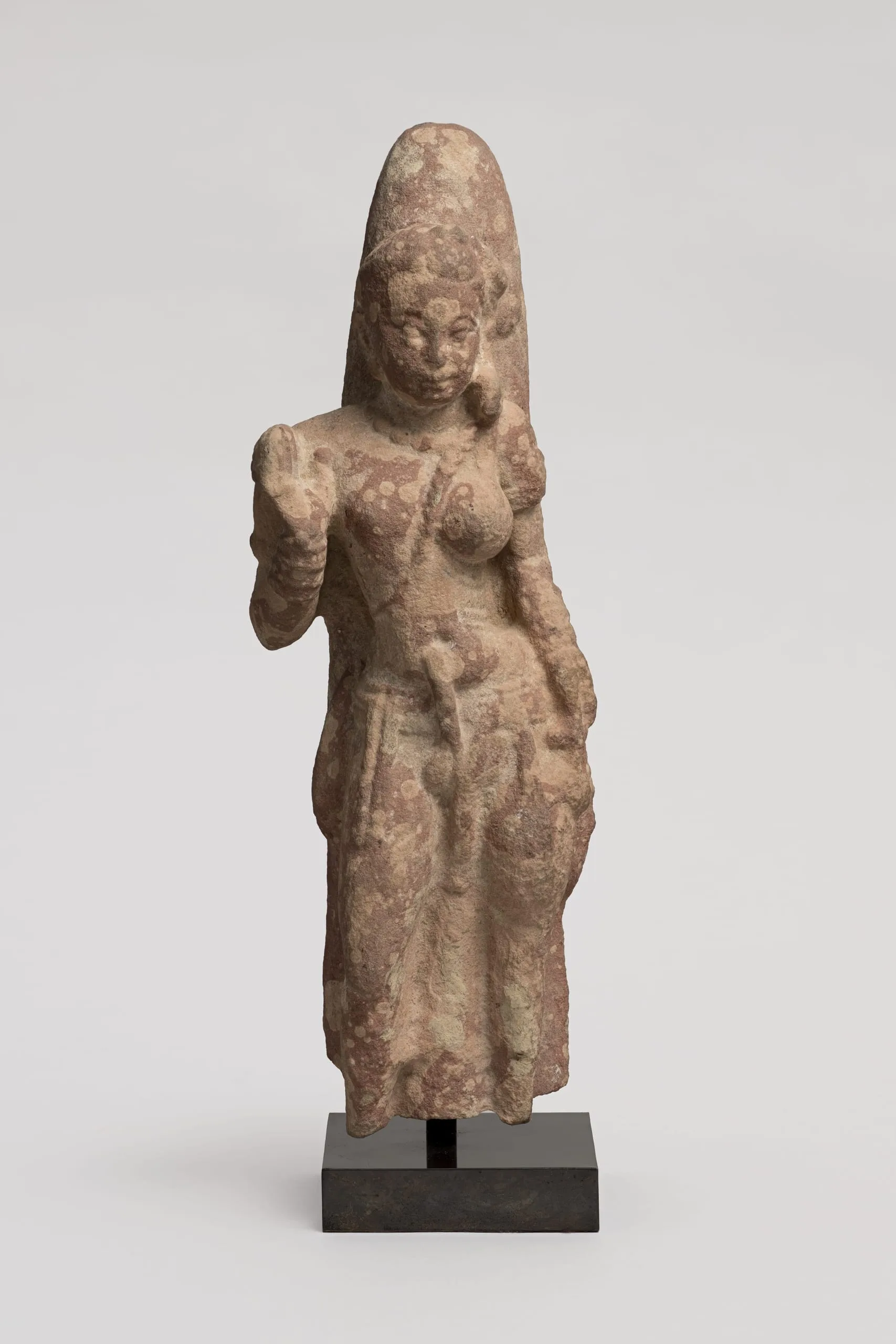
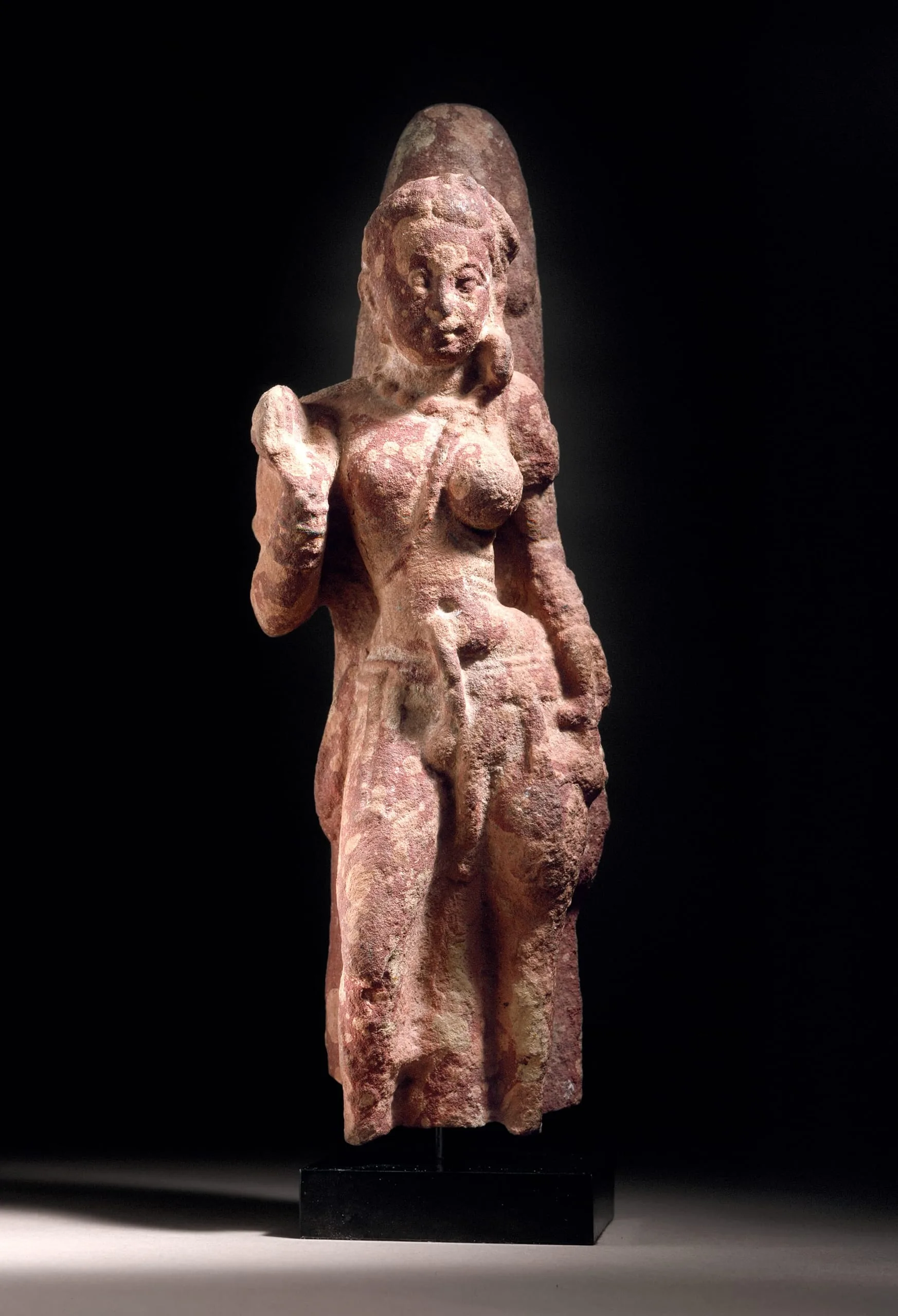
Small sandstone sculpture of a standing female figure with a tall conical headdress, one hand raised, wearing a draped lower garment, heavily weathered surface
Fragmentary red sandstone sculpture of a standing female figure, with tall headdress, raised right arm, and gently curved torso, showing heavily weathered surface with eroded details throughout.
Artist or Maker
Unknown
Title
The Androgynous Form of Shiva and Parvati (Ardhanarishvara)
Place Made
India, Uttar Pradesh, Mathura
Date Made
2nd-3rd century
Medium
Mottled red sandstone
Dimensions
12 1/8 x 4 3/8 x 3 in. (30.79 x 11.11 x 7.62 cm)
Credit Line
Gift of Mr. and Mrs. Herbert Kurit
Accession Number
M.85.213.2
Classification
Sculpture
Collecting Area
South and Southeast Asian Art
Curatorial Notes

This image depicts the combined forms of the Hindu god Shiva and his wife Parvati, known as Ardhanarishvara (the lord who is half woman). According to one myth, the Hindu god of creation, Brahma, neglected to create women. Shiva corrected this oversight by turning the left side of his body into a woman. The two halves eventually separated and then coupled to conceive all of humankind. On a philosophical level, Shiva is the ideal yogi who remains detached from the world, while Parvati represents the creative energy that enlivens him. Ultimately, this image symbolizes the inseparability of the male and female elements of existence and the nonduality of the divine principle. (See also M.82.6.1, M.87.107, and AC1996.170.1.)

As is the norm with images of Ardhanarishvara, the gender-identifying features are distinguished along the figure’s vertical axis with Shiva on the right side and Parvati on the left. Besides the here subtle variances in male versus female musculatures and ornamentation, there are also distinct anatomical differences. Shiva is depicted with an erect penis that leans away from the female side and has only a right testicle. He has a half-moustache on his right side. Shiva holds his right hand in the ‘fear-not’ gesture (abhaya mudra). Parvati has a full breast, which is absent on Shiva. Her left hand dangles near her thigh and holds a flower. The androgyne stands in front of Shiva’s columnar aniconic symbol, a Shivalinga (see M.2010.131).
Selected Bibliography
  • Pal, Pratapaditya. Indian Sculpture, vol.1. Los Angeles: Los Angeles County Museum of Art; University of California Press, 1986.
  • Goldberg, Ellen. The Lord Who Is Half Woman: Ardhanarisvara in Feminist Perspective. Albany, NY: State University of New York Press, 2002.