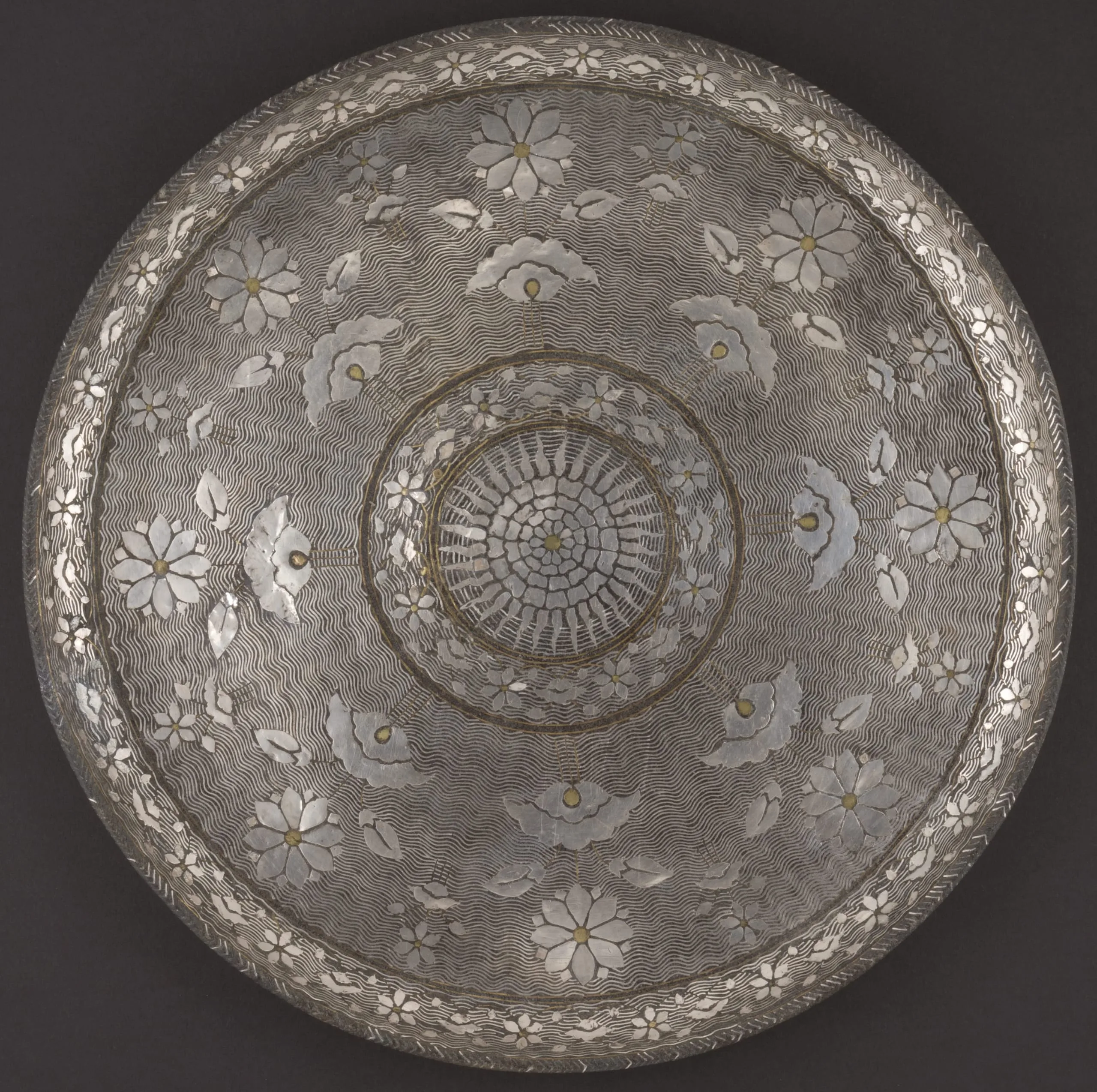
This lyrically rhythmic tray (thali) is decorated with silver wire and silver sheet inlay, and small accents of brass used to define and highlight select elements of the composition. The central medallion is a radiant sun-burst motif in silver sheet with a brass center. It is encircled by a band of lotus scrolling. Undulating strands of silver wire are used over the entire surface of the tray to represent the rippled waters of a pond, which emanate concentrically from the central medallion like the waves from a rock tossed in a pond. Eight large blossoming lotus plants formed by sheet inlay alternate with eight smaller lotuses in a more subtle than usual spoked arrangement often found on bidri-ware trays. Brass sheet is used for the stamen-like center and brass wire for the stem of the lotus flowers. The tray’s low lip repeats the lotus scroll found on the band around the central medallion.
The depiction of water is a conventional but somewhat infrequent motif on Deccani bidri-ware. The surface of the water is often elaborated with flowering plants or with various real and fanciful creatures of the sea. Water is precious across much of arid South Asia. Consequently, the arrival of the monsoon and its replenishing waters are celebrated annually. The waters of life have long been glorified in Islamic and Indian poetry, including in laudatory verses inscribed on prized decorative art objects. Water imagery is replete throughout the pictorial arts and architecture of the Mughal, Rajput, and Deccani realms. It is used not only for symbolic or decorative purposes, as here, but also in a narrative context or as a landscape element. Water fountains and channels with a scalloped surface to make the flowing waters shimmer in the sunlight were also popular palatial features, particularly in the desert climate.