- Title
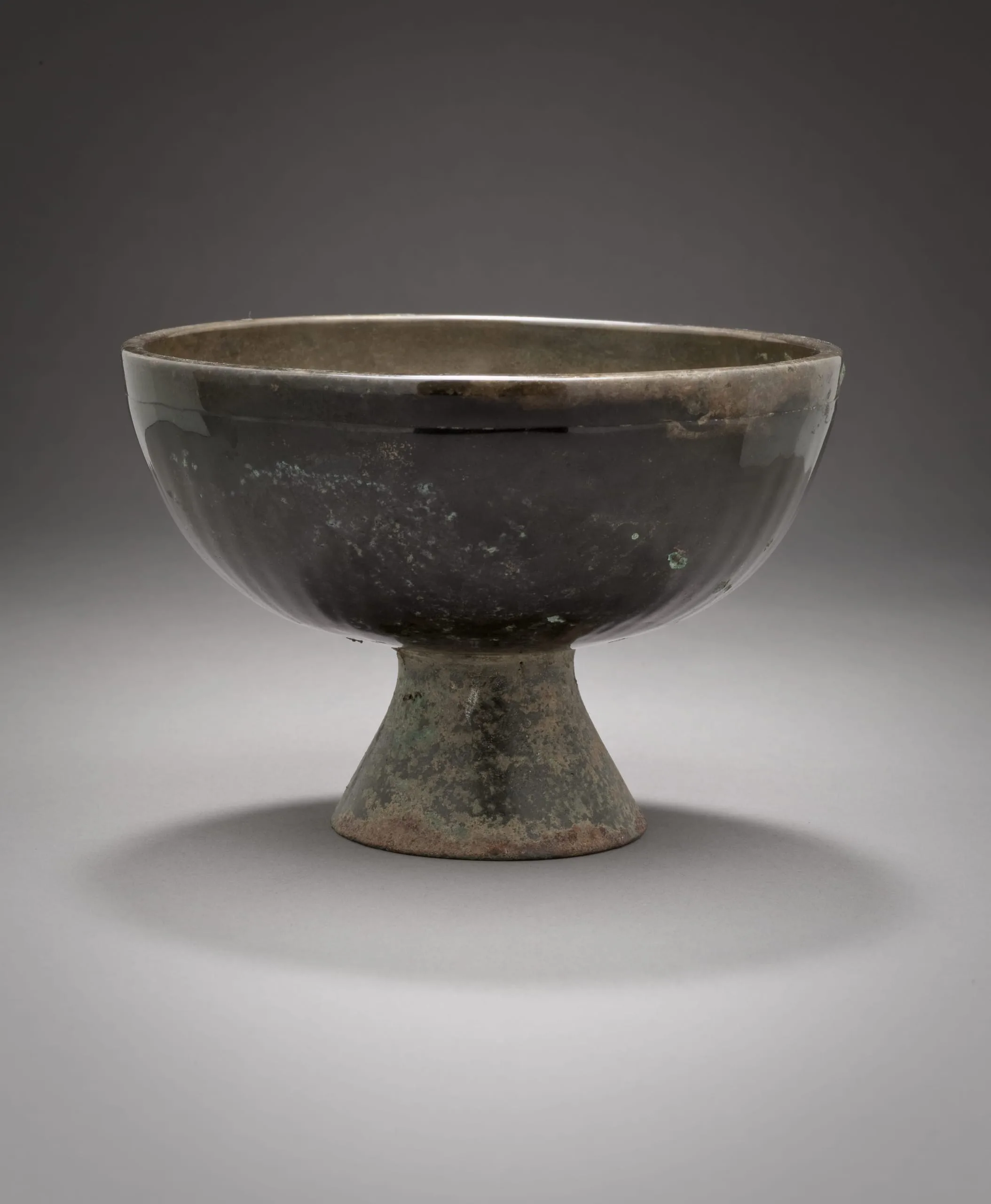
- Pedestal Bowl
- Date Made
- Sasanian period (225-650 A.D.)
- Medium
- High-tin bronze
- Dimensions
- Height: 3 1/2 in. (8.8 cm); Diameter: 5 in. (12.8 cm)
- Accession Number
- M.76.97.379
- Curatorial Notes
Appearances to the contrary, this handsome bronze bowl in the form of a hemispherical vessel set on a conical foot was likely not a wine cup as its thick rim would not have been conducive to sipping. Rather, it may have been used to serve foods such as fruits, suggested by contemporaneous depictions of banqueting, although those vessels were likely meant to represent silver or gold, the tableware of choice among Iranian elite under the Sasanian dynasty (224−651). Indeed, the same pedestal bowls survive in silver (see M.76.97.402), suggesting that this base-metal version was made as a less costly substitute. Its high tin content may have initially given it a silvery color that blackened over time. Such high-tin bronze vessels survive in a variety of shapes (see M.76.97.378), while the technique carried over into the early Islamic era (see M.2002.1.568), which heralded the ascendancy of a new faith and leadership but did not necessarily alter the traditional manufacture of fine tableware in Iran.
2024
- Selected Bibliography
- Ancient Bronzes, Ceramics, and Seals: The Nasli M. Heeramaneck Collection of Ancient Near Eastern, Central Asiatic, and European Art. Los Angeles: Los Angeles County Museum of Art, 1981.