- Title
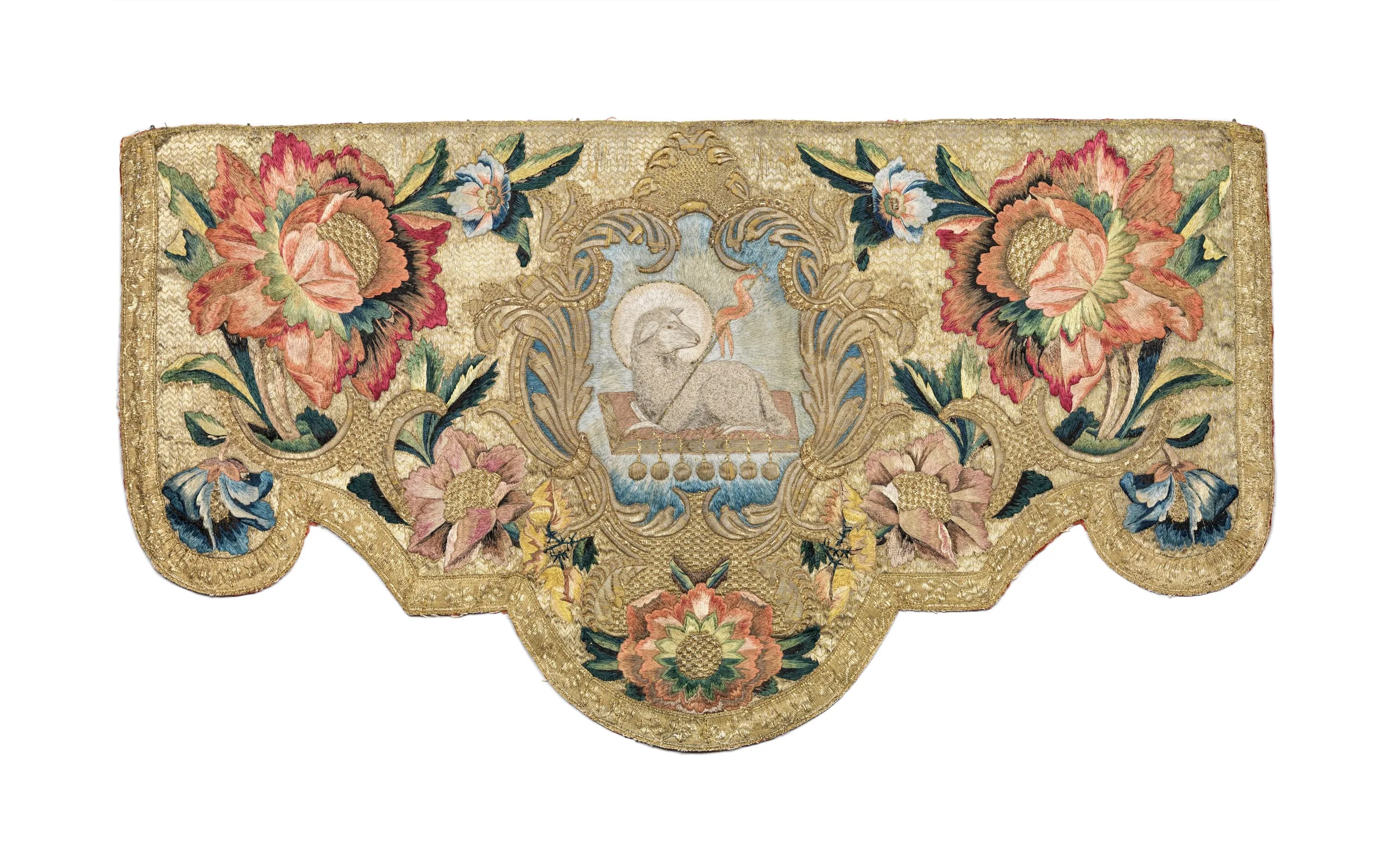
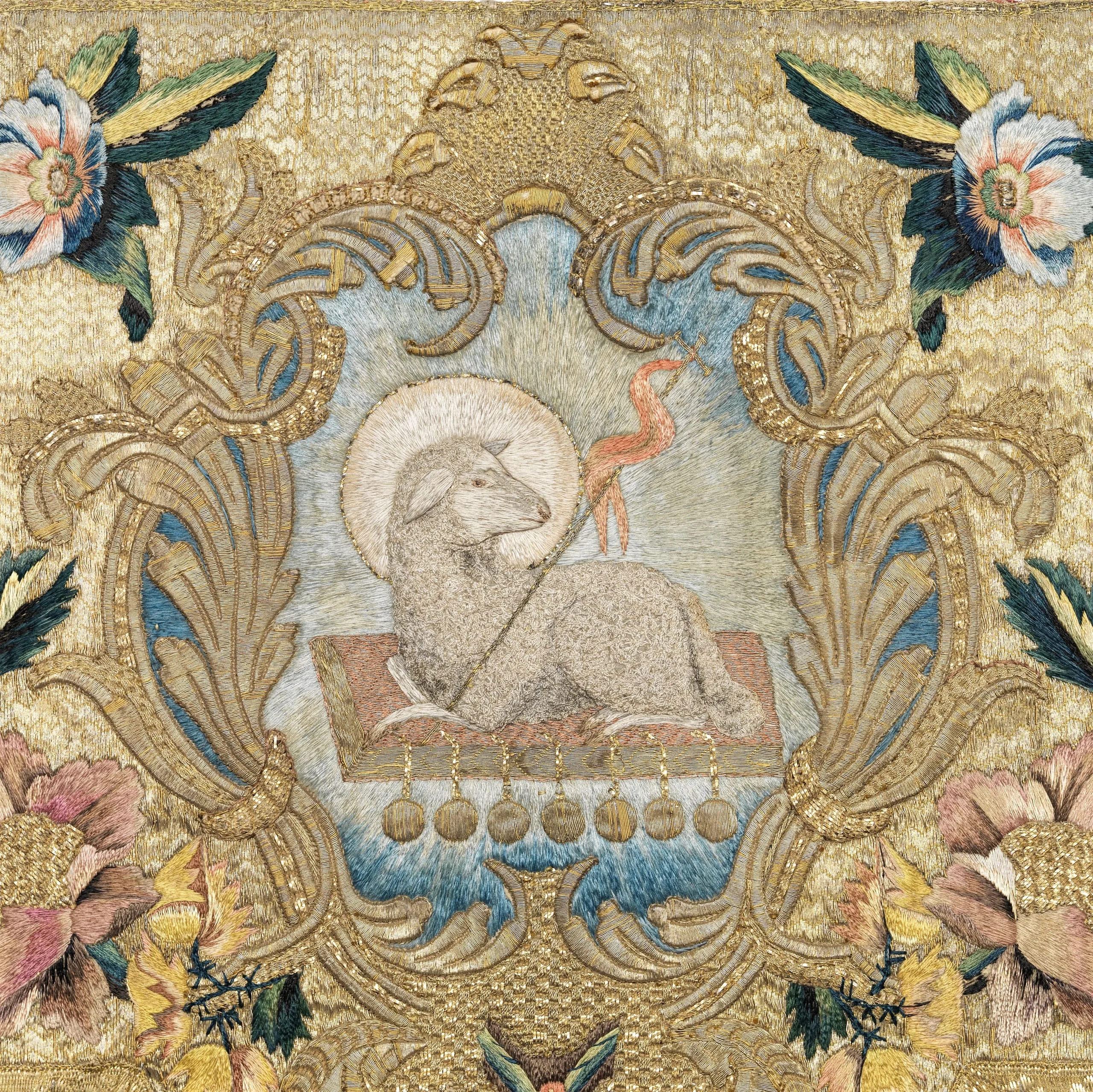
- Set of Ecclesiastical Vestments: Lectern Hanging (Partes de un terno eclesiástico: Paño de atril)
- Date Made
- circa 1730
- Medium
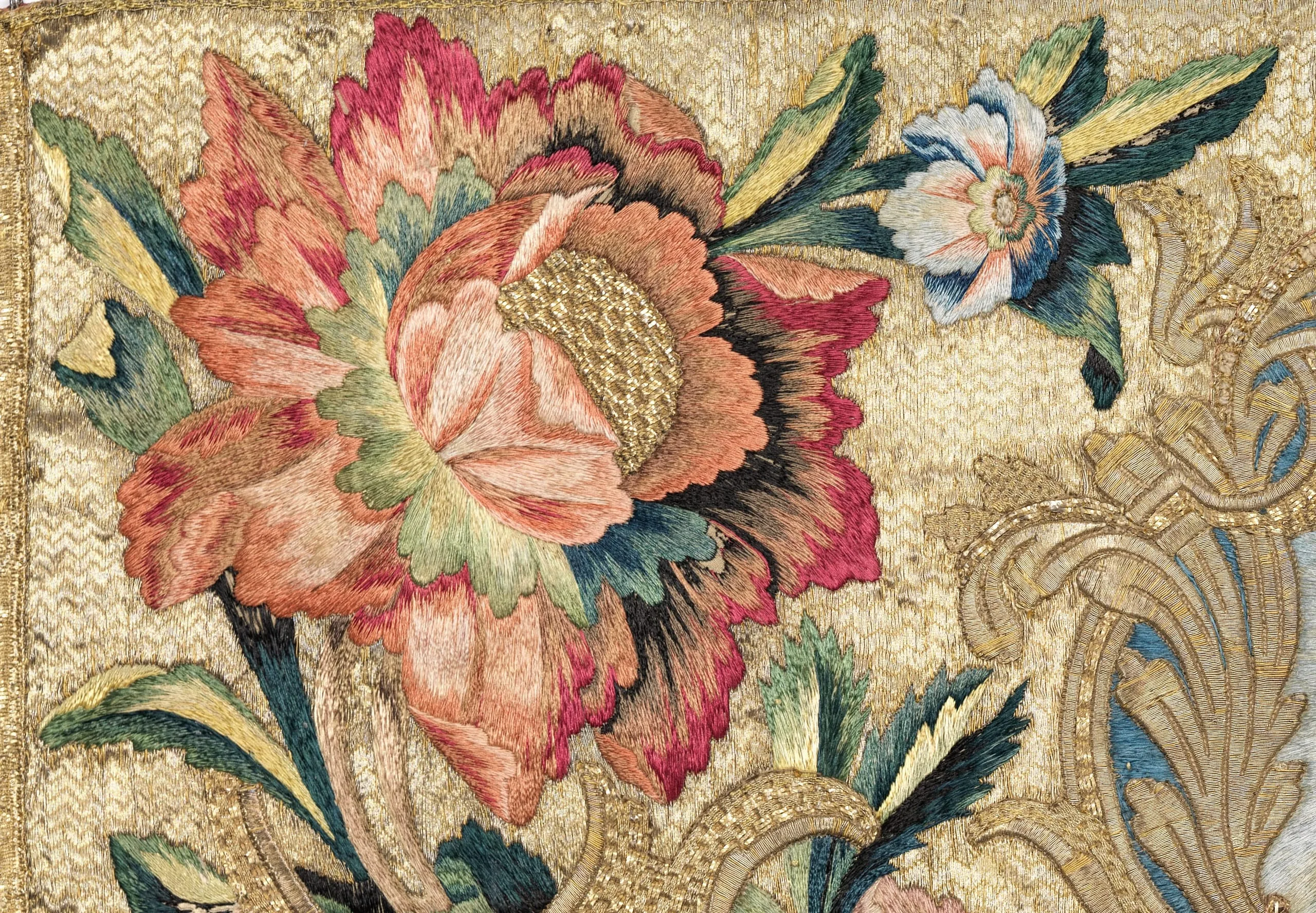
- Silk, metallic-thread, and lamella embroidery
- Dimensions
- 17 1/4 × 31 1/4 in. (43.82 × 79.38 cm)
- Accession Number
- M.85.96.2
- Curatorial Notes
Embroidered for Catholic priests, vestments were among the most resplendent art forms of eighteenth-century Mexico. These garments were created as sets in guild workshops led by master craftsmen, as well as by nuns in convents. The quality of the embroidery, alongside the abundant use of silk and gold, reveals the enormous resources invested in their production. Based on designs from Europe and constructed using silk and metallic threads imported from China and Spain, these elaborate vestments embody the intersection of cultures made possible by global trade networks. LACMA’s fine grouping—which includes this lectern hanging, plus a chasuable (M.85.96.1), two stoles (M.85.96.3.4), two collars (M.85.96.5, M.85.96.3.6), a cope (M.85.96.3.7), and two dalmatics (M.85.96.3.8, M.85.96.3.9)—bears a striking resemblance to a set preserved in the Puebla Cathedral by the Spanish master embroiderer Manuel José de Mena Cárdenas, which, according to extant documentation, was completed by one Ana Bárbara Quijano (probably of Indigenous or mestizo background) upon his death.
Ilona Katzew
2024
- Provenance
Virginia Araciga, c. 1983; Loewi-Robertson Inc., Los Angeles, 1983; LACMA, 1985.
- Selected Bibliography
- Katzew, Ilona, ed. Archive of the World: Art and Imagination in Spanish America, 1500–1800: Highlights from LACMA’s Collection. Exh. Cat. Los Angeles: Los Angeles County Museum of Art; New York: DelMonico Books/D.A.P., 2022.