LACMA

ShopMembershipMyLACMATickets
LACMA
Los Angeles County Museum of Art
5905 Wilshire Blvd.
Los Angeles, CA 90036
info@lacma.org
(323) 857-6000
Sign up to receive emails
Subscribe
© Museum Associates 2025

Museum Hours

Monday

11 am–6 pm

Tuesday

11 am–6 pm

Wednesday

Closed

Thursday

11 am–6 pm

Friday

11 am–8 pm

Saturday

10 am–7 pm

Sunday

10 am–7 pm


  • About LACMA
  • Jobs
  • Building LACMA
  • Host An Event
  • Unframed
  • Press
  • FAQs
  • Log in to MyLACMA
  • Privacy Policy
© Museum Associates 2025
Collections

Unknown
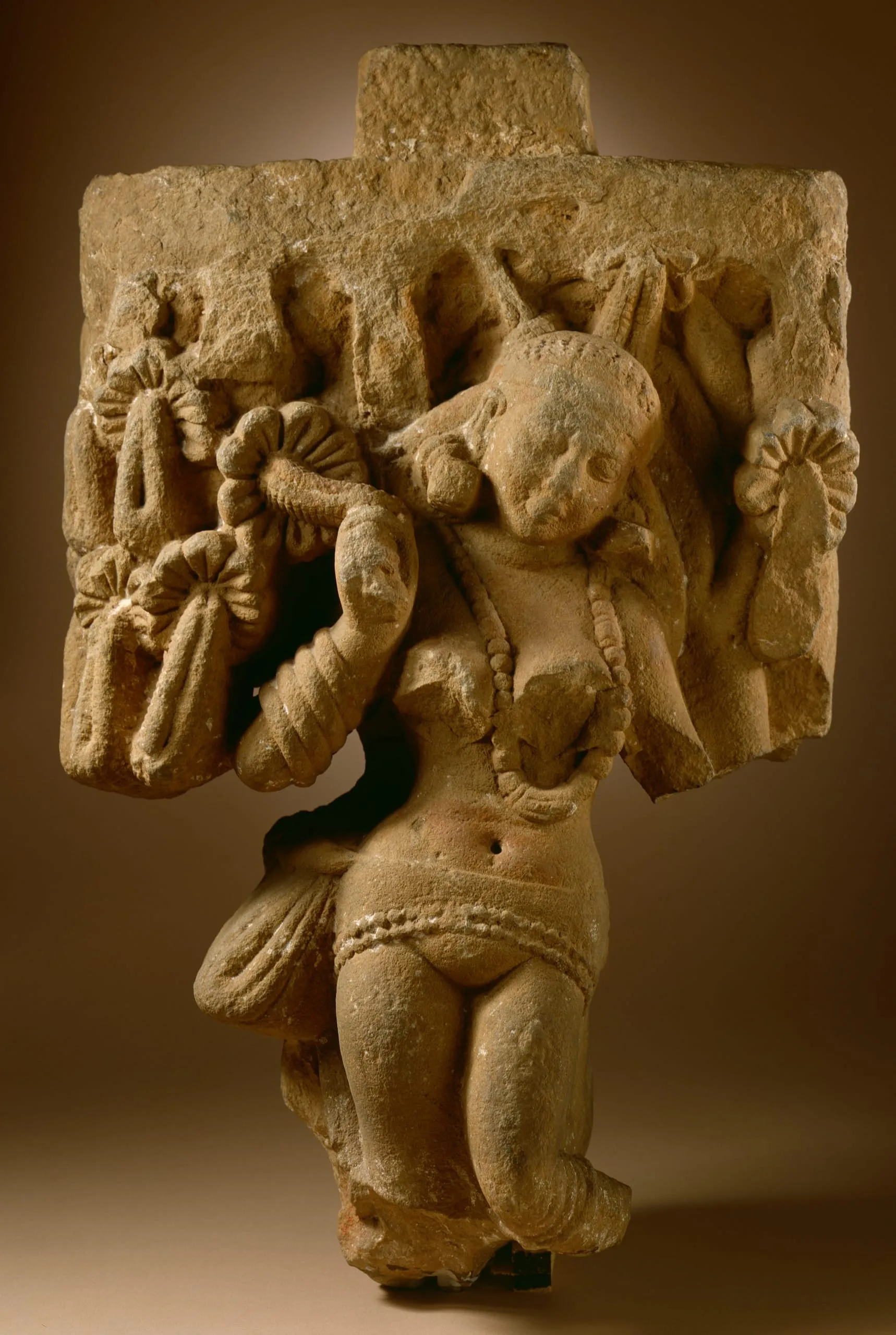
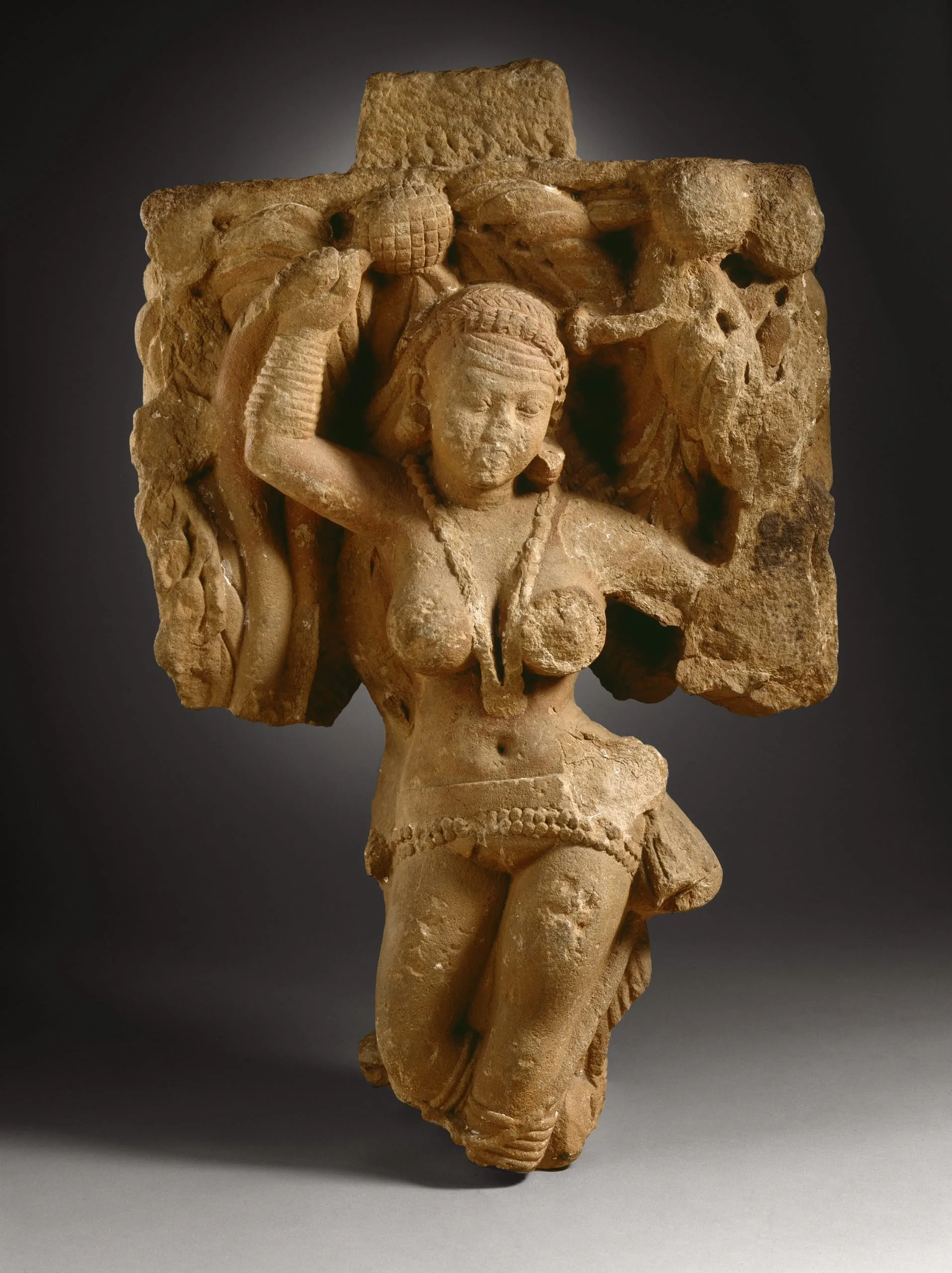
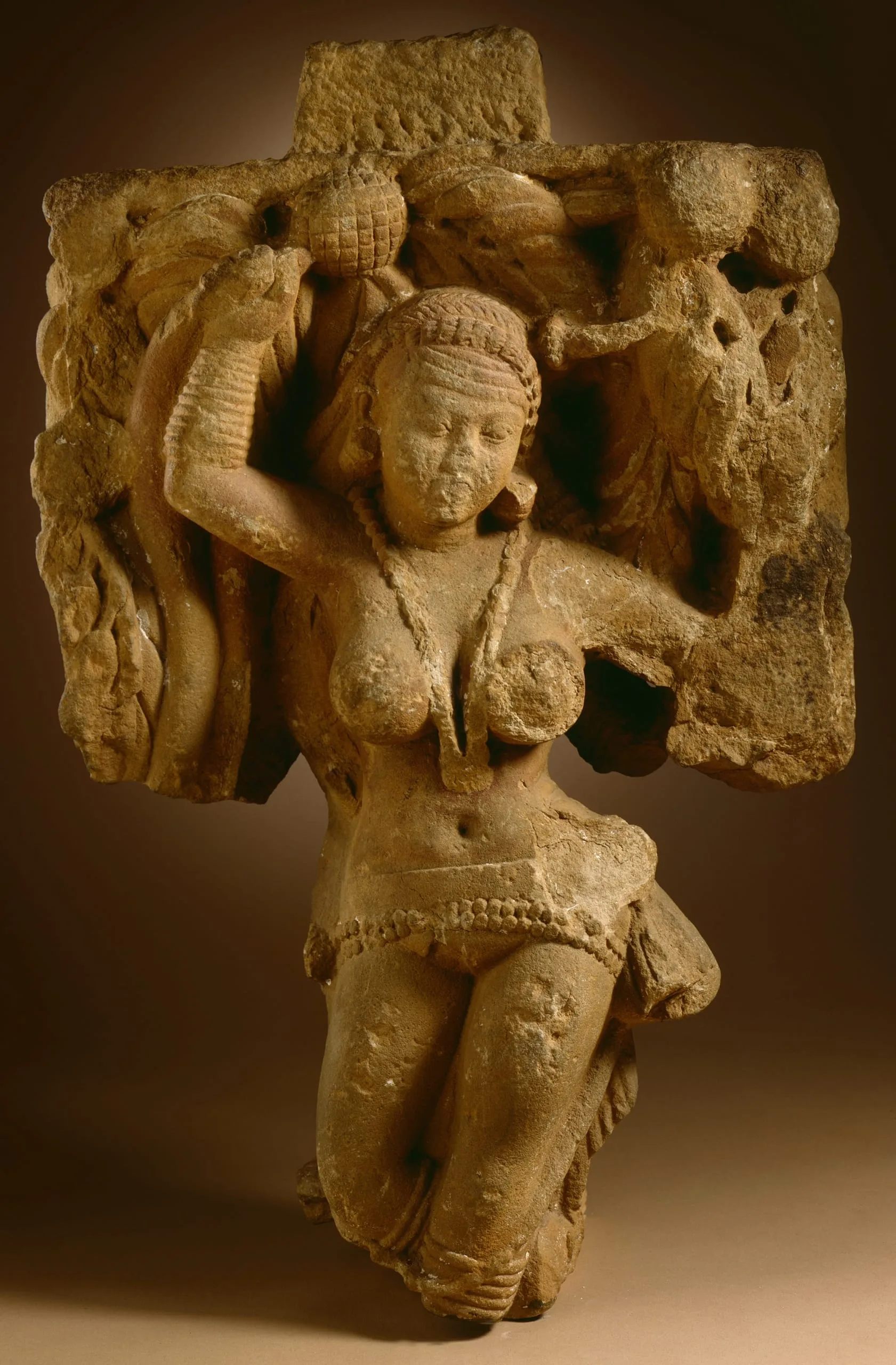
Two Addorsed Tree Dryads50 BCE-50 CE

On view:
Resnick Pavilion, floor 1
Sandstone architectural bracket sculpture of a kneeling female figure with raised arms, braided hair, and beaded jewelry, carved in high relief from the base of a weathered rectangular corbel
Sandstone bracket figure of a female yakshi in a dynamic bent-knee pose, arms raised to support a rectangular architectural element above; wearing beaded jewelry and a low hip girdle, with braided hair and foliage carved in high relief behind her.
Sandstone relief sculpture of a female figure in tribhanga pose, adorned with beaded jewelry and a low-slung garment; flanked by foliage and attendant figures in high relief against a rectangular backing slab.
Artist or Maker
Unknown
Title
Two Addorsed Tree Dryads
Place Made
India, Madhya Pradesh, Sanchi, Stupa I
Date Made
50 BCE-50 CE
Medium
Sandstone
Dimensions
24 1/2 x 16 1/2 x 7 1/2 in. (62.23 x 41.91 x 19.05 cm)
Credit Line
From the Nasli and Alice Heeramaneck Collection, purchased with funds provided by Mr. and Mrs. Allan C. Balch
Accession Number
M.85.2.1
Classification
Sculpture
Collecting Area
South and Southeast Asian Art
Curatorial Notes

In this sandstone image of two elegantly adorned women standing back-to-back (addorsed), the women’s voluptuousness exemplifies the traditional Indian ideal of feminine beauty, which is closely linked with natural abundance. Each of the individualized women holds the branch of a fruit-bearing or flowering tree, suggesting a type of tree nymph of Indian poetry--a beautiful woman who can make trees or flowers bloom by a mere touch of her hand or foot (shalabhanjika). The inclusion of the beautiful tree nymphs and other nature spirits in Buddhist art represents the assimilation of popular village and folk divinities into the higher religion that served to broaden its appeal and attract converts.

These addorsed dryads originally served as a bracket between two gateway lintels of the Great Stupa at Sanchi, Madhya Pradesh, and thus would have been seen by worshippers on both sides of the gateway. Built in the 2nd century BCE on the site of an even earlier stupa or reliquary mound, Sanchi is one of the most important early Buddhist sites in India. Its four gateways - added in the early first century CE and 30 feet in height - still stand today. For a miniature Votive Stupa, which is a devotional version of a large stupa, see M.85.224.6.
Selected Bibliography
  • Peyton, Allysa B. and Katherine Anne Paul. Arts of South Asia: Cultures of Collecting. Gainesville: University of Florida Press, 2019.
  • Little, Stephen, Tushara Bindu Gude, Karina Romero Blanco, Silvia Seligson, Marco Antonio Karam. Las Huellas de Buda. Ciudad de México : Instituto Nacional de Antropología e Historia, 2018.
  • Little, Stephen, and Tushara Bindu Gude. Realms of the Dharma: Buddhist Art across Asia. Los Angeles: Los Angeles County Museum of Art, 2025.