LACMA

ShopMembershipMyLACMATickets
LACMA
Los Angeles County Museum of Art
5905 Wilshire Blvd.
Los Angeles, CA 90036
info@lacma.org
(323) 857-6000
Sign up to receive emails
Subscribe
© Museum Associates 2026
  • About LACMA
  • Jobs
  • Host An Event
  • Unframed
  • Press
  • FAQs
  • Log in to MyLACMA
  • Privacy Policy
© Museum Associates 2026
Collections

Unknown
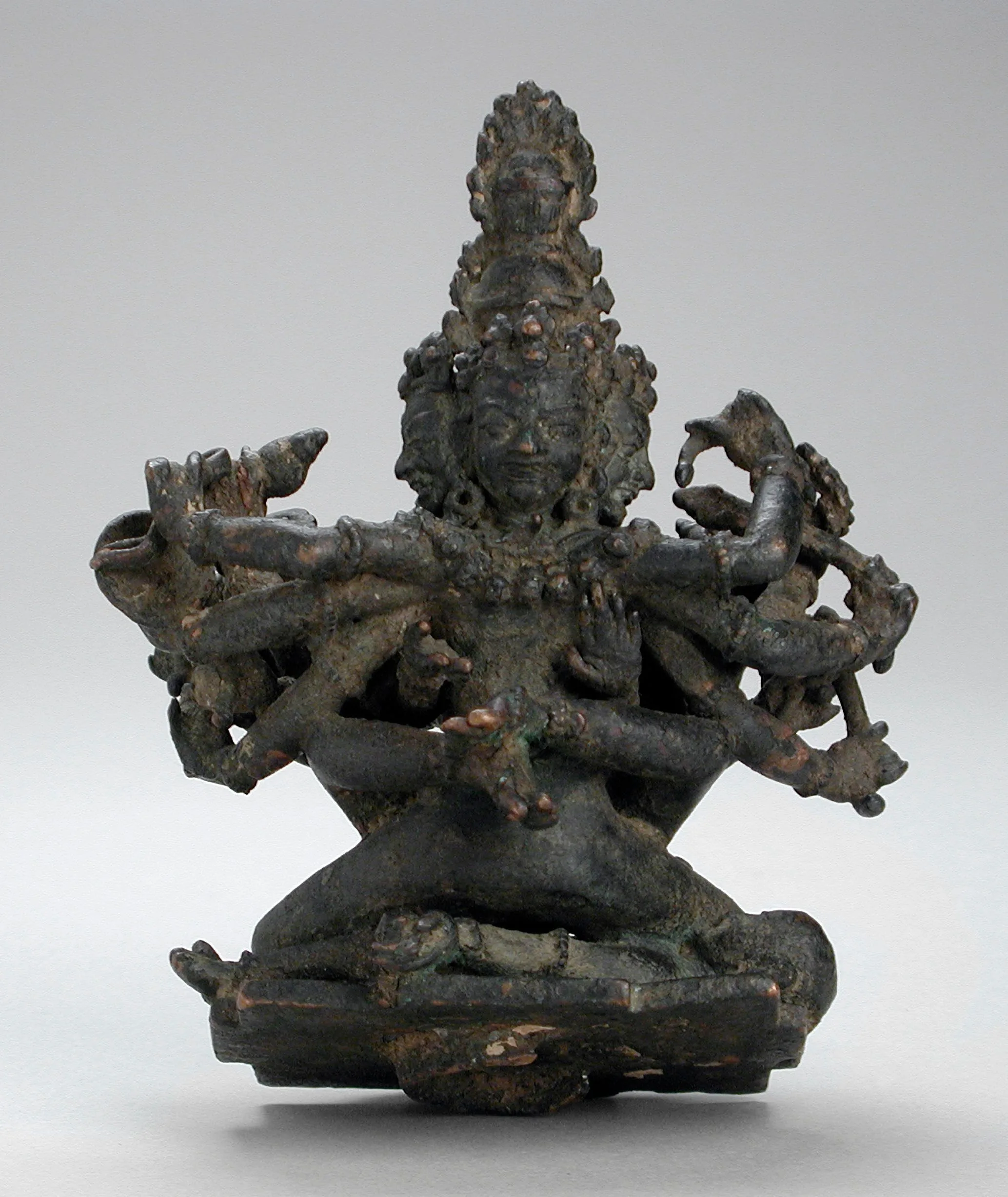
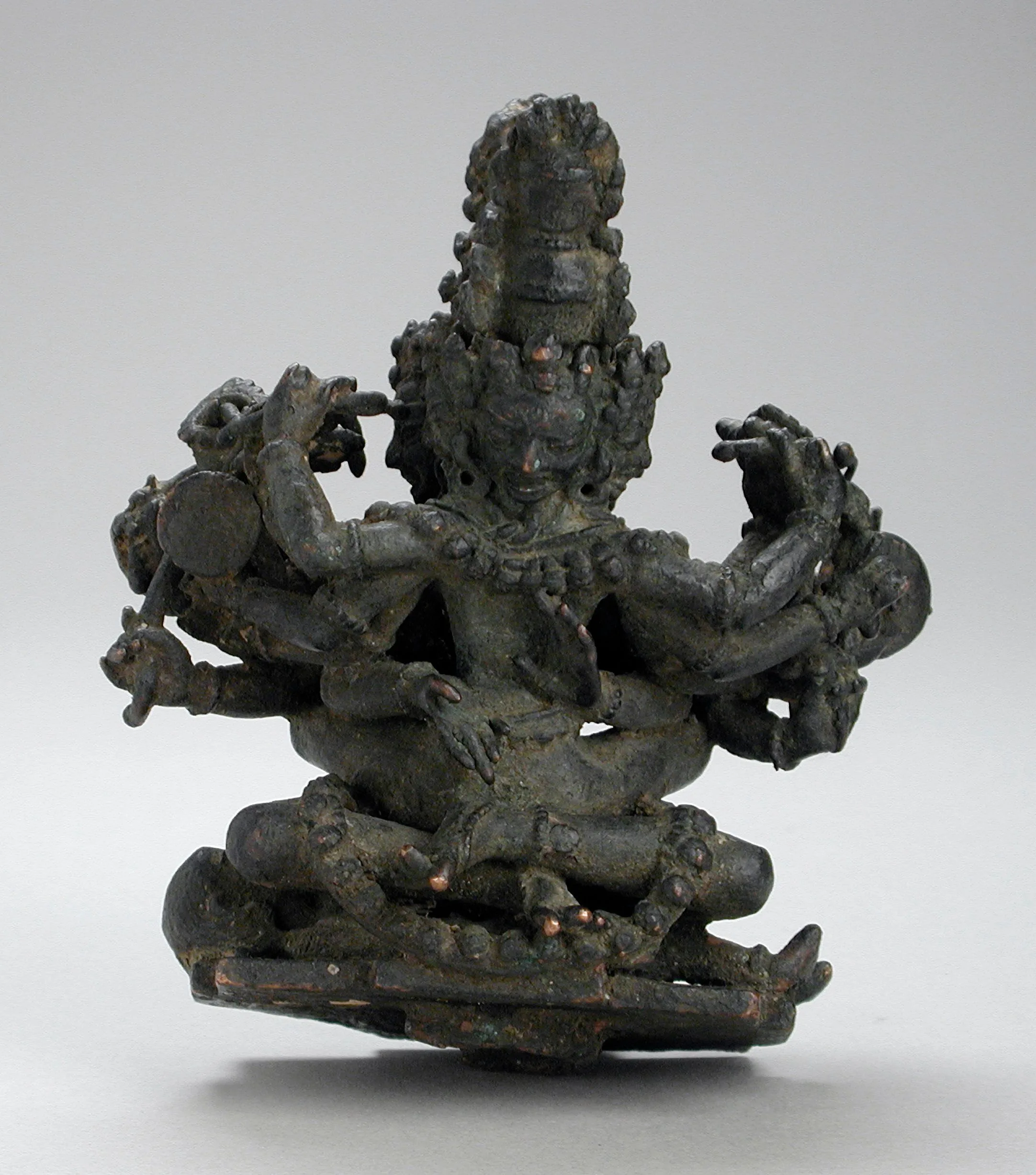
The Hindu God Shiva Shrikantha Kamakala and His Consort Guhyakali11th-12th century

Not on view
Small bronze sculpture of a multi-armed, multi-headed deity seated cross-legged on a stepped base, with a near-black patina and green verdigris accents
Small bronze sculpture of a multi-armed deity seated in cross-legged posture on a lotus base, with stacked crown and multiple hands holding attributes, dark patinated surface with traces of red pigment.

Unknown, The Hindu God Shiva Shrikantha in Union with His Consort, Guhyakali, 11th-12th century, Los Angeles County Museum of Art, Gift of Jerry Heymann, photo © Museum Associates/LACMA

Artist or Maker
Unknown
Title
The Hindu God Shiva Shrikantha Kamakala and His Consort Guhyakali
Place Made
Central Tibet
Date Made
11th-12th century
Medium
Brass
Dimensions
4 3/4 x 3 3/4 x 2 3/4 in. (12.06 x 9.52 x 6.98 cm)
Credit Line
Gift of Jerry Heymann
Accession Number
M.84.221.7
Classification
Sculpture
Collecting Area
South and Southeast Asian Art
Curatorial Notes

Shrikantha (beautiful-throated) Kamakala (union of creative power) is an esoteric form of the Vedic (proto-Hindu) and Hindu god Shiva in sexual embrace (yab-yum) with his consort Guhyakali. According to some textual lists, Shrikantha is one of the Eleven Rudras (Ekadasha Rudra), which are tantric manifestations of Shiva created to defeat the demons (asuras) and maintain cosmic order.

In this seated representation, Shrikantha is depicted with five fierce heads and ten arms holding various symbolic attributes. Guhyakali is similarly multi-headed and multi-armed. They are adorned with a long garland of severed skulls (mundamala).

A comparable image of Shrikantha Kamakala, albeit standing, is in the Norton Simon Museum, Pasadena (M.1979.91.S).

Selected Bibliography
  • Reedy, Chandra L. Himalayan Bronzes: Technology, Style and Choices. Newark: University of Delaware Press, 1997.