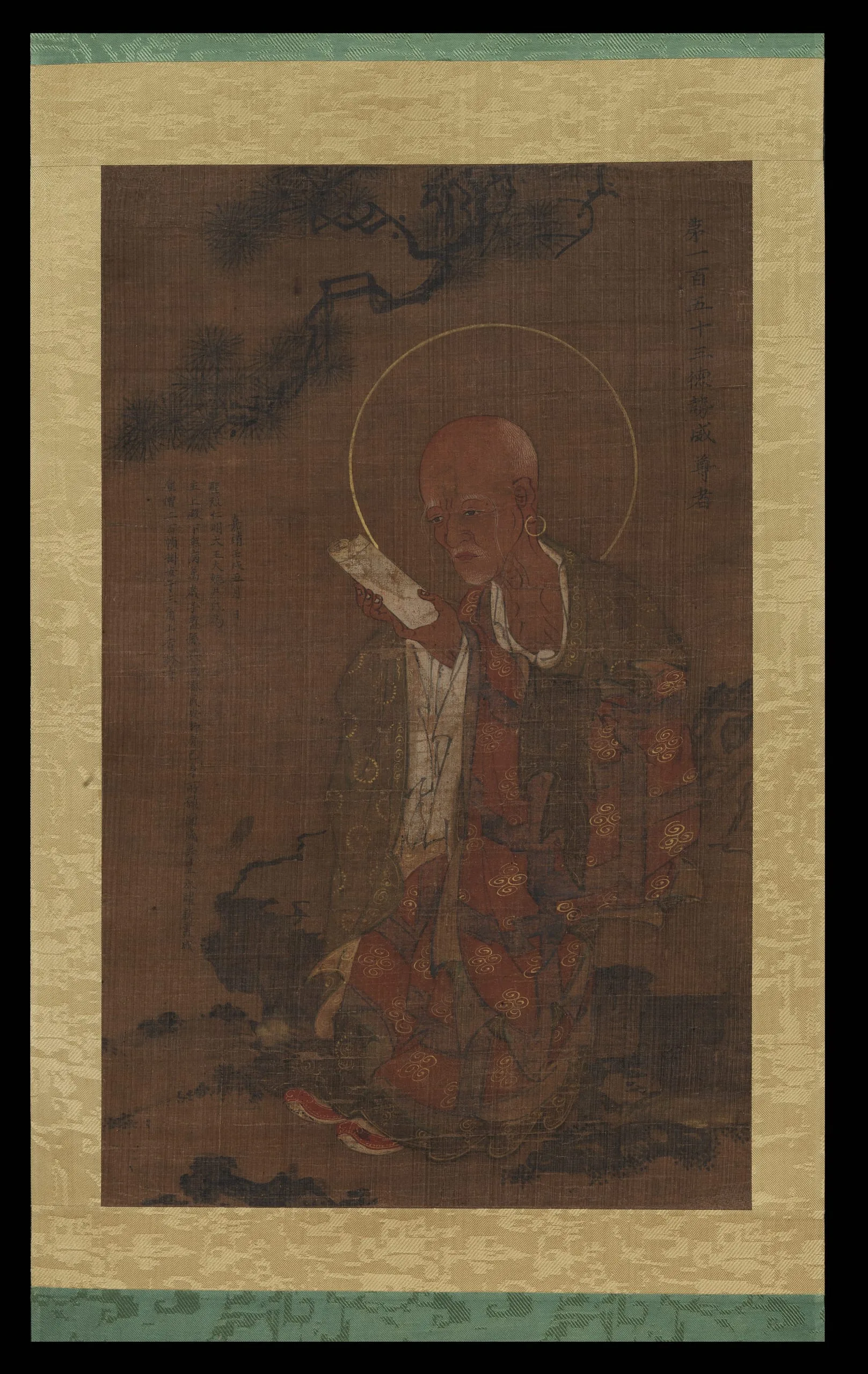
A nahan (Sanskrit: arhat; Chinese: lohan) is a disciple of Buddha who has reached enlightenment. The Buddha asked the nahans to remain in the world to propagate Buddhist law (dharma), to protect and benefit the common beings, and extend human lives. Traditionally, the nahans are depicted in groups of sixteen, eighteen, or five hundred and are worshipped that way.
There are no Buddhist texts that include either the names of the Five Hundred Nahans -- believed to be their most powerful manifestation during the Goryeo dynasty -- or their individual roles in the propagation of Buddhism. The Lotus Sutra (Myobeop yeonhwa gyeong) and other records mention the five hundred disciples of the Buddha, and it seems that, from such sources, the concept eventually transformed into the Five Hundred Nahans. Because Buddhist texts do not include names for the nahans, the names found on paintings or in texts about the Five Hundred Nahans vary.
In China, for example, the names are often based on a section of text titled “Names of Five Hundred Nahans” in the Great Life Collection of All the Sacred Writings of Buddhism (Dae myeong sok janggyeong). In Korea, the names are taken from the text titled Record of the Five Hundred Nahans from 1805, currently housed in the Geojo’am of Eunhae Temple, near Daegu, North Gyeongsang province. The names listed in these two works are very different.
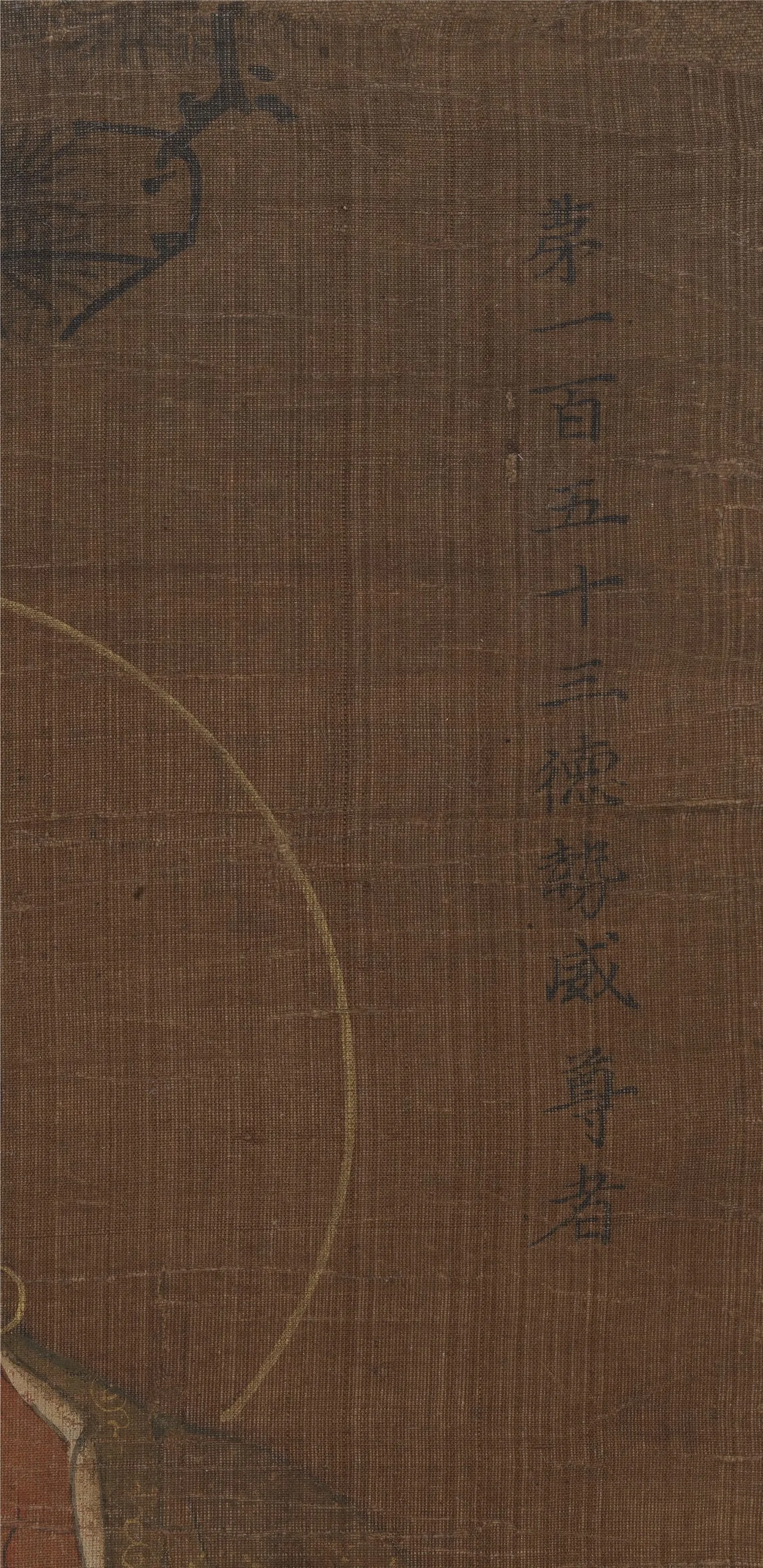
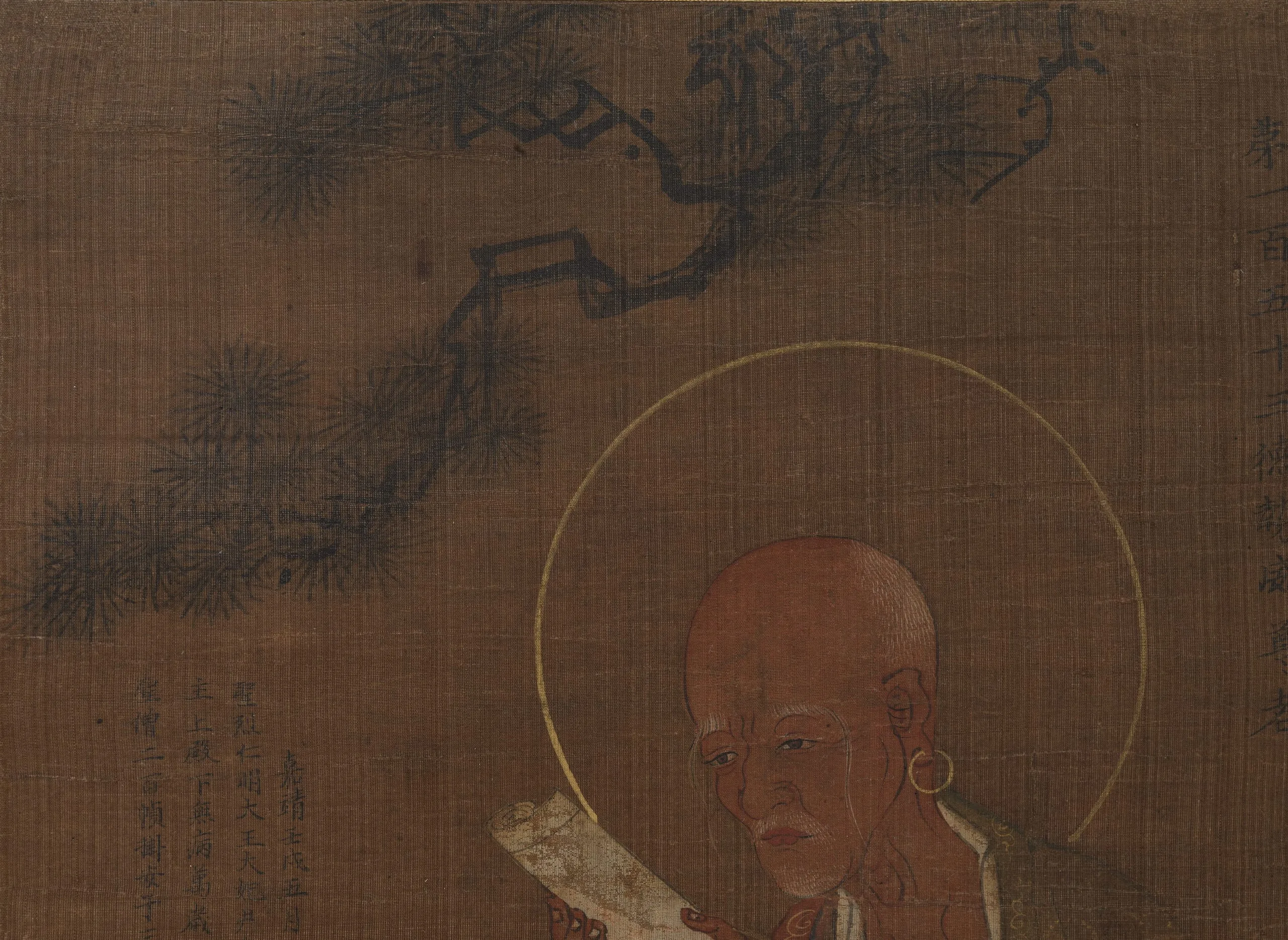
In this painting, the name of the 153rd of the Five Hundred Nahans is written as “Deoksewi,” which is consistent with the name suggested in the Record of the Five Hundred Nahans. The preface of the Record of the Five Hundred Nahans indicates that the text was based on the ritual manual compiled in the early Joseon period by the Great Monk Muhak. It is highly probable, therefore, that the names found in this text were being used during the early Joseon period as well. In addition, a series of five hundred Goryeo period scroll paintings featuring the individual nahans includes names that also agree with those found in the Record of the Five Hundred Nahans, indicating that the work compiled by Muhak had been based on another record that existed in the earlier Goryeo period.
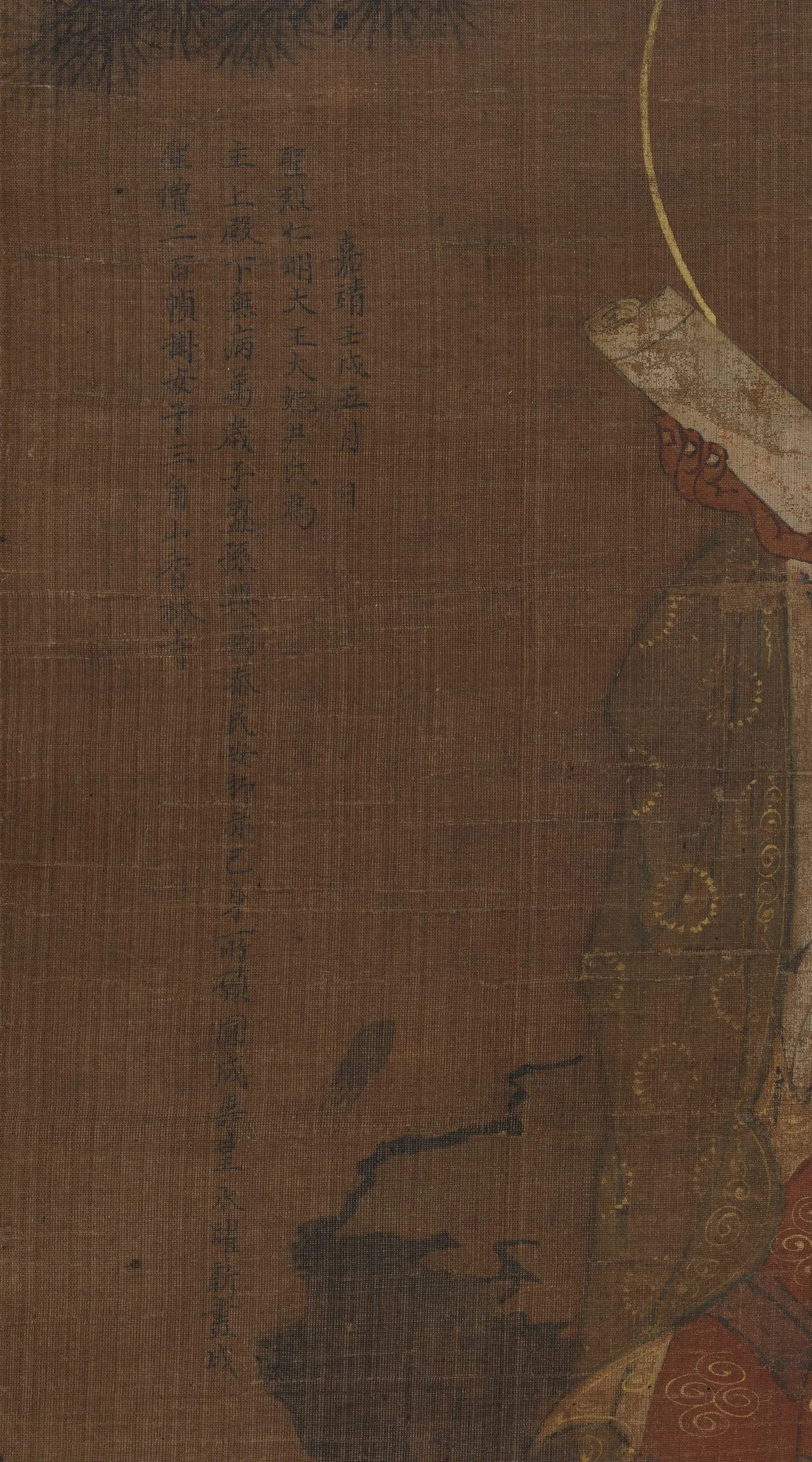
The scroll shown here is one of two hundred that were enshrined at Hyanglim Temple of Mount Samgak by Queen Munjeong in 1562. Queen Munjeong (1501-1565), the mother of King Myeongjong (1534-1567), is known for inspiring a resurgence of interest in Buddhism in Korea; she enshrined the scrolls in a desire for peace in the country and prosperity and health for her son, King Myeongjong. It is curious that only two hundred scrolls, rather than the more typical five hundred, were reported to have been displayed according to the inscription (det. 1). It is not known if five hundred scrolls were painted initially, with two hundred being enshrined at Hyanglim Temple and the remaining three hundred scrolls enshrined elsewhere, or if there were only two hundred scrolls total. As yet, no documentation has been discovered in Korea, Japan, or China of artists painting only two hundred of the Five Hundred Nahans.
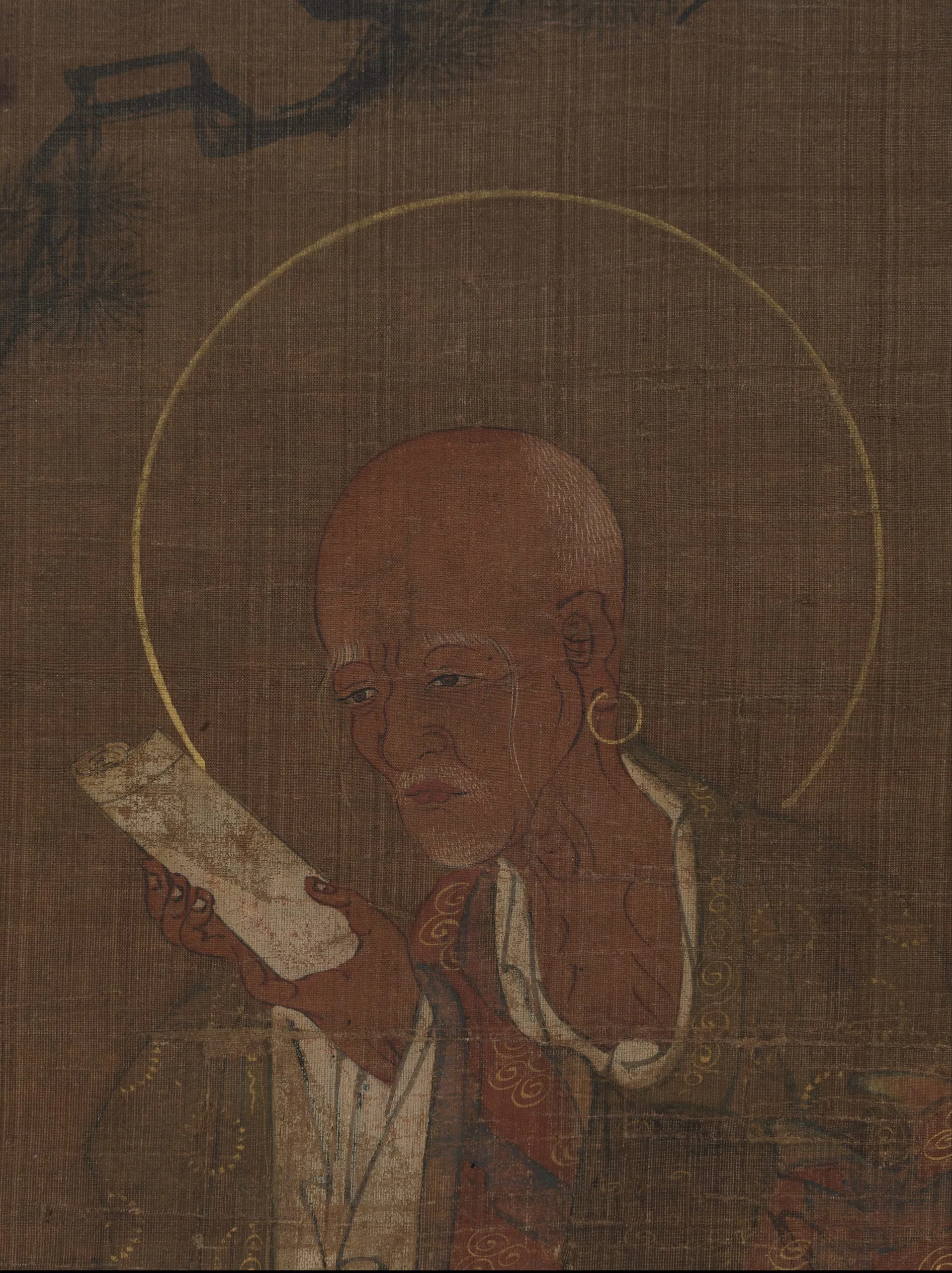
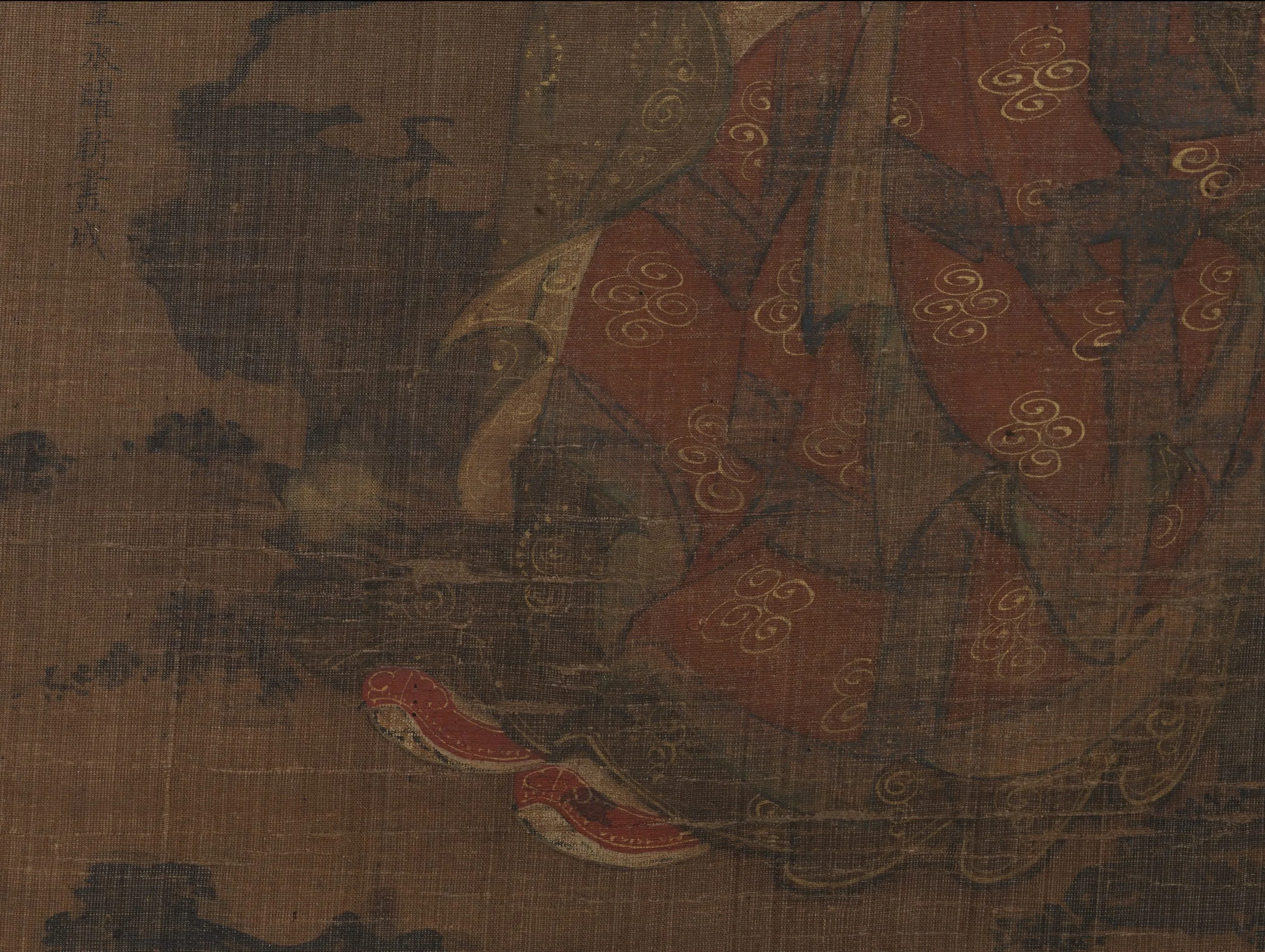
Here, the 153rd nahan is depicted as an elderly Buddhist monk (bigu); he is seated facing left on a rock and reading a sutra (det. 2). First, the artist painted the face of the nahan in red on the back of the silk. Then, on the front, the contour lines of the face were redrawn again with black ink and then, once again, with red. White pigment was used for his hair, eyebrows, and beard. The dominant color for the robe was red, and gold was used for the nimbus, earring, and the robe’s swirled pattern (det.3). The landscape in the background was executed in ink (det. 4).
The nahan’s position, seated on a rock, as well as the inclusion of the nimbus, is evidence that this artwork was influenced by the compositions of Goryeo period paintings of the Five Hundred Nahans, as can be seen in this ink painting of the 282nd of the 500 Nahans from 1236 (fig. 1). The elderly monk’s face, earring, and the gold pattern of his robe are also very similar to those of the disciples seen in Gathering of Four Buddhas from 1562 (fig. 2), indicating that LACMA’s Deoksewi, 153rd of the 500 Nahans (Arhats) is consistent with the court style of Buddhist paintings of that period.
This highly significant scroll is the only extant example of a nahan painting in the early Joseon style. The overall reddish hue of the painting is due to the application of a thin red backing paper. All paintings on silk or paper have layers of backing papers to give support and strength, and colored backing papers are occasionally used to lend an overall tone to the paintings.
Bibliography
Chung, WooThak. “A Study on Court Style Buddhist Paintings in Early Joseon Dynasty.” Art History [Misul Sahak] 13, Seoul, 1999.
National Museum of Korea. The Arhats. Chuncheon: National Museum of Korea, 2003.
Additional References
Kim, Hongnam. The Story of a Painting: A Korean Buddhist Treasure from The Mary and Jackson Burke Foundation. New York: The Asian Socity Galleries, 1991, 12, Fig. 16/No. 13 See other artworks in this book