LACMA

ShopMembershipMyLACMATickets
LACMA
Los Angeles County Museum of Art
5905 Wilshire Blvd.
Los Angeles, CA 90036
info@lacma.org
(323) 857-6000
Sign up to receive emails
Subscribe
© Museum Associates 2025

Museum Hours

Monday

11 am–6 pm

Tuesday

11 am–6 pm

Wednesday

Closed

Thursday

11 am–6 pm

Friday

11 am–8 pm

Saturday

10 am–7 pm

Sunday

10 am–7 pm


  • About LACMA
  • Jobs
  • Building LACMA
  • Host An Event
  • Unframed
  • Press
  • FAQs
  • Log in to MyLACMA
  • Privacy Policy
© Museum Associates 2025
Collections

Unknown
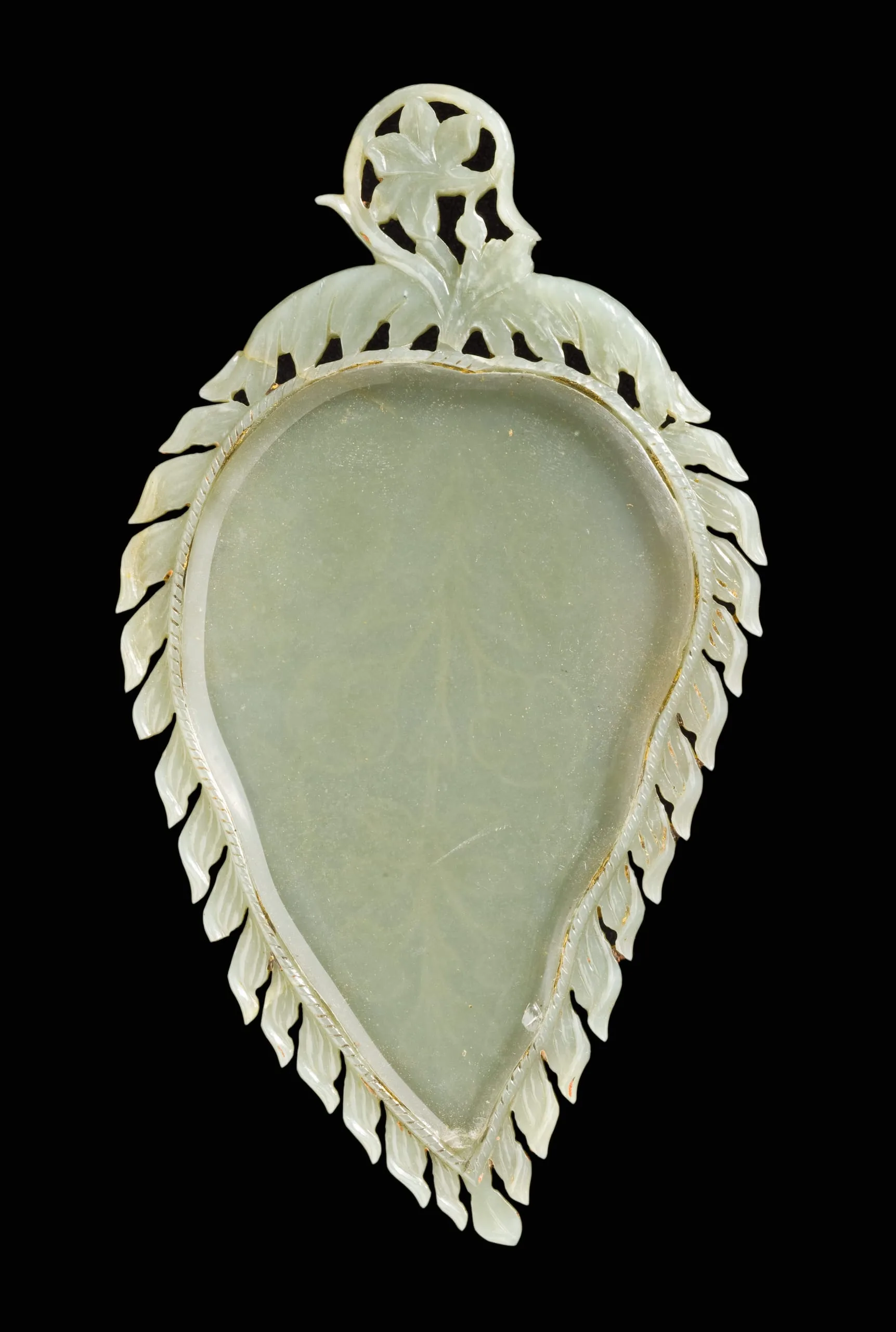
Mirror in the Form of a Leafcirca 1675-1700

Not on view
Carved pale celadon jade tray in an elongated leaf shape, with openwork feather-like border and a pierced finial of two birds flanking a floral medallion
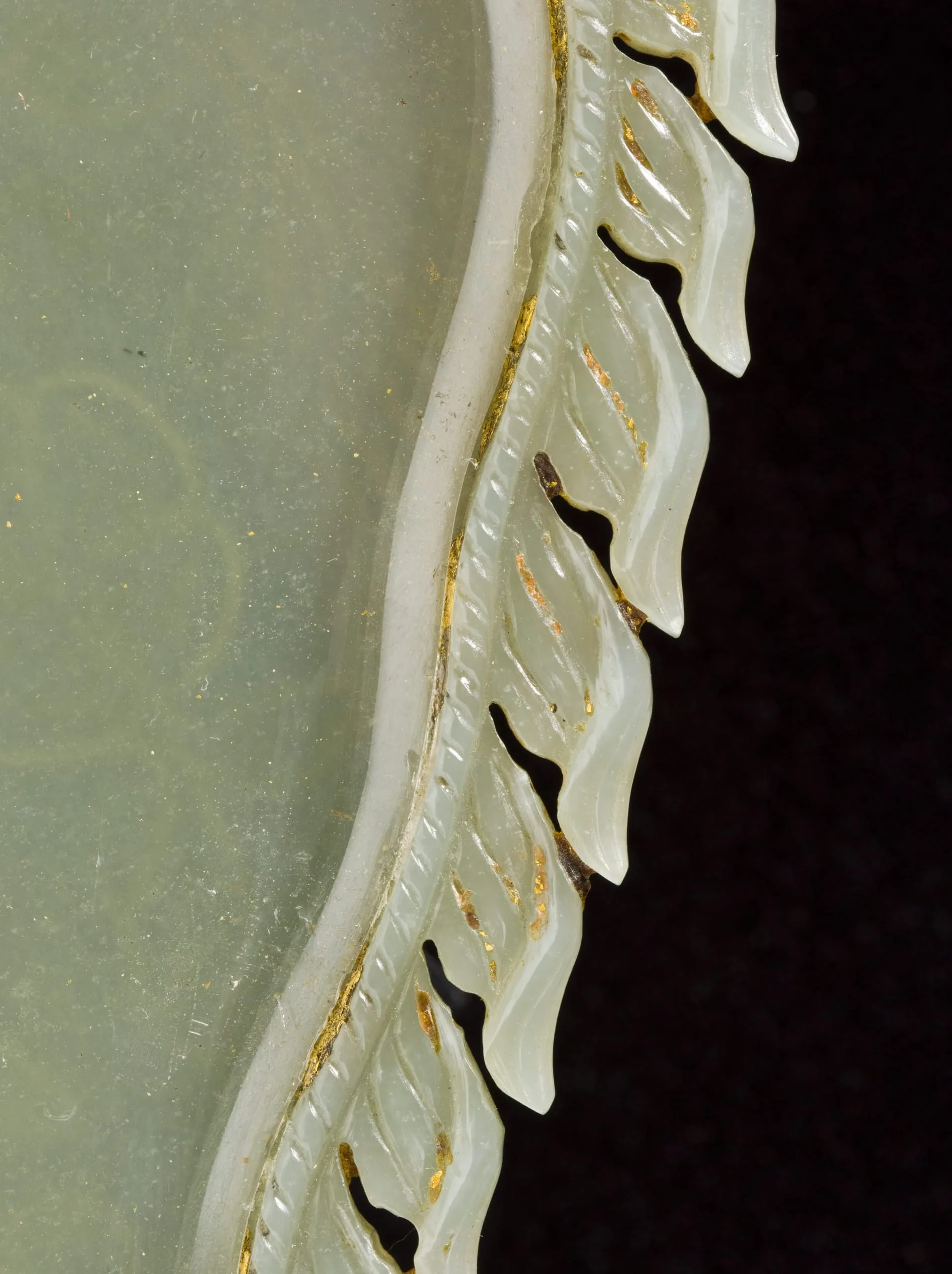
Close-up detail of a pale celadon jade carving, showing a pierced and finely carved leaf or feather motif along the edge, with gilded gold pigment remaining in the incised grooves, against a dark background.
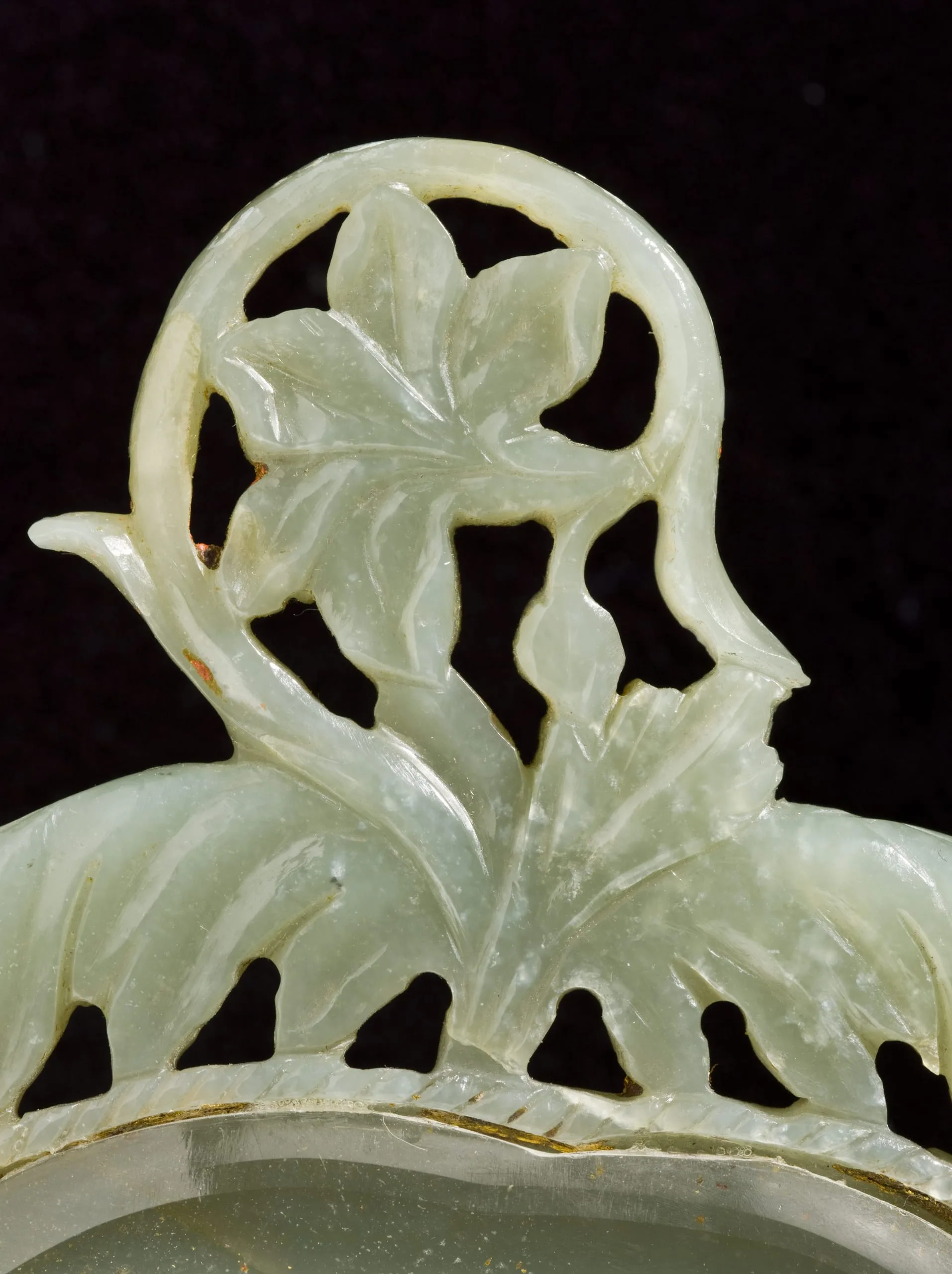
Close-up of a pale celadon jade carving with openwork floral and leaf motifs, featuring a circular scrolling form enclosing a deeply carved flower, set atop a rimmed jade vessel with gilt metal mount.
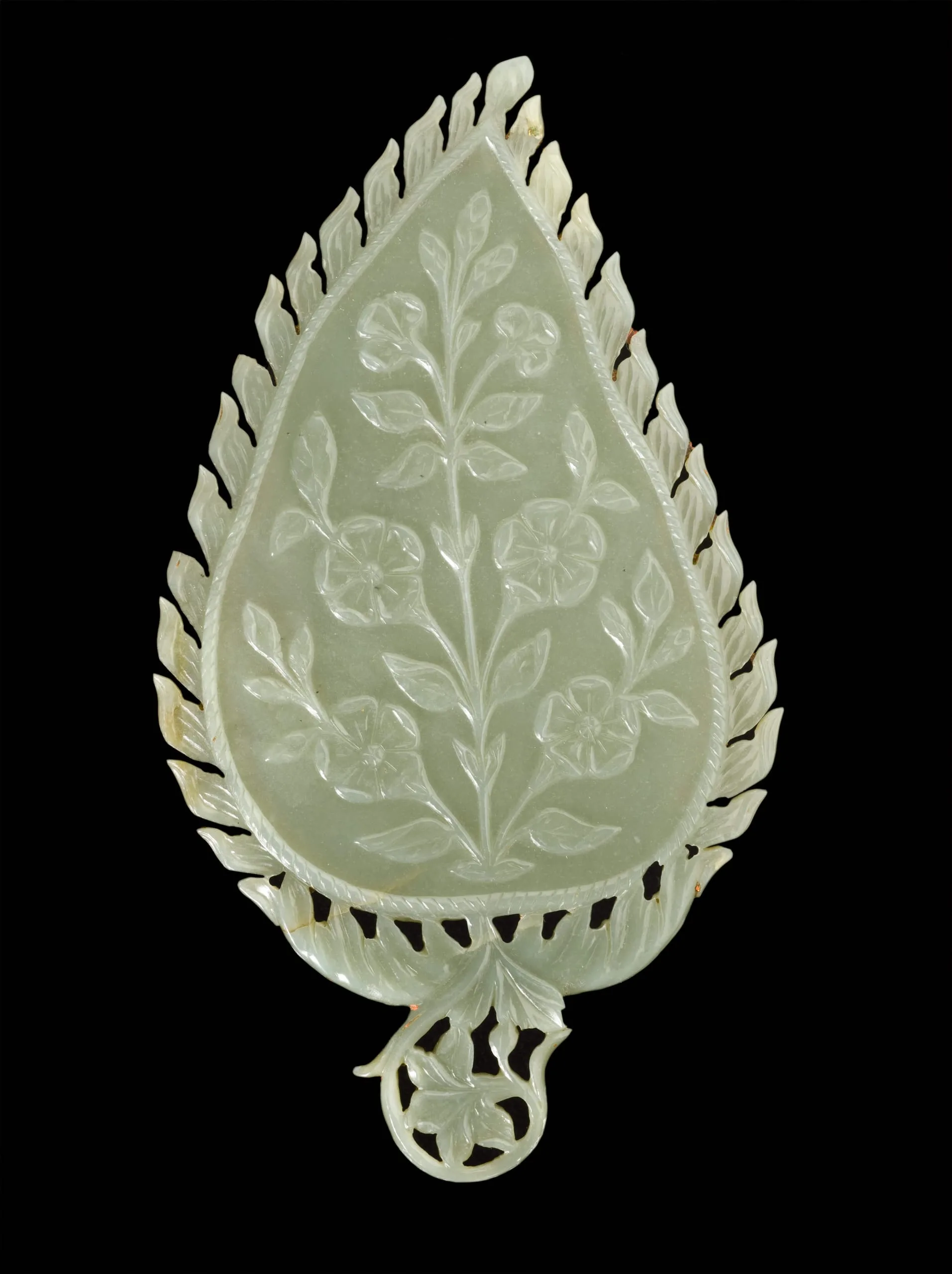
Carved pale jade plaque in a teardrop form with a serrated flame-like border, featuring a relief-carved flowering plant with leaves and blossoms; openwork floral motif at the base.
Artist or Maker
Unknown
Title
Mirror in the Form of a Leaf
Place Made
India, Mughal empire
Date Made
circa 1675-1700
Medium
Light green nephrite jade; rock crystal with traces of gilding
Dimensions
Jade: 6 1/2 x 3 5/8 x 1/8 in. (16.51 x 9.21 x .32 cm)
Credit Line
From the Nasli and Alice Heeramaneck Collection, Museum Associates Purchase
Accession Number
M.84.32.2
Classification
Furnishings
Collecting Area
South and Southeast Asian Art
Curatorial Notes

Fashioned in an overall triangular or deltoid leaf shape with a curved apex, known specifically as a falcate leaf shape, the back of this light green jade mirror has a flat inner plane embellished with a stylized, blossoming lotus plant executed in shallow relief. It is surrounded by a serrated edge of pointed leaves with the tip folded over in the elegant fashion popular in mid-17th-century Mughal painting. The base of the mirror is formed by two splayed acanthus leaves that are pierced along their inner border. An iris flower encircled by its stem forms the perforated handle. The mirror is fronted with a rock crystal panel with traces of gilding. The dynamic asymmetry of the falcate leaf shape results in a much livelier expressiveness than most Mughal handheld mirrors, which are typically circular, oval, square, or octagonal in shape. The slightly stiff stylized treatment of the central lotus plant suggests that this mirror was likely made in the late 17th century.

First imported into Mughal India in the early 16th century, silvered or gilded mirrors were highly prized by the women at court and royal courtiers. Ostensibly used mundanely to aid in the application of cosmetics, handheld mirrors were also regarded as exotic luxury curiosities. Within a century, however, mirrors became commonplace and demand dwindled except for exceptional examples. Myriad small mirrors mounted on a palace chamber’s walls to view myriad reflections of flickering candlelight and, by the eighteenth century, large imported wall mirrors were fashionable trappings of palatial architecture and mansions of wealthy nobles and merchants.
Selected Bibliography
  • Pal, Pratapaditya, Janice Leoshko, Joseph M. Dye, III, Stephen Markel. Romance of the Taj Mahal. Los Angeles: Los Angeles County Museum of Art, 1989.
  • Pal, Pratapaditya, Thomas W. Lentz, Sheila R. Canby, Edwin Binney, 3rd, Walter B. Denny, and Stephen Markel. "Arts from Islamic Cultures: Los Angeles County Museum of Art." Arts of Asia 17, no. 6 (November/December 1987): 73-130.

  • Rosenfield, John. The Arts of India and Nepal: The Nasli and Alice Heeramaneck Collection. Boston: Museum of Fine Arts, Boston, 1966.
  • Markel, Stephen. "The Use of Flora and Fauna Imagery in Mughal Decorative Arts." Marg 50, no. 3 (March 1999).