LACMA

ShopMembershipMyLACMATickets
LACMA
Los Angeles County Museum of Art
5905 Wilshire Blvd.
Los Angeles, CA 90036
info@lacma.org
(323) 857-6000
Sign up to receive emails
Subscribe
© Museum Associates 2026
  • About LACMA
  • Jobs
  • Building LACMA
  • Host An Event
  • Unframed
  • Press
  • FAQs
  • Log in to MyLACMA
  • Privacy Policy
© Museum Associates 2026
Collections

Antoine Etex
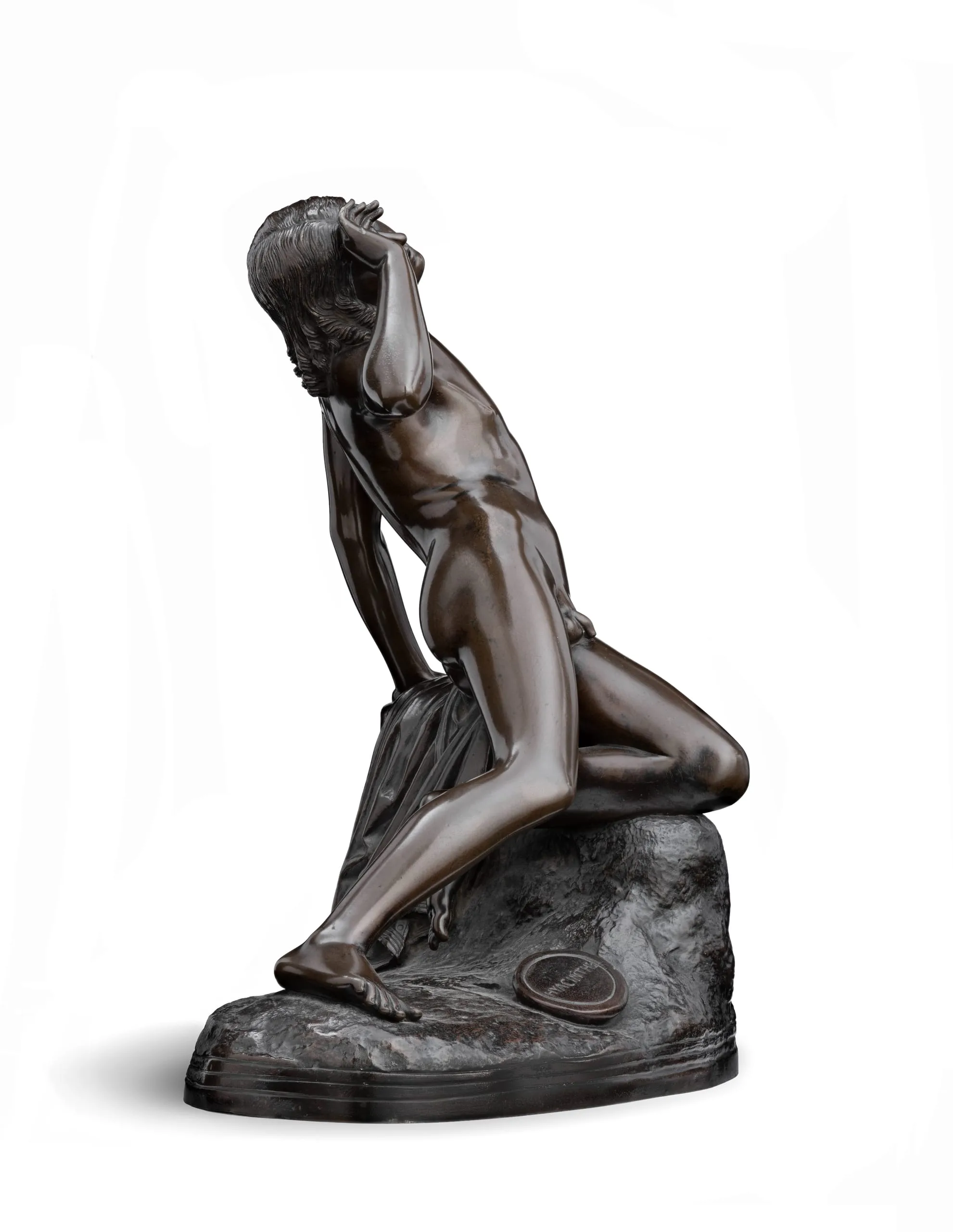
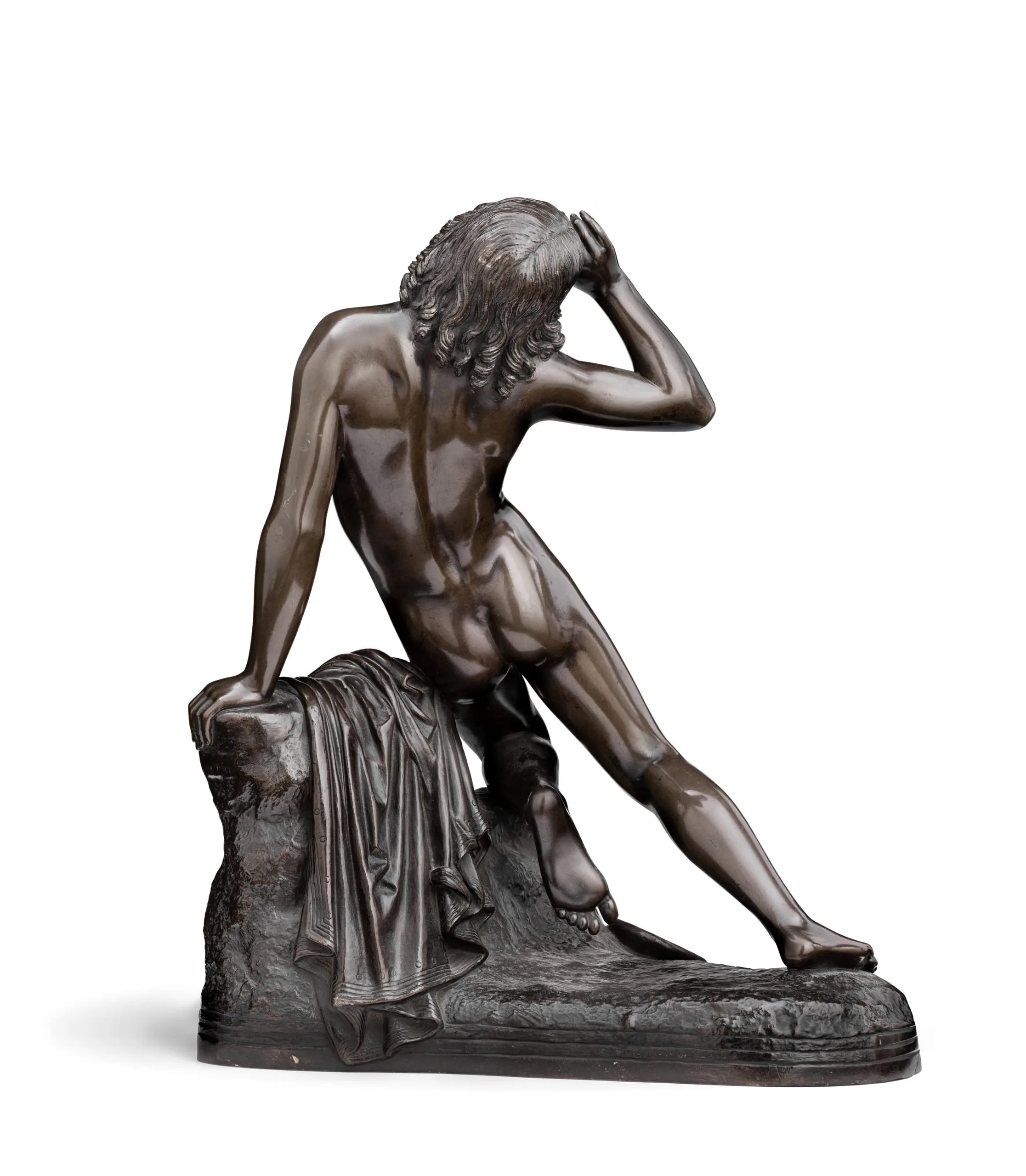
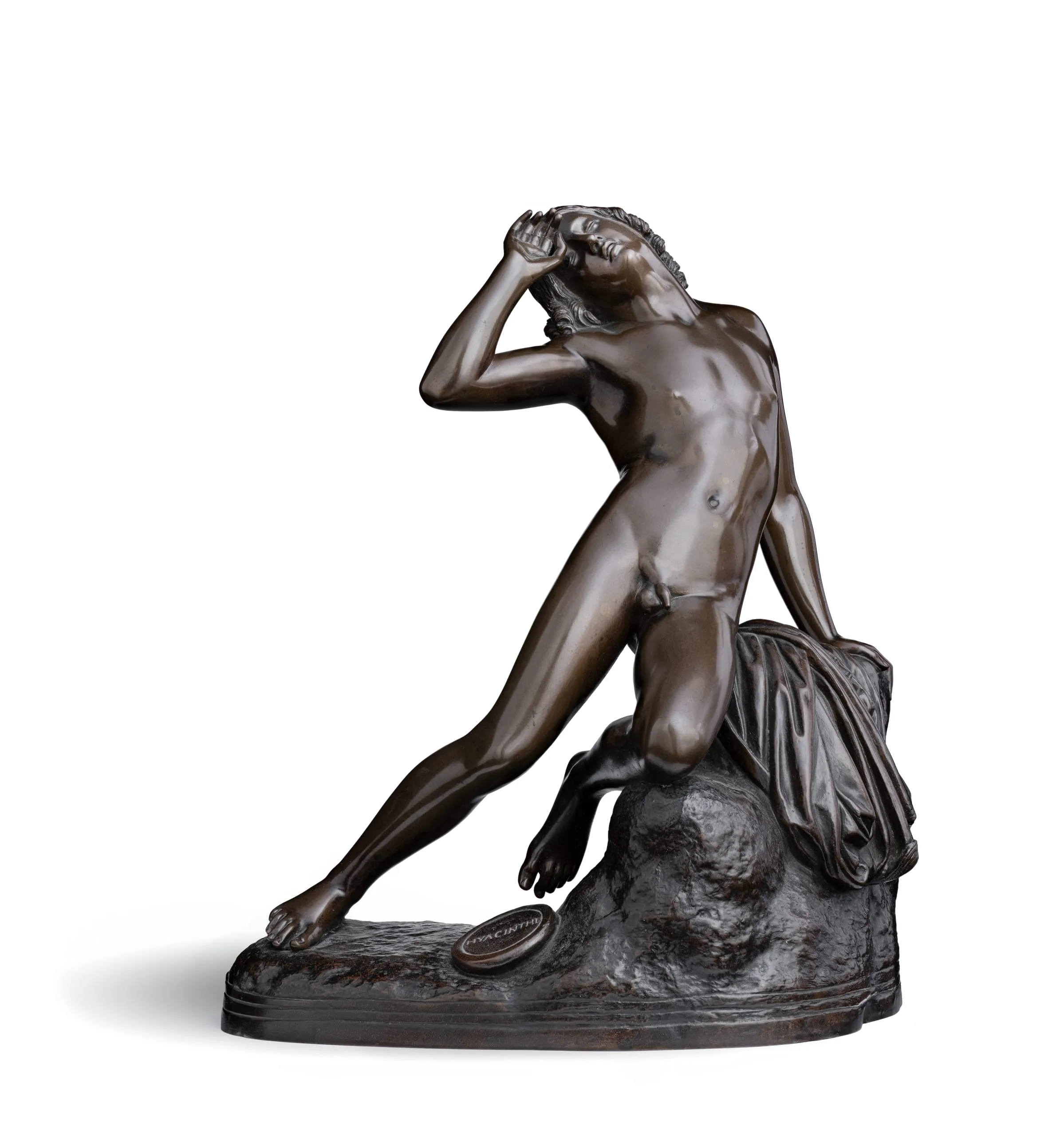
The Death of Hyacinthuscirca 1829

On view:
Geffen Galleries, floor 2
Dark brown patinated bronze sculpture of a reclining nude male figure leaning back against a rocky base, one arm raised to his forehead, on an oval plinth inscribed "HYACINTHE"
Bronze sculpture of a nude male figure kneeling on one knee atop a rocky base, torso twisted and one arm raised to the head, with a dark brown patinated surface and smooth finish.
Bronze sculpture of a seated nude male figure leaning back on one arm with the other hand raised to his bowed head, curly hair, draped cloth over a rocky base, dark patinated surface with high polish highlights.
Artist or Maker
Antoine Etex
Title
The Death of Hyacinthus
Place Made
France
Date Made
circa 1829
Medium
Bronze
Dimensions
Overall: 15 x 12 1/2 x 9 in. (38.1 x 31.75 x 22.86 cm)
Credit Line
Gift of James E. Clark
Accession Number
M.83.225.1
Classification
Sculpture
Collecting Area
European Painting and Sculpture
Curatorial Notes

The story of the death of Hyacinthus following Apollo’s fatal blow with a discus, recounted in Ovid’s Metamorphosis, was a hallmark of Antoine Etex’s early work. At the young age of twenty-one, the Parisian-born artist submitted a plaster version of the subject as his presentation piece for the Prix de Rome. His teacher, Jean-Auguste Dominique Ingres, an indomitable force in French art at the time, advised against it, feeling that a composition based on the moment of Hyacinthus’s death was not dramatic enough to move the judges. Ingres was correct: the piece garnered second place. However, through the support of the director of the French Academy of Fine Arts, Etex secured a scholarship to spend two years in Rome.

Like generations of art students before him, Etex studied the antiquities in the ancient capital, gathering inspiration for the large-scale and public monumental works he would ultimately make. This tender depiction in bronze, with its delicate modeling of the youth’s sensitive features, showcases the sculptor’s facility for subtle emotional representations on a small scale.

2025
Selected Bibliography
  • Schaefer, Scott, and Peter Fusco. European Painting and Sculpture in the Los Angeles County Museum of Art: an Illustrated Summary Catalogue. Los Angeles: Los Angeles County Museum of Art, 1987.