LACMA

ShopMembershipMyLACMATickets
LACMA
Los Angeles County Museum of Art
5905 Wilshire Blvd.
Los Angeles, CA 90036
info@lacma.org
(323) 857-6000
Sign up to receive emails
Subscribe
© Museum Associates 2025

Museum Hours

Monday

11 am–6 pm

Tuesday

11 am–6 pm

Wednesday

Closed

Thursday

11 am–6 pm

Friday

11 am–8 pm

Saturday

10 am–7 pm

Sunday

10 am–7 pm


  • About LACMA
  • Jobs
  • Building LACMA
  • Host An Event
  • Unframed
  • Press
  • FAQs
  • Log in to MyLACMA
  • Privacy Policy
© Museum Associates 2025
Collections

Unknown
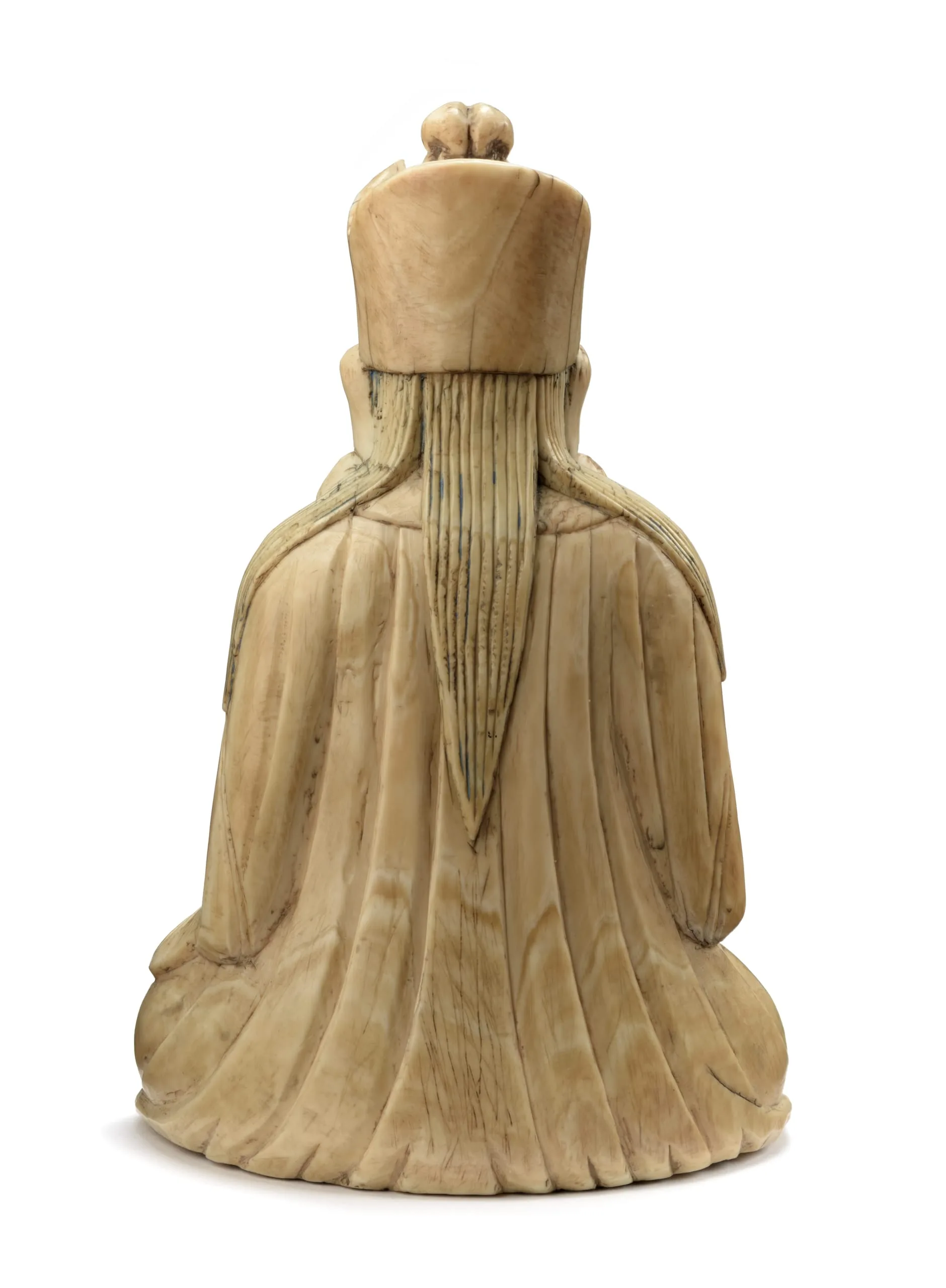
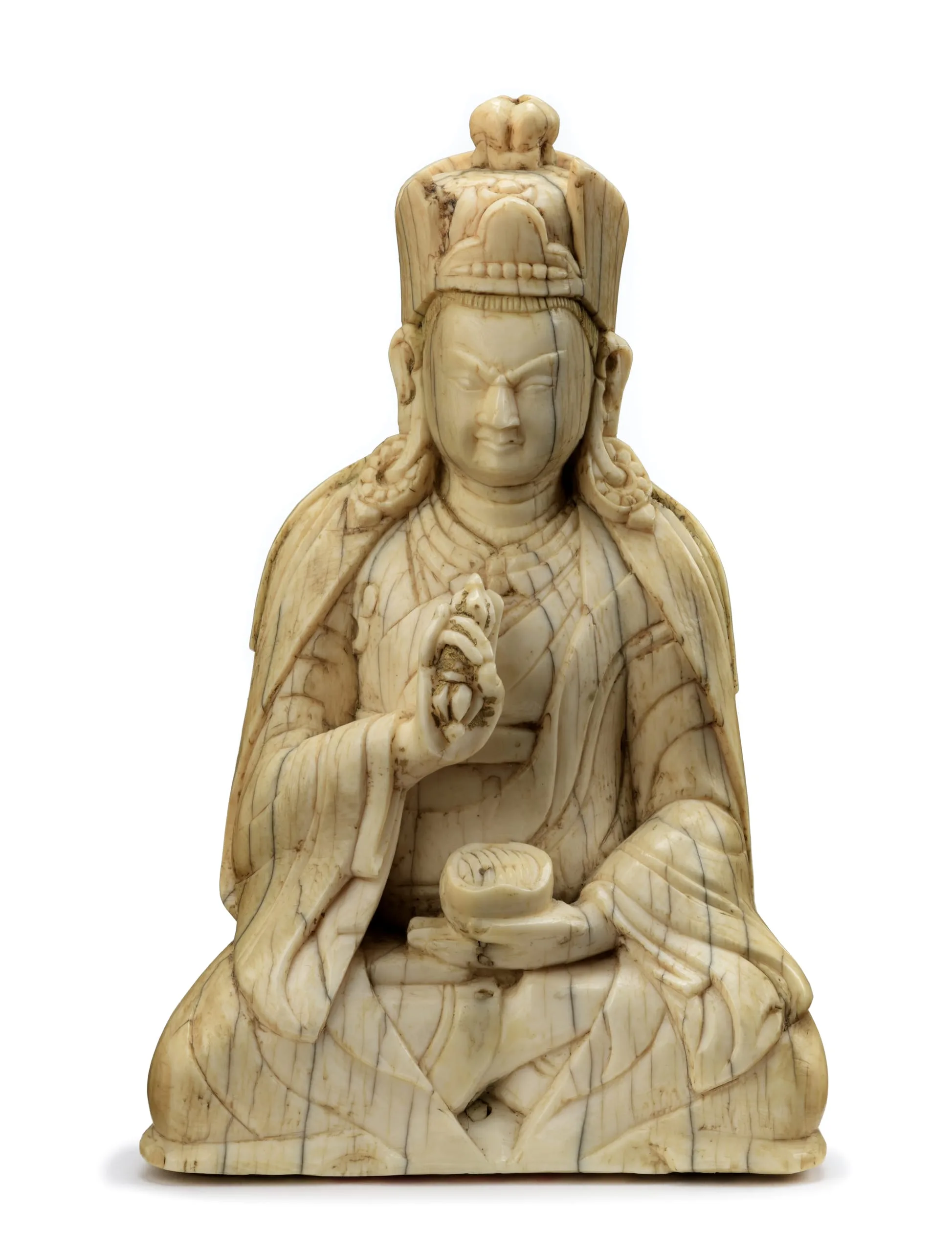
Padmasambhava (Guru Rinpoche, 8th century)17th century

On view:
Resnick Pavilion, floor 1
Pale cream stone or ivory sculpture of a seated crowned figure in robes, cross-legged, holding a small object in each hand, with carved flowing drapery and elongated earlobes
Ivory or pale stone carved figure shown from the back, seated in flowing robes with incised linear folds, wearing a tall official's cap with streamer bands descending to the shoulders.
Artist or Maker
Unknown
Title
Padmasambhava (Guru Rinpoche, 8th century)
Place Made
Central Tibet
Date Made
17th century
Medium
Ivory
Dimensions
5 1/2 x 3 1/2 x 2 in. (13.97 x 8.89 x 5.08 cm)
Credit Line
Gift of Corinne and Don Whitaker
Accession Number
M.83.218.3
Classification
Sculpture
Collecting Area
South and Southeast Asian Art
Curatorial Notes

Padmasambhava (also known as Guru Rinpoche [Precious Teacher]) was a Buddhist master from Uddayana (modern Udiana) in the Swat Valley of Pakistan. He founded Tibet’s first monastery, the Samye Monastery near Lhasa, which was built between 787 and 791. According to the Blue Annals (completed in 1476), he was summoned to Samye to quell local spirits who were thwarting the new faith. Through awesome demonstrations of his powers, he subdued these gods and drew them into the service of Buddhism.

Padmasambhava is typically depicted with a distinctive peaked lotus hat, reflective of Gandharan origins, and wearing a monk’s robe. He is frequently scowling to convey his fierce determination in overcoming obstacles and ignorance. He holds a thunderbolt (vajra) and a ritual skull cup (kapala). He sits in the meditation posture (padma asana).

See also M.81.183.1, M.86.281, M.86.338.1, AC1994.117.2, AC1997.244.1, and M.2005.154.7.
Selected Bibliography
  • Little, Stephen, Tushara Bindu Gude, Karina Romero Blanco, Silvia Seligson, Marco Antonio Karam. Las Huellas de Buda. Ciudad de México : Instituto Nacional de Antropología e Historia, 2018.
  • Little, Stephen, and Tushara Bindu Gude. Realms of the Dharma: Buddhist Art across Asia. Los Angeles: Los Angeles County Museum of Art, 2025.