LACMA

ShopMembershipMyLACMATickets
LACMA
Los Angeles County Museum of Art
5905 Wilshire Blvd.
Los Angeles, CA 90036
info@lacma.org
(323) 857-6000
Sign up to receive emails
Subscribe
© Museum Associates 2025

Museum Hours

Monday

11 am–6 pm

Tuesday

11 am–6 pm

Wednesday

Closed

Thursday

11 am–6 pm

Friday

11 am–8 pm

Saturday

10 am–7 pm

Sunday

10 am–7 pm


  • About LACMA
  • Jobs
  • Building LACMA
  • Host An Event
  • Unframed
  • Press
  • FAQs
  • Log in to MyLACMA
  • Privacy Policy
© Museum Associates 2025
Collections

Cheek Piece from a Horse Bitcirca 1000-800 B.C.

Not on view
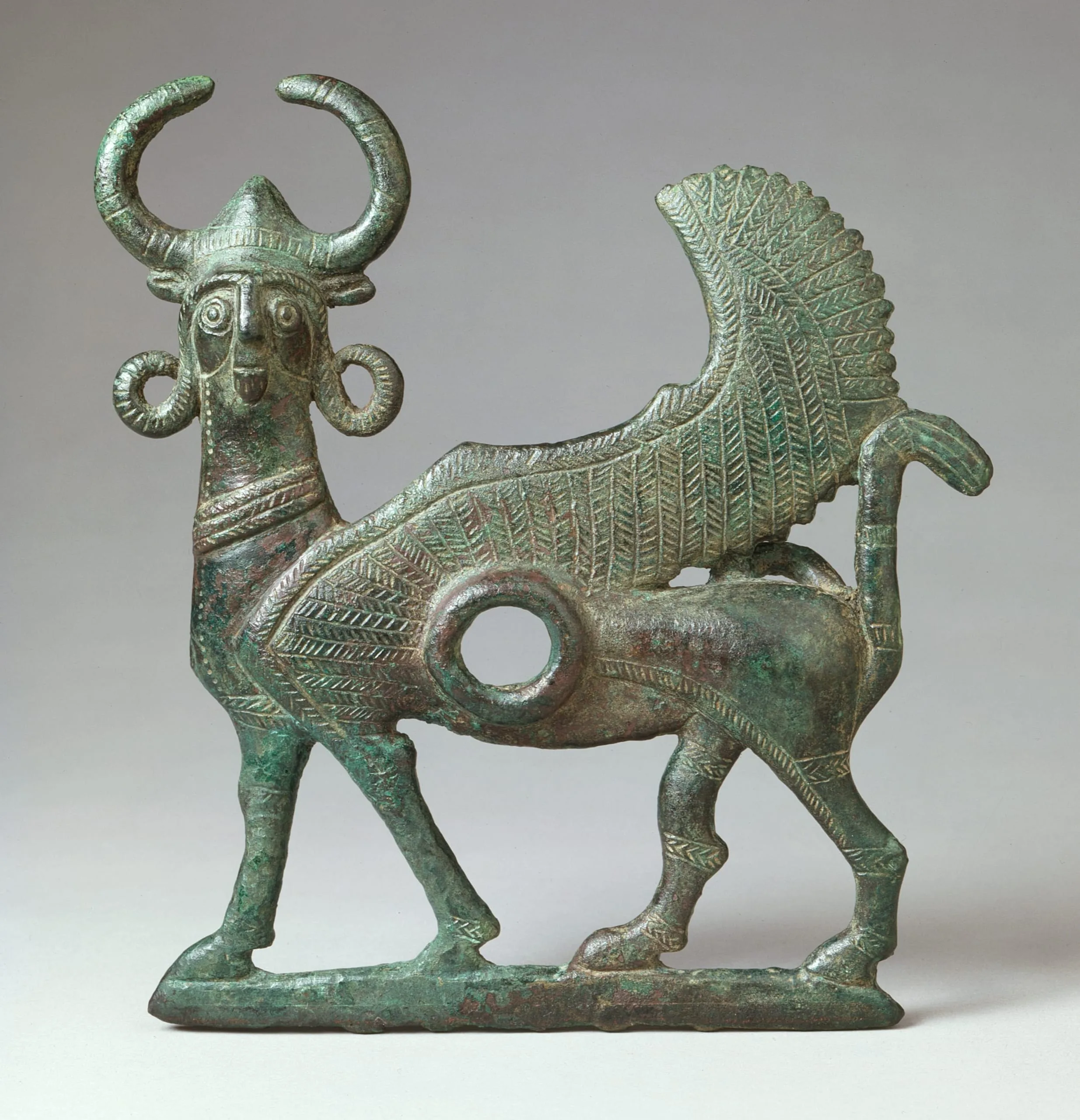
Bronze sculpture of a winged, four-legged hybrid creature with a human face, curved horns, and incised feather patterning, heavily patinated in green
Title
Cheek Piece from a Horse Bit
Culture
Bronze du Luristan
Place Made
Iran
Date Made
circa 1000-800 B.C.
Period
Iron Age II-III
Medium
Bronze
Dimensions
7 5/16 × 6 9/16 × 3/4 in. (18.57 × 16.67 × 1.91 cm)
Credit Line
The Nasli M. Heeramaneck Collection of Ancient Near Eastern and Central Asian Art, gift of The Ahmanson Foundation
Accession Number
M.76.97.99
Classification
Tools and Equipment
Collecting Area
Art of the Middle East: Ancient
Curatorial Notes
Horse-bits are a large and recognizable group within the canonical bronzes of Luristan. A typical Luristan horse-bit consists of a rigid mouthpiece and a pair of cheekpieces, either plain or cast in the form of horses, caprids (goats), boars, cocks, and griffins. It is unclear whether horse-bits were manufactured for practical use or only for funerary purposes; however, because many examples seem to show wear and almost all have rear spikes that could have been used as goads, it seems probable that they were used in daily life for large horses, which is also indicative a mobile community.
LACMA's collection includes fine examples of typical Luristan bronzes, including ceremonial cheekpieces from horse bits. This cheekpiece, in the shape of an advancing, winged sphinx, was originally one of a pair of horse-bits that had been placed among other grave goods; it is probably the mate for another cheekpiece now in a private collection. The bits are complementary to a whole range of harness trappings. The cheekpiece reveals the Luristan craftsman’s great skill in modeling and casting by lost-wax process, as well as the remarkable combination of natural and fantastic in his imagery.
Selected Bibliography
  • Mousavi, Ali. Ancient Near Eastern art at the Los Angeles County Museum of Art. Los Angeles: Los Angeles County Museum of Art, 2012.