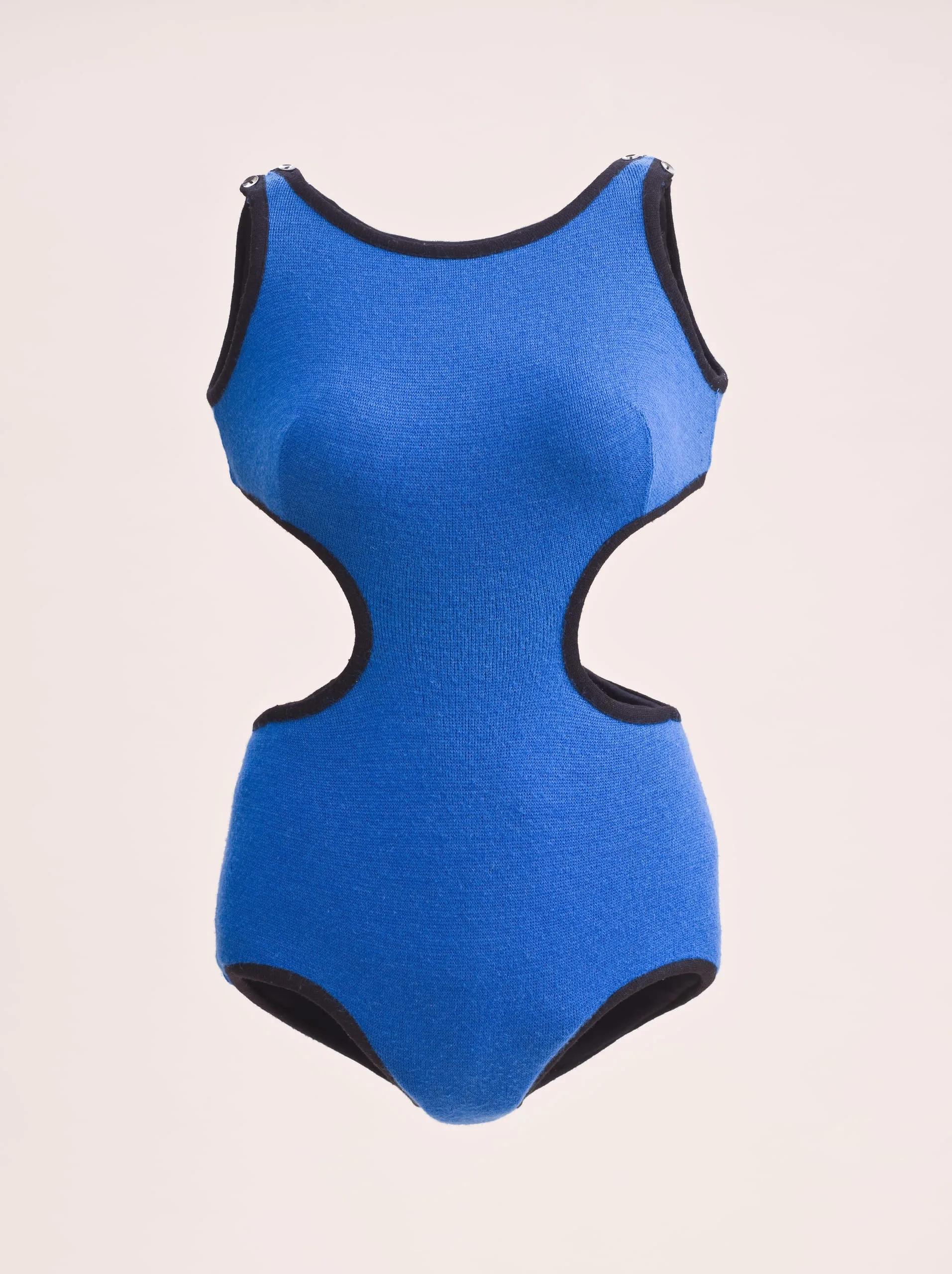
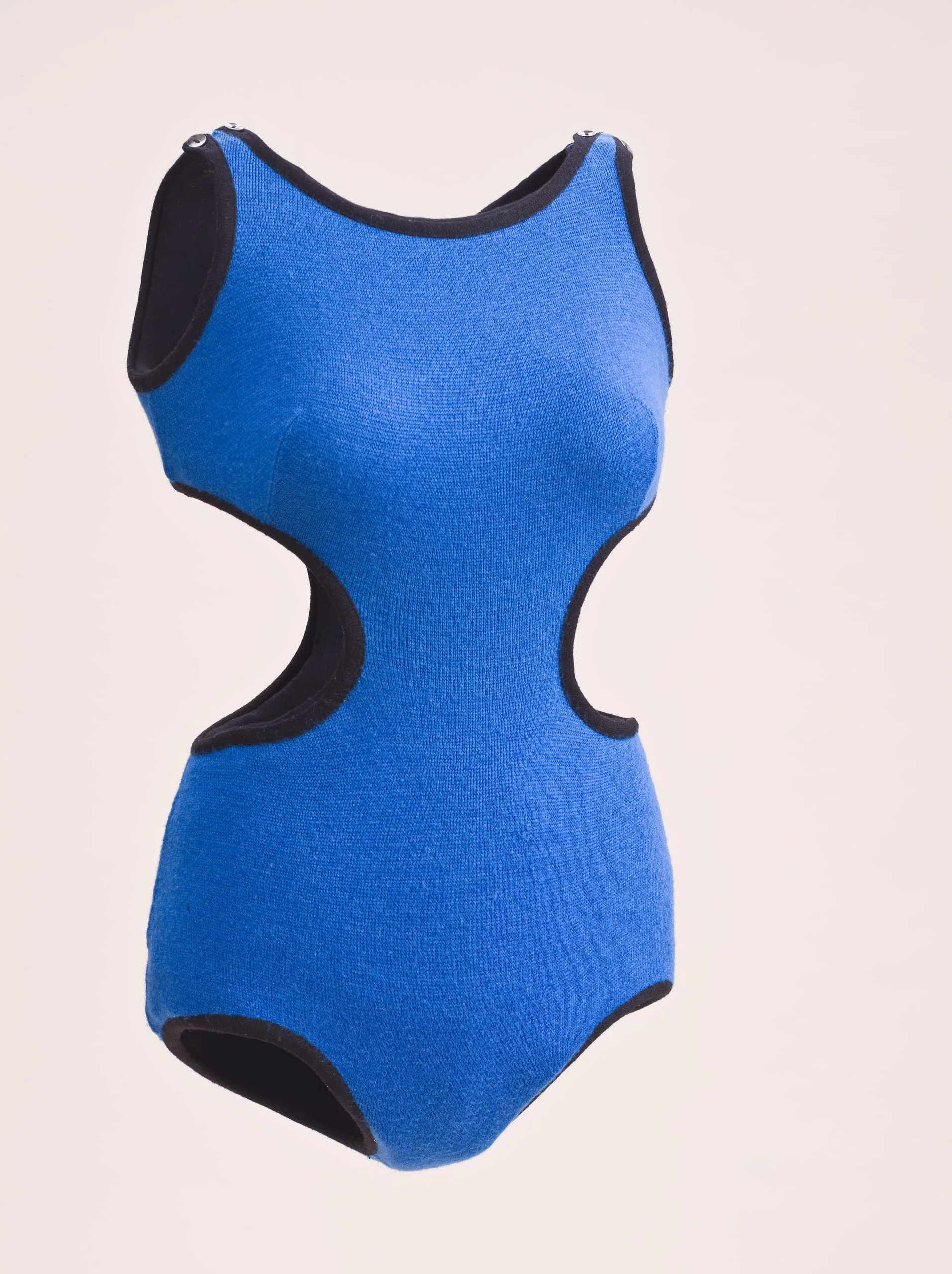
California women’s fashion made its strongest mark in swimwear. Two of that industry’s giants, Cole of California and Catalina, were located in Southern California, along with many of their smaller competitors. Bathing suit designs closely reflected the playful styles of the era, and some even came with coordinating accessories for poolside comfort, as in Margit Fellegi’s cheerful polka-dot swimsuit and jacket ensemble for Cole. By the late 1940s a more curvaceous female body had emerged as the fashionable ideal, and swimsuits became more heavily constructed, architectural, and dresslike. Flexible Lastex yarn (a rubber core wound with fiber) and firm, fusible materials used for suits’ inner corsetry allowed women’s swimsuit-clad bodies to be molded into an idealized silhouette. However, the iconoclastic Rudi Gernreich used wool knits without understructures to create suits that clung daringly close to the bodies of unfettered wearers.
(California Design, 1930–1965: "Living in a Modern Way," 2011-12)