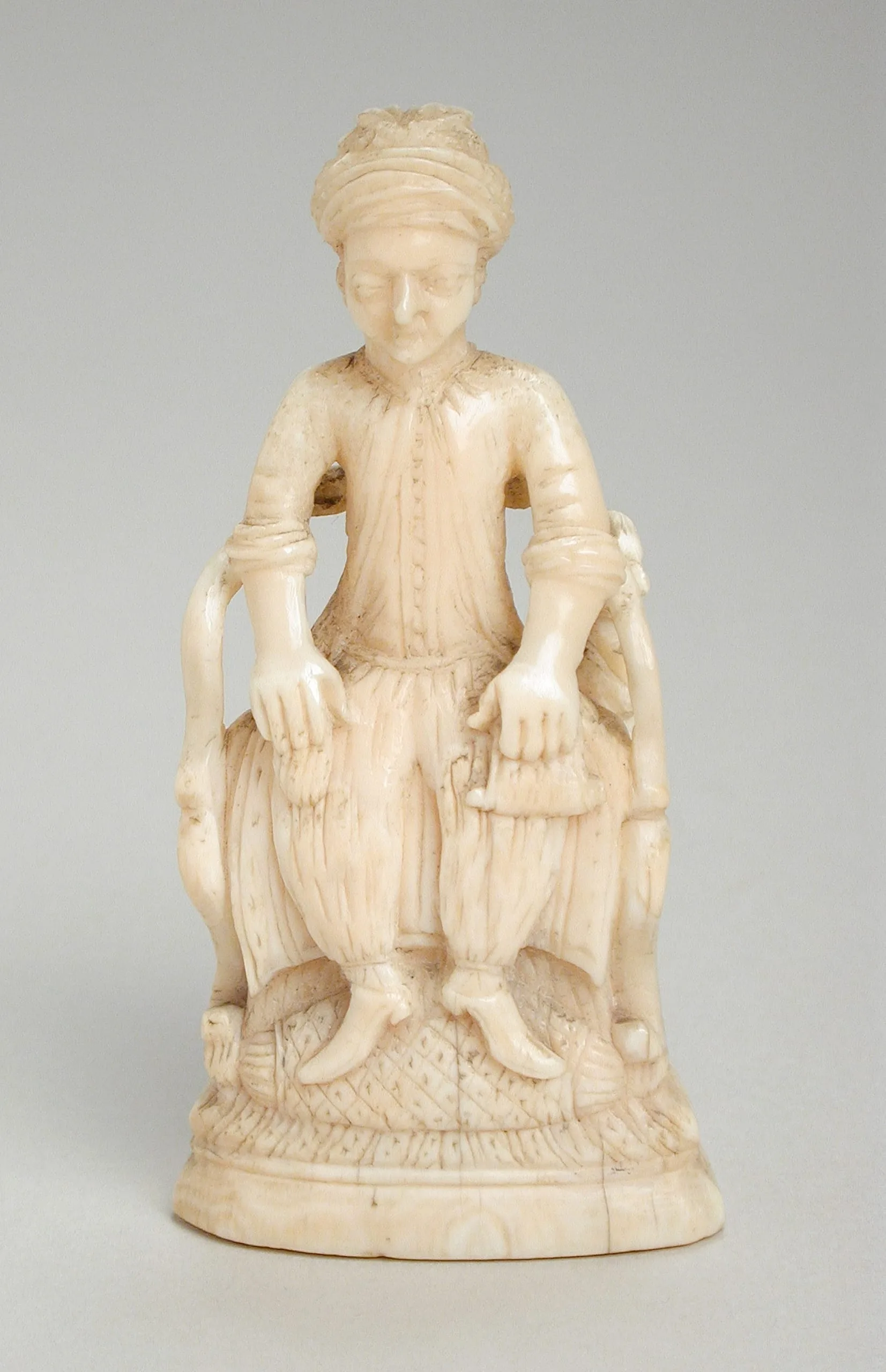
This ivory figurine of an Indian Civil Servant, and its companion portrayal of an English Official (M.89.131.2), are a parallel expression in sculpture of the numerous paintings, drawings, and photographs representing occupations that were popular among the many European residents and visitors in India during the 18th and 19th centuries. Besides bureaucrats, the occupations depicted include various native craftsmen, nautch dancing girls, soldiers, and circus performers. Similar portraits included illustrious rulers, majestic monuments, local scenery, and numerous studies of India's rich flora and fauna. This Indian civil servant wears a turban, long upper garment buttoned at the neck, shirt, and pajama pants. He holds what is likely a money bag. He sits in a European-style chair, which is braced in the rear corner by an indigenous attendant. His feet rest on a bolster.
Murshidabad in the 18th century was a wealthy cosmopolitan city. It was the capital of the Mughal province of Bengal, and an economic epicenter for merchant families and European companies. It was also a cultural and artistic center, with particular specialties in music, silk, painting, and ivory. The Murshidabad ivory carvers produced a diverse range of subjects, including occupations, containers, chess sets, royal peacock barges (see M.82.154), bullock carts (see AC1994.230.2 and M.2000.166), and elephants with canopied howdahs.