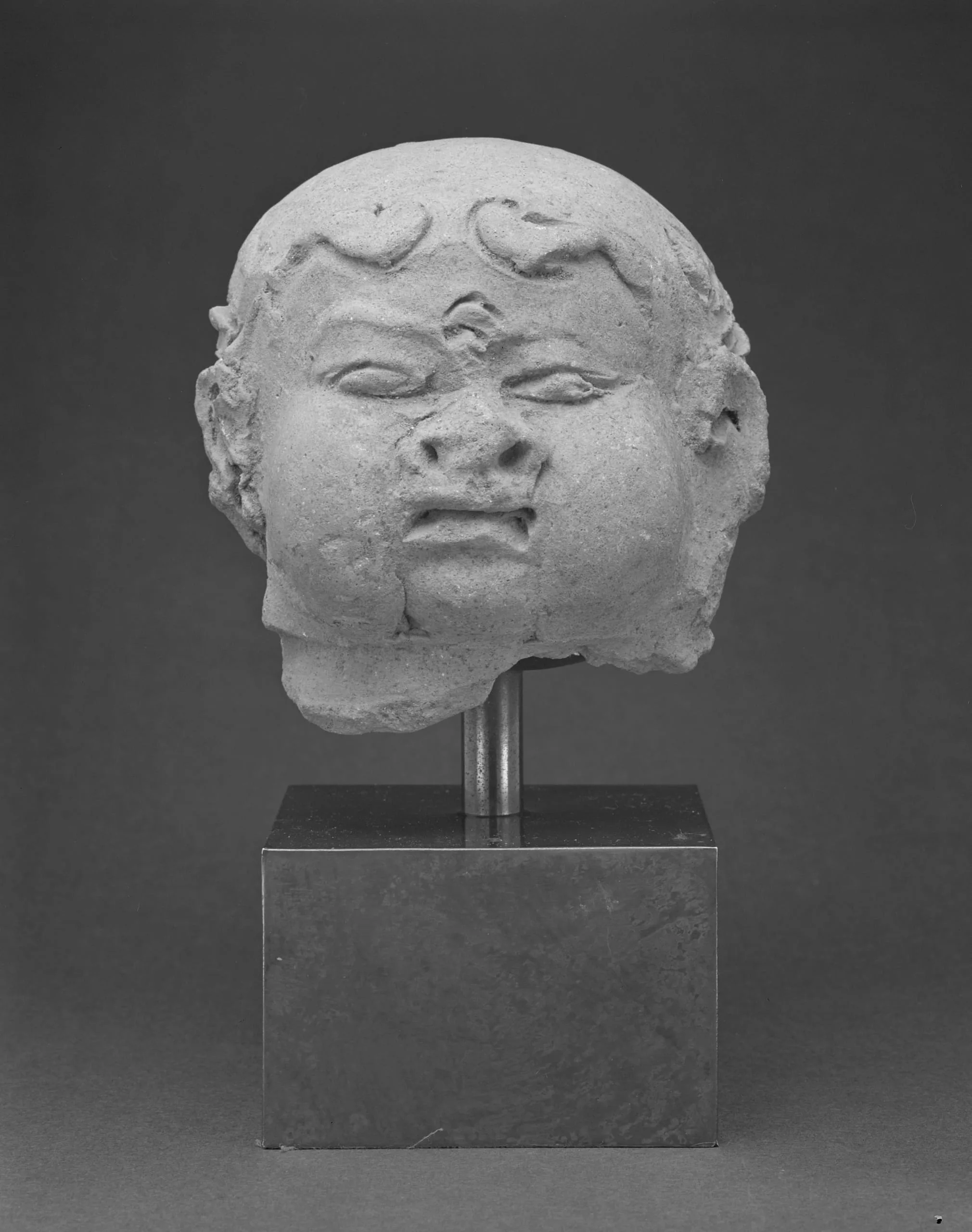
Numerous earthenware sculptures and decorative objects modeled by hand or made with molds have been unearthed in the environs of Trowulan (or Trawulan), the former capital of the Majapahit Empire (1292–1527) in Eastern Java. A substantial quantity of the surviving corpus consists of sculptures of various figural types, including caricatures, servants, ascetics, as well as numerous animals. A popular genre of representation in Majapahit earthenware sculpture are piggy banks and human figures used as money boxes, both with slots for inserting coins. See H. R. A. Muller, Javanese Terracottas: Terra Incognita (Lochem, The Netherlands: Tijdstroom, 1978), pp. 27-31, pls 38-48; Pratapaditya Pal, Icons of Piety, Images of Whimsy: Asian Terra-cottas from the Walter Grounds Collection (Los Angeles: LACMA, 1987, p. 97, no. 62; and John N. Miksic, ed. The Legacy of Majapahit (Singapore: National Heritage Board, 1995), pp. 161-162, nos. 70-71.
The coins held in these earthenware piggy banks and human figural money boxes were mainly Chinese coins, which became the standard currency of Majapahit in the 14th century. See Amelia S., "The Role of Chinese coins in Majapahit," in Miksic 1995, pp. 99-105.
This head of a gluttonous boy has slit on the crown of his head for inserting the coins. Like the plump piggy banks, his rotund features may be a pun on his function as a greedy receptacle. See Robert L. Brown, "The Art of Southeast Asia," Arts of Asia 15:6 (November-December 1985), pp. 123 and 125, fig. 89.