LACMA

ShopMembershipMyLACMATickets
LACMA
Los Angeles County Museum of Art
5905 Wilshire Blvd.
Los Angeles, CA 90036
info@lacma.org
(323) 857-6000
Sign up to receive emails
Subscribe
© Museum Associates 2025

Museum Hours

Monday

11 am–6 pm

Tuesday

11 am–6 pm

Wednesday

Closed

Thursday

11 am–6 pm

Friday

11 am–8 pm

Saturday

10 am–7 pm

Sunday

10 am–7 pm


  • About LACMA
  • Jobs
  • Building LACMA
  • Host An Event
  • Unframed
  • Press
  • FAQs
  • Log in to MyLACMA
  • Privacy Policy
© Museum Associates 2025
Collections

Unknown
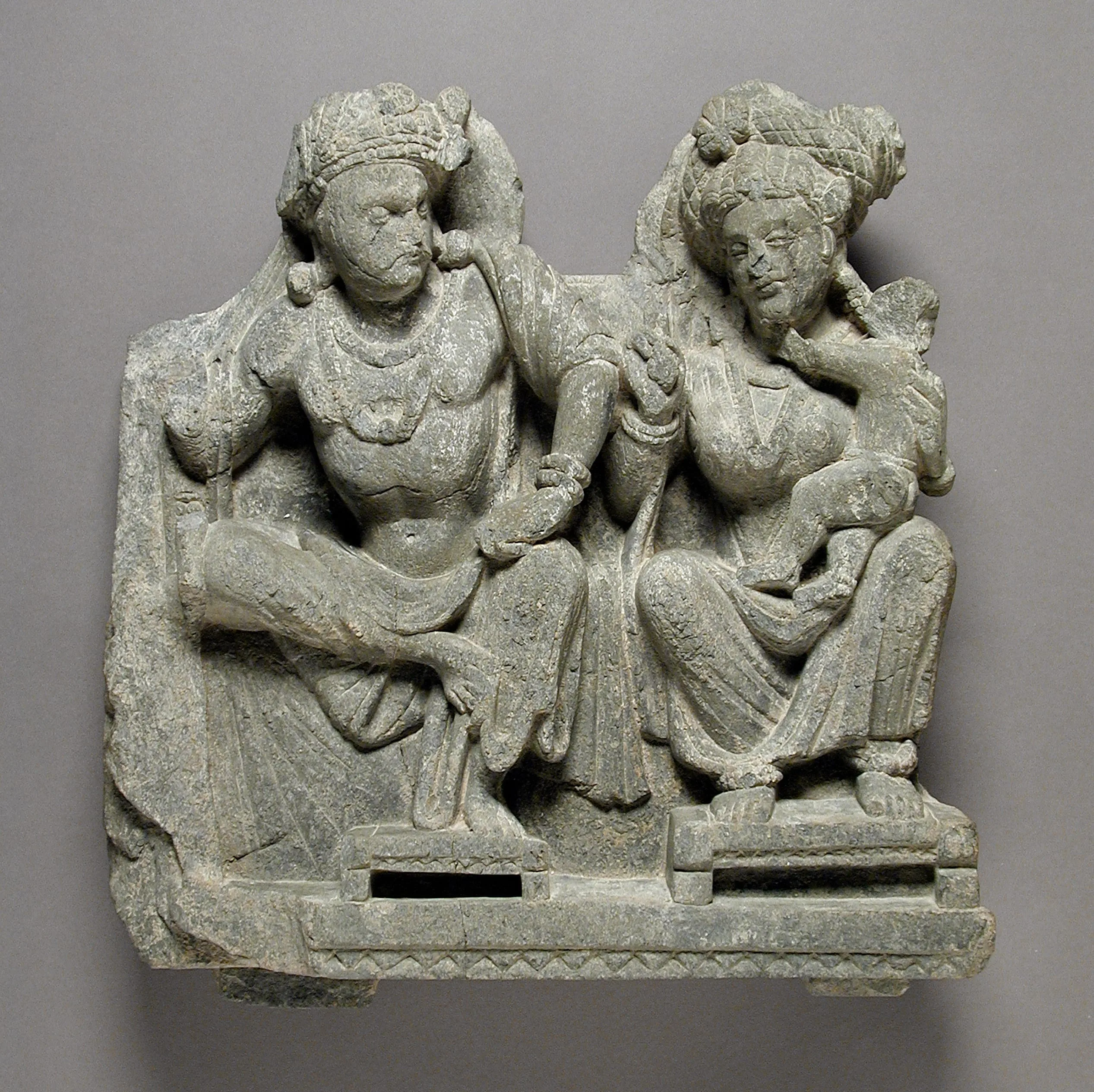
The Tutelary Couple Panchika and Hariticirca 100-150

Not on view
Gray stone relief sculpture of two seated figures with elaborate headdresses on a decorated plinth, their arms intertwined at center, with a small figure tucked at right
Artist or Maker
Unknown
Title
The Tutelary Couple Panchika and Hariti
Place Made
Pakistan, Gandhara region
Date Made
circa 100-150
Medium
Gray schist
Dimensions
12 x 11 3/4 x 3 1/4 in. (30.48 x 29.84 x 8.25 cm)
Credit Line
Gift of Tom and Nancy Juda
Accession Number
M.83.66
Classification
Sculpture
Collecting Area
South and Southeast Asian Art
Curatorial Notes

Panchika and Hariti were a tutelary couple widely venerated and represented in ancient Gandhara, a region located in present-day northern Pakistan and eastern Afghanistan. Panchika was a demigod (yaksha) and the chief general of Vaishravana (or Kubera), the god of wealth. Hariti was originally an ogress and queen of the female nature spirits (yakshis) who lived in Rajagriha (modern Rajgir), Bihar. After the Buddha converted her to Buddhism, she became a mother goddess and the protectress of children and women in childbirth (see M.78.105). The couple were believed to have had over 500 children.

Panchika and Hariti are each nimbate and supported by a footstool. They face each other as if engaged in conversation. The mustachioed Panchika wears a turban, scarf, and dhoti. In his right hand, he originally carried a now-damaged spear. His left hand rests on his knee or may have once held a now-missing drinking cup. Hariti wears her curled hair bound at the back of her head with a wreath and floral ornament. A child sits on her left knee and embraces her around the neck. Her right hand likely once held a now-lost pomegranate, symbolic of fertility and abundance.

Comparable representations are in the British Museum, London (1950,0726.2) and Museum of Asian Art, Berlin (I.1184).
Selected Bibliography
  • Pal, Pratapaditya. Indian Sculpture, vol.1. Los Angeles: Los Angeles County Museum of Art; University of California Press, 1986.
  • Larson, Gerald et al. In Her Image: The Great Goddess in Indian Asia and the Madonna in Christian Culture. Santa Barbara: UCSB Art Museum, University of California, 1980.