LACMA

ShopMembershipMyLACMATickets
LACMA
Los Angeles County Museum of Art
5905 Wilshire Blvd.
Los Angeles, CA 90036
info@lacma.org
(323) 857-6000
Sign up to receive emails
Subscribe
© Museum Associates 2025

Museum Hours

Monday

11 am–6 pm

Tuesday

11 am–6 pm

Wednesday

Closed

Thursday

11 am–6 pm

Friday

11 am–8 pm

Saturday

10 am–7 pm

Sunday

10 am–7 pm


  • About LACMA
  • Jobs
  • Building LACMA
  • Host An Event
  • Unframed
  • Press
  • FAQs
  • Log in to MyLACMA
  • Privacy Policy
© Museum Associates 2025
Collections

Unknown
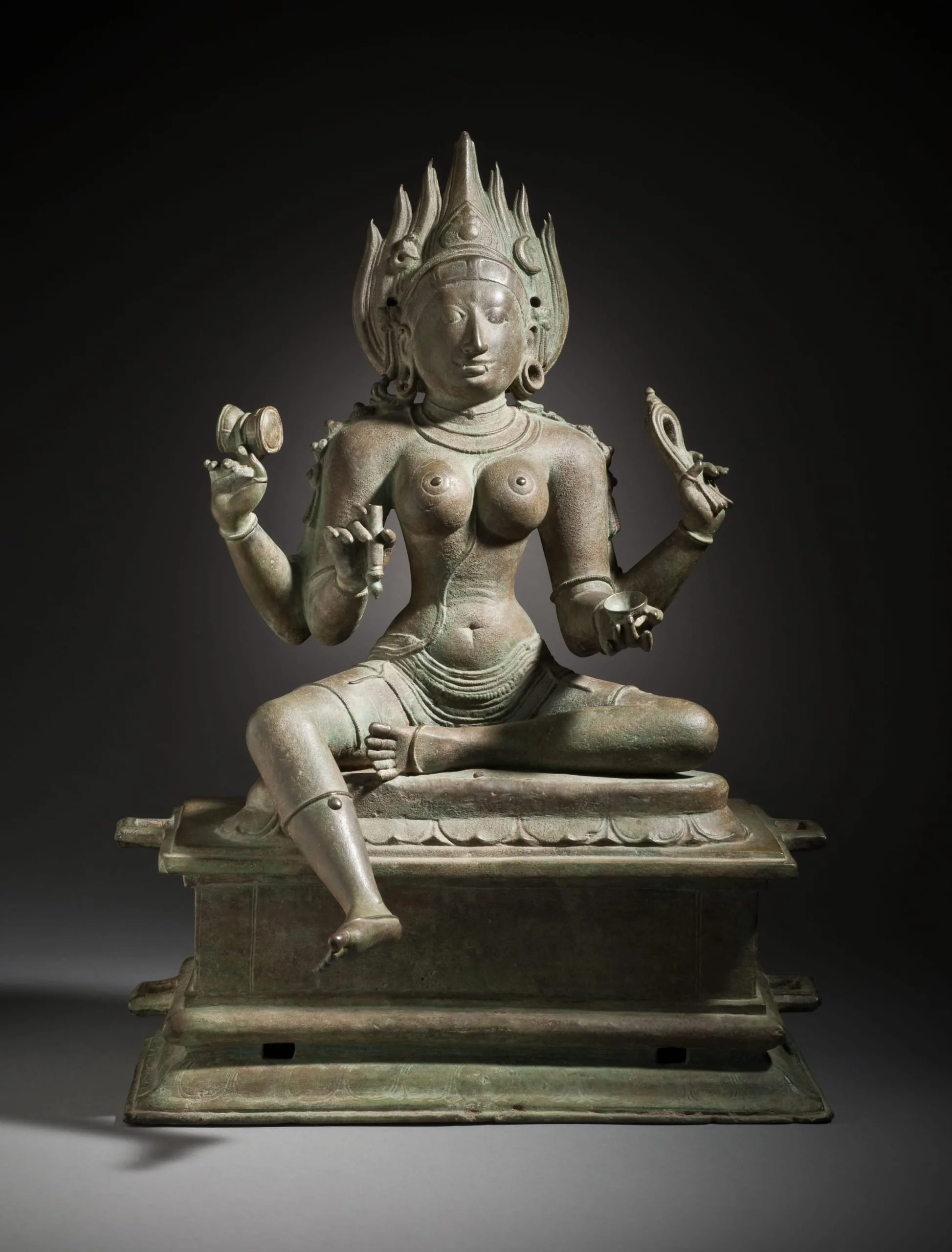
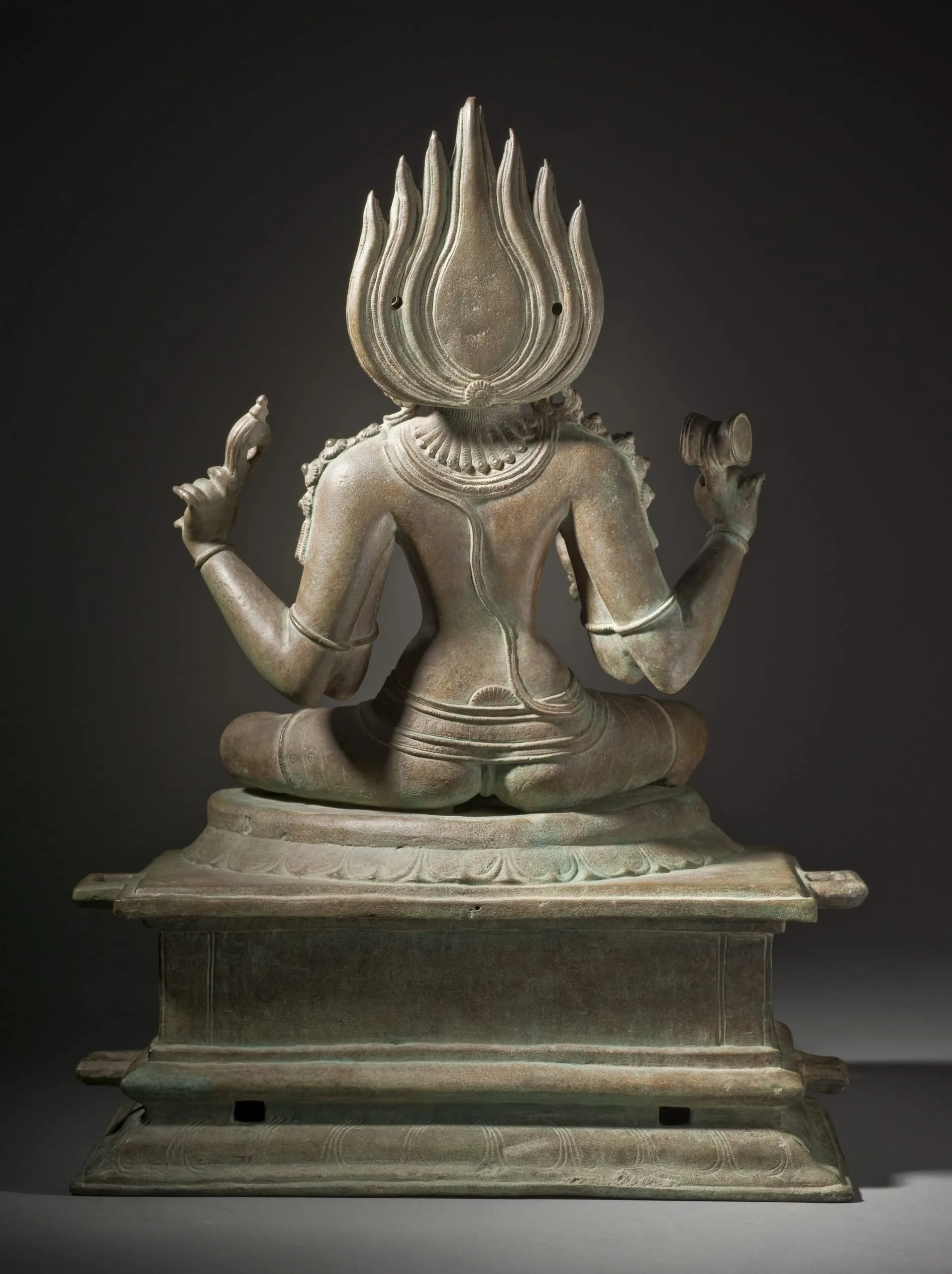
The Hindu Goddess Kali11th century

Not on view
Bronze sculpture of a seated four-armed female deity with olive-green patina, elaborate crown, and jewelry, on a tiered rectangular pedestal
Bronze sculpture, rear view of a four-armed seated deity in cross-legged posture on a tiered rectangular pedestal, each hand holding an object, crowned with a flame-like foliate headdress, wearing necklace and armlets, with verdigris patina throughout.
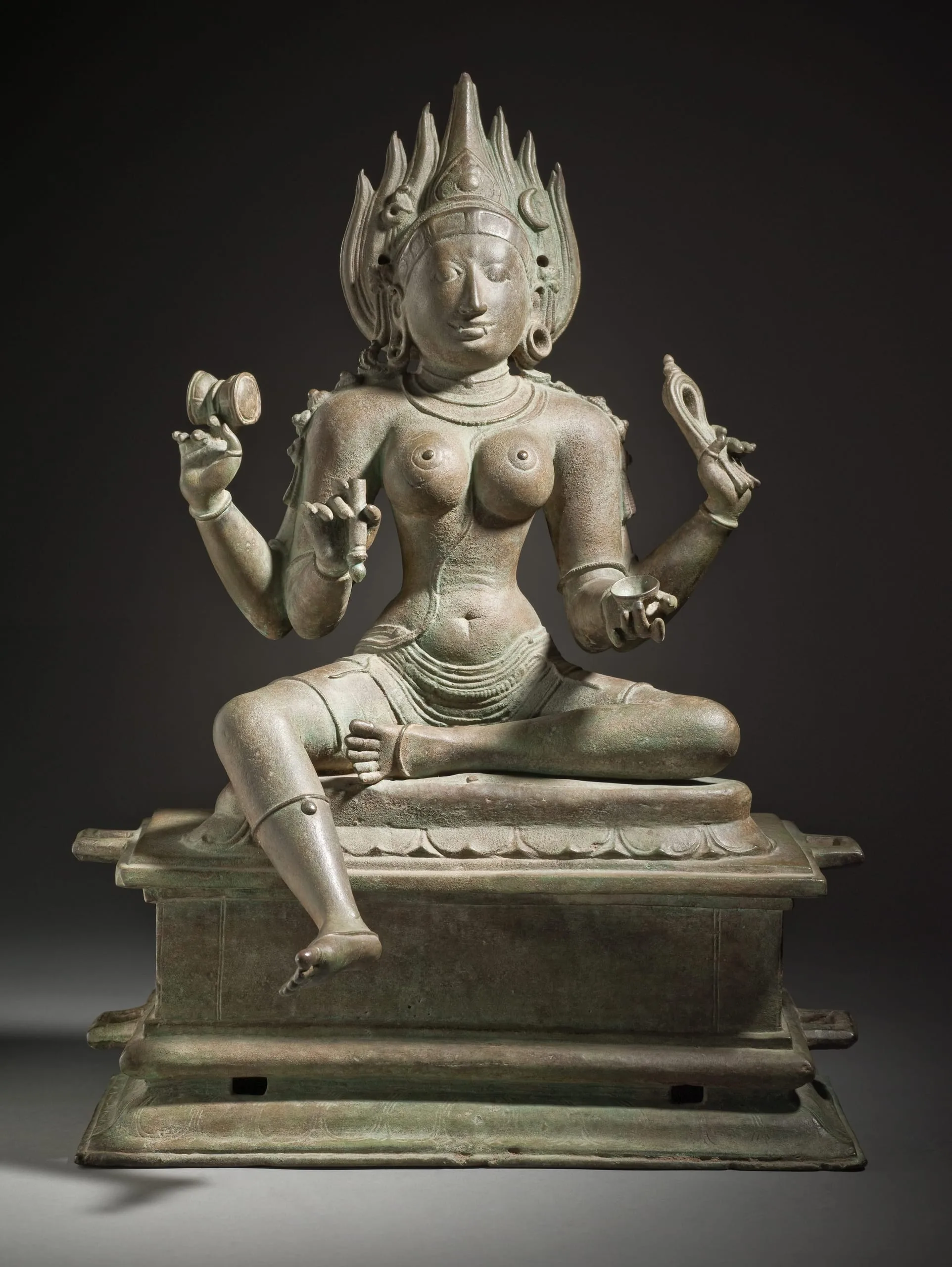
Bronze sculpture of a four-armed seated deity with a flame crown, ornate jewelry, and elaborately cast details, seated in lalitasana on a tiered lotus pedestal, with a green patinated surface.
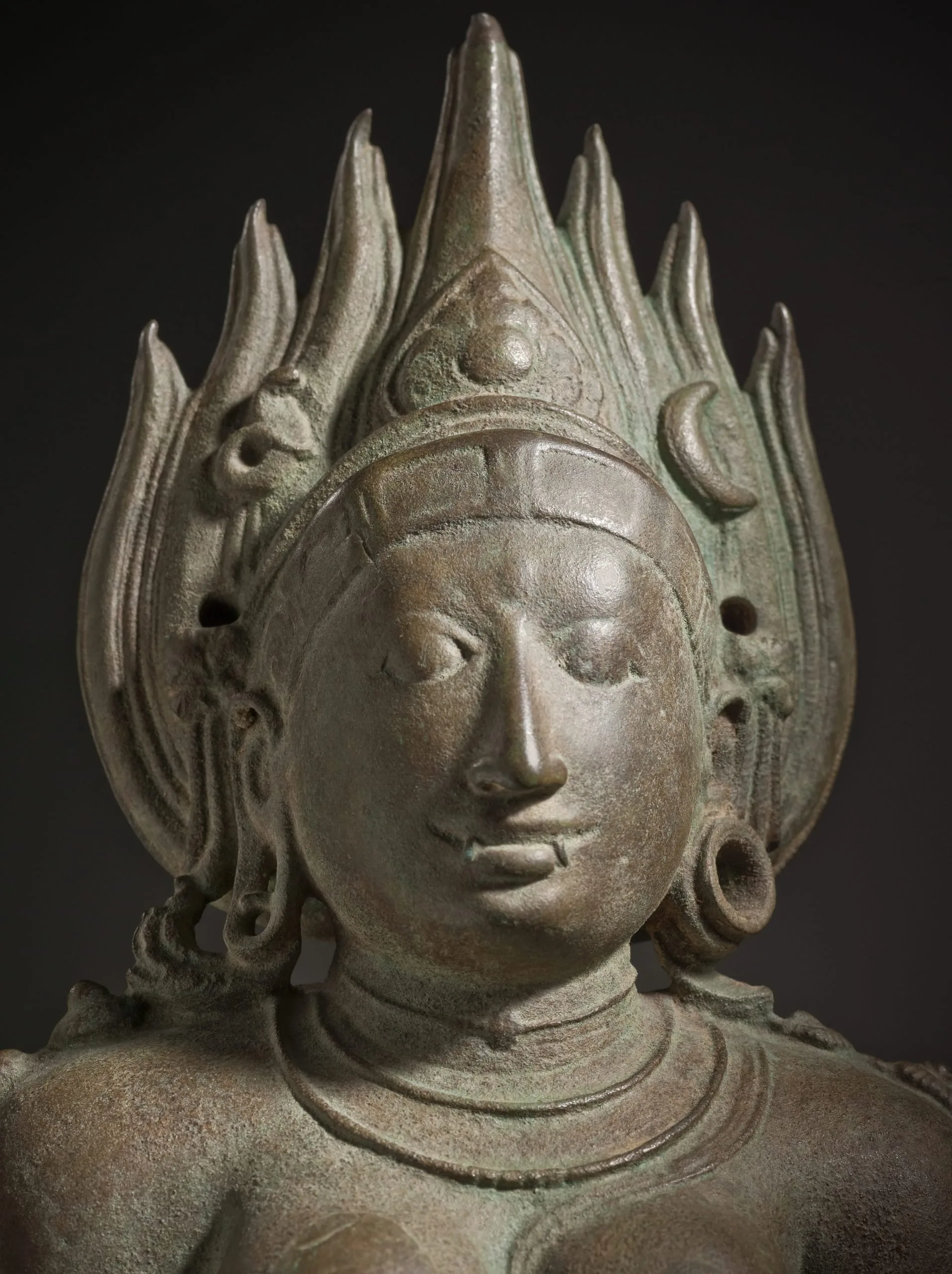
Bronze sculpture, close-up of a deity figure with a flame-shaped crown, crescent moon at the side, and large circular earrings, dark patinated surface with fine cast detailing, against a dark background.
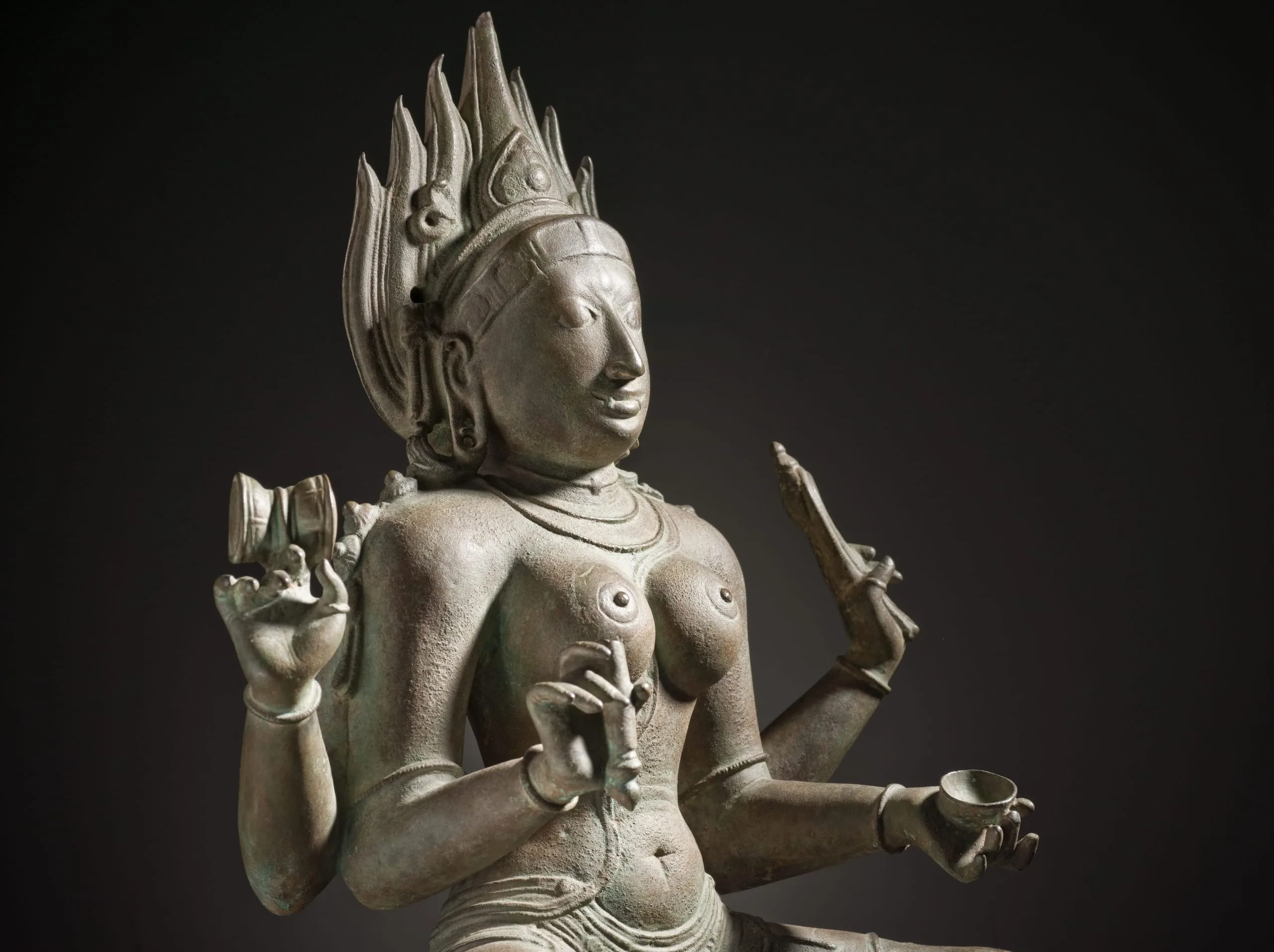
Bronze sculpture of a multi-armed deity with an elaborate flame crown, layered necklaces, and multiple hands holding ritual objects including a small vessel and a blade, with verdigris patina surface, against a dark background.
Artist or Maker
Unknown
Title
The Hindu Goddess Kali
Place Made
India, Tamil Nadu
Date Made
11th century
Medium
Copper alloy
Dimensions
19 1/2 x 14 x 11 3/8 in. (49.53 x 35.56 x 28.89 cm)
Credit Line
Purchased with Harry and Yvonne Lenart Funds and the Museum Acquisition Fund
Accession Number
M.83.48
Classification
Sculpture
Collecting Area
South and Southeast Asian Art
Curatorial Notes

The Hindu goddess Kali, whose name can be interpreted as either the Black One or the Power of Time, is a terrific manifestation of Durga, embodying her divine wrath. As recounted in the Devimahatmya (Glory of the Goddess), a devotional text dating to circa 550 CE, when Durga battled the demons Shumba and Nishumba Kali emanated to help defeat the legions of chaos. Kali’s haunt is the cremation ground, and in paintings she is thus often shown sitting on corpses.

In north India, Kali is typically depicted with a garland of skulls, snakes, sword, lolling tongue dripping blood, and tiger skin skirt. Here, however, in accordance with a south Indian iconographic tradition, she is depicted in a more pacific form in the guise of a beautiful woman with her only fierce attributes being fangs and flaming hair that forms a nimbus. Small holes in her hair above her ears suggest she may have once had separate earrings attached. She has a third eye in her forehead and her hair is adorned with a serpent and crescent moon, all of which are attributes associated with the god Shiva. She wears heavy earrings, one of which is in the form of a mythical aquatic creature (makara kundala). She sits on a double lotus base in a relaxed posture (lalita asana) with her right leg pendant. The goddesses four arms. In her upper right hand, she holds a drum. Her lower right hand carries a now-broken trident. In her upper left hand, she holds a noose. Her lower left hand carries a skull cup. The presence of lugs on the side of the tiered pedestal indicates the bronze originally had a large aureole (prabhavali). The two holes above the lotus border of the pedestal were used to tie the bronze onto poles for parading during festival processions.
Selected Bibliography
  • El Universo de la India: Obras Maestras del Museo de Arte del Condado de Los Angeles. Santiago: Centro Cultural Palacio La Moneda, 2012.